
Pull to refresh
Logo
Daily Brief
Following
Why Sign Up
NATO expands Arctic defense as Russia intensifies northern operations

NATO expands Arctic defense as Russia intensifies northern operations

Force in Play
By Newzino Staff |

UK Carrier Strike Group Deployment Anchors Alliance's New Arctic Sentry Mission

February 14th, 2026: UK announces Operation Firecrest carrier deployment

Overview

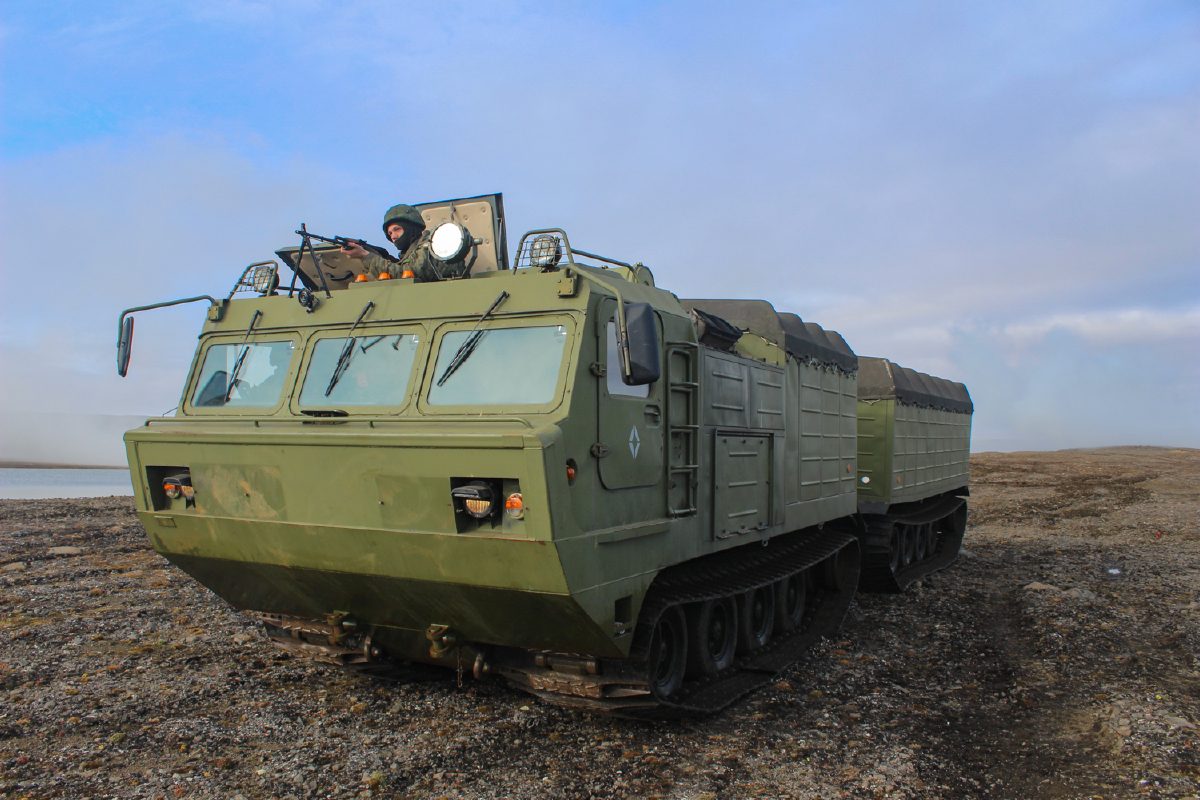
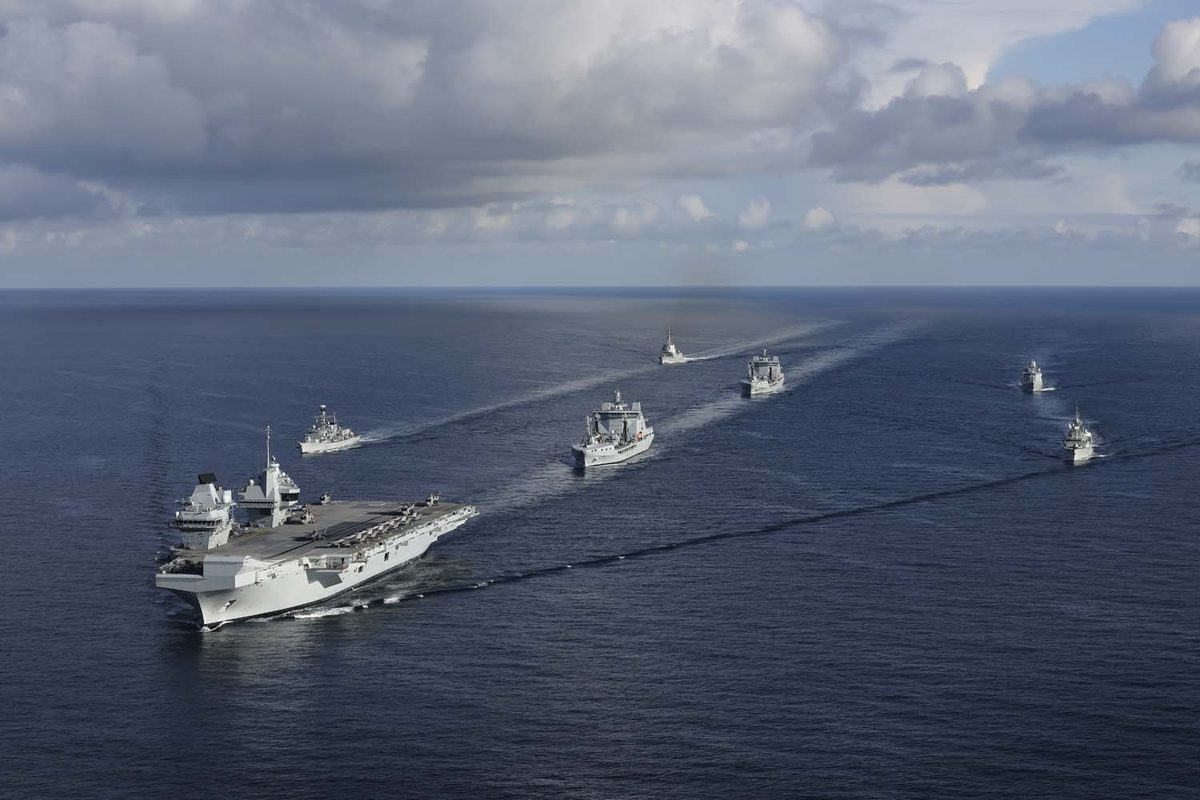
Britain is sending its largest warship to the Arctic. On February 14, 2026, Prime Minister Keir Starmer announced at the Munich Security Conference that HMS Prince of Wales will lead a carrier strike group to the North Atlantic and High North—Operation Firecrest—operating alongside the United States, Canada, and Nordic allies under NATO's new Arctic Sentry mission.

Key Indicators

10+
Undersea cables damaged
Since 2022, at least ten subsea cables connecting Baltic and Nordic nations have been cut, with seven incidents between November 2024 and January 2025.
2,000
UK troops deploying to Norway
Britain is doubling its rotational troop presence in Norway over three years, up from 1,000 personnel.
13
Type 26 frigates in UK-Norway fleet
Joint anti-submarine frigate fleet under the Lunna House Agreement will patrol the GIUK Gap.
24
F-35s embarked on HMS Prince of Wales
The largest British F-35B concentration ever deployed on a carrier, declared combat-ready by NATO.

Interactive

Exploring all sides of a story is often best achieved with Play.

Ever wondered what historical figures would say about today's headlines?

Sign up to generate historical perspectives on this story.

Sign Up

Debate Arena

Two rounds, two personas, one winner. You set the crossfire.

People Involved

Organizations Involved

Timeline

  1. UK announces Operation Firecrest carrier deployment

    Military

    Prime Minister Starmer announces at Munich Security Conference that HMS Prince of Wales will lead carrier strike group to North Atlantic and Arctic, operating alongside US, Canada, and NATO allies.

  2. NATO launches Arctic Sentry mission

    Military

    NATO places all allied Arctic operations under unified command for the first time, coordinated by Joint Force Command Norfolk with NORAD, USNORTHCOM, and USEUCOM.

  3. UK and Norway sign Lunna House Agreement

    Diplomatic

    Defence secretaries sign agreement to jointly operate 13 Type 26 anti-submarine frigates, expand Arctic training, and pre-position British military equipment in Norway.

  4. HMS Prince of Wales declared combat-ready with 24 F-35s

    Military

    NATO certifies the UK carrier strike group as fully combat-ready after HMS Prince of Wales embarks 24 British F-35B fighters, the largest concentration of UK stealth jets on any European deck.

  5. UK-led JEF conducts largest-ever exercises

    Exercise

    Exercise Tarassis deploys 1,700 British personnel across Norway, Sweden, Finland, Estonia, and Latvia—the Joint Expeditionary Force's largest operation in its 11-year history.

  6. NATO launches Baltic Sentry mission

    Military

    NATO establishes Baltic Sentry, deploying a joint task force of allied navies and air support to patrol the Baltic Sea and deter further infrastructure sabotage.

  7. Estonia-Finland power cable damaged, tanker detained

    Infrastructure

    The Estlink 2 submarine power cable fails, reducing cross-border capacity by 65%. Finland detains oil tanker Eagle S, suspected of Russia's shadow fleet, for dragging its anchor across cables.

  8. Baltic Sea cables severed by Chinese vessel

    Infrastructure

    Two fiber-optic cables connecting Baltic nations are cut. German officials call it sabotage and the Danish navy stops Chinese cargo ship Yi Peng 3, which passed over both cables.

Scenarios

1

NATO Arctic Presence Deters Russian Aggression, Infrastructure Attacks Decline

Discussed by: NATO officials, European defense analysts, Royal United Services Institute (RUSI)

The combined show of force—carrier strike group, doubled troop deployments, joint frigate patrols—raises the cost of Russian operations enough to reduce infrastructure sabotage. Russia's shadow fleet redirects away from NATO waters, and the Northern Fleet avoids provocative exercises. This scenario requires sustained Western commitment over multiple years, which budget pressures could undermine.

2

Russia Escalates Arctic Operations, Tests NATO Resolve

Discussed by: Carnegie Endowment, Center for Strategic and International Studies (CSIS), Scandinavian defense ministries

Moscow interprets NATO buildup as provocation and increases Northern Fleet activity. More cables are damaged, Russian aircraft probe deeper into allied airspace, and submarine movements intensify near the GIUK Gap. This tests whether NATO's new unified command can coordinate an effective response without triggering direct confrontation.

3

US-European Divergence Fragments Arctic Strategy

Discussed by: Atlantic Council, European Council on Foreign Relations, German Marshall Fund

Trump administration tariff threats against European NATO allies participating in Arctic operations create friction. If the US pursues Greenland acquisition unilaterally or demands bilateral deals that bypass NATO structures, European allies may have to choose between American and alliance-based security frameworks. UK positioning as Europe's Arctic leader becomes more critical—or more isolated.

4

Arctic Becomes Site of Direct Confrontation

Discussed by: Bulletin of the Atomic Scientists, US Naval Institute, defense hawks in multiple capitals

A serious incident—collision between vessels, downed aircraft, or confirmed attack on critical infrastructure with casualties—forces NATO to invoke Article 5 or respond militarily. This remains the lowest-probability but highest-consequence scenario, dependent on miscalculation or deliberate escalation by either side.

Historical Context

Cold War GIUK Gap Defense (1950-1991)

1950-1991

What Happened

NATO deployed the Sound Surveillance System (SOSUS), a multibillion-dollar network of seafloor hydrophones, to detect Soviet submarines transiting from the Kola Peninsula to the Atlantic. The Royal Navy's primary mission was anti-submarine warfare, operating Invincible-class carriers and maritime patrol aircraft to monitor the Greenland-Iceland-UK chokepoint.

Outcome

Short Term

SOSUS detected Soviet submarines attempting to reach Atlantic shipping lanes, providing early warning that shaped NATO strategy.

Long Term

After the Cold War, NATO drastically reduced Arctic surveillance. SOSUS was declassified in 1991 and the alliance's northern focus atrophied for three decades.

Why It's Relevant Today

Today's Arctic Sentry mission and UK carrier deployment represent the first serious attempt to rebuild the surveillance and deterrence architecture that NATO dismantled after 1991. The GIUK Gap is again a contested chokepoint.

Falklands War Task Force (1982)

April-June 1982

What Happened

Three days after Argentina invaded the Falkland Islands, Britain dispatched HMS Hermes and HMS Invincible with 127 ships, 9,000 troops, and 70 aircraft on an 8,000-mile voyage. It was the largest British naval operation since World War II, conducted with carriers that had been slated for decommissioning.

Outcome

Short Term

Britain recaptured the islands in 74 days, losing 255 personnel and six ships while demonstrating carrier power projection.

Long Term

The operation convinced Britain to retain carrier capability and ultimately led to the Queen Elizabeth-class program that produced HMS Prince of Wales.

Why It's Relevant Today

Operation Firecrest echoes the Falklands deployment: a carrier strike group sailing into contested waters to project power and deter aggression. The UK is again betting that visible naval presence can shape an adversary's calculations.

Nord Stream Pipeline Sabotage (2022)

September 2022

What Happened

Explosions ruptured three of four Nord Stream gas pipelines connecting Russia to Germany in the Baltic Sea. Danish and Swedish authorities detected seismic events consistent with detonations. No state has been officially blamed, though investigations continue.

Outcome

Short Term

Europe lost a major gas supply route, accelerating energy diversification away from Russian sources.

Long Term

The attack demonstrated that undersea infrastructure—previously considered too diffuse to target—could be struck with strategic effect, prompting NATO to reassess cable and pipeline security.

Why It's Relevant Today

Nord Stream established that undersea infrastructure sabotage was possible at scale. The subsequent cable-cutting incidents in 2024-2025 confirmed this as a sustained threat, directly motivating Baltic Sentry, Arctic Sentry, and the UK carrier deployment.

Sources

(10)