

Pull to refresh
Logo
Daily Brief
Following
Why Ranks Sign Up
UK defence secretary resigns over military funding dispute

UK defence secretary resigns over military funding dispute

Money Moves

Britain's military chief warned of operational cutbacks as the new defence secretary arrived at NATO without a spending plan, three weeks before the Ankara summit.

June 20th, 2026: Standoff continues ahead of NATO summit

Overview

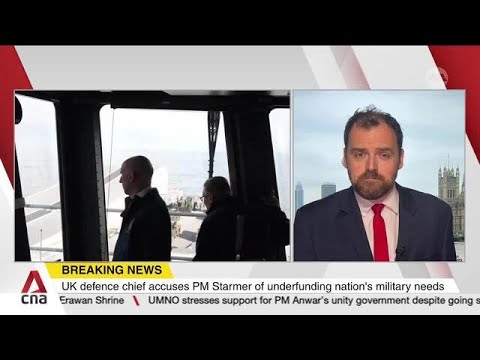
Britain's top uniformed officer told the House of Lords on June 16 that the armed forces will have to 'dial back' operations, training, and exercises if funding does not rise. Chief of the Defence Staff Rich Knighton said day-to-day budgets are losing ground to capital spending. The split was 80/20 twenty years ago; on current projections it reaches 50/50 by 2030.

New defence secretary Dan Jarvis attended the NATO defence ministers meeting in Brussels on June 18 without the unpublished Defence Investment Plan. NATO Secretary General Mark Rutte is pressing all 32 members to present concrete plans for reaching 5% of GDP in defence spending before the July 7 Ankara summit. Starmer has indicated no additional money is coming.

Why it matters

Two ministers quit over Britain's defence budget weeks before a NATO summit, raising doubts about whether Starmer can fund the military he says is needed.

Questions about this story

No questions yet — be the first to ask.

Key Indicators

2.68%
Defence spending by 2030 under the disputed plan
The share of national income the rejected funding settlement would reach by 2030.
£28B
Extra funding the Ministry of Defence sought
The additional money the department requested over four years, above the planned increase.
£13B
Extra funding actually offered in the disputed plan
The Treasury's settlement offered £13 billion over four years — less than half of what the MoD requested.
2
Senior defence ministers who resigned
Healey and Carns quit within hours of each other on June 11.
3.5%
NATO core target Starmer pledged by 2035
The core defence-spending level the prime minister committed to at the 2025 NATO summit.

Voices

Curated perspectives — historical figures and your fellow readers.

Ever wondered what historical figures would say about today's headlines?

Sign up to generate historical perspectives on this story.

Play

Exploring all sides of a story is often best achieved with Play.

Log in to play. Track your picks, climb the leaderboards. Log in Sign Up
Predict 4 ways this could play out. Contrarian picks score more — points lock when the scenario resolves. Log in to play
Higher or Lower Two numbers from this story. Guess which is bigger. 5 rounds to set a streak. Log in to play
Timeline Five events from this story — drag them oldest to newest. Log in to play
Connections Sixteen names from the news. Find the four hidden groups of four. Log in to play

People Involved

Organizations Involved

Timeline

June 2025 June 2026

7 events Latest: June 20th, 2026 · 4 weeks ago
Tap a bar to jump to that date
  1. Standoff continues ahead of NATO summit

    Latest Developing

    With the Defence Investment Plan still unpublished, pressure builds on new defence secretary Dan Jarvis and the Treasury to settle the funding question before the July 7 NATO summit.

  2. Jarvis attends NATO defence ministers meeting without Defence Investment Plan

    Developing

    Dan Jarvis meets allied defence chiefs at NATO headquarters in Brussels, just seven days after taking office. The Defence Investment Plan — the document his predecessor resigned over — remains unpublished. Ministers say it will be released before the July 7 Ankara summit.

  3. NATO chief demands concrete spending plans before Ankara summit

    Statement

    Secretary General Mark Rutte calls on all 32 members to present 'clear, concrete and credible plans' for raising defence spending to 5% of GDP by 2035 before the July 7 summit. The target splits into 3.5% for core defence and 1.5% for wider resilience.

  4. Military chief warns armed forces must 'dial back' without more money

    Statement

    Air Chief Marshal Rich Knighton, Chief of the Defence Staff, tells the House of Lords International Relations and Defence Committee that the armed forces will have to reduce operations, training, and exercises without more resource funding. He says the day-to-day budget is being crowded out: a 80/20 resource-to-capital split twenty years ago is on course to reach 50/50 by 2030.

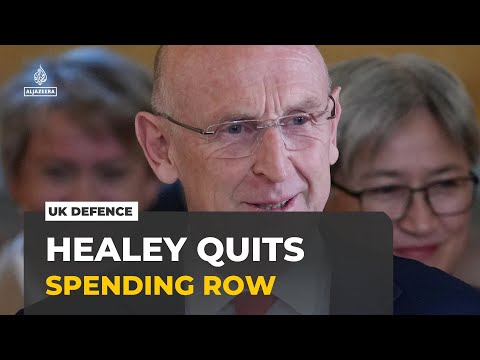
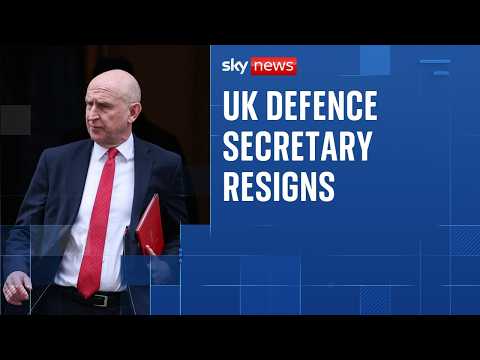
  5. Healey resigns; Carns follows; Jarvis appointed

    Resignation

    Healey quits over the funding plan, saying the Treasury would not commit the resources defence needs. Armed forces minister Al Carns resigns hours later. Dan Jarvis is appointed Defence Secretary the same day.

  6. Treasury delivers the disputed settlement

    Negotiation

    The Ministry of Defence receives its final Defence Investment Plan settlement. Healey judges it too small and too backloaded, rising to only 2.68% of GDP by 2030.

  7. Starmer pledges 3.5% of GDP at NATO summit

    Statement

    At the NATO summit, Starmer commits to raising UK defence spending to 3.5% of national income by 2035, alongside other members.

Historical Context

3 moments from history that rhyme with this story — and how they unfolded.

January 1986

Michael Heseltine resigns over Westland (1986)

Defence Secretary Michael Heseltine walked out of a cabinet meeting and quit over how the government handled the rescue of helicopter maker Westland. He accused Margaret Thatcher's team of stifling debate. The dispute mixed defence procurement with a fight over process.

Then

The walkout damaged Thatcher and forced a second minister, Leon Brittan, to resign weeks later.

Now

Heseltine returned to government in 1990 and later challenged Thatcher, helping end her leadership.

Why this matters now

Like Healey, a defence secretary resigned on principle over how the government ran a major defence decision, wounding a sitting prime minister.

March 2016

Iain Duncan Smith resigns over welfare cuts (2016)

Work and pensions secretary Iain Duncan Smith quit, blaming Treasury-driven cuts to disability benefits he called indefensible. He framed the resignation as a stand against a budget squeeze imposed from outside his department.

Then

The government dropped the disputed cuts within days to limit the damage.

Now

The resignation exposed Conservative splits months before the Brexit referendum deepened them.

Why this matters now

It is the same fight Healey describes: a department head resigning because the Treasury would not fund what he believed the job required.

December 2018

James Mattis resigns as US defense secretary (2018)

US Defense Secretary Jim Mattis resigned with a letter setting out policy disagreements with President Trump, after a decision to withdraw troops from Syria. The letter spelled out his reasons rather than offering a quiet exit.

Then

Trump moved up Mattis's departure date after the letter became public.

Now

The resignation became a reference point for principled exits over defence policy.

Why this matters now

Healey, like Mattis, used a detailed resignation letter to put his disagreement on the record and pressure the leader he served.

Sources

(13)