Anchor

Minnesota solar farms planted with native habitat see native bees multiply 20-fold
New CapabilitiesFive-year study finds pollinator habitat under solar panels restores insect communities and spills into nearby soybean fields
Today: Findings reach top of r/UpliftingNewsNew here? Follow stories to track developments over time. Create a free account to get updates when stories you care about change.
Overview
Updated 9 hours agoIn 2018, Enel Green Power seeded two retired farm fields in southern Minnesota with native grasses and wildflowers beneath its solar panels. By 2022, native bee numbers had grown 20-fold, total insects had tripled, and flowering plant species had increased sevenfold.
The five-year study, led by Argonne National Laboratory and the National Renewable Energy Laboratory, is the first long-term field evidence that solar-pollinator habitat can restore insect communities on farmland within four years. The benefits spilled into neighboring crops: bee visitation at adjacent soybean fields ran about 2.5 times higher than at field interiors.
Why it matters
Solar is spreading across farm country. Planted with native habitat, those acres can restore insects and boost pollination for adjacent crops.
Questions about this story
Free account needed to ask — your question is kept and asked for you right after sign-up. Answers are public.
No questions yet — be the first to ask.
Key Indicators
20-fold
Native bee abundance increase
Native bee numbers grew 20-fold over five years at the two solar sites, with most gains after Year 2.
7-fold
Flowering plant species richness increase
Average flowering plant species richness rose sevenfold within the habitat transects.
3-fold
Total insect abundance increase
Total insect abundance tripled, led by beetles, flies, and moths.
2.5x
Bee visitation at solar-adjacent soybean fields vs. interiors
Bee visits to soybean flowers within 15 meters of solar habitat ran about 2.5 times higher than at field interiors.
Related Media
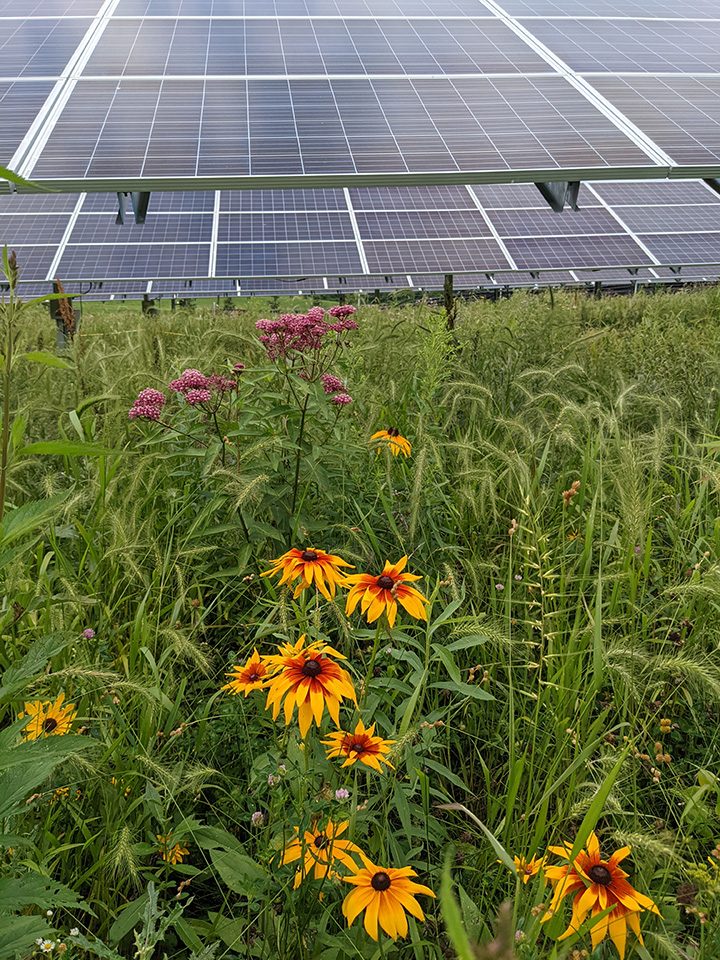
Renewable energy meets pollinator habitat in Minnesota solar fields
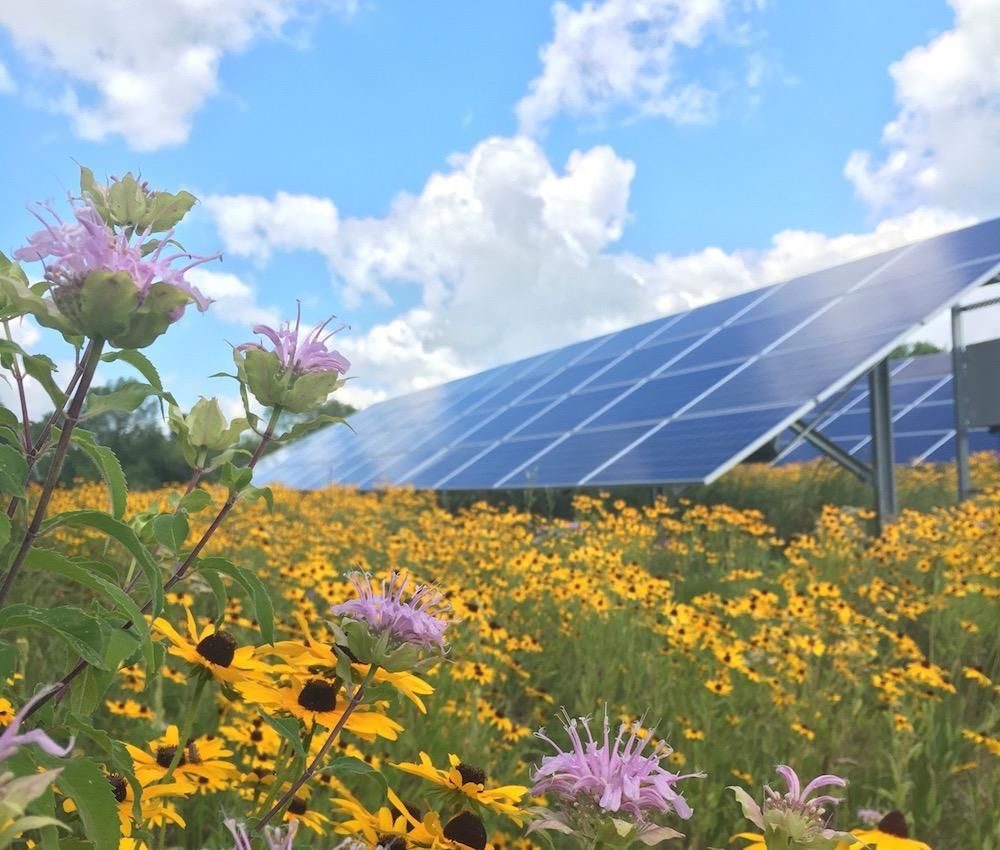
Solar Power and Honey Bees Make a Sweet Combo in Minnesota
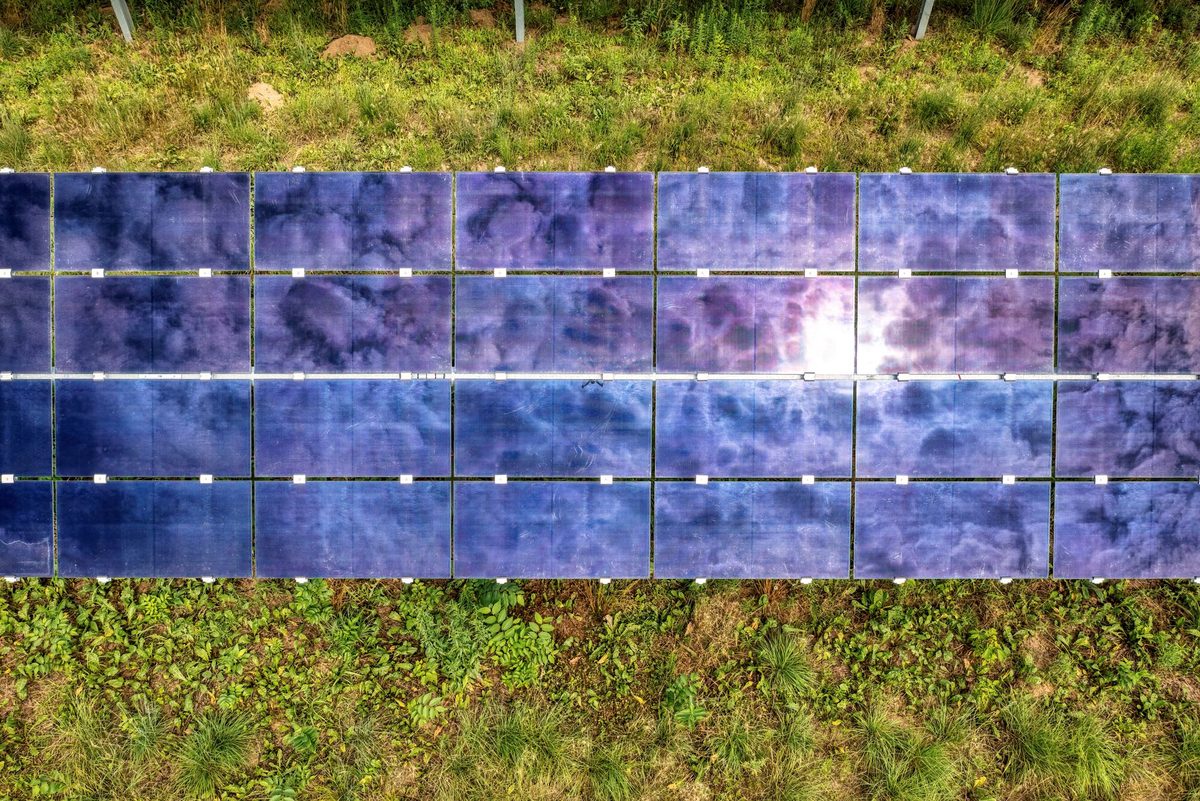
Top view of sustainable energy solar panels on a grassy field in Minnesota.
217 views
2:48
How solar energy companies are helping pollinators
NBC Chicago
1.1K views
3:42
Dive into the Prairie: AgriSolar Partnerships Bloom in Minnesota
NCATATTRA
1.6K views
6:36
Pollinators, Prairie & Power: A Sustainable Win-Win
Prairie Restorations, Inc.
Images from Openverse under Creative Commons licenses. Videos from YouTube.
Voices
Curated perspectives — historical figures and your fellow readers.
Play
Exploring all sides of a story is often best achieved with Play.
Most of these play right now — no account needed. Sign up to save scores, keep a streak, and unlock Debate and Predict.
Log in
Sign Up
Higher or Lower
A number from this story, against one from elsewhere in the news — guess which is bigger, then keep the chain going. 5 rounds, 3 strikes; a miss costs a strike and resets your streak.
Example
Anchor
EU tariff revenue
$52B
Big for this kind of number
Mystery
Pentagon AI contract
?
Round 1
Streak: 0
Mystery
?
Keyboard: ↓/L lower · ↑/H higher
0 pts
Best streak: 0 · Rounds: 0
0 points — sign up to put that on the leaderboard.
Now try on this story
Connections
Sixteen names from the news. Find the four hidden groups of four. Four mistakes max.
Loading today's puzzle…
0/4 groups
Mistakes
Sign up to keep a daily streak — a new puzzle lands every day.
Now try on this story
Exit debate?
Your progress in this debate will be lost.
How it works
- 1 Two AI personas square off on this story.
- 2 You predict who'll win each round — correct picks earn XP.
- 3 One crossfire question is yours to fire. Pick it carefully.
Couldn't generate a topic
Select Your Champions
Choose one persona for each side of the debate
DEBATE TOPIC
Choose personas with different perspectives for a more dynamic debate.
SIDE A (PRO)
Select debater for this side:
No debate personas available right now.
SIDE B (CON)
Select debater for this side:
No debate personas available right now.
VS
Get ready to make your prediction...
Round of
Claim
Evidence
Stakes
Crossfire Answer
Closing Statement
Claim
Evidence
Stakes
Crossfire Answer
Closing Statement
Your Crossfire Question
Generating arguments...
Who's Got This Round?
Make your prediction before the referee scores
The referee scores both sides on
Correct predictions earn +20 XP
· Press 1 or 2 to pick
Evidence
40%
Logic
30%
Detail
20%
Style
10%
Round Results
Your Pick
Not this time
(%)
Overall Score
/10
Your Pick
Not this time
(%)
Overall Score
/10
Set the Crossfire
Pick the question both personas must answer in the final round
Crafting crossfire questions...
Choosing a question earns +10 XP crossfire bonus
🏆
Total XP Earned
Cred Change
Predictions
Debate Oracle! You called every round!
Sharp Instincts! You know your debaters!
The Coin Flip Strategist! Perfectly balanced!
The Contrarian! Bold predictions!
Inverse Genius! Try betting the opposite next time!
XP Breakdown
Base completion
+20 XP
Rounds played ( rounds x 5 XP)
+ XP
Correct predictions ( correct x 20 XP)
+ XP
Crossfire bonus
+10 XP
Accuracy
%
Prediction History
Round
You picked:
✓
✗
Now try on this story
Keep debating to level up your credibility and unlock achievements
People Involved
Organizations Involved
Argonne National Laboratory
US Department of Energy national laboratory
Led the five-year field study
Argonne is a US Department of Energy national laboratory that led the solar-pollinator habitat study.
National Renewable Energy Laboratory (NREL)
US Department of Energy national laboratory
Co-led the study
The National Renewable Energy Laboratory co-led the study, contributing expertise on solar site design and land-use trade-offs.
Enel Green Power North America
Renewable energy company
Operated the two solar sites studied
Italian utility Enel's North American renewables arm operates the two southern Minnesota solar facilities where the study was conducted.
Timeline
March 2018 September 2026
6 events
Latest: Today
Tap a bar to jump to that date
-
Findings reach top of r/UpliftingNews
Today Public AttentionA Reddit post summarizing the solar farm habitat results becomes the top post of the week in r/UpliftingNews, driving fresh public discussion.
-
Study published in Environmental Research Letters
PublicationPeer-reviewed paper reports that all habitat and biodiversity metrics increased each year, with native bee abundance rising exponentially after Year 2.
-
Field campaign concludes
ResearchAfter 358 surveys, researchers document sevenfold increase in flowering plant species, tripled insect abundance, and 20-fold rise in native bees.
-
Soybean field pollination surveys start
ResearchResearchers begin observing pollinator visitation in nearby soybean fields during July bloom periods, comparing solar-adjacent, CRP-adjacent, roadside, and field interior transects.
-
Five-year survey campaign begins
ResearchArgonne and NREL researchers begin 358 observational surveys of flowering vegetation and insect communities at both sites.
-
Native habitat planted at two Minnesota solar sites
Habitat RestorationEnel Green Power seeded native grasses and wildflowers at two southern Minnesota solar facilities built on retired farmland.
Scenarios
1
More states pass pollinator-friendly solar laws
Possible
Resolves by Q2 2028
Discussed by: Clean energy policy trackers including the NC Clean Energy Technology Center; Minnesota, Michigan, Vermont, Maryland, and Illinois already have certification laws
The study gives state lawmakers a measurable return on pollinator-friendly solar: insect numbers tripling and native bees multiplying 20-fold within five years. The evidence could push additional states, especially in the Midwest where solar is expanding fastest on farmland, to pass certification standards requiring native habitat under new utility-scale arrays.
2
USDA or DOE launches a dedicated solar-pollinator program
Possible
Resolves by Jan 31, 2028
Discussed by: The study itself, which frames the spillover effect as a food-security benefit; Argonne's own coverage highlights the soybean pollination findings
The 'spillover' result is the policy hook: bee visitation at soybean fields adjacent to solar habitat matched Conservation Reserve Program grasslands and ran 2.5 times higher than field interiors. That gives federal agencies an argument that pollinator-friendly solar supports crop production. A dedicated program would surface in USDA or DOE funding announcements rather than as a budget line item.
3
Solar industry adopts pollinator habitat as default design
Unlikely
Resolves by End of 2028
Discussed by: Trade organizations like the Solar Energy Industries Association (SEIA), which track land-use practices and community acceptance of utility-scale projects
Solar developers face local opposition on farmland, and pollinator habitat converts the 'solar sprawl' objection into an environmental benefit. If SEIA or a top developer formally commits to native plantings as standard design on new utility-scale projects, the practice becomes the default without legislation. That outcome is the least certain because it depends on voluntary adoption and landowner cooperation.
Historical Context
3 moments from history that rhyme with this story — and how they unfolded.
1985–present
Conservation Reserve Program (1985–present)
The 1985 Farm Bill created the Conservation Reserve Program, paying farmers to convert erodible cropland back to grass. It became the largest private-lands conservation program in the US, covering tens of millions of acres at its peak.
Then
Millions of acres of cropland returned to grassland, reversing erosion and creating wildlife habitat across the Great Plains and Midwest.
Now
CRP grassland became the de facto benchmark for farmland habitat quality. The Minnesota study used CRP-adjacent soybean fields as its comparison for pollinator visitation.
Why this matters now
Solar-pollinator habitat matched CRP grassland for bee visitation in this study. That means solar arrays on farmland can slot into the same conservation framework as the country's largest habitat program.
1992–present
Tallgrass prairie restoration at Neal Smith National Wildlife Refuge (1992–present)
The US Fish and Wildlife Service began restoring thousands of acres of tallgrass prairie on former Iowa farmland at Neal Smith refuge. It was slow, deliberate work: careful seed mixes, repeated planting, and decades of prescribed burning and weed control.
Then
The refuge rebuilt a functioning tallgrass prairie ecosystem on retired cropland, demonstrating restoration is feasible on degraded agricultural soil.
Now
Prairie restoration projects established the techniques and timelines for rebuilding native grassland, including the seed mixes used at solar sites today.
Why this matters now
The Minnesota study shows insect communities responded within four years of planting, far faster than full ecosystem recovery. Solar projects, with their multi-decade lifespans, can host restoration that keeps compounding.
2010s
Monarch decline and the pollinator crisis (2010s)
Monarch butterfly populations fell sharply in the 2010s as milkweed disappeared from farm country, and conservation groups petitioned the federal government to list them as endangered. States responded with voluntary monarch protection plans, and researchers targeted agricultural land as potential habitat.
Then
The US Fish and Wildlife Service launched a monarch conservation fund, and states from Minnesota to Texas developed voluntary habitat plans.
Now
The crisis normalized the idea that working agricultural land can double as habitat, opening the door for solar arrays to be designed as pollinator habitat.
Why this matters now
The Minnesota study demonstrates a concrete mechanism for offsetting farmland habitat loss: instead of bare gravel under panels, native plantings that support bees, butterflies, beetles, and flies.
Sources
(6)Related Stories
Prairie butterfly rebounds from 9 known US individuals to hundreds in the wild
New Capabilities
Updated Yesterday
Solar leads new US power capacity as global installations pass 3 terawatts
Built World
Updated Aug 13
Google backs West Virginia solar-plus-storage project pairing lithium and zinc batteries
New Capabilities
Updated Sep 4
Saint Paul residents appeal tall-grass citations for native pollinator gardens
Rule Changes
Updated Aug 26
Mexico reintroduces bison to desert reserve, ecosystem begins recovering
New Capabilities
Updated 2 days ago
Oregon farmer converts barley farm into wetland refuge for endangered fish
Built World
Updated 4 days ago