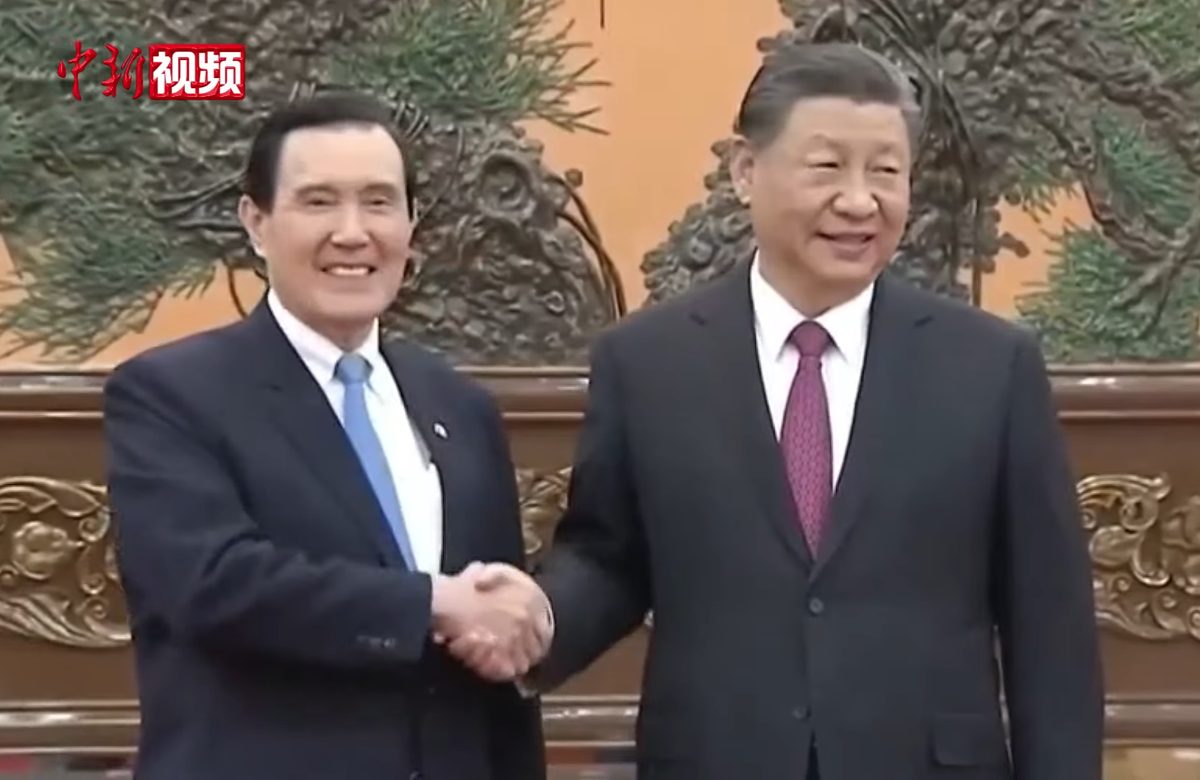
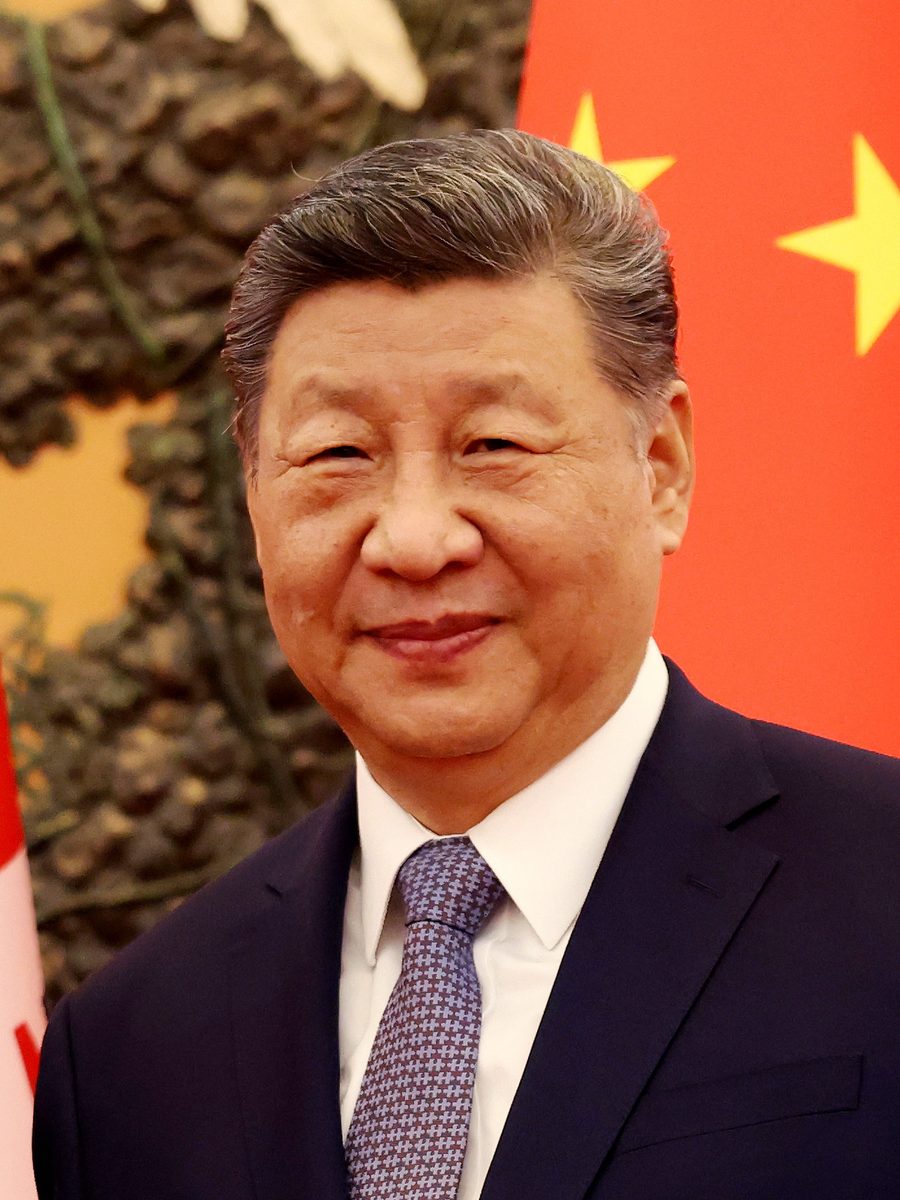
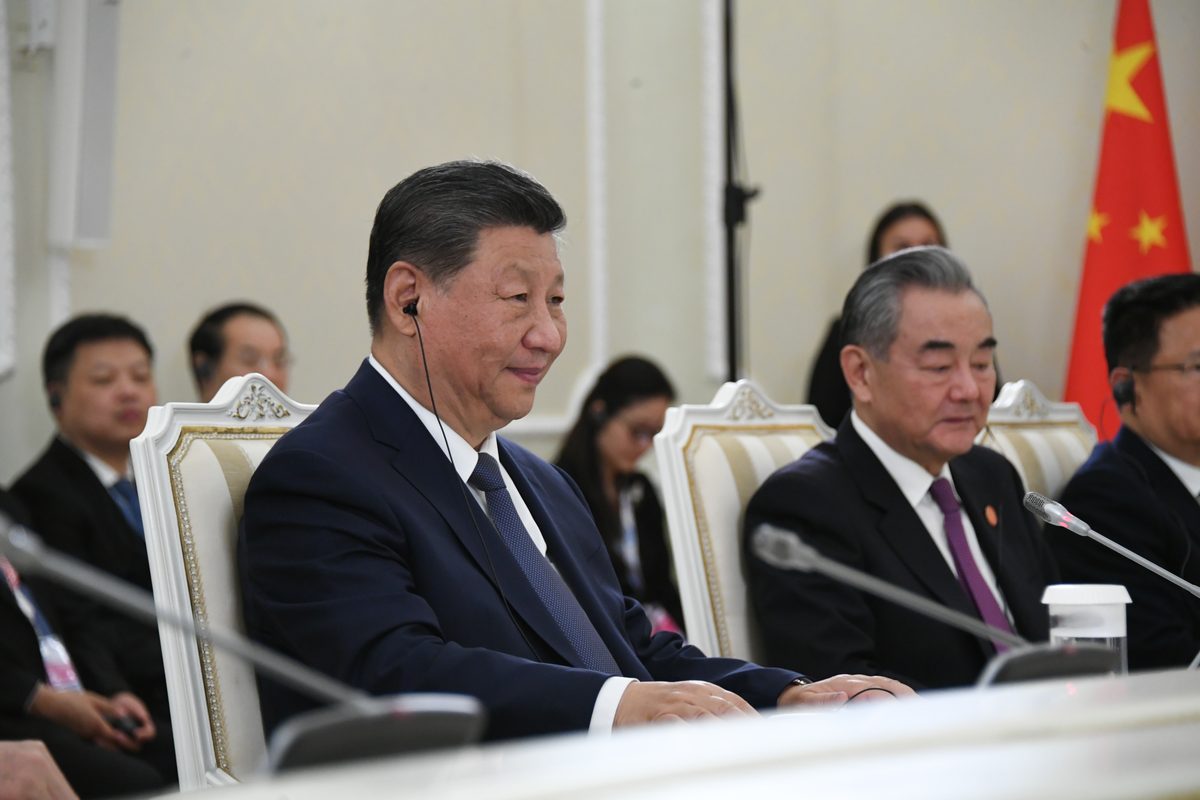
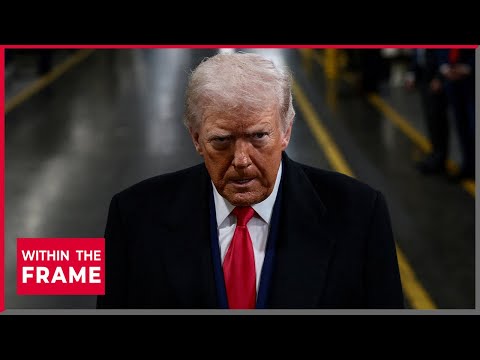
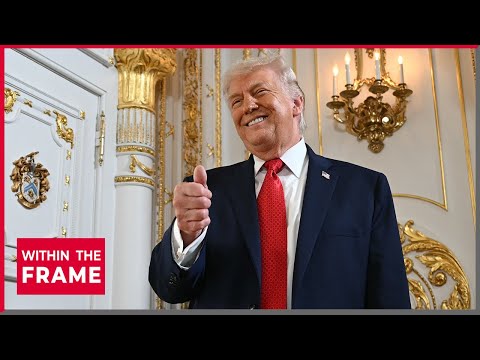
In April 2025, U.S. tariffs on Chinese goods peaked at 145 percent. Nine months later, President Trump and Chinese President Xi Jinping describe their relationship as 'extremely good' and are planning four bilateral summits in 2026, including Trump's first visit to Beijing since 2017.
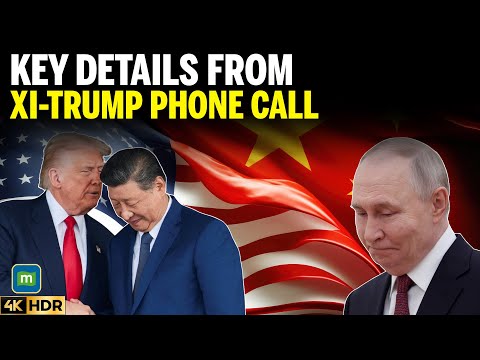
On February 5, 2026, Trump and Xi confirmed an April presidential visit to Beijing. The call signals a diplomatic engagement phase after a year of extreme tariff escalation, a temporary trade truce in Busan, and ongoing friction over Taiwan arms sales. The relationship has stabilized around managed competition rather than resolution—both sides have suspended their most aggressive trade measures through November 2026, but structural disagreements over technology, Taiwan, and industrial policy remain intact.
Questions about this story
Free account needed to ask — your question is kept and asked for you right after sign-up. Answers are public.
No questions yet — be the first to ask.
Key Indicators
145%
Peak U.S. tariffs on China
Tariff rate reached in April 2025 before de-escalation began
4
Planned bilateral summits in 2026
Treasury Secretary Bessent predicted up to four Trump-Xi meetings this year
$11.1B
Taiwan arms package
Record U.S. weapons sale approved December 2025, a persistent friction point
Nov 2026
Trade truce expiration
Current tariff suspension and rare earth export pause expires November 10, 2026
16 events
Latest: February 5th, 2026 · 7 months ago
Showing 8 of 16
JK to step
Tap a bar to jump to that date
Jump to
February 2026
Trump-Xi Phone Call Confirms April Summit
LatestDiplomatic
Trump and Xi speak by phone, describing the bilateral relationship as 'extremely good' and confirming Trump's April Beijing visit.
December 2025
China Conducts Largest Taiwan Military Drills
Military
Chinese military launches expansive exercises around Taiwan simulating blockade operations in response to U.S. arms sales.
China Sanctions 30 U.S. Defense Firms
Diplomatic
China sanctions Boeing, Northrop Grumman, L3Harris, and others over Taiwan arms sales, freezing assets and barring domestic cooperation.
Record $11.1 Billion Taiwan Arms Sale Announced
Military
U.S. announces largest-ever arms package for Taiwan, including HIMARS, ATACMS missiles, and howitzers.
November 2025
Trump Accepts Beijing Visit Invitation
Diplomatic
Trump announces he will visit China in April 2026 and will host Xi for a state visit later in the year.
Trade Truce Takes Effect
Trade
One-year tariff suspension begins; China suspends retaliatory tariffs and October rare earth controls; U.S. reduces fentanyl tariff to 10%.
October 2025
Busan Summit: One-Year Trade Truce
Diplomatic
Trump and Xi meet in South Korea for nearly two hours, agreeing to a one-year tariff suspension through November 2026 and Chinese soybean purchases.
China Expands Rare Earth Export Controls
Trade
China announces sweeping new export controls on rare earths, lithium batteries, and superhard materials, adding five more elements.
August 2025
Tariff Pause Extended 90 Days
Trade
Both parties extend the tariff reduction for another 90 days as negotiations continue.
May 2025
First Tariff Pause Agreed in Switzerland
Diplomatic
Bessent and Chinese officials agree to 90-day tariff reduction, lowering rates to 30% on both sides.
April 2025
Tariffs Peak at 145% vs. 125%
Trade
U.S. raises tariffs to 145%; China responds with 125% tariffs on American goods—the highest rates of the trade war.
U.S. Tariffs Reach 104%
Trade
Trump raises tariffs by additional 50%, bringing the baseline rate on Chinese imports to 104%.
China Retaliates with Rare Earth Controls
Trade
China's Ministry of Commerce introduces export restrictions on seven rare earth elements in response to U.S. tariffs.
Liberation Day Tariffs Add 34%
Trade
U.S. imposes additional 34% duty on Chinese imports as part of 'Liberation Day' tariffs, stacking on top of existing measures.
February 2025
Fentanyl Emergency Tariffs Imposed
Trade
Trump signs Executive Order 14195 declaring a national emergency over fentanyl trafficking, imposing 20% tariffs on Chinese imports.
January 2025
Trump Inaugurated, Trade War Preparations Begin
Political
Trump begins second term with plans to escalate tariffs on China as a central economic policy.
Scenarios
1
Trade Truce Extended, Competition Continues
Likely
Discussed by: Brookings Institution, Council on Foreign Relations, Atlantic Council analysts
The most likely near-term path. Both sides extend the tariff suspension beyond November 2026, possibly with modest additional concessions on agricultural purchases or technology licensing. The relationship stabilizes around 'managed competition'—cooperative enough to avoid economic rupture, adversarial enough that neither side makes structural concessions on technology policy, industrial subsidies, or Taiwan. Multiple summits create optics of progress without resolving underlying disputes.
If U.S. inflation remains elevated or employment softens ahead of November 2026 midterms, Trump could return to blaming China as a political strategy—a playbook he has used in previous election cycles. China hawks in Congress could push legislative hardening regardless of White House tone. A renewed tariff spiral would follow, potentially returning to 100%+ rates and prompting China to reimpose rare earth export controls.
3
Taiwan Crisis Derails Diplomacy
Possible
Discussed by: American Enterprise Institute, CSIS, South China Morning Post analysts
A Taiwan flashpoint—whether triggered by additional U.S. arms sales, a political development in Taipei, or Chinese military action—could rapidly collapse the diplomatic track. Xi's emphasis in the February call that Taiwan is 'the most important issue' signals Beijing's red line. A serious incident could make summits politically untenable for either leader and reverse the engagement trajectory entirely.
4
Comprehensive Trade Agreement Reached
Unlikely
Discussed by: White House officials, some business community optimists
Trump and Xi use the planned summits to negotiate a broader agreement addressing technology transfer, market access, and industrial subsidies. This would require structural concessions neither side has shown willingness to make—China on state enterprise subsidies and intellectual property enforcement, the U.S. on technology export restrictions. Analysts view this as unlikely given that the Busan framework was explicitly a 'shallow truce' rather than a breakthrough.
Historical Context
3 moments from history that rhyme with this story — and how they unfolded.
1 of 3
June 1930
Smoot-Hawley Tariff Act (1930)
The U.S. Congress passed tariffs on over 20,000 imported goods, raising average rates to nearly 50%. More than 1,000 economists signed a letter urging President Hoover to veto the bill. Major trading partners retaliated with their own tariffs.
Then
U.S. imports declined 66% and exports 61% between 1929 and 1934.
Now
The tariff war is widely credited with deepening and prolonging the Great Depression. It led to the 1934 Reciprocal Trade Agreements Act and ultimately the post-WWII multilateral trade system.
Why this matters now
Trade economists have drawn parallels to Smoot-Hawley when analyzing the 2025 tariff escalation. The U.S.-China rates of 145% and 125% exceeded Smoot-Hawley levels. While the truce has paused the worst effects, the episode demonstrates how quickly protectionist spirals can escalate.
2 of 3
February 1972
Nixon's China Opening (1972)
President Richard Nixon traveled to Beijing for the first U.S. presidential visit to communist China, meeting Chairman Mao Zedong and Premier Zhou Enlai. The trip followed two years of secret diplomacy by Henry Kissinger and produced the Shanghai Communiqué, in which both nations agreed to work toward normalized relations while acknowledging their differences over Taiwan.
Then
The visit ended 25 years of diplomatic isolation between the two countries and began a gradual normalization process.
Now
Full diplomatic relations were established in 1979. The framework lasted until the current strategic competition era—roughly 50 years of engagement-focused policy.
Why this matters now
Trump's planned April 2026 Beijing visit carries echoes of Nixon's opening: a Republican president using personal diplomacy to reshape the U.S.-China relationship. But where Nixon sought rapprochement, Trump oscillates between confrontation and engagement. The Taiwan question that Nixon carefully sidestepped remains the central unresolved issue.
3 of 3
June 2019
Trump-Xi G20 Osaka Truce (2019)
At the G20 summit in Osaka, Trump and Xi met for 80 minutes and agreed to pause tariff escalation. Trump described the outcome as 'better than expected.' The U.S. suspended planned tariff increases and signaled it would ease restrictions on Huawei. Both sides agreed to resume trade negotiations.
Then
The truce produced six months of negotiations leading to the Phase One trade deal in December 2019.
Now
The Phase One deal was only partially implemented before COVID-19 disrupted trade flows. China never met its purchasing commitments. The pattern—summit truce, partial agreement, incomplete implementation—established the template for subsequent negotiations.
Why this matters now
The Busan summit in October 2025 closely mirrors Osaka: a bilateral meeting producing a tariff pause, agricultural purchase commitments, and agreement to continue talking. Observers note the 2025 truce is similarly 'shallow' and question whether implementation will fare better than the Phase One agreement.