
Pull to refresh
Logo
Daily Brief
Following
Why Ranks Sign Up
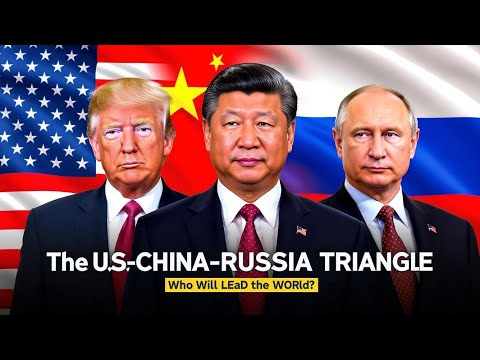
The US-Russia-China triangle

The US-Russia-China triangle

Force in Play

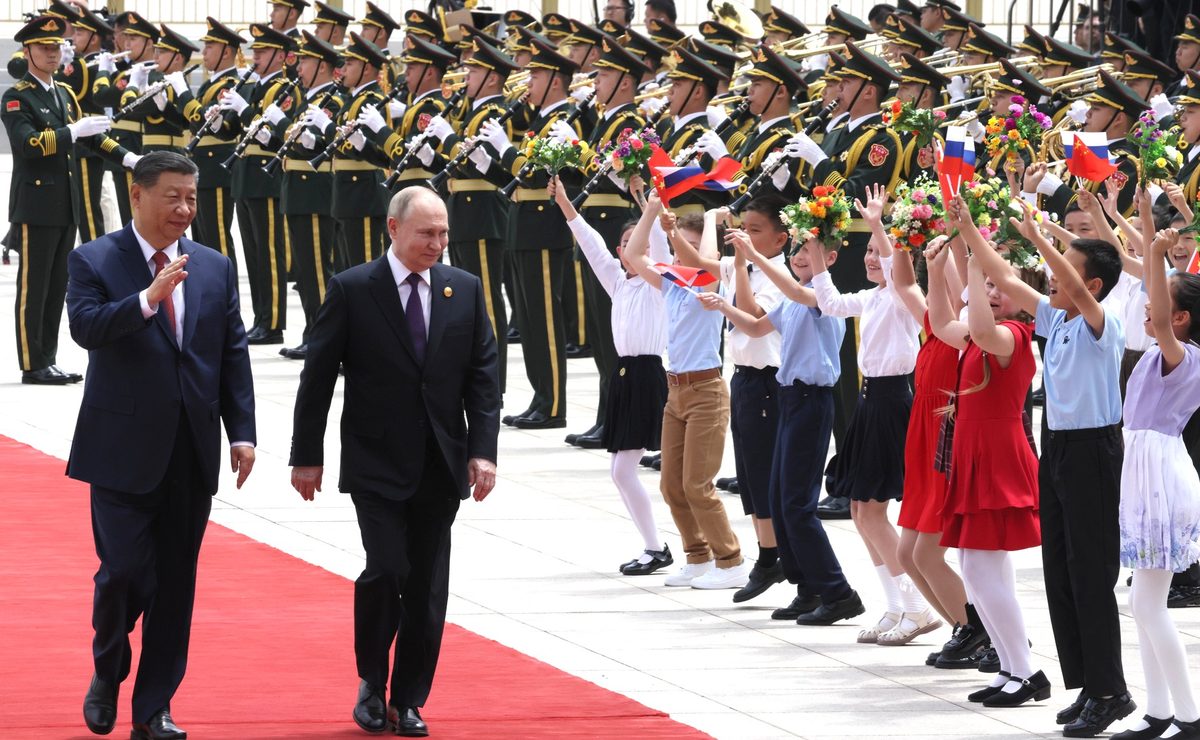
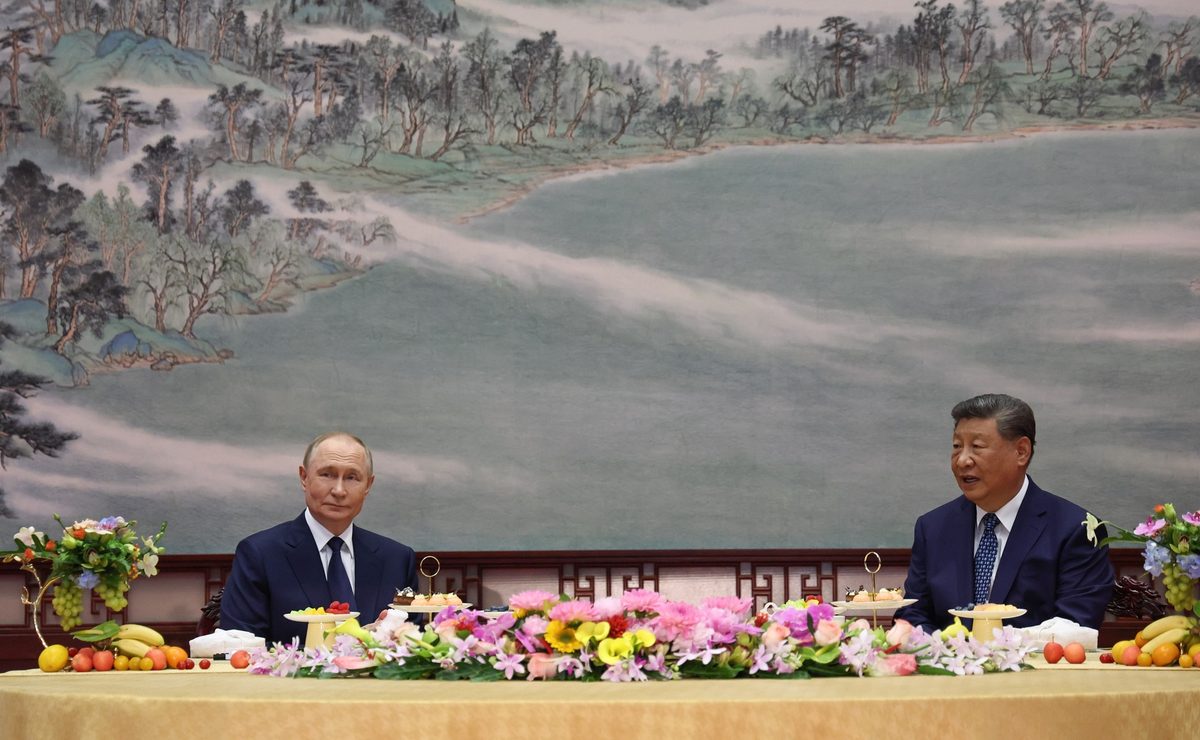
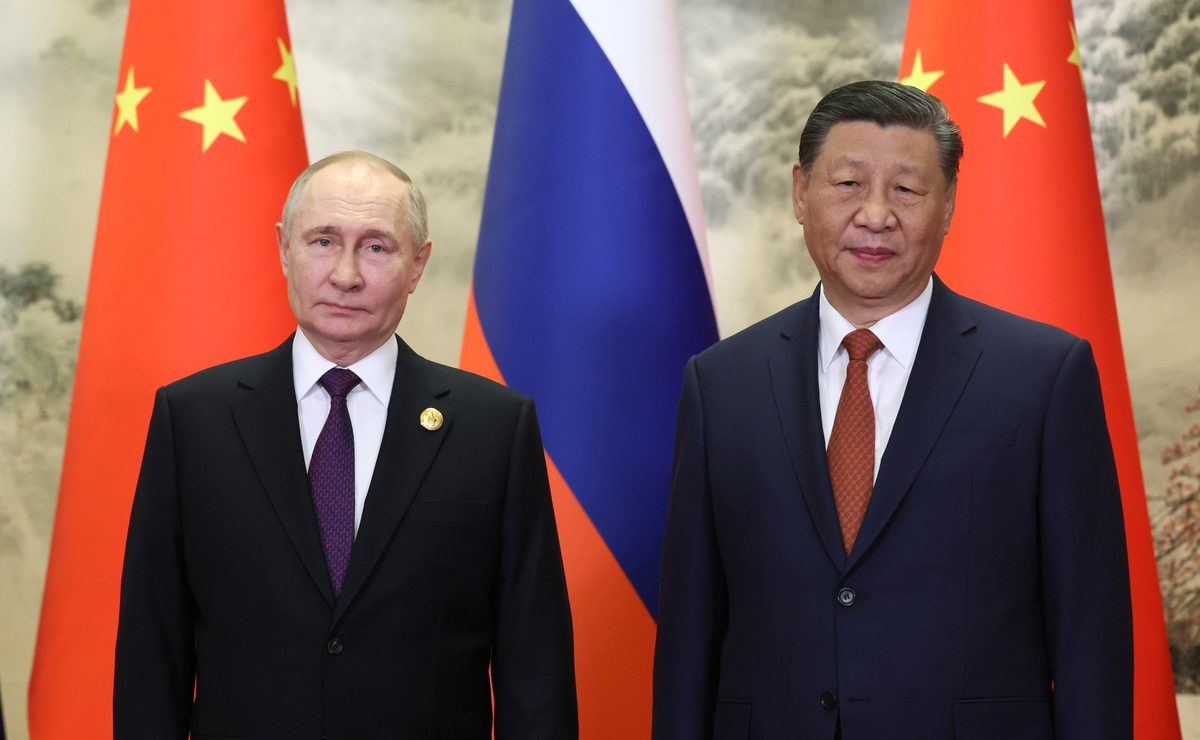
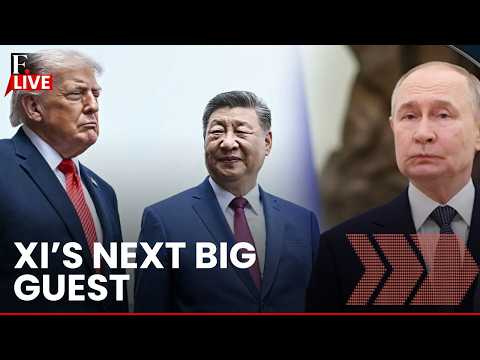
Putin follows Trump to Beijing in same week as Xi hosts both

In 3 days: Putin arrives in Beijing for two-day Xi summit

Overview

Trump flew to Beijing on May 13 and left on May 15. Four days later, Putin arrives at the same airport for his own Xi summit. No US and Russian leaders have ever made back-to-back state visits to the same country in the same week.

China is the swing partner in the great-power triangle. Russia leans on Chinese oil buyers, yuan settlements, and dual-use exports to sustain its war economy. Washington wants Beijing to cool that support and ease rare-earths curbs. Both leaders flew in to make their case to Xi in person.

Why it matters

Whichever way Beijing tilts shapes the war in Ukraine, the US-China trade truce, and the dollar's grip on global trade.

Key Indicators

4 days
Gap between Trump and Putin Beijing visits
First time the US and Russian leaders have visited the same country in the same week outside a multilateral summit.
25
Years since Russia-China friendship treaty
The 2001 Treaty of Good-Neighbourliness is the legal backbone of the bilateral relationship; Putin and Xi are signing an anniversary declaration.
1.86M bpd
Russian seaborne oil to China, Jan 2026
Up 46% year-on-year; Russia is now China's largest crude supplier, ahead of Saudi Arabia.
95%
Share of bilateral trade in ruble or yuan
By late 2025, the two countries had nearly eliminated the dollar from their direct trade.

Interactive

Exploring all sides of a story is often best achieved with Play.

Ever wondered what historical figures would say about today's headlines?

Sign up to generate historical perspectives on this story.

People Involved

Timeline

  1. Putin arrives in Beijing for two-day Xi summit

    Summit

    Scheduled to sign joint declaration with Xi and discuss energy and trade with Premier Li Qiang.

  2. Kremlin announces Putin's Beijing visit

    Announcement

    Putin will travel to China May 19-20 to meet Xi and Premier Li Qiang. The two sides will sign a 25th-anniversary joint declaration.

  3. Trump leaves Beijing with trade truce intact

    Summit

    Tariff suspensions and rare-earths rollback preserved. Xi accepts return visit to the US in the fall. No Taiwan deal.

  4. Xi warns Trump on Taiwan as summit opens

    Summit

    Xi tells Trump that mishandling Taiwan will put ties in 'great jeopardy.' Two sides agree to a 'constructive, strategic and stable' framework.

  5. Trump arrives in Beijing for state visit

    Diplomatic

    First Beijing visit by a sitting US president since 2017. Delayed from April by the Iran war.

  6. Putin signals 'substantial step' on China energy

    Statement

    Russian leader previews oil and gas deliverables for the upcoming Beijing summit, hinting at pipeline progress.

  7. Lavrov visits Beijing to prepare Putin trip

    Diplomatic

    Russian foreign minister meets Xi and counterpart Wang Yi. Agenda covers energy, payments, and Ukraine.

  8. Putin-Xi video call sets 2026 visit

    Diplomatic

    Xi calls for a 'grand plan' to deepen ties. Putin accepts invitation to visit China in the first half of the year.

  9. Russia invades Ukraine

    Conflict

    Western sanctions cut Russia off from dollar markets. China becomes the lifeline for oil sales and yuan settlements.

  10. Putin-Xi declare 'no-limits' partnership in Beijing

    Diplomatic

    Joint statement issued at the Winter Olympics, 20 days before Russia's invasion of Ukraine.

  11. Russia and China sign Treaty of Good-Neighbourliness

    Treaty

    The 20-year treaty became the legal foundation of the bilateral relationship. It was extended for five years in 2021.

Scenarios

Predict which scenario wins. Contrarian picks score more — points lock in when the scenario resolves.

Log in to predict. Track your picks, climb the leaderboard. Log in Sign Up
1

Putin-Xi summit produces concrete Power of Siberia 2 movement

Putin's preview of 'a serious and very substantial step' on oil and gas points to long-stalled pipeline progress. Beijing has resisted Moscow's preferred terms on volumes and price for years. A signed intergovernmental agreement or named contractor would mark the first hard movement on Power of Siberia 2 since talks began in 2014.

Resolves by: 2026-05-21
Source: Kremlin official readout and Gazprom press releases
Discussed by: Bloomberg, South China Morning Post, Moscow Times
Consensus
2

Joint declaration is ceremonial, no major new agreements

Beijing has just locked in a fragile US trade truce. Xi has reason to keep the Putin meeting symbolic and tied to the treaty anniversary, avoiding moves that could give Washington a pretext to reopen tariffs. Analysts at MERICS and elsewhere have noted China's pattern of front-loading rhetoric and slow-walking deliverables in the Russia relationship.

Resolves by: 2026-05-21
Source: Joint declaration text published by Kremlin and Chinese Foreign Ministry
Discussed by: Foreign Affairs, MERICS analysts, Council on Foreign Relations
Consensus
3

Russia-China announce new dollar-alternative payments mechanism

Bilateral trade already runs 95% in rubles and yuan, but a formal joint mechanism for clearing, banking, or BRICS-aligned settlement remains a stated goal. New US secondary sanctions on Russian oil buyers in late 2025 sharpened the incentive. A formal announcement would expand the workaround framework other sanctioned states could plug into.

Resolves by: 2026-12-31
Source: Joint statement from Russian Central Bank and People's Bank of China
Discussed by: Reuters, Eastern Herald, Russian Foreign Ministry briefings
Consensus
4

US-China trade truce holds through end of 2026

Trump and Xi agreed to a 'constructive, strategic and stable' framework on May 14. The Putin visit will test whether Beijing's Russia ties trigger a Washington response. If the rare-earths rollback and tariff suspensions remain in place through year-end, the framework is real. If either side reimposes restrictions, it was rhetoric.

Resolves by: 2026-12-31
Source: US Trade Representative and Chinese Ministry of Commerce announcements
Discussed by: CSIS, CNBC, CBC
Consensus

Higher or Lower

Two numbers from this story. Guess which is bigger. Up to 5 rounds — one wrong call ends the streak.

Log in to play. Track your streak, climb the leaderboard. Log in Sign Up
Example
Anchor
EU tariff revenue
$52B
Mystery
Pentagon AI contract
?

Historical Context

Nixon's visit to China (1972)

February 1972

What Happened

President Richard Nixon flew to Beijing and met Mao Zedong, ending two decades of frozen relations. The trip exploited the Sino-Soviet split, which had broken into border clashes in 1969. Henry Kissinger had laid the groundwork in secret talks the previous year.

Outcome

Short Term

The Shanghai Communique reopened US-China relations and gave Washington new leverage in arms talks with Moscow.

Long Term

The triangle frame Nixon set, playing one rival against another, became standard great-power strategy for the next fifty years.

Why It's Relevant Today

Nixon's move worked because he had the wedge in the third corner. This week Xi sits in that corner, hosting Washington and Moscow in turn.

Gorbachev's Beijing visit (1989)

May 1989

What Happened

Soviet leader Mikhail Gorbachev arrived in Beijing for the first Sino-Soviet summit in thirty years, ending the rift that had started under Khrushchev. The visit coincided with the Tiananmen Square protests, which were still ongoing when he met Deng Xiaoping.

Outcome

Short Term

The two sides normalized state and party ties. The Tiananmen crackdown followed weeks later, ending the political opening Gorbachev's visit had partly enabled.

Long Term

Russia and China rebuilt the relationship that has since become the 'no-limits partnership.' The 2001 friendship treaty grew out of this thaw.

Why It's Relevant Today

The current treaty Putin is celebrating in Beijing began here. Today's anniversary is the closing of a loop that started thirty-seven years ago.

Putin-Xi 'no-limits' declaration (2022)

February 2022

What Happened

Putin met Xi in Beijing on the opening day of the Winter Olympics and signed a 5,000-word joint statement declaring 'no limits' to their cooperation. Twenty days later, Russia invaded Ukraine.

Outcome

Short Term

Western governments treated the declaration as evidence of coordinated revisionism. China publicly disputed that reading but expanded oil purchases and yuan trade with Russia.

Long Term

The phrase has become shorthand for the partnership, even as Beijing has quietly distanced itself from it. The 2026 treaty anniversary is the next test of how 'limitless' the partnership actually is.

Why It's Relevant Today

Four years of war later, the bills from that declaration are coming due. Putin needs Beijing to pay them. Xi has to decide what it costs him.

Sources

(10)