Three major US household-goods makers have now reported how the combined tariff and oil-cost shock hits their books. Kimberly-Clark beat Q1 estimates on April 28, with adjusted EPS of $1.97 against an expected $1.92, but still carries $300 million in tariff exposure representing about 20% of its US cost base. Colgate-Palmolive beat Q1 expectations on May 1 and immediately flipped its full-year gross margin guidance from expansion to decline, citing $300 million in higher raw-material and logistics costs from crude oil and tariffs.
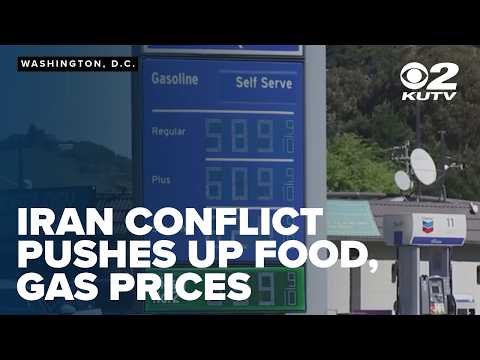
The April consumer price index, released May 12, showed headline inflation at 3.8% year-over-year, the highest since May 2023, driven by energy costs up 17.9% annually. Gasoline prices jumped 28.4% from a year ago. The Federal Reserve held rates at 3.50–3.75% at its April 29 meeting and signaled patience, waiting to see whether the oil shock and tariff-driven goods inflation prove temporary.
Why it matters
When P&G eats costs on detergent and diapers, it either raises prices, shrinks packages, or squeezes margins—all of which eventually reach shoppers.
Questions about this story
Free account needed to ask — your question is kept and asked for you right after sign-up. Answers are public.
No questions yet — be the first to ask.
Key Indicators
$150M
P&G Q4 cost hit
P&G's guidance for transportation and input-cost pressure tied to tariffs and oil.
10%
Global tariff rate
The baseline import tax the Trump administration applies to goods from nearly all countries.
3.8%
April CPI (year-over-year)
Headline inflation in April 2026, the highest since May 2023, driven by energy costs up 17.9% annually.
$300M
Colgate margin headwind
Colgate-Palmolive's estimate of higher raw-material and logistics costs in 2026, which flipped its gross margin guidance from expansion to decline.
$1.97
KC Q1 adjusted EPS
Kimberly-Clark's Q1 2026 earnings per share, beating the $1.92 analyst estimate despite $300M in tariff exposure.
7%
P&G Q3 sales growth
Net sales reached $21.24 billion, beating analyst expectations.
1st
P&G volume growth in a year
P&G unit volume grew year-over-year for the first time in four quarters.
12 events
Latest: May 1st, 2026 · 4 months ago
Showing 8 of 12
JK to step
Tap a bar to jump to that date
Jump to
May 2026
Colgate-Palmolive beats Q1, flips full-year gross margin guidance to decline
LatestEarnings
Colgate-Palmolive reported Q1 revenue of $5.32 billion and EPS of $0.97, both ahead of estimates, but reversed its full-year gross margin outlook from expansion to decline. The company cited $300 million in higher raw-material and logistics costs from crude oil and tariffs. It announced a productivity program targeting $200–$300 million in annualized savings, most of it expected in 2027 and 2028.
April 2026
Fed holds rates at 3.50–3.75%, watches tariff-driven goods inflation
Policy
The Federal Open Market Committee held the federal funds target range at 3.50% to 3.75%, taking a wait-and-see posture. Officials acknowledged that tariffs have driven goods inflation higher and said the pace of any future rate cuts depends on whether the Iran war oil shock and tariff effects prove transitory.
Kimberly-Clark reported net sales of $4.2 billion (+2.7%) and adjusted EPS of $1.97, beating the $1.92 analyst estimate. Operating profit rose 19.3% to $753 million. CEO Mike Hsu called tariffs 'an externality we don't think will continue to recur' and said the company will restructure parts of its supply chain to cut import exposure.
USPS imposes 8% fuel surcharge on parcel services
Policy
The US Postal Service activated a temporary 8% surcharge on Priority Mail, Priority Mail Express, and USPS Ground Advantage, citing surging transportation costs tied to the Iran war oil shock. The surcharge runs through January 17, 2027 and, stacked on top of a 7.8% general rate increase USPS implemented in January 2026, leaves high-volume shippers facing cumulative year-over-year cost increases of up to 16% on some services.
A widely syndicated Associated Press and BNN Bloomberg report documented how the Iran war's oil-price shock is passing through into petroleum-derived consumer products well beyond fuel—plastics, packaging, synthetic fabrics, and crayons—with at least one toy manufacturer reporting supplier quotes already 10–15% higher.
P&G beats Q3 estimates, flags $150M Q4 cost hit
Earnings
P&G reported $21.24B in net sales (up 7%) and $1.59 adjusted EPS, beat analyst expectations, and guided to a $150 million Q4 pressure from tariffs and oil-linked transportation costs. Shares rose more than 3%.
Fed study: tariffs explain entirety of core goods inflation since 2025
Analysis
A Federal Reserve Board research note found that tariffs enacted through November 2025 raised core goods Personal Consumption Expenditures prices by 3.1% through February 2026, explaining the entirety of excess goods inflation relative to pre-pandemic rates and adding 0.8 percentage points to overall core PCE. The study estimated pass-through is 'effectively complete' within seven months of implementation.
February 2026
Iran war disrupts oil shipping
Geopolitics
The 2026 Iran war drove crude prices and tanker insurance rates sharply higher, raising freight costs for US importers.
January 2026
P&G Q2 earnings flag freight costs
Earnings
With tensions in the Gulf rising, P&G told investors ocean and trucking rates were climbing and could weigh on coming quarters.
November 2025
Supreme Court upholds tariff authority
Legal
The Court ruled the administration had the statutory authority to maintain the baseline tariff, ending legal challenges and cementing the regime.
July 2025
P&G first flags tariff headwinds
Earnings
In its fiscal Q4 2025 report, P&G cited tariff-related input costs as a rising pressure but said pricing and productivity would largely offset them.
April 2025
Trump imposes 10% baseline global tariff
Policy
The administration announced a baseline 10% tariff on imports from nearly all trading partners, plus higher country-specific rates, citing emergency economic authority.
Scenarios
1
P&G and peers raise shelf prices, household spending tightens
Likely
Discussed by: CNBC analysts, Morgan Stanley consumer-goods desk
If oil prices stay elevated and tariff costs don't ease, P&G and competitors like Colgate-Palmolive and Unilever lift prices on core brands in fiscal 2027. Shoppers trade down to private label, volume growth stalls, and the broader consumer price index picks up a measurable contribution from household goods categories that had been stable for a year.
Discussed by: Wall Street Journal, Bernstein Research
Large consumer-goods firms eat most of the tariff and freight cost to protect volume and market share, as P&G is signaling now. Margins contract, earnings growth slows, and the sector derates even as shelf prices hold. Smaller competitors without P&G's scale get squeezed hardest and lose shelf space or get acquired.
3
Tariff exemptions or oil de-escalation relieves the pressure
Uncertain
Discussed by: Washington Post, industry trade groups
A narrow tariff-exemption process for non-substitutable consumer-goods inputs, combined with a ceasefire or shipping-lane stabilization in the Gulf, pulls freight and input costs back toward 2024 levels by late 2026. P&G's Q4 guidance turns out to be the peak, and the consumer-goods cost story fades from earnings calls.
Historical Context
3 moments from history that rhyme with this story — and how they unfolded.
1 of 3
October 1973 – March 1974
1973 oil embargo and consumer-goods inflation
OPEC's oil embargo quadrupled crude prices within months. Consumer-goods makers faced sharp increases in plastics, packaging, and shipping costs, with P&G and others raising prices on detergents, diapers, and paper goods.
Then
US consumer price inflation hit double digits by 1974, and household goods categories saw some of the steepest increases.
Now
The shock drove a decade of investment in packaging efficiency and supply-chain resilience, and established oil price as a direct line into supermarket shelf prices.
Why this matters now
The Iran war's oil shock is the clearest modern echo. Shipping rates and petroleum-derived inputs flow into household goods cost structures within one to two quarters, which is roughly the lag P&G's $150M guidance describes.
2 of 3
2018–2019
First-term Trump tariffs on Chinese goods (2018–2019)
The first Trump administration imposed tariffs of 10% to 25% on roughly $370 billion of Chinese imports. Consumer-goods companies including P&G, Colgate, and Stanley Black & Decker warned of cost pressure, with studies later attributing most of the cost to US importers and consumers rather than Chinese exporters.
Then
Retail prices on affected categories rose measurably; companies accelerated supplier diversification into Vietnam, Mexico, and India.
Now
The Biden administration kept most China tariffs in place, establishing tariffs as a durable bipartisan tool and normalizing the idea that US consumers absorb much of the cost.
Why this matters now
The 2018 round is the cleanest playbook for how P&G and peers respond to import taxes: pricing, productivity, sourcing shifts—and eventually, cost pass-through to shoppers. The difference now is that the 10% tariff is global, leaving fewer places to shift sourcing.
3 of 3
2021–2022
Pandemic supply-chain shock for consumer goods (2021–2022)
Container rates spiked more than tenfold on major routes; commodity and packaging costs rose sharply. P&G raised prices on roughly 9 of 10 product categories and still saw margins compress.
Then
Consumer-goods inflation ran hot through 2022, contributing to the sharpest CPI readings in four decades.
Now
Shoppers permanently shifted more spend to private-label brands; retailers gained pricing leverage over national brands they have not given back.
Why this matters now
Shows how the cost pass-through mechanism actually plays out: P&G raises prices, volume softens for a year or more, and private label takes share. The volume recovery P&G just reported came after two years of that dynamic—now a fresh cost wave is arriving.