
Pull to refresh
Logo
Fehmarnbelt tunnel's German portal finishes concrete work

Fehmarnbelt tunnel's German portal finishes concrete work

Built World

A 600-metre landfall at Puttgarden is ready to receive immersed tubes. Four of 89 elements are on the seabed, and road traffic is not expected before 2032.

Overview

Updated Nov 2

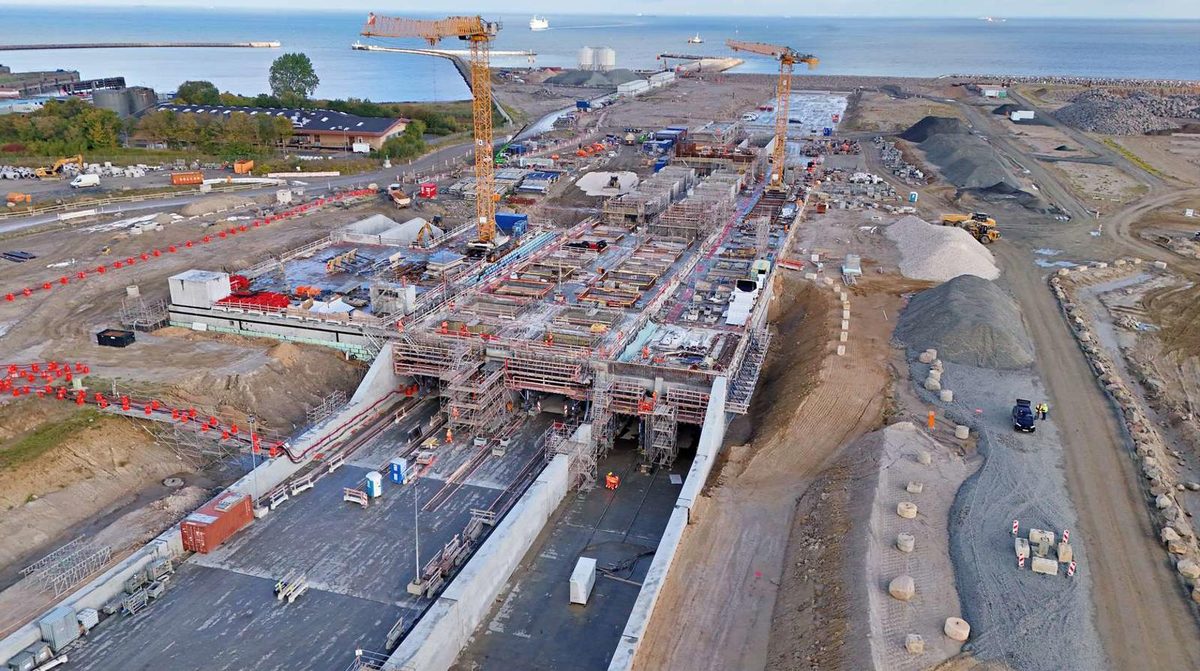
Crews at Puttgarden poured the last section of tunnel roof in October 2026, finishing the concrete shell of the German entrance to the Fehmarnbelt tunnel. The landfall runs 450 metres of cut-and-cover tunnel plus a 150-metre light transition zone, where road and rail traffic will move between daylight and the enclosed tube.

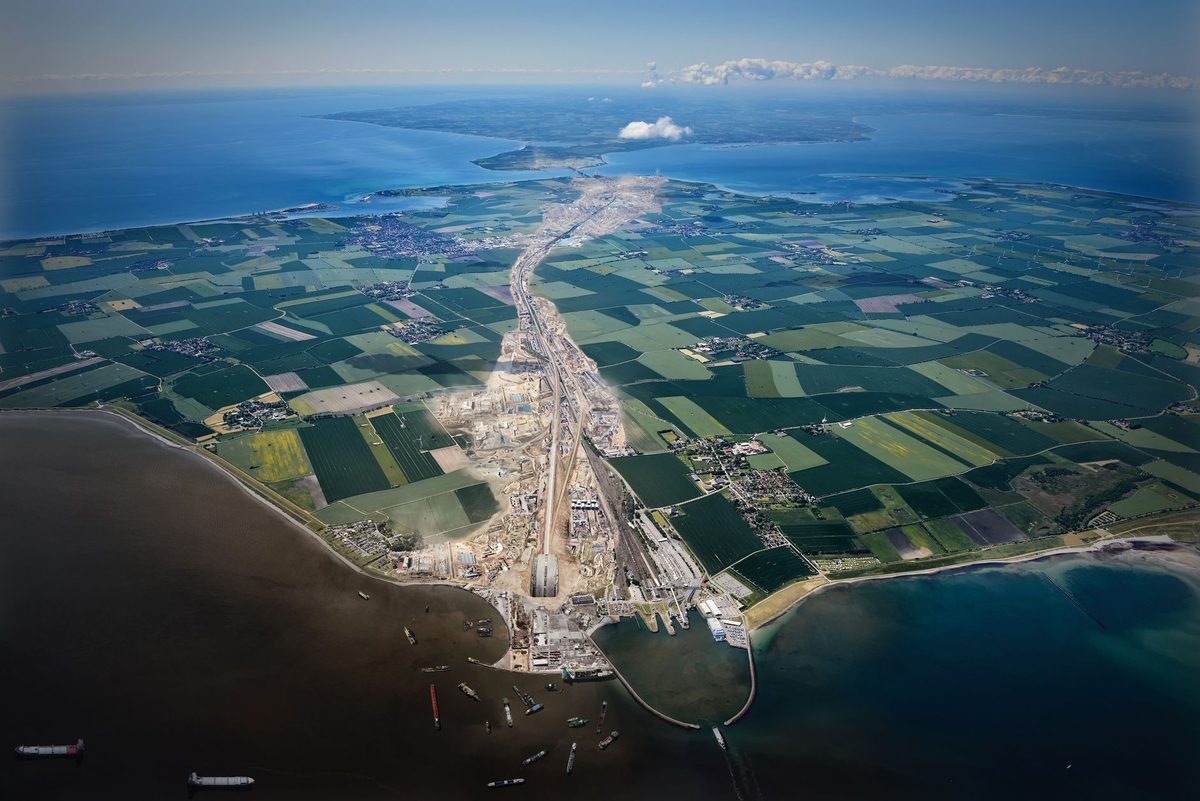
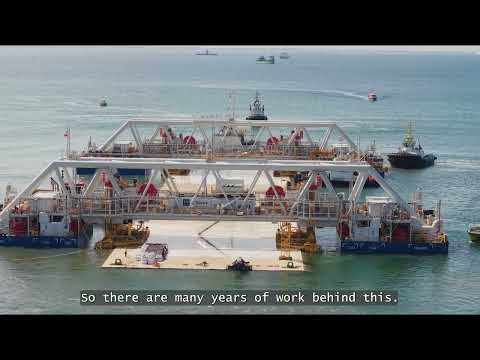
Out at sea, four of the tunnel's 89 concrete elements had been sunk and joined to their neighbours by the end of September 2026, putting about 900 metres on the Baltic seabed. Sund & Bælt has said road traffic could use the link in 2032 at the earliest, with rail following once German hinterland works are ready. The Fehmarnsund tunnel that would carry that traffic from Fehmarn to the mainland is now listed for completion by 2035.

Why it matters

When it opens, the tunnel cuts a 45-minute ferry crossing between Denmark and Germany to a roughly 10-minute drive or train ride.

Questions about this story

Free account needed to ask — your question is kept and asked for you right after sign-up. Answers are public.

No questions yet — be the first to ask.

Key Indicators

450 m
Cut-and-cover tunnel at German portal
Concrete box built in an open pit, then covered over.
150 m
Light transition zone
Graded section easing drivers and train crews between daylight and the tunnel.
600 m
Total land tunnel on the German side
Includes the portal building and approach ramps.
4
Immersed elements placed (of 89)
The fourth was lowered and connected on 28 September 2026.
900 m
Tunnel resting on the seabed
Roughly the first kilometre of the 18-kilometre link, as of the end of September 2026.
2032
Earliest road opening
Sund & Bælt's staged plan puts cars first and trains later; completion of the tunnel itself is scheduled for 2031.

Voices

Curated perspectives — historical figures and your fellow readers.

Sign up to generate historical perspectives on this story.

People Involved

Organizations Involved

Timeline

October 2021 November 2026

13 events Latest: November 2nd, 2026 · 1 week ago Showing 8 of 13
Tap a bar to jump to that date
  1. Structural completion reported

    Latest Construction

    Trade press confirms the milestone; fire-protection panel installation begins inside the tubes.

  2. German portal shell finished

    Construction

    Final roof segment cast, ending major concrete work at Puttgarden.

  3. Contractor reports data stolen

    Cyber

    FLC says data, including personal data, was taken in the October cyberattack; Danish police investigate.

  4. Work resumes after cyberattack

    Cyber

    Sund & Bælt says work is ramping up gradually; some IT systems remain affected.

  5. Cyberattack hits contractor FLC

    Cyber

    Earthworks and concreting continue despite the IT breach.

  6. Fehmarnsund link slips to 2035

    Policy

    The German transport ministry's Infraplan names 2035 as the latest commissioning date for the Fehmarnsund tunnel, which would connect Fehmarn to the mainland; Schleswig-Holstein criticised the delay.

  7. Fourth tunnel element connected

    Construction

    Femern confirms the fourth of 89 concrete elements was sunk and joined, leaving about 900 metres of tunnel on the seabed.

  8. First immersed element connected

    Construction

    The first sunken tube section is joined to a tunnel portal.

  9. Temporary dyke dismantled

    Construction

    The retaining dyke is removed; a permanent dyke becomes the new coastline.

  10. Front of excavation pit flooded

    Construction

    Bulkheads seal the first tubes and the seaward end is submerged.

  11. Puttgarden work harbour opens

    Construction

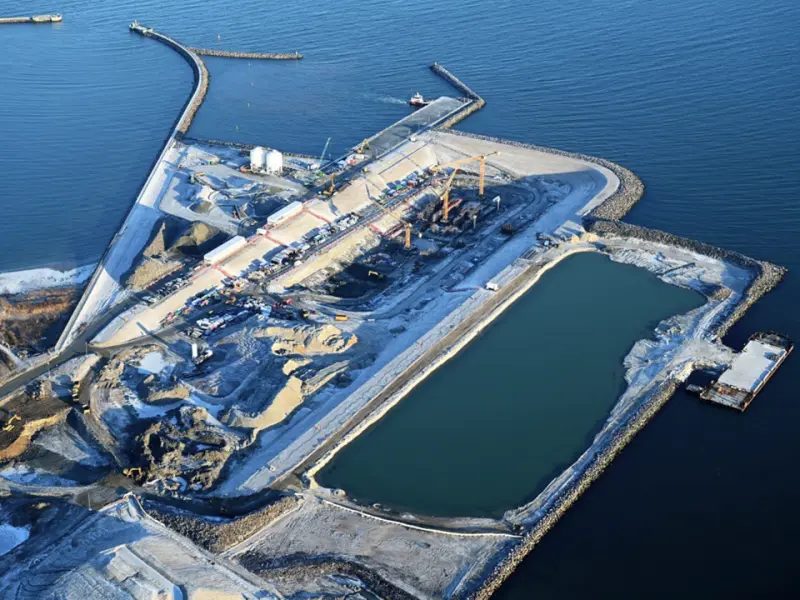
    Cargo vessels begin delivering most materials, avoiding lorry traffic across Fehmarn.

  12. Concrete work begins at German portal

    Construction

    Crews start casting tunnel segments in a pit up to 12 metres deep.

  13. Marine work starts off Fehmarn

    Construction

    Dredging and seabed preparation begin in the Fehmarnbelt strait.

Scenarios

1

First immersed tube joined at the German portal

Likely Resolves by End of 2027

Discussed by: Femern A/S project status updates

Femern says the seaward end of the German cut-and-cover section is positioned to receive the first sunken element. That requires more elements placed on the Danish side and the trench off the German coast dredged first. If the marine campaign holds pace, the link-up happens on the German side within a year.

2

Tunnel opens to traffic in 2031

Uncertain Resolves by End of 2031

Discussed by: German regional outlet Lageblatt, citing reports on the revised schedule

The official opening date has already slipped from 2029 to no earlier than 2031. Hitting even that depends on the Danish marine campaign and on Germany completing its rail connection, which has been slowed by planning and permitting. If both hold, the link takes road traffic and trains two years late but on the revised timetable.

3

German rail link misses the tunnel opening

Possible Resolves by End of 2031

Discussed by: Lageblatt, reporting that the German rail connection lags on planning and permitting

The tunnel itself can open before the German hinterland rail line is ready. If the electrified connection between Puttgarden and Lübeck slips, the tunnel opens with road capacity but without the freight and passenger rail traffic that underpins much of its economic case.

4

Road opens before the railway

Likely Resolves by End of 2033

Discussed by: Sund & Bælt, as reported by Solid

Sund & Bælt plans a staged start: the road link first, the railway once German hinterland works are finished. Danish agency reports cited by Solid put the earliest road opening in 2032, with no date set for trains.

Historical Context

3 moments from history that rhyme with this story — and how they unfolded.

1995-2000

Øresund Connection (1995-2000)

Denmark and Sweden built a combined bridge and immersed tunnel across the Øresund strait between Copenhagen and Malmö. The 16-kilometre link carried road and rail and was delivered by the same Danish state holding structure that now runs Femern A/S.

Then

The link opened in July 2000, months behind its original schedule.

Now

It turned the Øresund region into a single commuting labour market and became the template for the Fehmarnbelt project's financing and governance.

Why this matters now

Femern A/S sits under the same parent company and follows the Øresund playbook of a state-owned builder delivering a fixed link on a revised timetable.

1987-1994

Channel Tunnel (1987-1994)

A private Franco-British consortium bored a rail tunnel under the English Channel, linking Folkestone and Calais. Cost overruns and rolling-stock delays pushed the opening years past the original plan.

Then

The tunnel opened in May 1994, roughly a year late, with freight and passenger services ramping up gradually.

Now

It became the standard reference for how immersed and bored undersea links slip against political timetables.

Why this matters now

The Fehmarnbelt link has already moved from 2029 to 2031, the same pattern of schedule drift that marked the Channel Tunnel.

1988-1998

Great Belt Fixed Link (1988-1998)

Denmark built a bridge and tunnel across the Great Belt between Zealand and Funen, the largest construction project in Danish history at the time. Sund & Bælt was created to deliver and operate it.

Then

The rail link opened in 1997 and the road link in 1998.

Now

Sund & Bælt's model of a state-owned operator financing links through user charges became the basis for later Danish projects.

Why this matters now

Sund & Bælt's ownership of Femern A/S traces directly to this delivery model.

Sources

(10)