


Pull to refresh
Logo
Red Eléctrica starts laying underground cable for Spain-France interconnector

Red Eléctrica starts laying underground cable for Spain-France interconnector

Built World

Underground section from Gatika to Lemoiz closes the all-underground and submarine route, now 70% built

Overview

Updated Oct 30

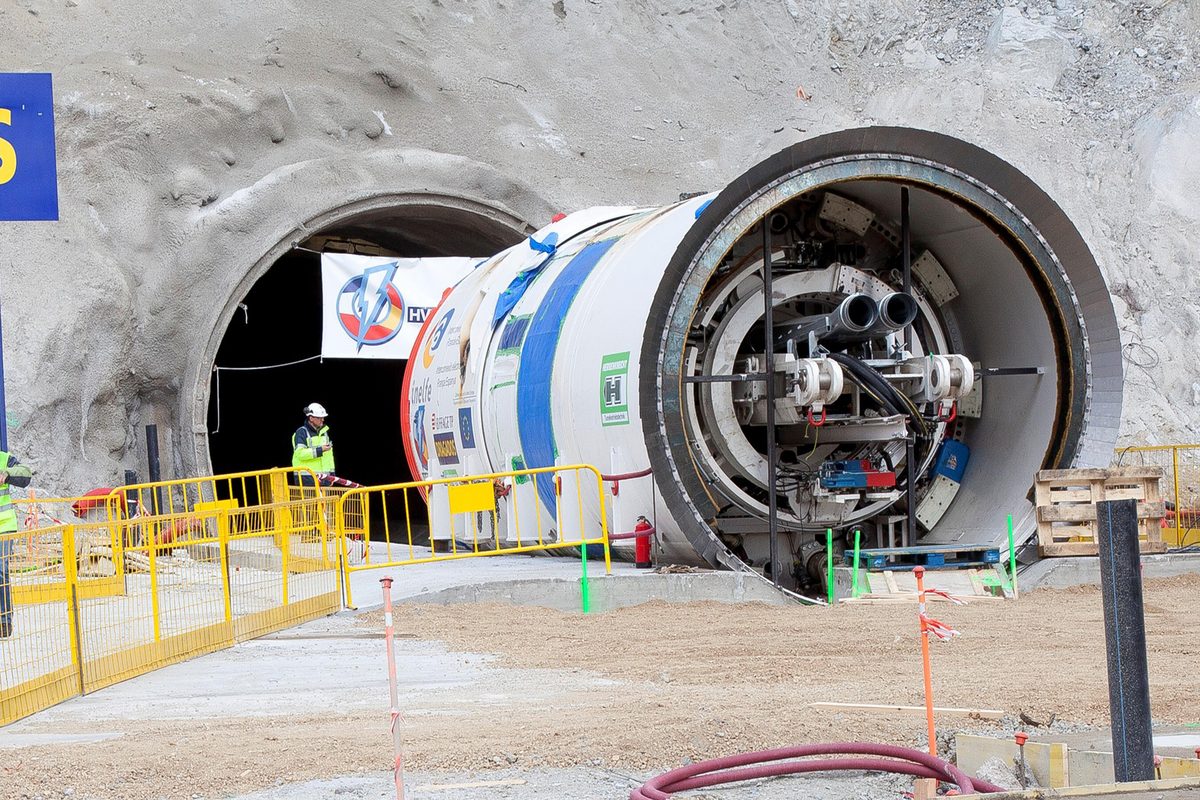
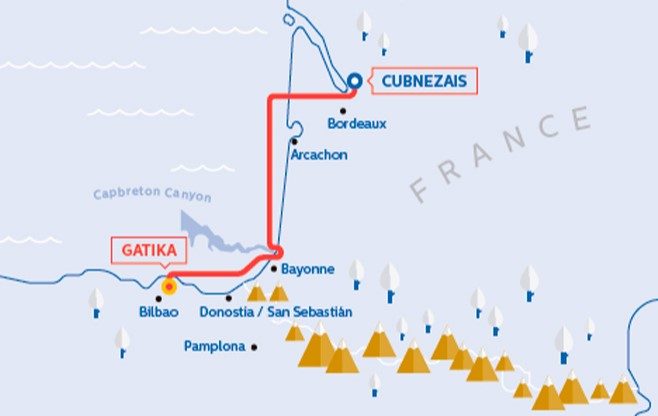
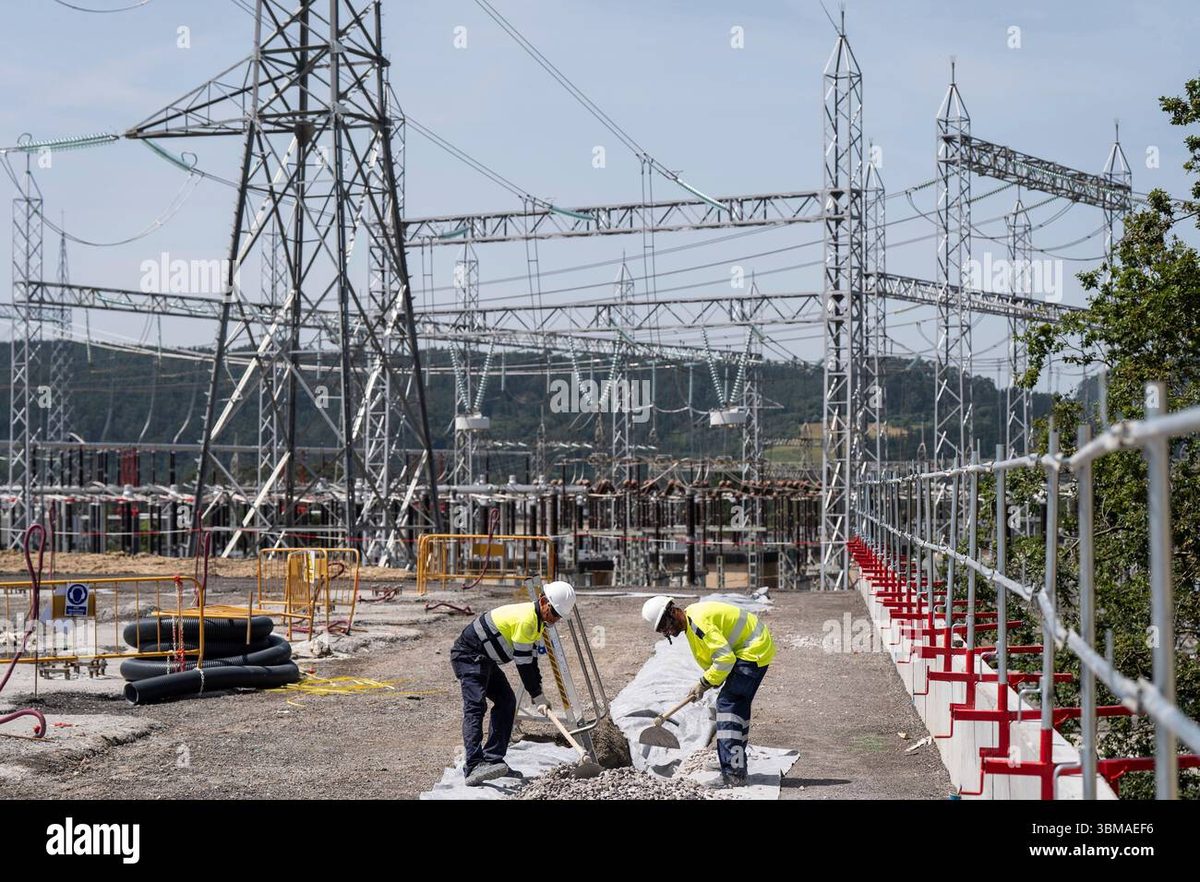
Red Eléctrica began laying the underground high-voltage direct current (HVDC) cable on October 29. It is the final land section of the Spain-France Bay of Biscay interconnection. The 13-kilometer cable runs from the Gatika converter station to Lemoiz, where it joins submarine cables already laid across the bay.

Red Eléctrica reported the project 70% complete in September, and a progress report on October 30 repeated the figure. The link will raise exchange capacity from 2,800 to 5,000 megawatts (MW). Cable laying off Gipuzkoa is next, scheduled from November 2026 to February 2027.

Why it matters

Once live, Spain-France exchange capacity nearly doubles to 5,000 MW, cutting blackout risk and letting more renewable power cross the border.

Questions about this story

Free account needed to ask — your question is kept and asked for you right after sign-up. Answers are public.

No questions yet — be the first to ask.

Key Indicators

5,000 MW
New Spain-France exchange capacity
Up from 2,800 MW today, an increase of 2,200 MW
70%
Project completion
Red Eléctrica reports the interconnection is 70% built
Not changed. The sources I checked give 65 km (first Bizkaia phase) and 50 km (second phase), which total 115 km for Bizkaia only. No source I found gives a total route length of 276 km.
Submarine cable length
Total underwater route across the Bay of Biscay
4
HVDC power cables
Plus fiber-optic cables running parallel for operations
€22,400
Fines for bentonite spills
Three Basque government sanctions against REE and contractor SEMI

Voices

Curated perspectives — historical figures and your fellow readers.

Sign up to generate historical perspectives on this story.

Organizations Involved

Timeline

June 2025 July 2027

9 events Latest: November 2026
Tap a bar to jump to that date
  1. French waters cable laying target

    Upcoming Construction

    All submarine cable laying in French waters scheduled by summer 2027

  2. Gipuzkoa submarine sections start

    Latest Construction

    Cable laying planned off Gipuzkoa coast through February 2027

  3. Underground cable laying begins

    Construction

    Red Eléctrica starts laying the 13 km underground cable from Gatika toward Lemoiz

  4. Project reaches 70% completion

    Construction

    Energy Secretary Joan Groizard and Redeia CEO Roberto García Merino visited the Gatika works, where Red Eléctrica said the project was 70% complete.

  5. All Bizkaia submarine cables laid

    Construction

    Prysmian Monna Lisa finishes 50 km second phase; 100% of Bizkaia section done

  6. First submarine cable phase completed

    Construction

    NKT cable-laying vessel Victoria installs first 65 km from Lemoiz

  7. Works resume after new protocols

    Regulatory

    New anti-spill protocols agreed with Basque Water Agency URA

  8. Basque government halts land works

    Regulatory

    Work stoppage ordered after bentonite detected in local waterways

  9. Land construction begins on underground route

    Construction

    Red Eléctrica begins trench-digging for the 13 km underground route in Biscay

Scenarios

1

Interconnector Live: 5,000 MW Flowing by Late 2028

Likely Resolves by End of 2028

Discussed by: Red Eléctrica and RTE, the project developers, target full operation by 2028

Cable laying finishes in French waters by summer 2027. Converter stations at Gatika and the French side come online through 2028. At 70% complete, the project delivers its promised 5,000 MW exchange capacity by the end of 2028.

2

New Environmental Stoppage Delays Completion Past 2029

Possible Resolves by Aug 31, 2027

Discussed by: Basque environmental groups and local municipalities, who have halted works three times

Another bentonite discharge or similar incident triggers a new Basque government work stoppage. New protocols agreed in June 2026 are meant to prevent it, but previous stoppages totaled over six months. A repeat could push full operation into 2029.

3

Canyon Terrain Delays Final Cable Laying Past Summer 2027

Possible Resolves by Q3 2027

Discussed by: Known geological difficulty; the French section routes 27 km underground specifically to bypass a submarine canyon

The Gipuzkoa sections, running November 2026 through February 2027, meet difficult canyon terrain. The existing canyon bypass in France signals the risk was recognized early. Delays would push final cable completion past summer 2027.

Historical Context

2 moments from history that rhyme with this story — and how they unfolded.

2000s-2026

Spain's 'energy island' era (2000s-2026)

Spain has long had the lowest electricity interconnection capacity with the rest of Europe among major EU economies, far below the EU's 10% interconnection target. Its only links to France are land crossings through the Pyrenees, together carrying about 2,800 MW.

Then

The shortfall limited Spain's ability to export surplus renewable power and raised reliance on domestic generation during peaks.

Now

The EU designated a Bay of Biscay link a Project of Common Interest, unlocking CINEA co-financing and European Investment Bank backing.

Why this matters now

This interconnection is the direct answer to that shortfall, nearly doubling Spain-France exchange capacity and adding an undersea corridor that avoids mountain terrain entirely.

Existing infrastructure

Pyrenees land crossings: the existing France-Spain links

The only Spain-France interconnections that currently exist cross the Pyrenees by land. Together they carry about 2,800 MW — the capacity this project will nearly double.

Then

Capacity limits on those lines constrain cross-border electricity trade between the two countries.

Now

They remain Spain's only grid connection to Europe, a dependence the Bay of Biscay project is meant to reduce.

Why this matters now

The new link adds a second, independent corridor and is the first Spain-France route built entirely underground and submarine.

Sources

(13)