

Pull to refresh
Logo
Chip selloff sends Nasdaq into correction after midterm elections

Chip selloff sends Nasdaq into correction after midterm elections

Money Moves

Qualcomm's soft forecast and a Democratic sweep raised doubts about AI data-center spending, and Nvidia's November 17 report is the next test

Overview

Updated 3 days ago

The Philadelphia Semiconductor Index fell 12.25% on November 5, 2026, to 9,011.14, its worst day since March 2020. The drop pushed the Nasdaq Composite into a correction, closing at 24,315.00, about 12% below the record it set on October 6.

Two things landed at once: Qualcomm gave a soft profit forecast, and Democrats swept both chambers of Congress, which investors read as a brake on AI data-center construction. Nvidia fell another 2.6% on November 6 as disappointing Intel and Amazon results added to the worry. Nvidia reports quarterly results on November 17.

Why it matters

If AI construction slows, chip stocks held in many retirement accounts fall further and the data-center building boom could stall.

Questions about this story

Free account needed to ask — your question is kept and asked for you right after sign-up. Answers are public.

No questions yet — be the first to ask.

Key Indicators

12.25%
Philadelphia Semiconductor Index one-day drop
Worst single day since March 2020.
9,011.14
Philadelphia Semiconductor Index close
Down sharply from its October high.
24,315.00
Nasdaq Composite close
About 12% below the October 6 record of 27,599.89, a correction.
9.5%
Qualcomm one-day drop
After a soft profit forecast and missed smartphone chip sales.
$450B
Nvidia market value lost
Shares fell more than 9% on November 5, then another 2.6% on November 6.
$1T
Magnificent 7 market value lost
Combined drop on November 5.
40 of 41
Data-center ballot measures rejected
Local votes across 10 states on November 3.

Voices

Curated perspectives — historical figures and your fellow readers.

Mark Twain

Mark Twain

(1835-1910) · Gilded Age · wit

Fictional AI pastiche — not real quote.

"Well, it appears the country has elected a new Congress and the market has promptly taken a chill—which only proves that the only thing more predictable than a politician's promise is a speculator's panic. A man may build his castle on silicon, but he forgets that even the mightiest chip can be knocked off the board by a whisper from Washington."

Ayn Rand

Ayn Rand

(1905-1982) · Cold War · philosophy

Fictional AI pastiche — not real quote.

"When the looters’ state expands, the creators’ capital retreats. A market that punishes Nvidia for the triumph of politicians is not a correction—it is a confession."

Sign up to generate historical perspectives on this story.

People Involved

Organizations Involved

Timeline

October 2026 November 2026

6 events Latest: 5 days ago
Tap a bar to jump to that date
  1. Nvidia falls another 2.6% as Intel and Amazon results deepen AI spending worries

    Latest Market

    The drop came in a broader technology selloff, according to Reuters. Nvidia was also reported to be discussing credit guarantees to back debt financing for a data center Anthropic intends to use.

  2. Chip index falls 12.25%; Nasdaq enters correction

    Market

    The Philadelphia Semiconductor Index posts its worst day since March 2020. The Nasdaq closes more than 10% below its record.

  3. Qualcomm issues soft forecast as memory shortage limits supply

    Earnings

    Qualcomm's smartphone chip sales miss estimates and its guidance disappoints.

  4. Meta president says data-center construction will be 'harder'

    Statement

    Dina Powell McCormick tells a Wall Street Journal conference the political climate has changed.

  5. Democrats sweep Congress; voters reject data-center measures

    Election

    Democrats win both chambers and key governor races, including Texas. Voters rejected data-center projects in 40 of 41 local ballots.

  6. Nasdaq closes at record 27,599.89

    Market

    The Nasdaq Composite sets its record close, the high-water mark for the slide that follows.

Scenarios

1

Hyperscalers cut 2027 data-center spending plans

Possible Resolves by Feb 15, 2027

Discussed by: Analysts cited by CNBC and Reuters, including Peter Boockvar and Richard Clode

If Meta, Alphabet, Amazon or Microsoft trim capital-spending guidance in their next quarterly reports, the chip selloff extends. The trigger is a company filing or earnings call that lowers 2027 infrastructure budgets.

2

Nasdaq falls into a bear market

Possible Resolves by Q2 2027

Discussed by: Market strategists including Sameer Samana of Wells Fargo Investment Institute

A bear market means a 20% fall from the record. The Nasdaq would need to close below roughly 22,080, down from 27,599.89 on October 6.

3

More states restrict data-center construction

Likely Resolves by Nov 30, 2027

Discussed by: Ballotpedia and CNBC election analysis

Voters rejected data-center measures in 40 of 41 local ballots on November 3. If state legislatures follow, the buildout faces more delays.

4

Nvidia's November 17 results miss guidance

Possible Resolves by Nov 18, 2026

Discussed by: Steve Weiss of Short Hills Capital Partners, who has sold most of his Nvidia stake, and analysts cited by Investing.com

Nvidia guided to revenue of roughly $108 billion for the quarter ended October 25. Reported revenue below that figure, or an outlook that falls short of expectations, would support the argument that data-center orders are peaking and extend the chip selloff.

Historical Context

2 moments from history that rhyme with this story — and how they unfolded.

March 2000-October 2002

Dot-com crash (2000-2002)

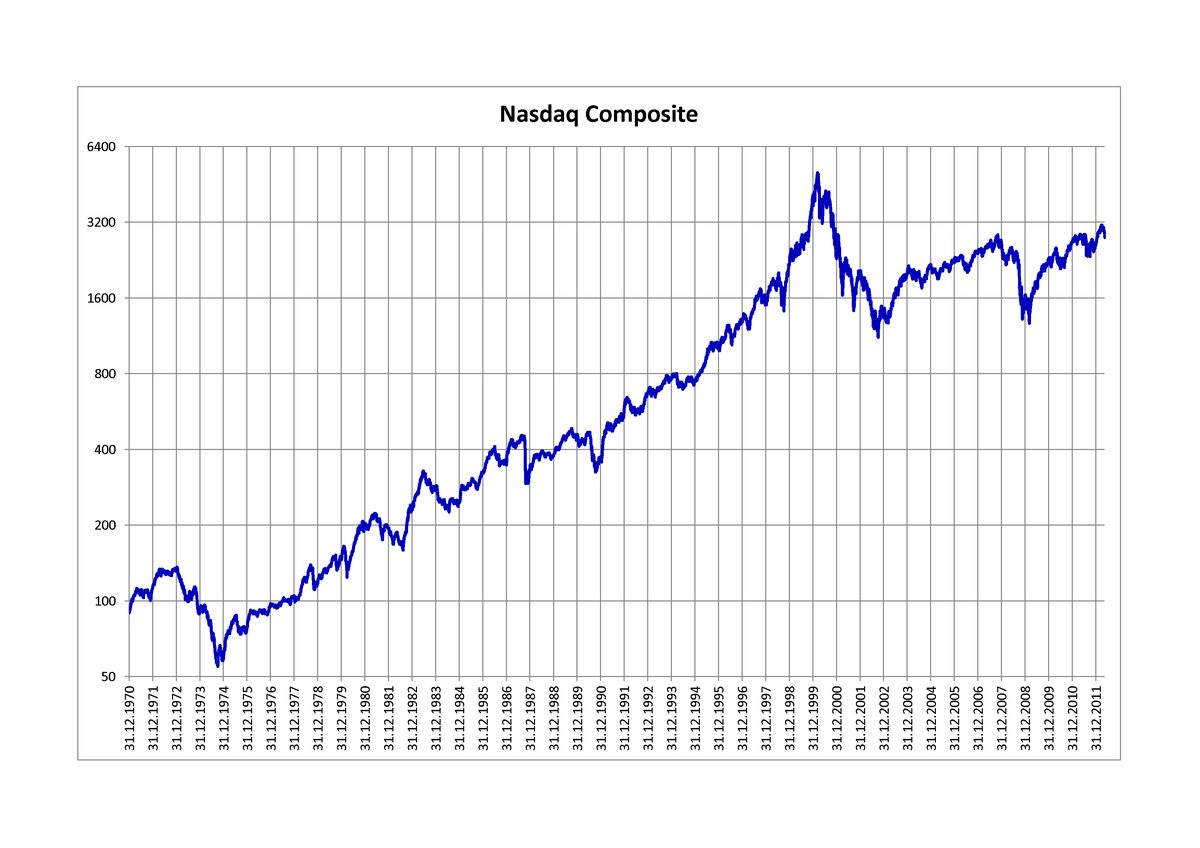
The Nasdaq peaked at 5,048.62 on March 10, 2000, driven by internet and telecom spending. When capital dried up, the index fell about 78% to roughly 1,114 by October 2002.

Then

Telecom equipment makers like Lucent and Nortel collapsed, and thousands of startups shut.

Now

The buildout left fiber capacity that took years to use. The Nasdaq took 15 years to regain its 2000 high.

Why this matters now

Today's AI data-center spending mirrors the telecom buildout: heavy capital, uncertain revenue, and a market that punishes any sign of a slowdown.

October-December 2018

Fourth-quarter 2018 selloff

The Federal Reserve raised interest rates and signaled more tightening. The S&P 500 fell about 14% in the fourth quarter, and the Nasdaq entered a correction.

Then

The Fed reversed course in early 2019 and stocks rallied.

Now

The episode showed how fast a rate-driven selloff can reverse when policy shifts.

Why this matters now

Rising rates and tighter financing are part of the current backdrop, and 2018 shows corrections can end quickly if the Fed changes course.

Sources

(9)