
Pull to refresh
Logo
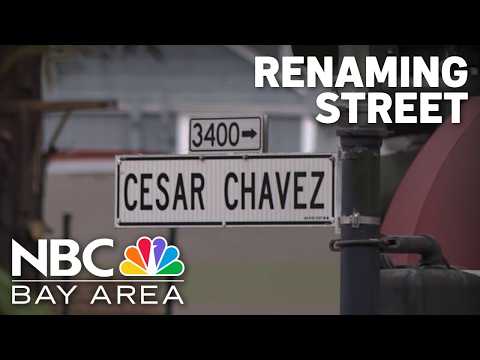
San Francisco supervisors vote to rename Cesar Chavez Street

San Francisco supervisors vote to rename Cesar Chavez Street

Rule Changes San Francisco, CA local

Board advances 'Las Campesinas' as replacement for the 3.2-mile Mission District artery

Overview

Updated 3 hours ago

San Francisco's Board of Supervisors voted on Nov. 11 to rename Cesar Chavez Street, the 3.2-mile Mission District artery that has carried the labor leader's name since 1995. The vote follows a New York Times investigation published in April that detailed sexual abuse allegations against Chavez, including by United Farm Workers co-founder Dolores Huerta.

The ordinance advances Las Campesinas, Spanish for female farmworkers, over the other finalist, Sí Se Puede. The measure now goes to Mayor Daniel Lurie before the city can replace signs, maps, and addresses. The fight echoes 1995, when opponents tried and failed to revert the street to Army Street.

Why it matters

The vote turns a sexual-abuse scandal into a concrete municipal change: a 3.2-mile street, its addresses, and its signs will carry a new name.

Last Monday's email for San Francisco, CA

Sent Nov 9. It carried:

Get next Monday's: one short email a week. Free. Unsubscribe in one click.

Questions about this story

Free account needed to ask — your question is kept and asked for you right after sign-up. Answers are public.

No questions yet — be the first to ask.

Key Indicators

3.2 miles
Length of Cesar Chavez Street
The Mission District artery runs from the Bayshore to Noe Valley.
$107,000
Estimated sign-replacement cost
The working group estimated the city's cost to replace signs and sidewalk etchings.
27
Working group members
Mayor Lurie's working group included residents, labor leaders, and city officials.
150+
Signatures on Mission business petition
A petition raised concerns about spelling and emergency communication for the new name.

Voices

Curated perspectives — historical figures and your fellow readers.

Sign up to generate historical perspectives on this story.

People Involved

Organizations Involved

Timeline

March 1995 November 2026

6 events Latest: Today
Tap a bar to jump to that date
  1. Board votes to rename street

    Today Vote

    Board of Supervisors votes to rename Cesar Chavez Street, sending ordinance to the mayor.

  2. Renaming ordinance introduced

    Legislation

    Supervisor Jackie Fielder introduces ordinance to rename the street Las Campesinas.

  3. Finalist names unveiled

    Public meeting

    Working group presents Sí Se Puede and Las Campesinas as possible replacements.

  4. Repeal effort fails

    Election

    Proposition O to revert the name to Army Street fails by nearly 10 points.

  5. Army Street becomes Cesar Chavez Street

    Background

    San Francisco renames Army Street to Cesar Chavez Street on the labor leader's birthday.

Scenarios

1

Mayor Lurie signs Las Campesinas renaming by December

Likely Resolves by End of 2026

Discussed by: KQED, citing Mayor's Office representative Moisés García

The Board has approved the ordinance. Mayor Daniel Lurie can sign it into law, and city officials have said a new name could be finalized as soon as December. If he signs, Public Works would begin replacing signs, sidewalk etchings, and mapping records.

2

Las Campesinas signs installed across the Mission by end of 2027

Possible Resolves by End of 2027

Discussed by: KQED and Mission Local, citing city implementation plans

After mayoral signature, the Department of Public Works would order and install new signs along the 3.2-mile street. The department has said it will coordinate with the U.S. Postal Service and mapping services. The working group estimated the sign work at $107,000.

3

Referendum or lawsuit forces a ballot fight over the street name

Possible Resolves by Q2 2027

Discussed by: NBC Bay Area, which reported a Mission business petition with more than 150 signatures

Opponents could try to block the name through a referendum petition or court challenge. In 1995, opponents put Proposition O on the ballot to revert Army Street to Cesar Chavez Street and lost by nearly 10 points. Any new petition or lawsuit would delay implementation and put the name before voters or a judge.

Historical Context

3 moments from history that rhyme with this story — and how they unfolded.

March-November 1995

Army Street to Cesar Chavez Street (1995)

On Cesar Chavez's birthday in 1995, San Francisco replaced Army Street signs with his name along the 3.2-mile Mission District route. Opponents put Proposition O on the November ballot to revert the name to Army Street.

Then

Proposition O failed by nearly 10 points.

Now

The Chavez name stayed on the street for 31 years, until the 2026 sexual-abuse allegations prompted a new renaming.

Why this matters now

The current fight echoes 1995: a street name became a proxy for how the city treats Latino history and public memory.

2014

Lech Walesa Way to Dr. Tom Waddell Place (2014)

San Francisco renamed Lech Walesa Way to Dr. Tom Waddell Place after the former Polish solidarity leader made deeply homophobic remarks. Waddell founded the Gay Games.

Then

The smaller street took Waddell's name.

Now

It showed the city would strip an honor after a namesake's remarks became unacceptable.

Why this matters now

It is a recent precedent for renaming a San Francisco street after a namesake's conduct, though Cesar Chavez Street is far larger and more prominent.

2018

Phelan Avenue to Frida Kahlo Way (2018)

San Francisco renamed Phelan Avenue to Frida Kahlo Way, rebuking former mayor and California senator James Phelan. The street had actually been named for his father, also James Phelan.

Then

The street took the name of artist Frida Kahlo.

Now

The change showed the city would revisit honors tied to contested historical figures.

Why this matters now

It shows San Francisco has used street renamings to address historical figures, but also that the target's identity can be tangled.

Sources

(5)