

Pull to refresh
Logo
Historic San Francisco office building sells at a big discount

Historic San Francisco office building sells at a big discount

Money Moves San Francisco, CA local

1936 landmark at 417 Montgomery St. sold for $25 million, about half its assessed value, as AI firms drive a slow market recovery

September 4th, 2026: Sale reported by SF Standard

Overview

Updated 6 days ago

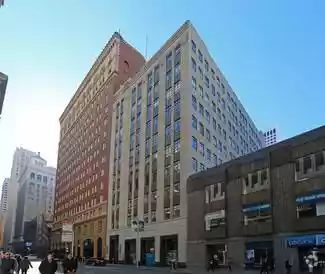
A historic Financial District office building at 417 Montgomery St., built in 1936, sold for roughly $25 million at the end of August. That is 17% below its 2006 sale price of $30 million and less than half its assessed market value of about $54 million.

The buyers, Kenson Ventures and Wheatley Properties, plan a six-month renovation and hope to fill the mostly vacant building with tech, architecture, and AI tenants. Their bet is that San Francisco's office market, hit hard by pandemic lockdowns and remote work, is finally turning around.

Why it matters

The sale shows how far San Francisco office values have fallen, and whether AI-powered demand can fill vacant space in the city's core.

Questions about this story

Free account needed to ask — your question is kept and asked for you right after sign-up. Answers are public.

No questions yet — be the first to ask.

Key Indicators

$25 million
Sale price of 417 Montgomery St.
Closed at end of August 2026, per city records.
$54 million
Assessed market value before sale
The building sold for 54% below this figure.
30%
San Francisco office vacancy rate
Down from last year but still higher than other major U.S. cities.

Voices

Curated perspectives — historical figures and your fellow readers.

Ever wondered what historical figures would say about today's headlines?

Sign up to generate historical perspectives on this story.

People Involved

Organizations Involved

Timeline

January 1936 September 2026

5 events Latest: September 4th, 2026 · 1 week ago
Tap a bar to jump to that date
  1. Sale reported by SF Standard

    Latest News

    Historic downtown office building sold at a big discount; new owners plan renovation for AI tenants.

  2. 417 Montgomery St. sells for $25 million

    Transaction

    Kenson Ventures and Wheatley Properties close on the building, paying 54% below assessed value.

  3. Pandemic hits San Francisco office market

    Market Shift

    Remote work and lockdowns push vacancy rates above 30%.

  4. Building sold for $30 million

    Transaction

    Previous sale price before the pandemic-era downturn.

  5. 417 Montgomery St. completed

    Milestone

    The Lurie Building opens as the first major office project after the Great Depression.

Scenarios

1

417 Montgomery becomes a tech hub within a year

Likely Resolves by Sep 4, 2027

Discussed by: John Fong, Kenson Ventures partner

The six-month renovation stays on budget and AI and architecture firms lease most of the 10 floors. Fong's prediction of a full building within a year comes true, landing a mix of venture capitalists and tech startups.

2

Renovation stalls, building stays mostly empty

Possible Resolves by End of 2027

Discussed by: Market analysts skeptical of office demand

Construction overruns or weak leasing interest leave the building below 50% occupancy. The marketing campaign fails to attract tenants despite AI growth, and the structure remains a landmark without a purpose.

3

Sale marks bottom; more steep-discount deals follow

Possible Resolves by Q2 2027

Discussed by: SF Standard, Cushman & Wakefield

The 417 Montgomery sale is seen as a turning point. Other owners accept discounts, sparking a wave of renovation projects that eventually bring vacancy below 20% as AI firms expand.

Historical Context

2 moments from history that rhyme with this story — and how they unfolded.

1935-1940

Great Depression Recovery (1930s)

After the 1929 stock market crash and ensuing depression, San Francisco office construction ground to a halt. The Lurie Building at 417 Montgomery broke ground in 1935 as one of the first major private projects to restart.

Then

Construction provided jobs and signaled renewed confidence in the city's commercial core.

Now

The building became a fixture in the Financial District, housing tenants for decades.

Why this matters now

This building survived the worst economic downturn in memory; the current sale echoes that resilience as the city emerges from pandemic-era remote work.

2008-2010

2008 Financial Crisis Office Sales

After the 2008 crash, distressed office buildings across the U.S. sold at 30-50% discounts from peak valuations. In San Francisco, many properties changed hands at steep cuts, but the market recovered within three years.

Then

Bargain-priced buildings produced high returns for investors who bought during the downturn.

Now

San Francisco's tech boom eventually pushed vacancy rates to record lows by 2015.

Why this matters now

The current sale at 54% below assessed value mirrors the post-2008 pattern, and suggests a similar rebound could be underway.

Sources

(1)