
Pull to refresh
Logo
Utah Museum of Contemporary Art to leave 'invisible' downtown site for new building

Utah Museum of Contemporary Art to leave 'invisible' downtown site for new building

Built World Salt Lake City, UT local

A relocation plan ends the museum's 47-year stay in a below-grade concrete plaza and ties it to Salt Lake City's downtown makeover.

Overview

Updated Oct 27

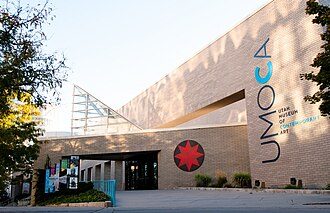
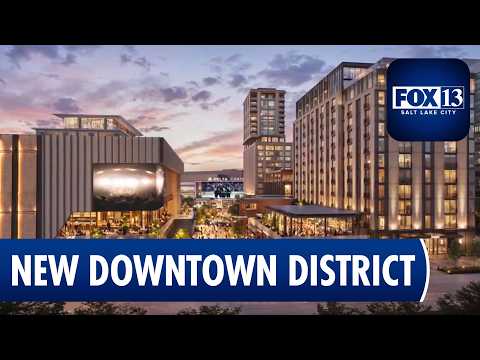
The Utah Museum of Contemporary Art will leave its below-street home, which it has occupied since 1979, and move north near Abravanel Hall. The new building will serve as an entryway to Salt Lake City's planned sports, entertainment and convention district. The current building will be torn down for an east-west connection through the district.

The museum closes its current building July 10, 2027, after a final exhibition titled 'So Long.' Artists who have shown there since 1979 are invited to donate work, which will be lost when the building is razed. Construction on the new building runs into 2031, and a temporary site has not been announced. A draft development agreement for the district, released Oct. 27, is open for public comment through Nov. 30. The Planning Commission holds a hearing on it Dec. 9.

Why it matters

UMOCA's future as a downtown anchor now depends on a building that won't open until 2031, with its temporary home still unannounced.

Last Monday's email for Salt Lake City, UT

Sent Nov 9. It carried:

Get next Monday's: one short email a week. Free. Unsubscribe in one click.

Questions about this story

Free account needed to ask — your question is kept and asked for you right after sign-up. Answers are public.

No questions yet — be the first to ask.

Key Indicators

Since 1931
UMOCA's operating history
Founded as the Art Barn in 1931, the museum has operated for over 90 years in various forms.
2031
Target for the new building
Construction is expected to run into 2031, the museum's centennial year. No cost figure has been published.
Allied Works
Architect
The Portland, Oregon firm is designing the replacement building, with early renderings showing a Sun Tunnels-inspired facade.

Voices

Curated perspectives — historical figures and your fellow readers.

Sign up to generate historical perspectives on this story.

People Involved

Organizations Involved

Timeline

1931 July 2027

6 events Latest: October 22nd, 2026 · 3 weeks ago
Tap a bar to jump to that date
  1. Current UMOCA building scheduled to close

    Upcoming Scheduled

    The museum's home at 20 South West Temple is set to shut on this date ahead of demolition, with programming moving to an unannounced temporary space.

  2. UMOCA says its building will be demolished for a new downtown museum

    Latest Announcement

    At a virtual community briefing, museum and county leaders said the current below-street building will come down for an east-west connection through the new district. A replacement is planned near Abravanel Hall, designed by Portland firm Allied Works, with the museum closing July 10, 2027 and construction running into 2031.

  3. Museum announces 'So Long' farewell exhibition

    Announcement

    UMOCA said it will host a final exhibition before the current building closes. Artists who have shown there since 1979 will be invited to donate work, which will be demolished with the building.

  4. Salt Lake Art Museum opens

    Milestone

    A new museum dedicated to Utah artists opens in the historic B'nai Israel Temple, the first new art museum in the city in over 40 years.

  5. Renamed Utah Museum of Contemporary Art

    Rebranding

    The Salt Lake Art Center is rebranded as the Utah Museum of Contemporary Art.

  6. UMOCA founded as the Art Barn

    Inception

    The institution that would become UMOCA is established, beginning over 90 years of operations in Salt Lake City.

Scenarios

1

UMOCA unveils a prominent new home in the downtown core

Likely Resolves by End of 2027

Discussed by: Salt Lake Tribune readers and downtown development observers

This scenario sees UMOCA securing a prime site on Main Street or nearby, with a design that emphasizes street-level visibility and public access. The move would be integrated with the city's overall downtown master plan, potentially using public funding or major private donations.

2

Funding gaps and delays stall the project

Possible Resolves by Q2 2028

Discussed by: Local arts and culture reporters

In this scenario, the museum struggles to secure the necessary capital, which could be in the tens of millions of dollars. The project faces delays due to fundraising challenges, internal disagreements over the location, or shifts in city priorities, leaving UMOCA in its current space for the foreseeable future.

3

UMOCA's new building is scrapped or merges

Unlikely Resolves by Oct 22, 2027

Discussed by: Utah arts bloggers and 15 Bytes, Artists of Utah

This unlikely scenario sees the plan collapse entirely. Facing financial pressure and the emergence of the new Salt Lake Art Museum, UMOCA could decide to not proceed, perhaps merging with another institution to form a larger arts organization.

4

New UMOCA building opens in 2031 for the museum's centennial

Likely Resolves by End of 2031

Discussed by: Salt Lake County and UMOCA briefing statements

The museum says construction will stretch into 2031 and that it will mark its centennial in the new home, while district backers aim to finish the wider downtown project before the 2034 Winter Olympics.

Historical Context

3 moments from history that rhyme with this story — and how they unfolded.

1937-1941

Rise of the National Gallery of Art (1937)

The National Gallery of Art in Washington, D.C., was built as a prominent, monumental structure on the National Mall, funded by industrialist Andrew Mellon and designed by architect John Russell Pope.

Then

The gallery became an immediate anchor for the city's cultural landscape, attracting millions of visitors.

Now

It set a precedent for how a purpose-built, landmark museum can elevate an institution's status and public profile. It drew a stark contrast to the often-cramped, repurposed buildings many museums operated in.

Why this matters now

UMOCA's move from an 'invisible' space to a new, purpose-built structure echoes this classic playbook: a purpose-built, prominent building can define a museum's identity. Like the National Gallery, UMOCA is betting the 'edifice complex' can turn public perception around.

1990-2000

Adaptive Reuse of the Tate Modern (2000)

The Tate Modern was created in London by converting a disused power station—the Bankside Power Station—into a major modern art museum designed by architects Herzog & de Meuron.

Then

Tate Modern immediately became one of London's most-visited attractions, revitalizing a previously neglected industrial area along the Thames.

Now

The project became a global case study for adaptive reuse, demonstrating that museums can transform not just themselves but their entire neighborhood.

Why this matters now

This is a contrast to UMOCA's plan. While Tate Modern stayed in its landmark location, UMOCA is doing the opposite—leaving its landmarked but flawed space. The Tate's success, however, underscores the same principle: a museum's physical home is crucial to its success, which is precisely why UMOCA is seeking a new one.

2006-2014

The High Line Effect (2009)

The High Line, a 1.45-mile-long elevated freight rail line in New York City, was transformed into a public park and cultural destination.

Then

The park attracted millions of visitors and catalyzed a wave of real estate development and cultural investment along its route.

Now

The 'High Line effect' became a byword for how cultural infrastructure and green space can drive urban development, drawing artists and galleries to neighborhoods.

Why this matters now

Salt Lake City's downtown 'makeover' echoes the goals of the High Line project. UMOCA's move is part of this larger ambition, aiming to anchor its new cultural investments and bring more foot traffic to the downtown core, much like the High Line did for New York's West Side.

Sources

(10)