
Pull to refresh
Logo
Joyful African Foods licensed to open on Saint Paul's White Bear Avenue

Joyful African Foods licensed to open on Saint Paul's White Bear Avenue

Built World Saint Paul, MN local

Minnesota food safety record clears the way for a Liberian and Nigerian kitchen

2 days ago: Food handler license record appears

Overview

Updated 2 days ago

Joyful African Foods now holds a Minnesota food handler retail license for 1632 White Bear Avenue North in Saint Paul. The state's online license list, first read September 10, 2026, is the public record confirming the West African restaurant is cleared to operate.

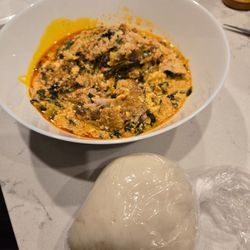
A license doesn't mean the doors are open. But the posted menu shows the plan: Liberian dry rice, Nigerian egusi soup with pounded yam, jolof rice, and okra stew, served for dine-in and online orders on the city's East Side.

Why it matters

A newly licensed West African kitchen brings Liberian and Nigerian cooking to Saint Paul's East Side, expanding the city's African dining scene.

Questions about this story

Free account needed to ask — your question is kept and asked for you right after sign-up. Answers are public.

No questions yet — be the first to ask.

Key Indicators

1
Food handler retail license on record
Minnesota Department of Agriculture lists Joyful African Foods for 1632 White Bear Ave N.
2
African cuisines on the posted menu
Dishes draw from Liberia and Nigeria, from dry rice to egusi soup.

Voices

Curated perspectives — historical figures and your fellow readers.

Ever wondered what historical figures would say about today's headlines?

Sign up to generate historical perspectives on this story.

Organizations Involved

Timeline

1 event Latest: 2 days ago
  1. Food handler license record appears

    Latest Licensing

    Joyful African Foods appears on the Minnesota Department of Agriculture's license list for 1632 White Bear Ave N, clearing it to operate.

Scenarios

1

Joyful African Foods opens on White Bear Avenue

Likely Resolves by Q1 2027

Discussed by: Local food writers who track new Twin Cities restaurants

The restaurant converts its license into a working kitchen and begins serving its Liberian and Nigerian menu to dine-in and online customers. The most common path for a newly licensed eatery is a soft opening within a few months.

2

Licensed but quiet: opening stalls on the East Side

Possible Resolves by Q2 2027

Discussed by: Baseline risk for any newly licensed restaurant

Holding a license doesn't guarantee a launch. Build-out delays, staffing shortages, or financing issues can keep the doors closed for months after a license record appears.

3

Food writers take notice of the new West African kitchen

Uncertain Resolves by End of 2027

Discussed by: Heavy Table, Sahan Journal, MPR food coverage

A distinctive Liberian-Nigerian menu in a neighborhood with a growing African diaspora could earn a review or feature, drawing customers from beyond the East Side.

Historical Context

3 moments from history that rhyme with this story — and how they unfolded.

1990s-2000s

Liberian resettlement in Minnesota (1990s-2000s)

During and after Liberia's civil wars, which ran from 1989 to 2003, tens of thousands of Liberians fled to the United States. Minnesota received one of the largest settlements, with major communities in Brooklyn Park, Brooklyn Center, and Saint Paul.

Then

Families rebuilt lives across the Twin Cities, forming churches, community groups, and small businesses.

Now

Minnesota now hosts one of the largest Liberian populations in the United States.

Why this matters now

The restaurant's Liberian dishes, dry rice and potato leaf, are aimed squarely at this diaspora.

2000s-2010s

University Avenue Somali restaurant corridor (2000s-2010s)

As Saint Paul's Somali community grew, restaurants and cafés opened along University Avenue, serving sambusas, spiced tea, and grilled meat.

Then

The corridor became a regional destination for East African food.

Now

It showed how immigrant dining scenes can anchor a Saint Paul street and draw customers from across the metro.

Why this matters now

Joyful African Foods is a newer instance of that pattern on the East Side, serving a neighborhood community.

2010s-2020s

African restaurant boom in the Twin Cities (2010s-2020s)

Beyond Somali cafés, the Twin Cities added Ethiopian, Nigerian, and Liberian kitchens from the West Bank to Frogtown and the East Side.

Then

Diners can now find injera, jollof rice, suya, and egusi within a few miles.

Now

African cuisine has shifted from niche to a recognized part of the region's food identity.

Why this matters now

Joyful African Foods joins this wave with a menu spanning Liberia and Nigeria.

Sources

(6)