



Pull to refresh
Logo
Safaricom expands solar-powered base stations as diesel prices hit record high

Safaricom expands solar-powered base stations as diesel prices hit record high

Built World

Kenya's largest telecom has 2,028 network sites on solar, funded by a KSh 20 billion green bond that drew 175.7% more orders than offered

Overview

Updated Oct 30

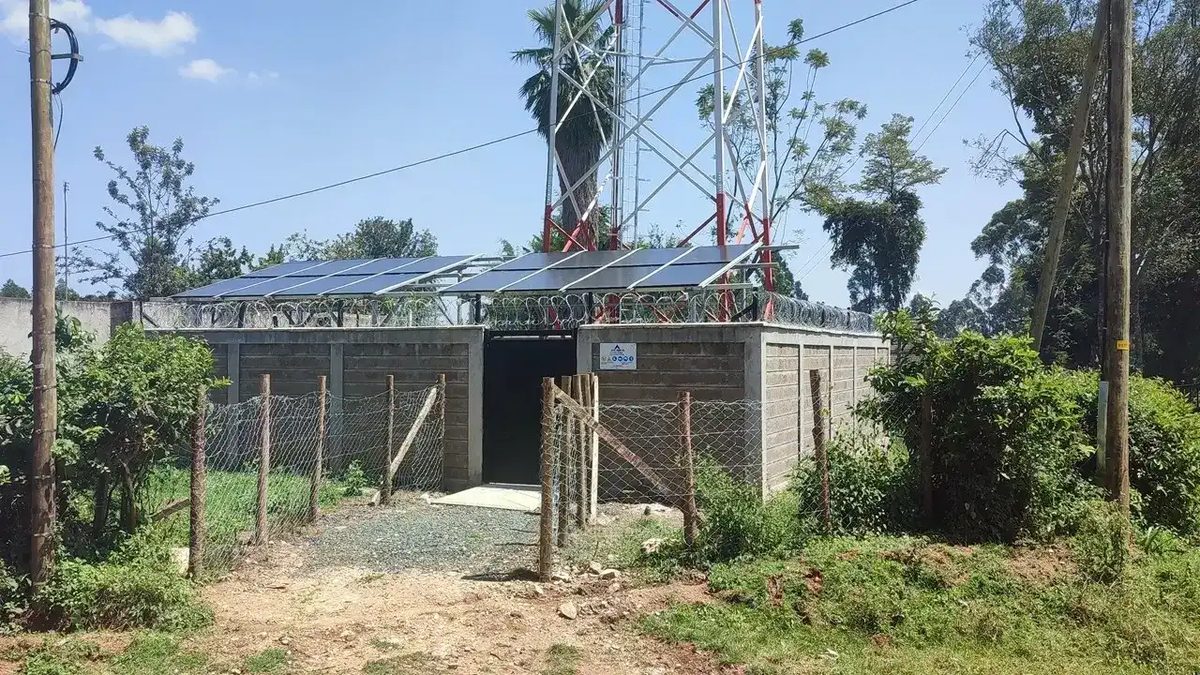
Safaricom ran 2,028 of its network base stations on solar power at the end of March 2026, up from 1,432 a year earlier. That is 35.7% of its masts, and the company says it expects to reach 3,000 sites by the end of the current year, a period its report does not define.

The rollout is funded through a KSh 20 billion sustainability-linked facility that was oversubscribed by 175.7% in the green bond market. Diesel still costs Safaricom more than Sh2 billion a year, and its electricity use rose to 274,531 megawatt-hours in 2026 from 259,715 a year earlier.

Why it matters

Every base station Safaricom moves off diesel cuts its exposure to record fuel prices and trims the carbon footprint of Kenya's largest telecom network.

Questions about this story

Free account needed to ask — your question is kept and asked for you right after sign-up. Answers are public.

No questions yet — be the first to ask.

Key Indicators

2,028
Base stations on solar power
Network sites powered by solar in FY26, up from 1,432 in FY25.
35.7%
Network sites on solar
Share of Safaricom's base stations running on solar power at the end of March 2026.
596
Sites added in FY26
Base stations converted to solar during the fiscal year.
Sh2B+
Annual diesel cost
Safaricom's yearly spending on diesel for network generators, which the company says exceeds Sh2 billion.
56,354
Scope 1 and 2 emissions
Combined tCO2e from owned generators and purchased electricity in FY26, up 9.1% from FY25.
274,531
Electricity use (MWh)
Safaricom's electricity consumption in 2026, up from 259,715 megawatt-hours a year earlier.

Voices

Curated perspectives — historical figures and your fellow readers.

Sign up to generate historical perspectives on this story.

People Involved

Organizations Involved

Timeline

2022 October 2026

5 events Latest: October 29th, 2026 · 1 week ago
Tap a bar to jump to that date
  1. Construction Review publishes analysis of solar rollout

    Latest Report

    Construction Review reports the 2,028 solar base stations and links the rollout to Kenya's off-grid electrification push. It also reports a KSh 20 billion green bond behind the programme.

  2. Safaricom launches FY26 Sustainable Business Report

    Report

    Company discloses 2,028 solar sites, 35.7% green energy share, and a 9.1% rise in Scope 1 and 2 emissions.

  3. FY26 closes with 2,028 sites on solar

    Milestone

    Safaricom adds 596 sites during the fiscal year, raising the total from 1,432 to 2,028.

  4. Solar-powered base stations reach 1,500

    Milestone

    Safaricom newsroom reports 1,500 base transmission stations fully powered by solar.

  5. Safaricom starts solar program with 310 off-grid sites

    Milestone

    Company converts 310 base stations in areas without grid access, all previously running on diesel.

Scenarios

1

Safaricom hits 3,000 solar sites by March 2027

Possible Resolves by Oct 31, 2027

Discussed by: Safaricom management; CEO Peter Ndegwa stated the company expects to reach 3,000 sites by the end of the current year

Safaricom needs 972 more site conversions, roughly 80 per month across FY27. The company added 596 in FY26 at about 50 per month, so the pace must rise by 60%. Management says the FY26 slowdown came from contracting delays it now expects to resolve.

2

Scope 1 and 2 emissions keep climbing despite solar growth

Possible Resolves by Oct 31, 2027

Discussed by: Safaricom's FY26 report, which states network expansion pressures emissions performance

Safaricom's network keeps growing, and new base stations add diesel and grid load faster than solar conversions remove it. The FY26 report shows Scope 1 and 2 emissions up 9.1% to 56,354 tCO2e, and the company has already acknowledged some interventions moved slower than planned.

3

Solar rollout misses 3,000-site target on contracting delays

Possible Resolves by Oct 31, 2027

Discussed by: Safaricom's own disclosure, which attributes the FY26 shortfall to contracting delays

If procurement and installation bottlenecks persist, Safaricom could fall short of its 3,000-site pledge. The FY26 report already revised expectations once, and the company is revalidating its science-based targets through FY27. Missing the target would push the 2030 goal of 5,000 sites further out.

Historical Context

2 moments from history that rhyme with this story — and how they unfolded.

2022

Safaricom's off-grid solar pilot (2022)

Safaricom began its solar program with 310 base transmission stations in areas entirely off the national grid. Those sites had depended fully on diesel generators for power.

Then

The pilot proved solar could reliably power network sites, cutting breakdowns tied to generator mechanics.

Now

It became the foundation of a program that now covers 2,028 sites. Safaricom's diesel use fell from 10.47 million litres in FY25 to 10.08 million in FY26.

Why this matters now

Shows the origin of the current rollout and how a diesel-replacement model was proven at small scale before being extended.

2024-2026

Kenya's off-grid solar electrification push (2024-2026)

Kenya's government fast-tracked its Off-Grid Solar Access Project, outlining large-scale clean energy deployments across regional counties, as reported by Construction Review.

Then

Expanded clean energy access to areas beyond the reach of the national grid.

Now

Created a pipeline of solar projects across Kenya that shares supply chains and installation capacity with telecom deployments.

Why this matters now

Safaricom's network solarization mirrors this broader off-grid electrification effort and competes for the same solar equipment and installation contractors.

Sources

(12)