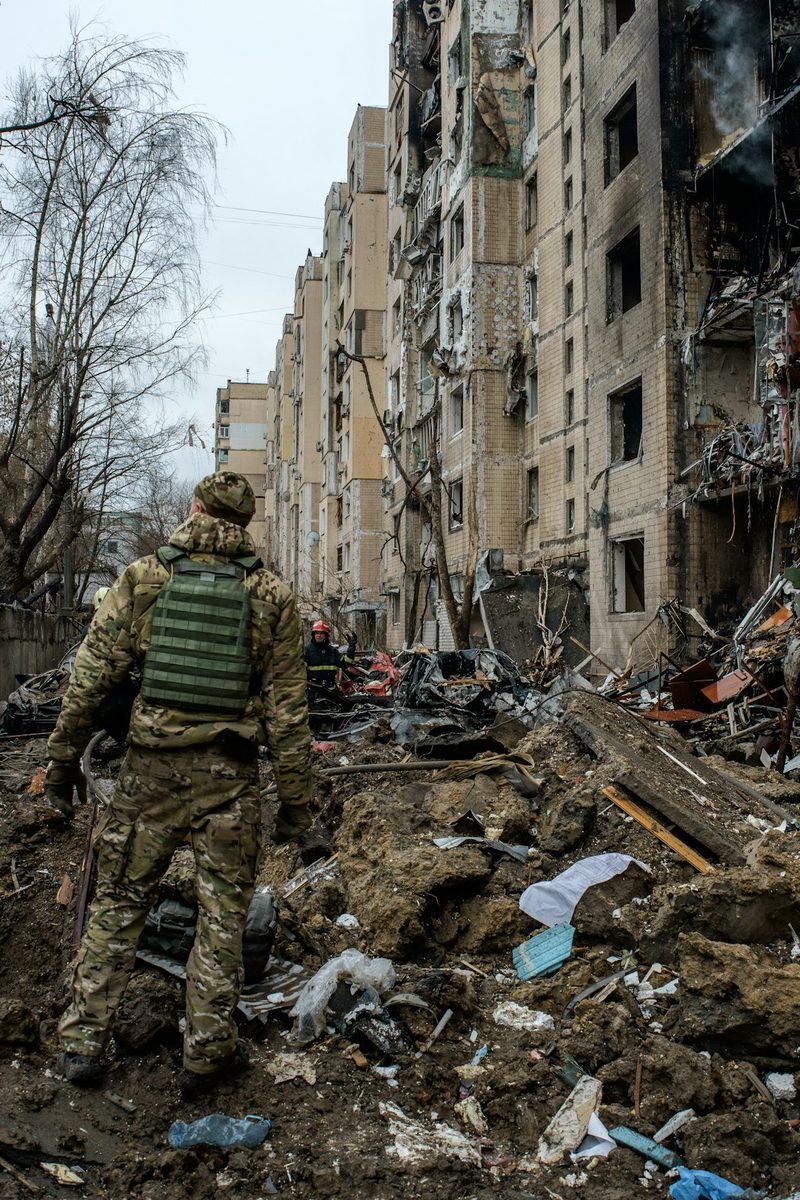
Russian forces kept striking Ukrainian civilians through spring and summer 2026 after ceasefire talks stalled in February. In May, Moscow launched more than 800 drones and missiles in one daytime assault on residential, rail, port, and energy sites across 14 regions, and a drone killed a father and his three small children in the Kharkiv region. The UN recorded about 11,000 Russian FPV-drone attacks on civilians since 2024, including deliberate "double strikes" that hit the same site again after medics and firefighters arrived.
The energy grid that survived 612 Russian strikes collapsed on January 31, when cascading failures left more than one million households in Kyiv without power at -15°C. DTEK, Ukraine's largest private energy company, has lost 60-70% of its generation capacity. The UN had recorded 14,999 civilian deaths by the end of 2025, with roughly 2,400 killed that year alone. Russia has not committed to new talks, and drone operators trained to hunt people have turned Kherson's roads into hunting grounds.
Why it matters
Drone and missile attacks on civilians and the power grid have killed thousands; no ceasefire exists, and another winter of blackouts looms.
Questions about this story
Free account needed to ask — your question is kept and asked for you right after sign-up. Answers are public.
No questions yet — be the first to ask.
Key Indicators
11,000
FPV drone attacks on civilians since 2024
UN-documented pattern of strikes on homes, civilian transport, and hospitals, including 'double strikes' on first responders
15,000
Civilians killed since Feb 2022
UN recorded 14,999 deaths by Dec 31, 2025; Air War Monitor estimates ~15,000 total, with ~2,400 killed in 2025
31%
Civilian casualty rise in 2025
UN HRMMU: 2,514 killed and 12,142 injured in 2025, a 31% increase from 2024
612
Attacks on Ukraine's energy infrastructure
Every power plant in Ukraine has been hit at least once since 2022; grid collapsed Jan 31, 2026, leaving 1M+ Kyiv households without power
60-70%
DTEK generation capacity lost
Ukraine's largest private energy company; damage to the energy sector estimated at $64-70 billion
800+
Drones and missiles in May 13 attack
Russia's daytime assault targeted residential, railway, port, and energy infrastructure in 14 regions
15
Miners killed Feb. 1
DTEK's deadliest single-day loss of employees since the invasion
Images from Openverse under Creative Commons licenses.
Videos from YouTube.
Voices
Curated perspectives — historical figures and your fellow readers.
Ayn Rand
(1905-1982) ·Cold War · philosophy
Fictional AI pastiche — not real quote.
"The deliberate murder of those miners—men who produced value from the earth through honest labor—reveals the ultimate logic of collectivism: a state that claims to act for "the people" inevitably regards actual people as disposable obstacles to its power. One cannot defend the rights of an abstraction called "the nation" while systematically extinguishing the only entities that possess rights: individual human beings."
0% found this insightful
Ever wondered what historical figures would say about today's headlines?
Sign up to generate historical perspectives on this story.
30 events
Latest: August 25th, 2026 · 3 weeks ago
Showing 8 of 30
JK to step
Tap a bar to jump to that date
Jump to
August 2026
Russian drones stalk civilians in Kherson in 'human safaris'
LatestReport
Reporting documents drone operators hunting civilians, a pattern the UN commission says killed roughly 150 people in the Kherson region alone since late 2024. Hunting people is now part of Russian drone-pilot training.
May 2026
UN documents 11,000 Russian FPV drone attacks on civilians since 2024
Report
Ukraine's Prosecutor General's Office identifies a systematic pattern of strikes on residential areas, civilian transport, and hospitals, including repeat 'double strikes' on the same site after medics and firefighters arrive.
Russian drone kills father and three children in Kharkiv region
Attack
A drone smashed into a home in the northeastern Kharkiv region, killing a father and his three small children. The family's pregnant mother was wounded but survived.
Russia targets Ukraine with more than 800 drones in daytime assault
Attack
Strikes hit residential and railway infrastructure in Dnipro and Kharkiv regions, port infrastructure in Odesa, and energy facilities in Poltava. Fourteen regions came under attack.
February 2026
Zelenskyy reveals Abu Dhabi talks failed on ceasefire details
Diplomatic
President discloses that Feb 4-5 trilateral negotiations focused on ceasefire mechanisms and US monitoring but parties could not agree on wording. Zelenskyy states 'Russians have one wording, we have another one, the Americans have the third one' on implementation details.
Russia refuses energy ceasefire, stalls on next talks
Diplomatic
Zelenskyy confirms Russia has not responded to US-proposed energy ceasefire discussed in Abu Dhabi and has not committed to another round of talks. Ukraine immediately agreed to US proposal for next negotiation round.
Russia launches 244 missiles and drones at four major cities
Attack
Overnight barrage of 24 Iskander-M/S-300 ballistic missiles, 1 Kh-59/69 guided missile, and 219 drones targets energy infrastructure in Kyiv, Dnipro, Odesa, and Kharkiv. Ukrainian air defenses intercept 213 targets; 9 missiles and 19 drones strike 13 locations. At least 7 civilians injured including children; over 107,000 Kyiv residents lose power; DTEK reports 31st major substation damaged in Odesa and 11th thermal plant attacked since October 2025.
Russia launches 149 drones and 11 missiles, kills 6 civilians
Attack
Strikes hit homes in Kharkiv, Odesa, Donetsk; mother and 10-year-old son killed in Kharkiv, 1 in Kramatorsk. Ukrainian defenses down 116 drones; attacks cause fires and infrastructure damage.
Russia fires 408 drones and 39 missiles at energy infrastructure
Attack
Second major barrage post-pause targets substations critical to nuclear power; deepens blackouts amid arctic cold. Ukrainian forces report significant civilian impacts in eastern regions.
Russian drone kills civilian in Kharkiv Oblast
Attack
Strike in Tsupivka kills 1, injures 2; precedes larger energy infrastructure assault overnight.
Human Rights Watch reports 27% civilian casualty rise in 2025
Report
World Report 2026 documents escalation in targeted drone strikes on civilians in Kherson and Donetsk regions, labeling them war crimes; total UN-verified deaths reach 14,534 since 2022.
Russia launches 171 drones and missile at civilian targets across 7 oblasts
Attack
Overnight barrage hits residential, civilian, and industrial infrastructure in Chernihiv, Cherkasy, Dnipropetrovsk, Kharkiv, Kyiv, Sumy, and Zaporizhia. Ukrainian forces down 157 drones; 12 drones and 1 Iskander-M strike 8 locations.
France condemns Russian escalation against civilians
Diplomatic
French government statement denounces increase in attacks on civilian targets, citing February 1 bus strike killing 16 miners and maternity hospital hit.
Russian drones kill 15 miners in Ternivka bus attack
Attack
Drones strike civilian bus in Dnipropetrovsk region on day Trump-brokered pause expired. DTEK confirms deadliest single-day employee loss since invasion. Ukrainian officials say operators deliberately targeted civilians.
Same day as miners' deaths, Russian attack hits maternity hospital in Zaporizhzhia, injuring at least nine including a child.
EU ambassador questions ceasefire after miners killed
Diplomatic
Katarina Mathernova asks 'Is this what a ceasefire is supposed to look like?' highlighting gap between negotiation rhetoric and battlefield reality.
January 2026
Ukrainian power grid collapses after cascading failures
Impact
With temperatures below -15°C, cascading grid failures caused the worst power, water, and heating outages of the war; more than one million households affected in Kyiv alone. Some cities had electricity only 3-4 hours per day.
Trump announces Putin agreed to pause energy strikes
Diplomatic
US President says Putin will halt attacks on Kyiv for one week during extreme cold. Kremlin clarifies pause limited to Kyiv only and expires February 1.
First trilateral talks since 2022 held in Abu Dhabi
Diplomatic
US, Ukraine, and Russia hold direct negotiations for first time since invasion began. Little progress on territorial issues.
UN confirms 2025 deadliest year for civilians since 2022
Report
Human Rights Monitoring Mission reports 31% increase in civilian casualties, driven by long-range weapons and short-range drones.
Ukraine joins International Criminal Court
Legal
Ukraine becomes 125th ICC member state, strengthening international legal accountability framework for war crimes.
November 2025
Ternopil strike kills 38 civilians
Attack
Russian combined attack causes highest civilian death toll from single incident since October 2023, including 8 children.
September 2025
Russia deploys record drone volume
Attack
Russia uses nearly 6,900 drones throughout September 2025—largest monthly total of the war—destroying recently rebuilt Trypilska power plant.
May 2025
90% of Ukraine's thermal power destroyed
Impact
Cumulative Russian attacks destroy nearly all thermal power generation capacity; 50% of hydropower installations also damaged.
August 2024
Russia's largest combined strike of the invasion
Attack
Over 100 missiles and 100 drones target multiple Ukrainian cities simultaneously, causing widespread damage to energy infrastructure.
March 2024
ICC issues warrants for commanders directing civilian attacks
Legal
Court charges Lieutenant General Kobylash and Admiral Sokolov for directing attacks at civilian objects and causing excessive harm to civilians.
March 2023
ICC issues arrest warrant for Putin
Legal
International Criminal Court charges Russian president with war crime of unlawful deportation of children from occupied Ukraine.
October 2022
Russia begins systematic energy infrastructure campaign
Attack
Following Crimean bridge explosion, Russia launches coordinated missile strikes on energy facilities across Ukraine, starting pattern of infrastructure targeting.
March 2022
Russia bombs Mariupol maternity hospital
Attack
Russian airstrike destroys maternity and children's hospital, killing at least three and injuring 17. International condemnation follows.
February 2022
Russia launches full-scale invasion of Ukraine
Military
Russian forces attack from multiple directions. Thousands of civilians killed in initial months, including during siege of Mariupol.
Discussed by: Institute for the Study of War, Carnegie Endowment, European Council on Foreign Relations
If Abu Dhabi talks fail to produce binding agreements, Russia may escalate infrastructure attacks heading into the final months of winter. This would follow the pattern of 2024-2025, when Russia used energy destruction as leverage during negotiations. Ukrainian officials warn that without Western air defense supplies, another wave could overwhelm remaining power generation capacity.
2
Limited Energy Truce Holds, Broader War Continues
Possible
Discussed by: Washington Post, DTEK analysts, US State Department officials
Russia may agree to extend pauses on energy infrastructure strikes while continuing attacks on other civilian targets and front-line positions. This would allow Moscow to claim de-escalation while maintaining military pressure. The miners' attack—targeting workers, not facilities—suggests Russia may be calibrating what counts as 'energy infrastructure' narrowly.
3
ICC Warrants Expand, International Pressure Increases
Possible
Discussed by: Human Rights Watch, Amnesty International, ICC observers
Continued documented attacks on civilians could prompt additional ICC arrest warrants for military commanders directing strike operations. With Ukraine now an ICC member, prosecutors have improved access to evidence. However, Russia's non-membership limits enforcement, and previous warrants have not meaningfully constrained Russian behavior.
4
Negotiated Settlement Includes Infrastructure Protection Clause
Unlikely
Discussed by: US negotiators, European diplomatic sources
A comprehensive ceasefire agreement could include verified prohibitions on infrastructure attacks, monitored by international observers. This would require Russia to accept restrictions it has historically rejected. The gap between Trump's claimed agreements and Moscow's actual behavior suggests such commitments may not be honored without robust enforcement mechanisms.
5
Winter 2026-27 Energy Collapse
Likely
Resolves by Q1 2027
Discussed by: Ukraine Air War Monitor, DTEK, UN Human Rights Monitoring Mission
With 612 attacks on energy infrastructure, 60-70% of DTEK generation destroyed, and Russia showing no willingness to honor energy pauses, another winter campaign could push the grid past the point of repair. January 2026 already caused a cascade failure affecting over one million Kyiv households at -15°C. The 250 cogeneration plants built since 2022 are a stopgap, not a substitute for lost thermal capacity.
Historical Context
3 moments from history that rhyme with this story — and how they unfolded.
1 of 3
April 1937
Bombing of Guernica, Spain (1937)
German and Italian aircraft supporting Francisco Franco's Nationalists bombed the Basque town of Guernica for three hours on market day. The attack killed an estimated 300-1,600 civilians and destroyed 85% of the town. It was one of the first deliberate aerial bombardments of a civilian population.
Then
International outcry followed, immortalized in Picasso's painting. But the attack achieved its military purpose: demoralizing Basque resistance.
Now
Guernica became a symbol of civilian victimization in war and helped shape post-WWII international humanitarian law, including the Geneva Conventions' protections for civilians.
Why this matters now
Like Guernica, Russian attacks in Ukraine target civilians not as collateral damage but as strategic tool—destroying morale and infrastructure to pressure surrender. Both campaigns test whether international norms against civilian targeting have enforcement mechanisms or remain symbolic.
2 of 3
February 1945
Strategic Bombing Debates: Dresden (1945)
Allied bombers struck Dresden, Germany, over three days, creating a firestorm that killed an estimated 25,000-35,000 civilians. The city had significant refugee populations fleeing the Eastern Front. The attack's military necessity was debated even at the time.
Then
Dresden was nearly destroyed. The bombing became a propaganda tool for the Nazi regime.
Now
Winston Churchill himself questioned whether the destruction 'remains a serious query against the conduct of Allied bombing.' The debate contributed to post-war legal frameworks distinguishing military targets from civilian populations.
Why this matters now
Russia frames its infrastructure attacks as targeting military-relevant facilities, echoing Allied arguments about Dresden's transportation hub. But the miners' bus and maternity hospital attacks have no military justification—they represent pure civilian targeting.
3 of 3
September 2015 - December 2016
Russian Campaign in Aleppo, Syria (2015-2016)
Russian aircraft supported Syrian government forces in the siege of Aleppo, systematically bombing hospitals, rescue workers, and civilian infrastructure. Physicians for Human Rights documented 266 attacks on medical workers after Russia's intervention. Russian forces employed 'double-tap' strikes—hitting a target, waiting for first responders to arrive, then striking again.
Then
Aleppo fell to government forces in December 2016 after massive civilian displacement. An estimated 21,500 civilians were killed during the siege.
Now
Russia faced no meaningful international consequences. China and Russia blocked ICC referral for Syria. The tactics developed in Aleppo—infrastructure destruction, double-tap strikes, targeting medical facilities—reappeared in Ukraine.
Why this matters now
The Ternivka bus attack mirrors Syrian tactics: Ukrainian officials say drone operators saw the bus was civilian, struck anyway, then hit survivors exiting the vehicle. This 'double-tap' approach, documented in both conflicts, suggests deliberate targeting rather than accident.