



Pull to refresh
Logo
Daily Brief
Following
Why Ranks Sign Up
Brad Jacobs assembles $30 billion building products empire in two years

Brad Jacobs assembles $30 billion building products empire in two years

Money Moves

QXO's $17 billion TopBuild acquisition is the third mega-deal in a rapid-fire consolidation of North American building materials distribution

April 20th, 2026: Analysts react to TopBuild deal with mixed ratings

Overview

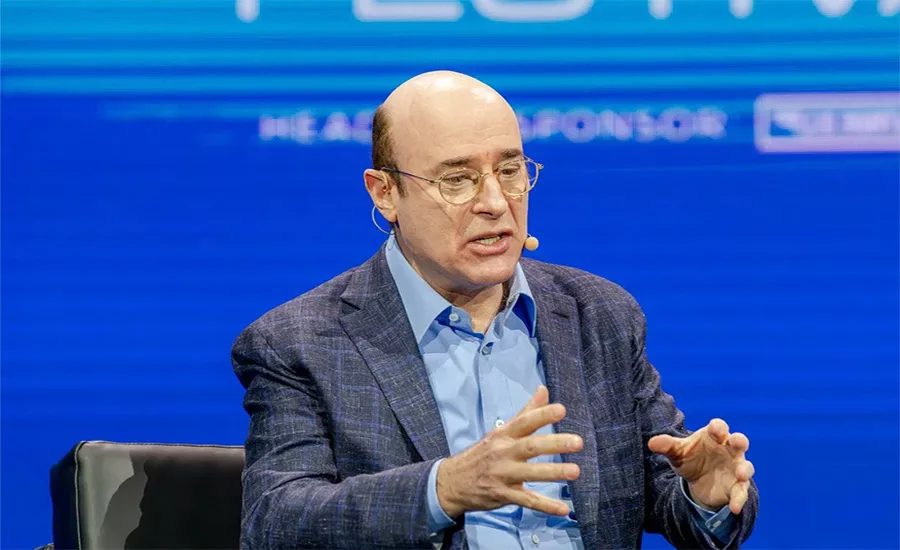
In December 2023, Brad Jacobs put $1 billion into a tiny software company, renamed it QXO, and declared he would build a building products distribution giant worth $50 billion in revenue. On April 19, 2026, QXO announced it will acquire TopBuild — North America's largest insulation distributor and installer — for approximately $17 billion, paying TopBuild shareholders $505 per share in a mix of cash and stock. The deal is QXO's third major acquisition in twelve months, following the $11 billion purchase of Beacon Roofing Supply and the $2.25 billion buyout of Kodiak Building Partners.

The combined company will employ 28,000 people across more than 1,100 locations, generating over $18 billion in annual revenue and ranking as the second-largest publicly traded building products distributor in North America. QXO expects $300 million in cost savings from integrating TopBuild by 2030. Markets reacted cautiously on April 20: TopBuild shares surged roughly 19% while QXO stock fell nearly 8%, as investors weighed the dilution and debt load that come with a $17 billion deal on top of two prior mega-acquisitions. Jacobs went on CNBC to defend the deal, framing it as a key step toward the $50 billion revenue target.

Why it matters

Three deals totaling $30 billion are reshaping who supplies the materials for every new home and building in America.

Play on this story Voices Debate Predict

Key Indicators

$30B+
Total acquisition spending by QXO since 2024
Three deals — Beacon ($11B), Kodiak ($2.25B), and TopBuild ($17B) — completed or announced in roughly 12 months.
$18B+
Combined annual revenue
QXO's combined platform would generate over $18 billion in revenue, up from essentially zero two years ago.
23%
Premium paid to TopBuild shareholders
QXO is paying $505 per share versus TopBuild's $410.31 closing price, a 23.1% premium.
~10,000
Distributors in North American building products
The extreme fragmentation of this $800 billion market is what makes Jacobs' rollup strategy viable.

Interactive

Exploring all sides of a story is often best achieved with Play.

Ever wondered what historical figures would say about today's headlines?

Sign up to generate historical perspectives on this story.

People Involved

Organizations Involved

Timeline

  1. Analysts react to TopBuild deal with mixed ratings

    Market

    Seaport Global Securities downgraded TopBuild to Neutral following the announcement; DA Davidson cut its price target from $485 to $465 while maintaining Buy; Truist Securities held a Hold rating. QXO described the deal as expected to be 'immediately and substantially accretive' to earnings.

  2. QXO stock falls ~8% as investors weigh dilution and leverage

    Market

    QXO shares fell roughly 8% on the day of the TopBuild announcement — closing at $24.21 — as investors expressed concern that the heavy stock component of the $17 billion deal will dilute existing shareholders and stretch the balance sheet. TopBuild shares surged roughly 19%, reflecting the 23% acquisition premium.

  3. Jacobs appears on CNBC, calls TopBuild deal 'exciting' and a step toward $50B

    Statement

    Brad Jacobs joined CNBC's Money Movers to defend the acquisition, saying 'We like buying leaders' and describing TopBuild as a key step toward QXO's goal of $50 billion in revenue. QXO also published a formal investor presentation outlining the strategic rationale and projected synergies.

  4. Mixed analyst ratings on QXO itself: Benchmark and KeyBanc bullish, RBC cautious

    Market

    Benchmark reiterated a Buy on QXO with a $50 price target; KeyBanc raised its QXO target from $30 to $32 (Overweight). RBC Capital cut its QXO target from $30 to $28, citing housing market weakness and reduced organic growth expectations.

  5. QXO announces $17 billion TopBuild acquisition

    M&A

    QXO agrees to acquire TopBuild Corp. for approximately $17 billion, paying $505 per share in a mix of 45% cash and 55% QXO stock. Both boards unanimously approve the deal, which would create the second-largest publicly traded building products distributor in North America.

  6. Kodiak acquisition closes

    M&A

    QXO completes its purchase of Kodiak Building Partners, adding lumber and specialty building materials to its roofing distribution platform.

  7. QXO announces $2.25 billion Kodiak acquisition

    M&A

    QXO agrees to buy Kodiak Building Partners, a distributor of lumber, trusses, windows, doors, and waterproofing products with roughly $2.4 billion in annual revenue and strong Sun Belt presence.

  8. QXO closes Beacon Roofing acquisition for $11 billion

    M&A

    Despite initial resistance, Beacon Roofing Supply becomes a wholly owned subsidiary of QXO, giving QXO a dominant position in roofing distribution.

  9. QXO receives antitrust clearance for Beacon deal

    Regulatory

    Both U.S. and Canadian regulators clear the Beacon Roofing acquisition, removing a key obstacle to closing.

  10. QXO launches hostile tender offer for Beacon

    M&A

    After Beacon formally rejects the bid and adopts a poison pill defense, QXO goes directly to Beacon shareholders with a hostile tender offer at $124.25 per share.

  11. QXO makes unsolicited $11 billion bid for Beacon Roofing

    M&A

    QXO publicly offers to acquire Beacon Roofing Supply, one of the largest roofing distributors in North America. Beacon's board declines to engage.

  12. SilverSun becomes QXO, targets building products

    Corporate

    SilverSun Technologies is renamed QXO Inc. Jacobs announces plans to consolidate the fragmented $800 billion building products distribution industry, targeting $50 billion in revenue within a decade.

  13. Brad Jacobs seeds $1 billion into shell company

    Corporate

    Jacobs Private Equity II invests $1 billion ($900 million from JPE, $100 million from co-investors including Sequoia Heritage) into SilverSun Technologies, a small publicly traded software firm, to create an acquisition platform.

Scenarios

Predict which scenario wins. Contrarian picks score more — points lock in when the scenario resolves.

Log in to predict. Track your picks, climb the leaderboard. Log in Sign Up
1

QXO closes TopBuild, integration delivers promised synergies

The deal closes on schedule in the third quarter of 2026, regulators raise no objections given the market's fragmentation, and QXO captures most of the $300 million in projected synergies by 2030. The combined platform — roofing, insulation, lumber, and specialty products — generates cross-selling opportunities and purchasing leverage. Jacobs has done this before: at XPO Logistics, he grew revenue from $175 million to $15 billion in four years through similar serial acquisitions. If this playbook holds, QXO becomes the dominant force in building products distribution.

Discussed by: Wall Street analysts with Strong Buy consensus; QXO management projections
Consensus
2

Integration stumbles, debt load slows further acquisitions

Integrating three major acquisitions — Beacon, Kodiak, and TopBuild — simultaneously proves more complex than Jacobs' prior rollups. Cultural clashes between a roofing distributor, a lumber supplier, and an insulation installer limit cross-selling. The $30 billion in total deal value strains QXO's balance sheet, and the heavy stock component dilutes existing shareholders further. QXO's stock, already down sharply from its 2024 highs, remains depressed, making future stock-funded acquisitions expensive and slowing the march to $50 billion in revenue.

Discussed by: Skeptical analysts noting QXO's $388 million net loss in 2025 and heavy stock dilution
Consensus
3

Antitrust regulators block or force divestitures in the TopBuild deal

Federal regulators, concerned about concentration in building materials distribution after a wave of mega-deals across the industry, require QXO to divest overlapping branches or product lines before approving the TopBuild acquisition. While the market is still highly fragmented with roughly 10,000 distributors, the simultaneous consolidation by multiple large players could draw scrutiny. QXO's Beacon deal cleared antitrust review smoothly, but the TopBuild deal is larger and comes atop a more concentrated post-Beacon market.

Discussed by: Industry observers noting parallel consolidation by Home Depot, Lowe's, and CRH
Consensus
4

QXO becomes an acquisition target itself

As QXO assembles a diversified building products platform, a major retailer like Home Depot or Lowe's — or a building materials conglomerate like CRH — views the assembled platform as more valuable than its current stock price implies and makes a bid. Jacobs has sold companies before: United Waste Systems was acquired after he built it into a national player. However, Jacobs typically holds and operates his platforms for years before any exit.

Discussed by: Market commentators noting Home Depot's SRS Distribution purchase and Lowe's Foundation Building Materials deal
Consensus

Historical Context

Jacobs builds XPO Logistics through serial acquisition (2011-2015)

2011-2015

What Happened

Brad Jacobs invested $150 million in Express-1 Expedited Solutions, a small trucking company with $175 million in revenue, and renamed it XPO Logistics. Over four years he completed 17 acquisitions — including the $3 billion purchase of Con-way — growing XPO to $15 billion in annual revenue. The company became a top-10 global transportation and logistics provider.

Outcome

Short Term

XPO became one of the fastest-growing companies in logistics, with investors who backed Jacobs early seeing returns far exceeding the broader market.

Long Term

Jacobs later spun XPO into three independent public companies — XPO, GXO Logistics, and RXO — collectively worth over $28 billion, validating the acquire-integrate-separate playbook.

Why It's Relevant Today

QXO's building products rollup follows the same template: acquire a public shell, raise billions, execute rapid serial acquisitions in a fragmented industry. The key question is whether building products distribution offers the same consolidation economics as trucking and logistics.

Home Depot acquires SRS Distribution (2024)

2024

What Happened

Home Depot, the world's largest home improvement retailer, acquired SRS Distribution — a specialty building products distributor serving roofing, landscaping, and pool contractors — for approximately $18.25 billion. The deal marked Home Depot's largest-ever acquisition and its most aggressive push into professional contractor supply.

Outcome

Short Term

The acquisition immediately expanded Home Depot's reach into professional-grade distribution channels it had previously struggled to penetrate through its retail stores.

Long Term

The deal accelerated industry-wide consolidation, with Lowe's and others following with their own large acquisitions to avoid being left behind.

Why It's Relevant Today

Home Depot's SRS deal demonstrated that the largest players in adjacent sectors view building products distribution as strategically valuable, validating Jacobs' thesis. But it also means QXO is racing against well-capitalized competitors to lock up the best acquisition targets.

Danaher Corporation's acquisition-driven transformation (1984-2020)

1984-2020

What Happened

Danaher, originally a real estate investment trust, was transformed by brothers Steven and Mitchell Rales into a diversified industrial conglomerate through more than 400 acquisitions over three decades. The company applied a rigorous operating system — the Danaher Business System, modeled on Toyota's lean manufacturing — to each acquired company, consistently improving margins and returns.

Outcome

Short Term

Each acquisition was integrated using the same playbook, generating predictable margin improvements that funded further deals.

Long Term

Danaher grew from a small company to a $200 billion market capitalization enterprise, becoming one of the most successful serial acquirers in corporate history. It later spun off Fortive and Envista.

Why It's Relevant Today

Danaher provides the best-case template for what Jacobs is attempting: sustained value creation through disciplined serial acquisition with a repeatable operational improvement system. The question is whether QXO's pace — $30 billion in deals in one year — allows for the methodical integration that made Danaher successful.

Sources

(19)