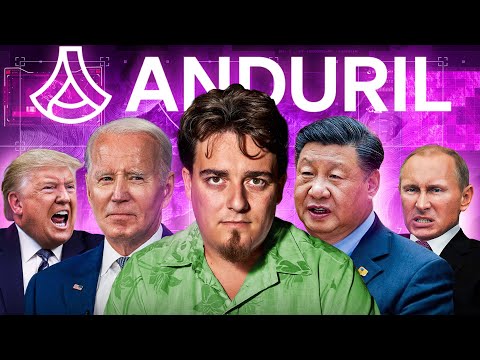
Anduril is negotiating a raise that could value it near $100 billion, per Reuters, three months after closing a $5 billion round at $61 billion. The Army also awarded Anduril $65 million to build hardware for the Palantir-led TITAN (Tactical Intelligence Targeting Access Node) system.
Revenue hit $2.2 billion in 2025, and Anduril projects $4.3 billion for 2026. Arsenal-1 in Ohio is producing Fury jets, Roadrunner interceptors, and Barracuda missiles. With over $11 billion raised since 2017, an IPO depends on how fast that factory ships.
Why it matters
Anduril's $100 billion valuation hinges on whether its Ohio factory can out-produce Boeing and Lockheed.
Questions about this story
Free account needed to ask — your question is kept and asked for you right after sign-up. Answers are public.
No questions yet — be the first to ask.
Key Indicators
$100B
Reported valuation target
Reuters reported in July 2026 that Anduril is negotiating a raise near $100 billion, up from $61 billion in May
$5B
Series H raised
Closed May 2026, led by Thrive Capital and Andreessen Horowitz; largest private defense tech raise on record
$2.2B
2025 revenue
Doubled from $1 billion in 2024; projecting $4.3 billion for 2026
$20B
Army contract ceiling
10-year enterprise deal for Lattice AI platform, signed March 2026
Images from Openverse under Creative Commons licenses.
Videos from YouTube.
Voices
Curated perspectives — historical figures and your fellow readers.
Ayn Rand
(1905-1982) ·Cold War · philosophy
Fictional AI pastiche — not real quote.
"Here, at last, is a man who grasps that the mind which creates the weapon is mightier than the bureaucracy that merely funds it — Palmer Luckey has done what Rearden did with metal: built something real while the parasites debated procurement forms. The tragedy is not that Anduril profits from government contracts, but that rational men must still negotiate with Washington rather than a free market to defend civilization."
0% found this insightful
Ever wondered what historical figures would say about today's headlines?
Sign up to generate historical perspectives on this story.
21 events
Latest: September 1st, 2026 · 1 week ago
Showing 8 of 21
JK to step
Tap a bar to jump to that date
Jump to
September 2026
Army Awards TITAN Production Contract to Palantir and Anduril
LatestContract
The Army awards $192 million to produce eight TITAN (Tactical Intelligence Targeting Access Node) intelligence systems. Palantir leads with $127 million; Anduril receives $65 million for ruggedized vehicle-mounted hardware and operator subsystems.
July 2026
Reported Talks for $100B Valuation Round
Funding
Reuters reports Anduril is raising a new round that could value it near $100 billion, up from $61 billion in May. The deal may use a two-stage structure: investors commit now, then a second tranche at a higher valuation within a year if Anduril hits benchmarks.
April 2026
Wins Golden Dome Space-Based Interceptor Contract
Contract
Anduril leads a team including Impulse Space, Inversion Space, K2 Space, Sandia National Laboratories, and Voyager Technologies to build space-based interceptors for the U.S. Space Force under the Golden Dome missile defense program.
March 2026
Arsenal-1 Opens Early; Fury Production Begins
Corporate
Anduril's 5-million-square-foot Ohio factory opens three months ahead of schedule and starts building the YFQ-44A Fury autonomous jet. Roadrunner and Barracuda production lines are planned before year-end.
$20B Army Enterprise Contract
Contract
The U.S. Army awards Anduril a 10-year contract worth up to $20 billion for the Lattice AI software platform and autonomous systems, consolidating more than 120 prior procurement actions into one agreement.
Acquires ExoAnalytic Solutions
Corporate
Anduril acquires ExoAnalytic Solutions, a space surveillance firm that operates 400 telescopes tracking orbital objects, doubling its 120-person space unit.
February 2026
Seeks $8B at $60B+ Valuation
Funding
Anduril enters talks to raise up to $8 billion in new funding, nearly doubling its valuation to over $60 billion.
October 2025
YFQ-44A Fury Flight Tests Begin
Technical
Anduril's autonomous combat aircraft completes first flight tests, achieving design-to-flight in 365 days.
June 2025
Series G at $30.5B
Funding
Anduril raises $2.5 billion led by Founders Fund's $1 billion investment, valuing the company at $30.5 billion.
March 2025
$642M Marine Corps Contract
Contract
Anduril wins indefinite-delivery contract worth $642 million to protect Marine Corps installations from drones through 2035.
January 2025
Arsenal-1 Announced
Corporate
Anduril announces $1 billion Arsenal-1 manufacturing facility near Columbus, Ohio—the largest job creation project in state history.
October 2024
$250M Roadrunner Contract
Contract
Pentagon awards Anduril $250 million for 500 Roadrunner drone interceptors to protect U.S. forces.
August 2024
Series F at $14B
Funding
Anduril raises $1.5 billion in Series F funding at a $14 billion valuation.
April 2024
Selected for CCA Program
Contract
Air Force selects Anduril for Collaborative Combat Aircraft program, beating Boeing, Lockheed Martin, and Northrop Grumman.
December 2022
Series E at $8.5B
Funding
Anduril raises $1.48 billion in Series E funding, pushing valuation to $8.5 billion.
February 2022
Dive Technologies Acquisition
Corporate
Anduril acquires Boston-based Dive Technologies, expanding into autonomous underwater vehicles.
June 2021
Series D at $4.7B
Funding
Anduril raises $450 million in Series D funding, reaching a $4.7 billion valuation.
April 2021
Area-I Acquisition
Corporate
Anduril acquires Atlanta-based Area-I, adding the Altius drone platform to its product line.
September 2019
Series B Funding
Funding
Anduril raises $120 million from Founders Fund, General Catalyst, and Andreessen Horowitz.
June 2018
Google Exits Project Maven
Industry
Google announces it will not renew its Pentagon AI contract after employee protests. Anduril and Palantir later take over the work.
June 2017
Anduril Founded
Corporate
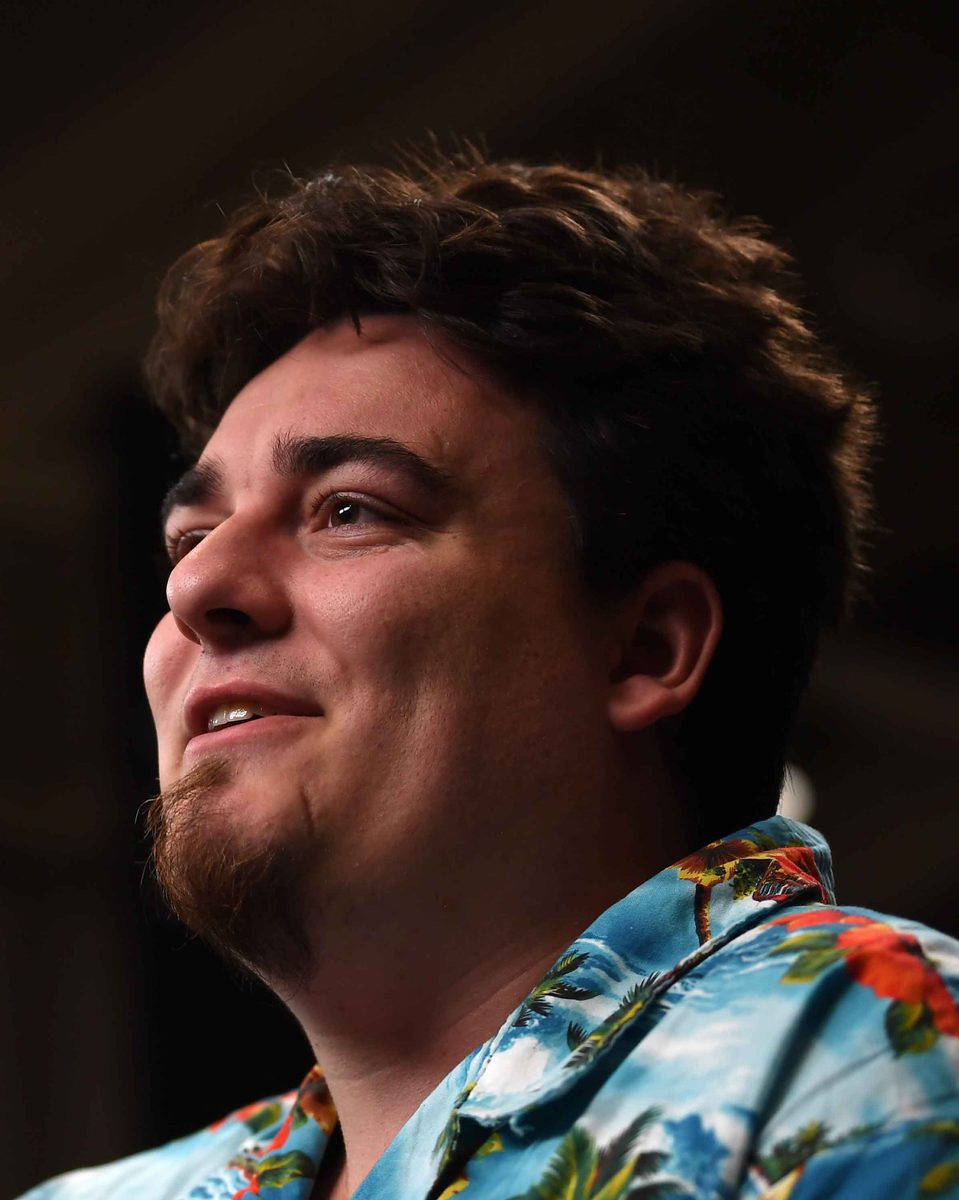
Palmer Luckey, Trae Stephens, Brian Schimpf, and other former Palantir employees launch Anduril Industries in Irvine, California.
Discussed by: Bloomberg, The Information, CNBC analysts covering defense tech
Anduril secures the full $8 billion at or above $60 billion valuation, providing capital to complete Arsenal-1 and begin Fury production in July 2026 as planned. Success at the Ohio facility triggers IPO preparations for late 2026 or early 2027, positioning Anduril to compete for trillion-dollar contracts currently held by legacy primes.
2
Manufacturing Delays Force Scaled-Back Raise
Possible
Discussed by: Defense industry analysts, Forge Global secondary market reports
Arsenal-1 construction or production timelines slip, making investors hesitant to commit at the $60 billion valuation. Anduril raises $4-5 billion at a lower valuation or with more restrictive terms, delaying IPO plans and giving legacy contractors more time to respond with their own autonomous systems.
3
Legacy Contractor Acquires Anduril
Unlikely
Discussed by: McKinsey defense industry reports, CNBC speculation on prime consolidation
A traditional defense contractor—Boeing, Lockheed Martin, or RTX—makes a preemptive acquisition offer as the funding round progresses. With Anduril's capabilities validated by Pentagon contracts and venture backing potentially seeking liquidity, an acquisition could exceed $80 billion, reshaping the defense industrial base overnight.
4
Defense Tech Bubble Correction
Possible
Discussed by: Venture capital skeptics, defense budget analysts tracking appropriations
A shift in Pentagon priorities, budget cuts, or broader market correction deflates defense tech valuations. Anduril's funding round stalls as investors reassess the sector, forcing the company to extend its private timeline and potentially seek strategic investment from government-adjacent sources.
5
Anduril Files for IPO by End of 2027
Likely
Resolves by End of 2027
Discussed by: CNBC analysts; Fortune profile of Brian Schimpf (May 2026); Palmer Luckey public statements
With Arsenal-1 running, the Army contract signed, and over $11 billion in total funding, Anduril's IPO window opens once the factory proves it can ship at scale. Luckey has said publicly the company will go public. Schimpf has tied IPO timing to manufacturing execution, not capital needs.
6
Anduril Closes Two-Stage Round Near $100B
Likely
Resolves by End of 2026
Discussed by: Reuters, TechCrunch, DroneXL
Reuters reported July 24 that Anduril is structuring a two-stage raise near $100 billion. Investors would commit now, with a second tranche at a higher valuation within a year if the company hits financial benchmarks. Both tranches could close by the end of 2026, per Reuters; a close would set up an IPO.
Historical Context
3 moments from history that rhyme with this story — and how they unfolded.
1 of 3
2015-2025
SpaceX's Rise as Defense Contractor (2015-Present)
SpaceX challenged United Launch Alliance's monopoly on national security launches, eventually winning certification in 2015. By 2025, Starlink generated $3 billion from government contracts, and the company held $22 billion in total government work including the classified Starshield satellite network.
Then
SpaceX broke the Boeing-Lockheed duopoly, reducing launch costs by 90% and winning the majority of military launch contracts through 2036.
Now
Proved that venture-backed startups could compete with and displace entrenched defense contractors. Starlink's role in Ukraine demonstrated commercial space capabilities in active warfare.
Why this matters now
Anduril explicitly models itself on SpaceX's playbook: move faster than incumbents, build internally rather than outsource, and prove capabilities in real-world deployment before seeking massive contracts.
2 of 3
March-June 2018
Google's Project Maven Withdrawal (2018)
Google was developing artificial intelligence for the Pentagon's Project Maven program to analyze drone footage. After employee protests—including a petition with thousands of signatures and a dozen resignations—Google announced it would not renew the contract worth a potential $250 million annually.
Then
Anduril and Palantir picked up the Project Maven work. Google published AI ethics principles excluding weapons development.
Now
Created a market opening for defense-focused startups willing to do work that consumer tech companies shunned. Established the cultural divide that Anduril was built to exploit.
Why this matters now
Anduril's founding thesis—that Silicon Valley's aversion to defense work created opportunity for new entrants—was validated when Google walked away from Project Maven. The same engineering talent and AI capabilities now flow to Anduril instead.
3 of 3
2022-2025
Ukraine Drone Warfare Lessons (2022-Present)
Drones became the dominant weapons system in Ukraine's defense against Russia. By 2025, analysts estimated drones caused 70% of battlefield losses on both sides. Ukraine produced 2 million drones in 2024 and ramped to 4 million annual capacity, while AI-enabled autonomous navigation raised target engagement rates from 10-20% to 70-80%.
Then
Ukraine established a dedicated Unmanned Systems Forces branch. Russia followed with its own autonomous systems unit in December 2024.
Now
Fundamentally shifted how venture capitalists and defense planners view autonomous weapons. Provided real-world combat validation for the technologies Anduril is building.
Why this matters now
Ukraine's battlefield demonstrated exactly what Anduril has been building: autonomous systems that can operate at scale, counter enemy drones, and integrate AI for targeting. This validation drove the defense tech funding surge that powers Anduril's growth.