Pull to refresh
Logo
Daily Brief
Following
Why Sign Up
Iranian missiles keep crossing into Turkish airspace as NATO defenses are tested

Iranian missiles keep crossing into Turkish airspace as NATO defenses are tested

Force in Play
By Newzino Staff |

Three interceptions in ten days raise questions about whether Iran is probing NATO's missile shield — or losing control of its own weapons

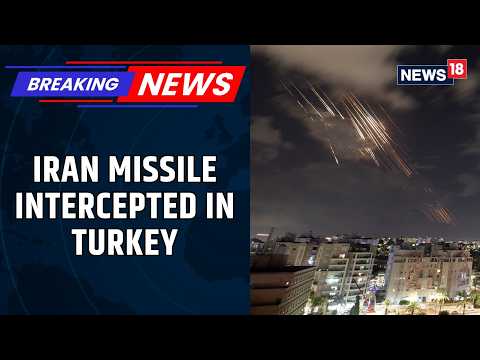
4 days ago: Third Iranian missile intercepted over eastern Turkey

Overview

For the third time in ten days, a ballistic missile fired from Iran crossed into Turkish airspace before NATO defenses destroyed it. The March 13 interception over eastern Turkey followed similar shootdowns on March 4 and March 9 — a pattern that has turned a NATO ally's skies into an unwanted proving ground for the alliance's missile shield. Turkey summoned Iran's ambassador and demanded an explanation; Iran, as it has after each incident, denied deliberately targeting its neighbor.

Key Indicators

3
Missiles intercepted over Turkey
Iranian ballistic missiles shot down in Turkish airspace since March 4, 2026
10 days
Duration of airspace violations
All three interceptions occurred between March 4 and March 13
0
Turkish casualties
No fatalities reported, though missile debris fell in populated areas including Hatay and Gaziantep
9
Countries targeted by Iranian retaliation
Iran has fired missiles or drones at targets in Bahrain, Iraq, Jordan, Kuwait, Oman, Qatar, Saudi Arabia, Turkey, and the United Arab Emirates

Interactive

Exploring all sides of a story is often best achieved with Play.

Ever wondered what historical figures would say about today's headlines?

Sign up to generate historical perspectives on this story.

Sign Up

Debate Arena

Two rounds, two personas, one winner. You set the crossfire.

People Involved

Organizations Involved

Timeline

  1. Third Iranian missile intercepted over eastern Turkey

    Interception

    NATO air and missile defense assets intercepted a third ballistic missile from Iran in Turkish airspace. Turkey's Foreign Ministry summoned the Iranian ambassador again and formally demanded an explanation for the repeated violations.

  2. Erdogan warns Iran after emergency cabinet meeting

    Diplomatic

    Following an emergency cabinet session, Erdogan publicly warned Iran to stop 'wrong and provocative steps' and said Turkey reserves its 'right to retaliate.' He urged Tehran not to damage 'thousand-year neighbourly and brotherly ties.'

  3. Second Iranian missile intercepted over Gaziantep

    Interception

    NATO air defenses shot down a second ballistic missile over the Sahinbey district of Gaziantep, a Turkish city of two million people. A Spanish Patriot battery deployed for NATO support 'assisted' the interception.

  4. Turkey creates emergency defense directorates; NATO sends Patriot to Malatya

    Defense

    A presidential decree established emergency planning offices in every Turkish cabinet ministry for 'civil defense' and 'war preparedness.' NATO deployed a US Patriot air defense battery to Malatya province to protect the Kurecik radar base.

  5. NATO and US rule out Article 5 collective defense

    Diplomatic

    NATO Secretary General Rutte told Reuters 'nobody's talking about Article 5,' and US Defense Secretary Hegseth said there was 'no sense' the incident would trigger collective defense. Turkey said it had no intention of invoking Article 4 consultations either.

  6. First Iranian missile intercepted over Turkey

    Interception

    A ballistic missile launched from Iran crossed Iraqi and Syrian airspace before entering Turkish territory. A US Navy Arleigh Burke-class destroyer destroyed it using an SM-3 missile, with debris falling in Dortyol, Hatay province. Turkey summoned Iran's ambassador. Iran denied responsibility, calling it a 'technical anomaly.'

  7. Iran launches retaliatory strikes across nine countries

    Military

    Iran fired missiles and drones at US military bases and allied targets in Bahrain, Iraq, Jordan, Kuwait, Oman, Qatar, Saudi Arabia, Turkey, and the UAE. Hezbollah launched parallel attacks on Israel from Lebanon.

  8. US and Israel launch Operation Epic Fury against Iran

    Military

    US and Israeli forces struck nearly 900 targets across Iran in 12 hours, destroying military infrastructure and killing Supreme Leader Ali Khamenei. Iran began retaliating with missiles and drones against US bases and allies across the Middle East.

Scenarios

1

Missile incidents stop as Iran's launch capacity degrades

Discussed by: US Defense Secretary Hegseth and Pentagon analysts, who claimed on March 13 that Iran's missile production has been 'functionally defeated'

Continued US-Israeli strikes destroy enough of Iran's ballistic missile infrastructure that the launches into Turkey simply stop. The incidents are retrospectively classified as stray fire from a military under severe duress — missiles launched at targets in the Gulf or Israel that went off course due to degraded command-and-control systems. Turkey avoids further escalation, and the airspace violations become a footnote in the broader Iran war.

2

Iran strikes Kurecik radar base, forcing NATO Article 5 debate

Discussed by: Middle East Eye analysts and Turkish defense experts, who note Iran has already targeted US radar installations in Qatar, Jordan, and the UAE

A missile directly hits or narrowly misses the Kurecik early-warning radar in Malatya — the facility that detects Iranian launches bound for Europe. A strike on a NATO military installation hosting US troops would make the Article 5 debate unavoidable, potentially dragging the alliance into the Iran conflict. Turkey would face enormous pressure to allow its territory to be used for operations it has so far blocked.

3

Turkey invokes Article 4, NATO bolsters defenses without joining war

Discussed by: NATO Watch and Atlantic Council analysts, citing Turkey's history of using Article 4 consultations — five of the six times the clause has been invoked

After continued violations, Turkey formally requests Article 4 consultations, compelling the North Atlantic Council to discuss the threat. NATO responds with additional air defense deployments, naval assets, and a formal condemnation, but stops well short of collective defense operations against Iran. This mirrors the 2012 precedent when Syrian shelling killed Turkish civilians and NATO deployed Patriot batteries without entering the Syrian conflict.

4

Turkey mediates a ceasefire, using missile incidents as leverage

Discussed by: Turkish Foreign Minister Fidan, who said on March 12 that Turkey is 'talking to both sides' to end the war

Ankara uses its unique position — a NATO ally that has refused to let its bases be used for strikes on Iran, yet is absorbing Iranian missile fire — to position itself as an indispensable mediator. Turkey leverages the airspace violations to extract concessions from both Tehran (stop firing near Turkish territory) and Washington (engage in ceasefire talks). Erdogan's track record of maintaining relationships with both sides makes this plausible, though the scale of the war makes a quick ceasefire unlikely.

Historical Context

Turkey-Syria border incidents and NATO Patriot deployment (2012)

June-December 2012

What Happened

Syria shot down a Turkish F-4 reconnaissance jet in June 2012 and killed five Turkish civilians with cross-border mortar fire in October. Turkey invoked NATO's Article 4 consultation clause — a step below the collective defense guarantee of Article 5 — compelling the alliance to formally discuss the threat.

Outcome

Short Term

NATO deployed Patriot missile batteries to Turkey's southern border in late 2012, operated by the US, Germany, and the Netherlands.

Long Term

The deployments set the precedent that NATO would defend Turkey against Middle Eastern missile threats without joining the underlying conflict. Turkey used Article 4 five of the six times it has been invoked.

Why It's Relevant Today

The current Iran missile incidents are following an almost identical pattern: airspace violations, escalating rhetoric, and Patriot deployments — without Article 5. If Turkey invokes Article 4 again, 2012 is the template for what comes next.

Turkey shoots down Russian jet near Syrian border (2015)

November 2015

What Happened

A Turkish F-16 shot down a Russian Su-24 attack aircraft that briefly entered Turkish airspace near the Syrian border on November 24, 2015. The Russian pilot was killed. The incident brought NATO and Russia to their most tense standoff since the Cold War.

Outcome

Short Term

NATO backed Turkey's right to defend its airspace, but Article 5 was not invoked. Russia imposed economic sanctions on Turkey, including banning food imports and suspending charter flights.

Long Term

After seven months of frozen relations, Erdogan apologized and the two countries restored ties. The episode demonstrated that airspace violations — even those involving allied military aircraft — do not automatically trigger collective defense.

Why It's Relevant Today

The 2015 incident established that airspace incursions near Turkey's borders are managed through diplomacy rather than military escalation. But unlike a single jet, three ballistic missiles in ten days represents a qualitatively different threat.

Iraqi Scud missile attacks on Israel and Saudi Arabia (1991)

January-February 1991

What Happened

During the Gulf War, Iraq fired 42 Scud ballistic missiles at Israel and 46 at Saudi Arabia. The attacks were retaliatory — Saddam Hussein responded to the US-led coalition's invasion by targeting its allies. Patriot missile batteries were deployed to intercept the Scuds, with mixed results.

Outcome

Short Term

The US pressured Israel not to retaliate, fearing it would fracture the Arab coalition against Iraq. Thirteen Israelis were killed. Saudi Arabia suffered higher casualties but the attacks failed to break the coalition.

Long Term

The Scud attacks accelerated global investment in missile defense technology. Israel established its Missile Defense Organization in 1991, eventually producing the Iron Dome, David's Sling, and Arrow systems.

Why It's Relevant Today

Like Iran's current retaliatory strikes, Saddam's Scud campaign targeted third-party countries to punish them for hosting or supporting the attacking coalition. The parallel extends to Turkey's Kurecik radar — Tehran views it the same way Saddam viewed Israel's alliance with Washington.

Sources

(15)