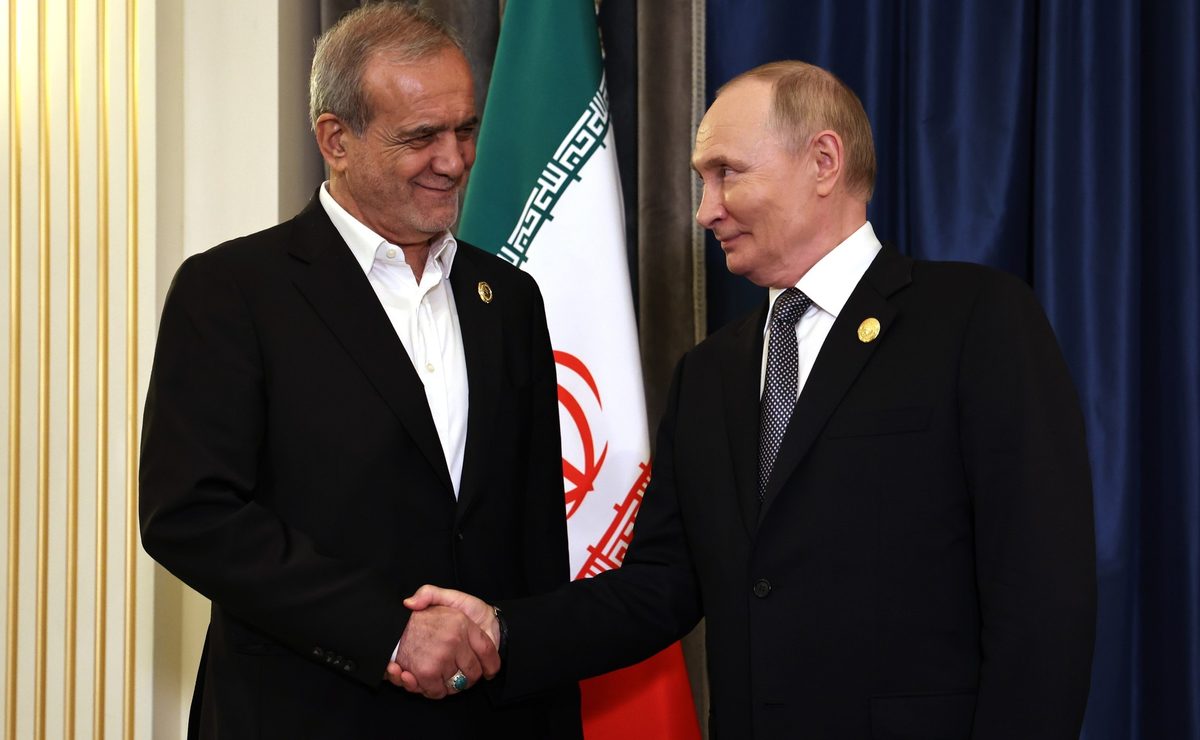
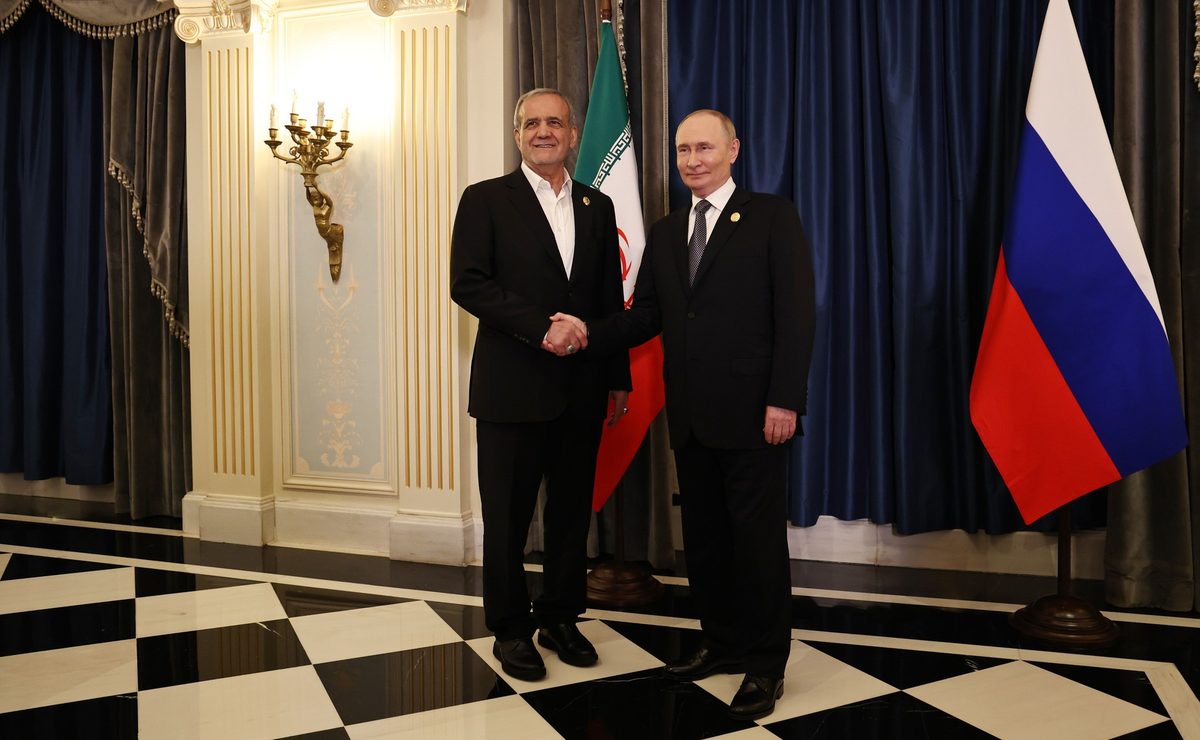
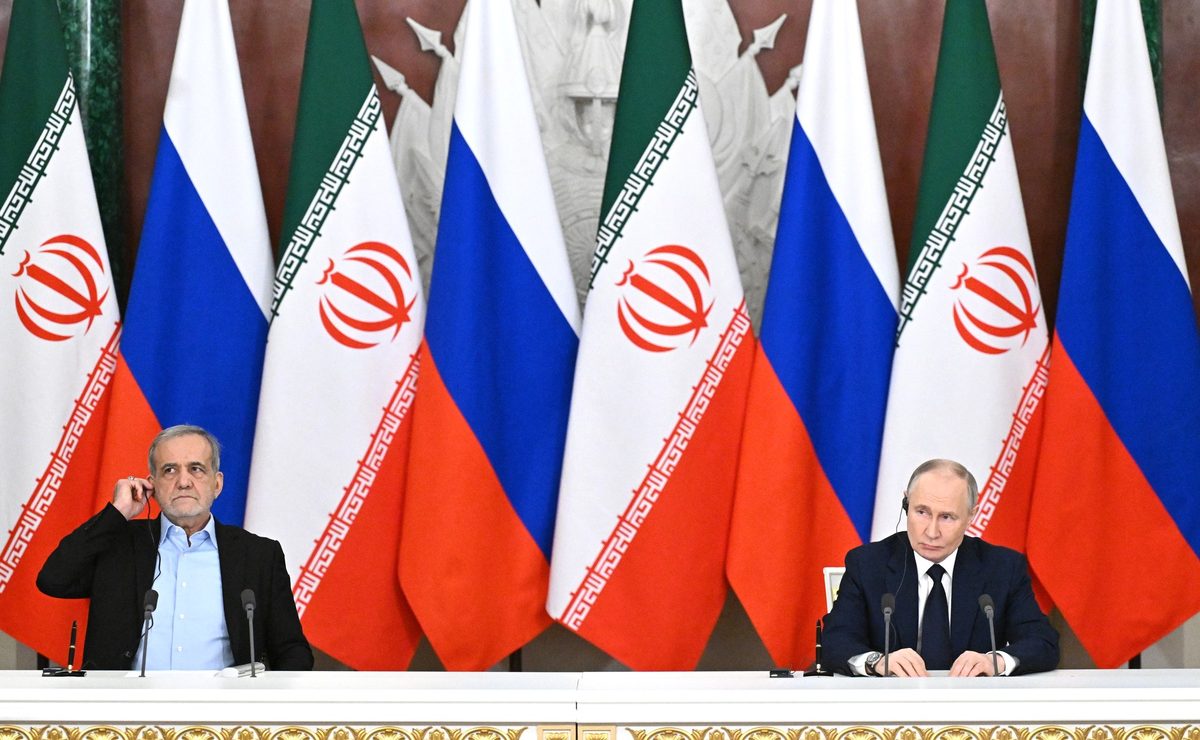
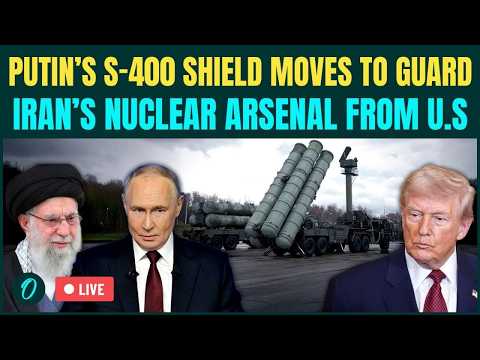
In June 2025, Israeli and American strikes destroyed roughly a third of Iran's air defenses in twelve days; leaked Russian documents show Tehran has since spent billions to replace and expand what it lost. The secret €500 million agreement includes 500 Verba shoulder‑fired launchers and 2,500 missiles, long‑range S‑400 batteries, and up to 48 Su‑35 fighter jets; the first 16 airframes are in production for Iran. This mix of advanced and widely dispersed man‑portable air‑defense systems is designed to make any future U.S. or Israeli air campaign far more complex and costly.
A third round of U.S.–Iran nuclear talks in Geneva on February 26 ended without breakthrough, as Tehran rejected demands to permanently end uranium enrichment and export its stockpile. U.S. envoys called the meetings constructive but incomplete; Washington is now weighing whether to expand its demands to include conventional arms and missile limits in light of the Verba and Su‑35 deals. Russian and Chinese military support—from air defenses to satellite intelligence—could lock in a longer‑term shift in the Middle East military balance.
Questions about this story
Free account needed to ask — your question is kept and asked for you right after sign-up. Answers are public.
No questions yet — be the first to ask.
Key Indicators
€500M
Verba MANPADS deal value
Secret December 2025 contract for 500 launchers and 2,500 missiles, with deliveries from 2027 to 2029
€6B
Su-35 fighter jet deal value
Reported contract for 48 Su-35 jets, with first deliveries begun in late 2024
~120
Air defense systems destroyed
Roughly one-third of Iran's pre-war air defense network was destroyed or disabled in June 2025 strikes
2027–2029
Verba delivery window
Three tranches of shoulder-fired missiles scheduled across three years
Images from Openverse under Creative Commons licenses.
Videos from YouTube.
Voices
Curated perspectives — historical figures and your fellow readers.
Ayn Rand
(1905-1982) ·Cold War · philosophy
Fictional AI pastiche — not real quote.
"Two theocratic regimes, each built on the mysticism of collective sacrifice, now trading missiles and fighter jets — as if armaments purchased with borrowed billions could substitute for the one weapon neither possesses: a civilization that produces rather than merely confiscates. The looters have found each other, which is precisely where they belong."
0% found this insightful
Ever wondered what historical figures would say about today's headlines?
Sign up to generate historical perspectives on this story.
18 events
Latest: March 6th, 2026 · 6 months ago
Showing 8 of 18
JK to step
Tap a bar to jump to that date
Jump to
March 2026
Leaked Russian letters show first 16 Su-35 jets for Iran in production
LatestProcurement
Defense outlets reported leaked Russian correspondence indicating that 16 Su-35 fighters for Iran are already in production, with documents detailing payment schedules and a push to deliver the full batch of aircraft by 2027.
February 2026
Analysis underscores Russian and Chinese technology as backbone of Iran’s strategic depth
Analysis
A geopolitical research brief argued that Russian S-400 air defenses, Su-35 fighters, and Chinese missile and drone technology are turning Moscow and Beijing into 'technological anchors' of Iran’s regional posture, deepening its resilience against Western pressure.
Third round of U.S.–Iran nuclear talks in Geneva ends without breakthrough
Diplomacy
Talks in Geneva produced what both sides called 'constructive' discussions but no agreement, with Iran rejecting key U.S. demands for a permanent end to enrichment and for exporting its uranium stockpile while agreeing to continue negotiations the following week.
Think tanks detail Iran’s post-war turn to Russian and Chinese missile systems
Analysis
New research outlined how Iran accelerated negotiations with Russia and China for air- and missile-defense systems after the June 2025 war, framing the Verba MANPADS, S-400 batteries, and Chinese HQ-9 purchases as part of a strategy to harden its airspace against future Western or Israeli strikes.
New analysis highlights strategic impact of secret Verba deal
Analysis
Security analysts assessed that Russia’s secret €500 million Verba MANPADS contract with Iran, delivering 500 launchers and 2,500 missiles between 2027 and 2029, could significantly complicate future Israeli or U.S. air operations and increase proliferation risks to Iranian proxies.
Financial Times reveals secret €500M Verba MANPADS deal
Revelation
The Financial Times reported on leaked Russian documents and sources confirming the December 2025 agreement for shoulder-fired missile systems, surfacing the deal as a third round of nuclear talks is days away.
Second round of nuclear talks concludes in Geneva
Diplomacy
Both sides described the talks as productive, but core disagreements remained over uranium enrichment. Iran offered a three-to-five-year suspension; Washington demanded permanent zero enrichment.
US and Iran hold first nuclear talks in Muscat
Diplomacy
Indirect negotiations between Washington and Tehran began in Oman's capital, mediated by Omani Foreign Minister Badr bin Hamad Al Busaidi.
December 2025
Iran and Russia sign three-year diplomatic cooperation plan
Diplomacy
Foreign ministers Araghchi and Lavrov signed a consultation program for 2026–2028, formalizing regular coordination between the two governments.
Iran and Russia secretly sign €500M Verba MANPADS deal
Procurement
Rosoboronexport and Iran's defense ministry signed a confidential agreement in Moscow for 500 Verba launchers and 2,500 missiles, with deliveries scheduled in three tranches from 2027 to 2029.
Iran International reported on leaked Russian defense files showing Iran agreed to purchase 48 Su-35 fighter jets for approximately €6 billion, with deliveries extending through 2028.
Iran-Russia strategic partnership treaty enters into force
Legal
The comprehensive strategic partnership agreement was officially implemented after completing ratification in both countries.
July 2025
Iran formally requests Verba MANPADS from Russia
Procurement
Iran's defense ministry submitted an official request to Rosoboronexport for Verba man-portable air defense systems, citing the destruction of its air defense network during the June war.
June 2025
Trump announces ceasefire with Iran
Diplomacy
A US-brokered ceasefire took effect after twelve days of hostilities that killed over 1,000 Iranians and 29 Israelis.
US strikes Iranian nuclear sites in Operation Midnight Hammer
Military
125 US military aircraft and a guided-missile submarine launched 75 precision munitions against the Fordow, Natanz, and Isfahan nuclear sites and remaining Iranian air defense assets.
Israel launches Operation Rising Lion against Iran
Military
Israel struck roughly 100 targets across Iran using over 200 fighter jets, destroying or disabling approximately 120 air defense systems—about one-third of Iran's pre-war total. Strikes targeted nuclear facilities, military bases, and air defense networks.
The State Duma voted to ratify the comprehensive strategic partnership treaty with Iran.
January 2025
Iran and Russia sign 20-year strategic partnership treaty
Diplomacy
Presidents Putin and Pezeshkian signed a comprehensive strategic partnership in Moscow, covering military-technical cooperation, economic ties, and security coordination. The treaty does not include a mutual defense clause.
Scenarios
1
Arms deals complicate but don't derail nuclear talks
Possible
Discussed by: Axios, Brookings Institution, European diplomatic sources
Washington uses the arms revelations as leverage to expand the scope of negotiations to include missile and conventional weapons limits, while Tehran argues the purchases are defensive responses to an unprovoked attack. Both sides have enough incentive to keep talking—Trump wants a signature foreign policy achievement, and Pezeshkian needs sanctions relief—so the deals become a bargaining chip rather than a dealbreaker. A nuclear agreement is reached that does not address conventional arms procurement.
Trump's stated deadline passes without agreement. The arms deal revelations harden Washington's position that Iran is using negotiations as cover for military buildup. With two carrier strike groups already positioned near Iranian waters, the US launches targeted strikes—likely against newly delivered Russian air defense equipment—creating a direct US-Russia friction point over destroyed Russian hardware on Iranian soil.
3
Iran builds a Russian-supplied deterrent that shifts regional power balance
Uncertain
Discussed by: Foreign Policy Research Institute, Center for Strategic and International Studies, Israeli defense analysts
If no new military action occurs, Iran's multi-billion-dollar procurement campaign reaches completion by 2028–2029. Operational S-400 batteries, Su-35 fighters, and distributed Verba MANPADS create layered air defenses far more capable than the network Israel destroyed in 2025. This raises the cost and complexity of any future strike campaign and could embolden Iran's regional posture, including arms transfers to proxy forces equipped with Russian-origin systems.
4
MANPADS proliferate to Iranian proxy groups across the Middle East
Possible
Discussed by: Federation of American Scientists, Arms Control Association, Israeli and US intelligence assessments
Iran has a documented history of transferring man-portable air defense systems to Hezbollah, Houthi forces in Yemen, and Iraqi Shia militias. The Verba, with its advanced three-band seeker designed to defeat countermeasures, would represent a significant upgrade over the older Igla and Strela systems currently in proxy arsenals. If even a fraction of the 2,500 missiles reach non-state groups, it could threaten military and civilian aviation across the region.
Historical Context
3 moments from history that rhyme with this story — and how they unfolded.
1 of 3
June 1967 – October 1973
Soviet rearming of Egypt and Syria after the Six-Day War (1967–1973)
Israel destroyed the Egyptian and Syrian air forces and air defenses in six days in June 1967. The Soviet Union immediately began a massive resupply, sending 13,000 military advisors to Egypt by late 1967—rising to 20,000 by 1970—along with hundreds of fighter jets, thousands of tanks, and advanced SA-6 air defense batteries.
Then
Egypt and Syria rebuilt forces far larger and more capable than what they lost, including an integrated air defense network that inflicted heavy Israeli aircraft losses in the opening days of the 1973 Yom Kippur War.
Now
The Soviet-supplied air defense umbrella changed the calculus of Middle Eastern air warfare and demonstrated that a devastated military could be reconstituted within years if a superpower patron committed to the effort.
Why this matters now
The parallel is direct: a Middle Eastern power whose air defenses were shattered turns to a major-power patron for rapid rebuilding. The key question is whether Russia can deliver at the scale and speed the Soviets managed in 1967–1973, especially while fighting its own war in Ukraine.
2 of 3
1986 – 1996
US Stinger MANPADS proliferation from Afghanistan (1986–1990s)
The United States supplied approximately 2,000 FIM-92 Stinger shoulder-fired missiles to Afghan mujahideen fighting Soviet forces. The missiles downed an estimated 269 Soviet aircraft and helicopters, fundamentally changing the battlefield. After the Soviet withdrawal, the Central Intelligence Agency spent years and millions of dollars trying to buy back unused Stingers.
Then
The Stingers helped end Soviet air dominance in Afghanistan and contributed to the Soviet withdrawal in 1989.
Now
An estimated 600 Stingers remained unaccounted for as of 1996. Black-market prices surged above $100,000 per missile, and MANPADS proliferation became a top-tier US security concern that shaped export controls for decades.
Why this matters now
The Afghan experience illustrates the proliferation risk inherent in large MANPADS transfers. Iran's history of supplying weapons to proxy groups raises the same concern: once 2,500 advanced missiles enter the supply chain, controlling their final destination becomes extremely difficult.
3 of 3
2007 – October 2016
Russia’s delayed S-300 delivery to Iran (2007–2016)
Russia signed a contract to sell S-300 air defense systems to Iran in 2007. Under international pressure, President Dmitry Medvedev suspended the deal in 2010. After the 2015 Iran nuclear agreement (known as the Joint Comprehensive Plan of Action), Putin lifted the ban, and Russia completed delivery of the S-300 batteries by October 2016—nine years after the original contract.
Then
Iran deployed the S-300 around key nuclear and military sites, closing a major gap in its air defense coverage.
Now
The episode established a pattern: Russian arms sales to Iran serve as a barometer of Moscow's broader diplomatic calculations. Sales accelerate when Russia prioritizes the Iranian relationship over Western objections, and freeze when Moscow sees greater value in cooperating with the West.
Why this matters now
The current wave of deals—Verba, S-400, Su-35—is moving faster than the S-300 saga, reflecting how much the geopolitical landscape has shifted. With Russia under Western sanctions for its invasion of Ukraine, there is far less incentive for Moscow to exercise restraint on Iran arms sales.