
December 1947
First transistor (1947)
John Bardeen, Walter Brattain, and William Shockley at Bell Labs demonstrated the first point-contact transistor. It was crude, slow, and fragile compared to today's chips, but it proved that solid-state amplification was possible.
Then
Transistors replaced vacuum tubes in radios and early computers over the following decade.
Now
The transistor became the foundation of all modern electronics, with billions now fabricated on single chips.
Why this matters now
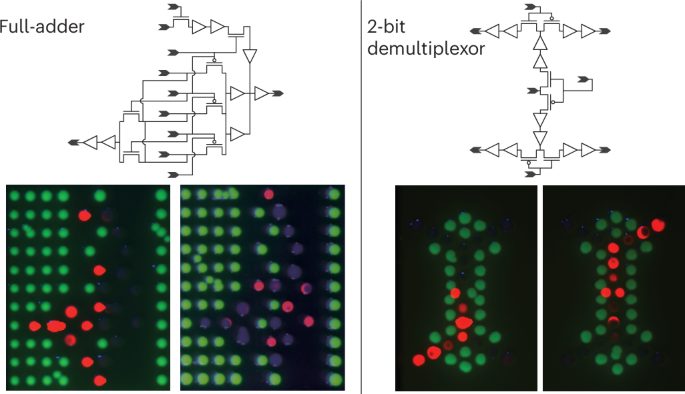
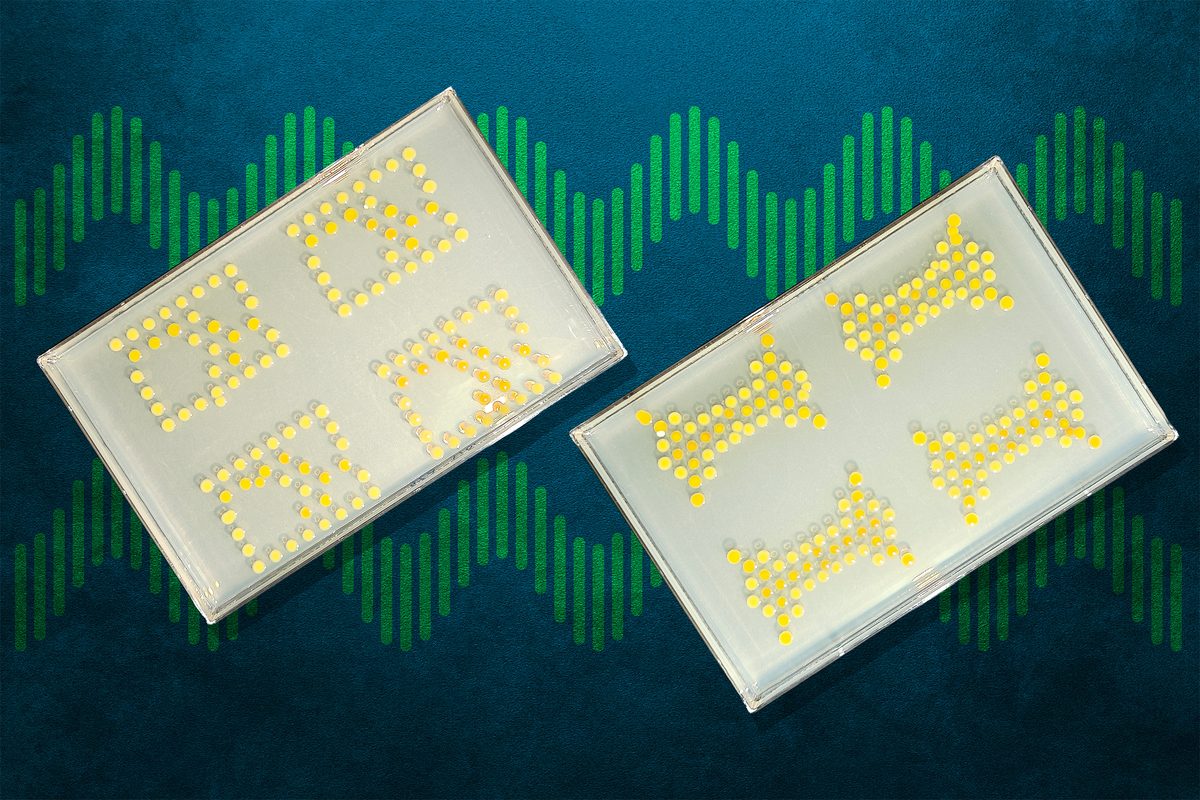
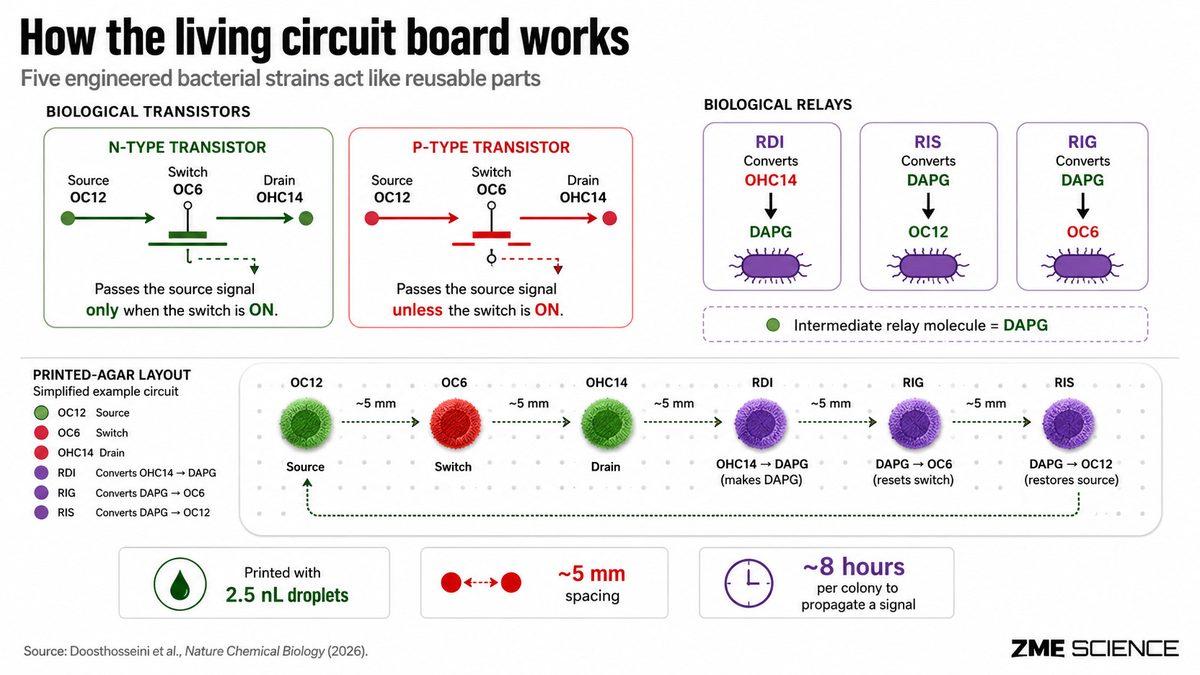
Today's bacterial transistors are similarly crude and slow, but they prove that biological computation is possible, just as the first transistor proved solid-state electronics.