



Pull to refresh
Logo
Magnitude 7.0 earthquake strikes Tibet near Nagqu

Magnitude 7.0 earthquake strikes Tibet near Nagqu

Force in Play

Magnitude 7.0 quake kills 16 and injures 76 in Baqen County, displacing thousands at 4,800 meters

Overview

Updated Oct 28

Sixteen people were killed and 76 injured after the magnitude 7.0 earthquake in Baqen County, Nagqu city, the latest figures officials gave on October 23. The quake destroyed or damaged 339 homes and 20 livestock sheds and cut power and phone service in the county seat.

Rescue work has continued at almost 4,800 meters, where cold, thin air and the risk of landslides and falling rocks slow crews. About 12,500 people are in 18 resettlement sites, and the China Charity Federation allocated 3 million yuan for relief.

Why it matters

A shallow quake at 4,800 meters has killed 16 people and left thousands in tents as winter cold sets in.

Questions about this story

Free account needed to ask — your question is kept and asked for you right after sign-up. Answers are public.

No questions yet — be the first to ask.

Key Indicators

7.0
Earthquake magnitude
Measured by USGS and China Earthquake Networks Center
16
Deaths
Figure given at the Nagqu city briefing on the afternoon of October 23
76
Injured
Each treated under an individual plan at area hospitals and aid posts
12,489
People evacuated
Moved to 18 resettlement sites across the quake zone
23
Aftershocks M3.0+
Recorded by 9 a.m. on October 23; the largest was magnitude 4.3
10–18 km
Focal depth
China Earthquake Networks Center recorded 10 km; USGS recorded 18 km

Voices

Curated perspectives — historical figures and your fellow readers.

Sign up to generate historical perspectives on this story.

People Involved

Organizations Involved

Timeline

7 events Latest: October 24th, 2026 · 3 weeks ago
Tap a bar to jump to that date
  1. China Charity Federation allocates 3 million yuan for relief

    Latest Aid

    The federation, one of China's most influential charity organizations, sent emergency funds as rescue teams worked at nearly 4,800 meters, where cold, low oxygen and secondary hazards slowed the effort.

  2. Officials confirm 16 dead and 76 injured

    Casualty update

    Nagqu city officials said the quake destroyed or damaged 339 homes and 20 livestock sheds, and that 12,489 people had been moved to 18 resettlement sites. Three rounds of door-to-door checks found no missing people.

  3. China raises national earthquake response to Level III

    Government action

    The State Council earthquake relief headquarters and the Ministry of Emergency Management upgraded the response from Level IV to Level III. China released 50 million yuan (about $7.5 million) in emergency relief funds and set aside another 30 million yuan for recovery.

  4. 23 aftershocks logged as experts warn more are possible

    Seismic activity

    The China Earthquake Networks Center recorded 23 aftershocks of magnitude 3.0 or higher by 9 a.m., the largest 4.3, and said felt quakes remain possible near the epicenter in coming days. CENC experts described the mainshock as an extensional rupture.

  5. Telecom service restored across Baqen County

    Infrastructure

    All base stations knocked out by the quake were back online by 10:30 a.m., the Xizang Communications Administration said. Repairs to damaged power lines continued.

  6. M 7.0 earthquake strikes Baqen County, Tibet

    Earthquake

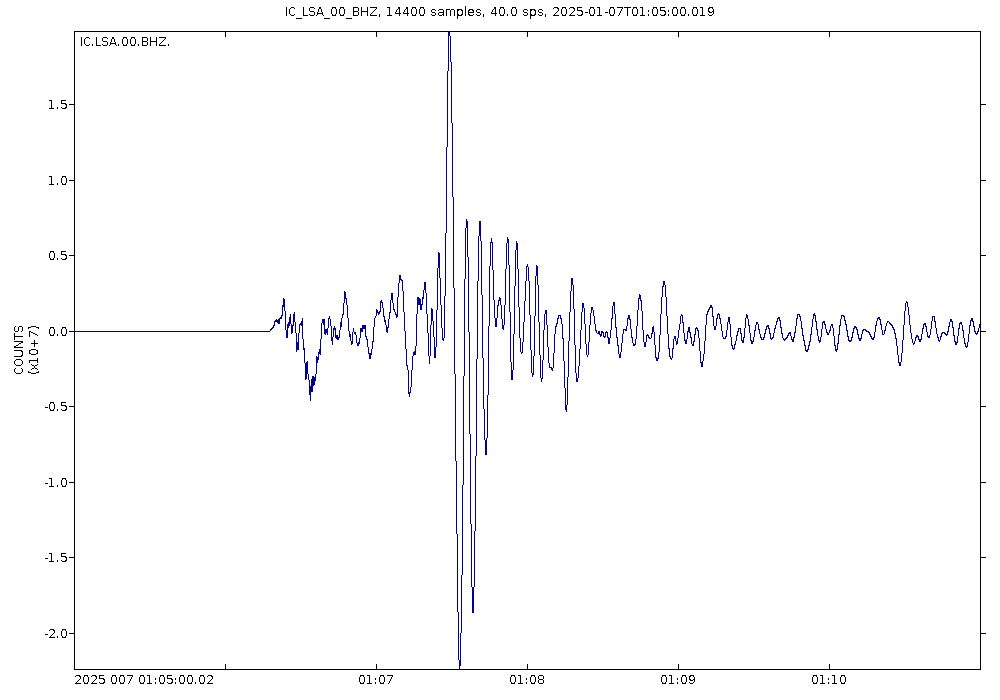
    A magnitude 7.0 earthquake hits 183 km east-northeast of Nagqu at a shallow depth, producing severe shaking (MMI VIII).

  7. Casualties reported and regional emergency response activated

    Emergency response

    Local authorities reported casualties within hours of the quake and Xizang activated a Level-II regional emergency response. The Baqen county seat lost power and telecommunications service.

Scenarios

1

Confirmed deaths reported in Nagqu quake aftermath

Possible Resolves by Nov 22, 2026

Discussed by: USGS PAGER estimates, China Earthquake Networks Center

The shallow depth and MMI VIII shaking suggest potential building damage in Baqing County. If the quake hit populated areas, casualties could emerge as damage assessments complete. The region's remote, high-altitude terrain could slow rescue efforts.

2

Major aftershock (M 6.0+) follows within 30 days

Possible Resolves by Nov 22, 2026

Discussed by: USGS aftershock forecasting

Large shallow earthquakes typically produce aftershocks. A magnitude 6 or higher aftershock would complicate rescue and recovery efforts and could cause additional damage to weakened structures.

3

No significant casualties; quake becomes a seismic data point

Likely Resolves by Nov 22, 2026

Discussed by: Seismologists studying the region

If the quake hit sparsely populated high-altitude terrain, casualties could be minimal. The event would still be significant for seismic research, providing data on the region's fault systems and the collision of the Indian and Eurasian plates.

4

Death toll rises above 16 as crews reach outlying villages

Deadline passed (Nov 6, 2026)

Discussed by: Nagqu city emergency command headquarters

Rescue teams have covered the county seat and 18 settlement sites, but the quake zone takes in remote high-altitude villages where collapsed homes can go unreported for days. Officials say three rounds of door-to-door checks found no missing people so far.

5

Aftershocks or landslides further damage weakened buildings

Likely Resolves by Nov 22, 2026

Discussed by: Pan Zhiqing, Nagqu emergency management bureau; China Earthquake Networks Center

Damaged structures are still standing across the quake zone, and the CENC says felt aftershocks remain possible. Landslides, slope collapses and falling rocks are the main secondary hazards, and hillsides above resettlement sites are being watched around the clock.

Historical Context

3 moments from history that rhyme with this story — and how they unfolded.

November 1951

1951 Nagqu earthquake (M 7.7)

A magnitude 7.7 earthquake struck 89 kilometers west-southwest of Nagqu on November 18, 1951, at a depth of 30 kilometers. It remains the strongest earthquake near Nagqu since 1900.

Then

The quake caused significant damage in the sparsely populated region.

Now

It established the region's seismic baseline and remains the reference point for large earthquakes near Nagqu.

Why this matters now

The 2026 quake is the first magnitude 7+ event near Nagqu since 1951, making it the region's largest in 75 years.

May 2008

2008 Wenchuan earthquake (M 7.9)

A magnitude 7.9 earthquake struck Sichuan province on May 12, 2008, at a depth of 19 kilometers. The quake killed nearly 70,000 people and left millions homeless.

Then

The Chinese government launched a massive rescue and reconstruction effort.

Now

It prompted stricter building codes and improved earthquake monitoring across China.

Why this matters now

Shows the potential impact of a large shallow earthquake in China, though the Nagqu region is far less populated than Sichuan.

April 2015

2015 Nepal earthquake (M 7.8)

A magnitude 7.8 earthquake struck central Nepal on April 25, 2015, at a depth of 15 kilometers. It killed nearly 9,000 people and destroyed hundreds of thousands of buildings.

Then

International aid poured into Nepal for rescue and recovery.

Now

The quake highlighted the vulnerability of Himalayan communities to large shallow earthquakes.

Why this matters now

The Nagqu quake occurs in the same Himalayan tectonic zone, where the Indian plate collides with the Eurasian plate.

Sources

(18)