



Pull to refresh
Logo
Lockheed Martin to buy submarine-hunting sensor maker Ultra Maritime

Lockheed Martin to buy submarine-hunting sensor maker Ultra Maritime

Money Moves

A $3.45 billion deal pulls much of the Western navies' undersea-sensing supply chain under one prime contractor

July 6th, 2026: Lockheed agrees to buy Ultra Maritime

Overview

Updated Jul 6

The gear that finds enemy submarines comes largely from one mid-sized firm, Ultra Maritime. On July 6, 2026, Lockheed Martin agreed to buy it for $3.45 billion.

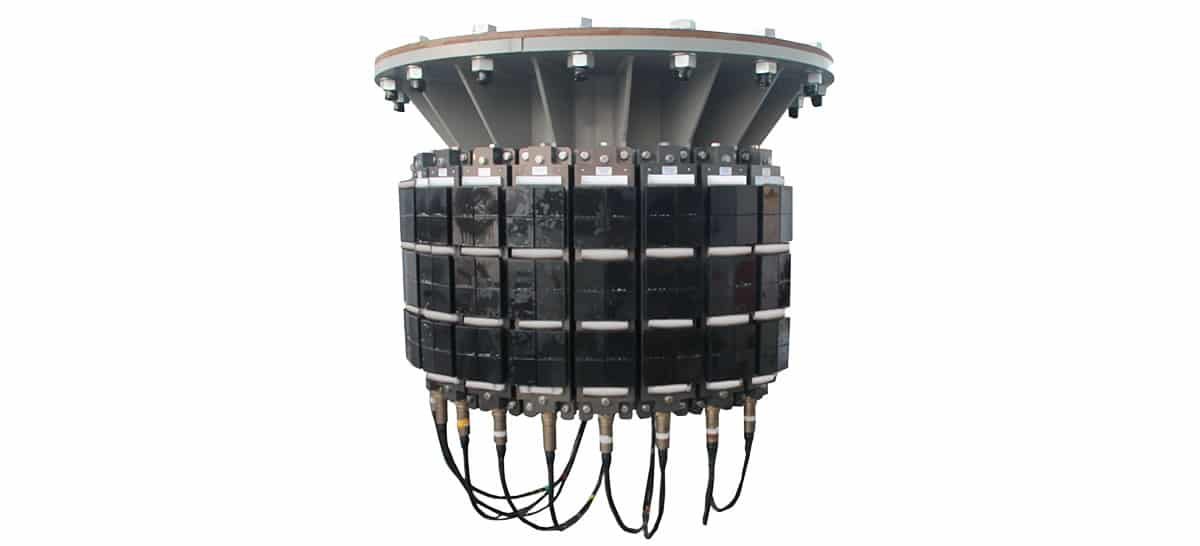
The purchase pulls a critical naval-sensing supply chain under a single prime contractor. Ultra sells sonar and sonobuoys to the navies of the United States, Britain, Canada, and Australia. Rival shipbuilders and missile makers may now depend on a competitor for parts.

Why it matters

One prime contractor would control much of the sensing gear that U.S. and allied navies use to find enemy submarines.

Questions about this story

Free account needed to ask — your question is kept and asked for you right after sign-up. Answers are public.

No questions yet — be the first to ask.

Key Indicators

$3.45B
Purchase price
What Lockheed will pay Advent for Ultra Maritime.
$170M
Advent's investment since 2022
Spent on product development and factory capacity, including in-house sonobuoy production.
17%
Annual revenue growth
Ultra Maritime's yearly sales growth under Advent from 2022 to 2025.
$17.3B
Buyer division revenue (2025)
Lockheed's Rotary and Mission Systems unit, which will absorb Ultra.
4
Core navy customers
The United States, Britain, Canada, and Australia buy Ultra's gear.

Voices

Curated perspectives — historical figures and your fellow readers.

Ever wondered what historical figures would say about today's headlines?

Sign up to generate historical perspectives on this story.

People Involved

Organizations Involved

Timeline

January 2020 July 2026

4 events Latest: July 6th, 2026 · 2 months ago
Tap a bar to jump to that date
  1. Lockheed agrees to buy Ultra Maritime

    Latest Deal

    Lockheed Martin announces a definitive agreement to buy Ultra Maritime from Advent for $3.45 billion, subject to regulatory approvals.

  2. Navy awards sole-source sonobuoy deal

    Contract

    Ultra Maritime wins a sole-source U.S. Navy contract to produce sonobuoys, showing its standing as a supplier.

  3. Ultra Maritime is formed under Advent

    Deal

    Advent completes its Ultra Electronics takeover and carves out Ultra Maritime as its undersea-warfare business.

  4. Advent buys Cobham

    Deal

    Advent International acquires British aerospace and defense supplier Cobham, its first step into the sector.

Scenarios

1

Lockheed closes the deal and folds Ultra into its naval division

Likely Resolves by Q2 2027

Discussed by: Bloomberg, Breaking Defense, company statements

The deal clears U.S. and allied reviews without major conditions. Lockheed completes the purchase and moves Ultra Maritime into Rotary and Mission Systems. This is the base case both companies describe, given Lockheed builds ships' combat systems but not the sensors, so the overlap looks limited.

2

Regulators open an in-depth review of the sensor deal

Possible Resolves by Q1 2027

Discussed by: Antitrust analysts tracking defense consolidation

A U.S. or allied competition authority worries that one prime controlling sonobuoy and sonar supply could squeeze rival shipbuilders and missile makers. The Federal Trade Commission issues a second request, or Britain's Competition and Markets Authority or Australia's foreign-investment reviewer opens an in-depth phase. This stretches the timeline past a year.

3

Deal clears only with a divestiture or supply guarantee

Uncertain Resolves by Q2 2027

Discussed by: Antitrust analysts citing prior defense-merger remedies

Regulators let the deal proceed but attach conditions. Lockheed must sell part of Ultra, or sign a binding commitment to keep supplying sonar and sonobuoys to competing primes on fair terms. This echoes how U.S. regulators cleared past defense-supplier mergers with behavioral remedies rather than an outright block.

Historical Context

2 moments from history that rhyme with this story — and how they unfolded.

September 2017 – June 2018

Northrop–Orbital ATK approved with conditions (2018)

Northrop Grumman bought Orbital ATK, a leading solid-rocket-motor maker, for $9.2 billion. The FTC feared Northrop could cut off rival missile bidders. It approved the deal anyway, with strings attached.

Then

The FTC required Northrop to supply rocket motors to competitors on non-discriminatory terms, watched by a compliance monitor.

Now

The behavioral remedy became a template for clearing defense mergers where a prime absorbs a critical parts supplier.

Why this matters now

It maps the middle path for the Ultra deal: not a block, but a supply guarantee to keep rivals in the game.

December 2020 – February 2022

Lockheed–Aerojet Rocketdyne blocked (2020–2022)

Lockheed agreed to buy Aerojet Rocketdyne, a top maker of rocket motors, for $4.4 billion. The Federal Trade Commission sued to block it, arguing Lockheed could starve rival missile makers of a key input. Lockheed dropped the deal.

Then

Lockheed terminated the purchase in February 2022 and paid no breakup fee to regulators.

Now

L3Harris later bought Aerojet Rocketdyne for $4.7 billion, cleared in 2023 because L3Harris was not a competing missile prime.

Why this matters now

It shows the exact worry regulators may raise here: a prime buying a supplier that also feeds its competitors.

Sources

(5)