
Pull to refresh
Logo
Las Vegas weighs bond allocations for three affordable housing projects

Las Vegas weighs bond allocations for three affordable housing projects

Money Moves Las Vegas, NV local

Staff recommends directing 78% of the city's annual volume cap to 534 units

August 5th, 2026: Council reviews $35.46M in bond allocations

Overview

Updated Aug 27

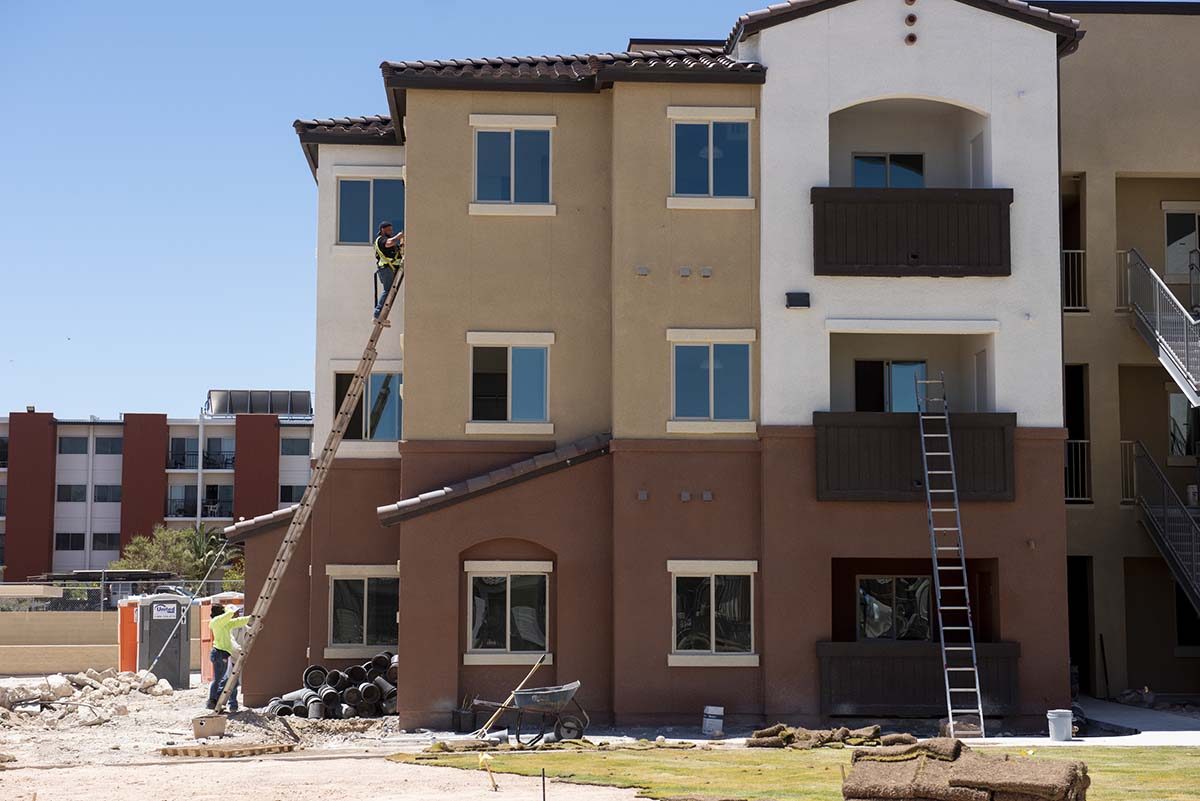
Las Vegas City Council members reviewed resolutions to direct $35.46 million of the city's annual tax-exempt bond capacity to three affordable housing developments. The money would support 534 units for low- and moderate-income renters, including a new build with 146 affordable apartments, a 220-unit senior housing rehabilitation, and a 141-unit affordable complex.

The volume cap comes from a federal program that lets cities borrow at tax-exempt rates on behalf of private developers. Cheaper financing is what makes below-market rents feasible. Approved projects must remain affordable for at least 30 years.

Why it matters

Nevada needs nearly 84,000 more affordable rental homes, and this bond authority is a primary tool the city can use to add them.

Questions about this story

Free account needed to ask — your question is kept and asked for you right after sign-up. Answers are public.

No questions yet — be the first to ask.

Key Indicators

$35.46M
Proposed bond allocation
Staff recommends the council direct this amount from its annual volume cap.
$45.45M
City's annual volume cap
Las Vegas's 2026 state private activity bond allocation.
78%
Share of cap proposed
The three allocations would use most of the city's annual authority.
534
Units across three projects
146 new affordable units, 220 senior units, and 141 affordable units.

Voices

Curated perspectives — historical figures and your fellow readers.

Ever wondered what historical figures would say about today's headlines?

Sign up to generate historical perspectives on this story.

People Involved

Organizations Involved

Timeline

April 2022 August 2026

4 events Latest: August 5th, 2026 · 1 month ago
Tap a bar to jump to that date
  1. Council reviews $35.46M in bond allocations

    Latest Vote

    Las Vegas City Council considers three resolutions totaling $35.46 million for affordable housing.

  2. Governor signs Assembly Bill 540

    Law

    Lombardo signs bill creating $133 million Attainable Housing Fund and expanding eligibility.

  3. State Board of Finance approves $2B+ in housing bonds

    Funding

    State approves more than $2 billion in tax-exempt bonds for affordable housing since 2019.

  4. Clark County creates Welcome Home housing program

    Policy

    County board allocates $160 million for affordable housing development and rehabilitation.

Scenarios

1

Council approves all three bond allocations

Likely Resolves by Aug 12, 2026

Discussed by: Las Vegas city staff, whose agenda recommendation backs approval

The council passes the three resolutions as recommended, directing $35.46 million to Marble Manor 2b, Arthur D. Sartini Plaza, and Decatur Evergreen Apartments. Developers then close the bond financing and move toward construction. This is the most likely outcome given the staff recommendation and the routine nature of the volume cap allocation.

2

Council tables or amends one or more allocations

Unlikely Resolves by Aug 12, 2026

Discussed by: No public analysts identified; hinges on individual council member actions

A council member requests additional detail on one project, such as the Sartini Plaza rehabilitation scope or the Marble Manor income mix. One or more resolutions get tabled, deferred, or amended for further review. This would delay the affected project's financing timeline but not necessarily kill it.

3

Allocations approved, but construction faces delays

Possible Resolves by Aug 5, 2027

Discussed by: Nevada developers and housing analysts monitoring construction cost trends

The council approves the allocations, but one or more projects hit bond-close or construction setbacks. Rising materials costs, contractor shortages, or financing gaps push groundbreaking past initial timelines. The allocation is necessary but not sufficient for completion; developers still need to close the tax-exempt bonds and secure additional subsidies.

Historical Context

3 moments from history that rhyme with this story — and how they unfolded.

October 1986

Tax Reform Act of 1986

Congress created the private activity bond program and the Low-Income Housing Tax Credit in a single bill. States receive an annual per-capita allocation of tax-exempt bond authority, which they distribute to cities, counties, and housing agencies for qualifying projects.

Then

Tax-exempt bonds and housing tax credits became the primary federal tools for financing below-market rental housing.

Now

Nearly four decades later, these programs still account for the majority of affordable housing produced in the United States.

Why this matters now

The volume cap Las Vegas is allocating traces directly to this 1986 framework — the same federal authority, distributed through the state, used for decades to finance below-market housing.

2008-2012

Nevada's 2008 housing crash

Las Vegas had among the highest foreclosure rates in the nation after the financial crisis. New construction collapsed and tens of thousands of properties went through foreclosure, disrupting the housing market for years.

Then

Home values fell sharply and construction stalled across the metro.

Now

Production has never fully caught up with subsequent population growth, leaving a persistent shortage of below-market units.

Why this matters now

The current affordable housing deficit traces to the post-crash supply gap; bond-financed projects like those before the council are part of the catch-up effort.

April 2022

Clark County Welcome Home program launch

Clark County created Welcome Home with a $160 million allocation — at the time the largest single local commitment to affordable housing in the region's history. The program funds both new construction and rehabilitation of below-market units.

Then

The first funding round supported construction or rehabilitation of nearly 3,000 units across the county.

Now

The county has since opened additional rounds, including $60 million in 2025, and coordinates with city-level bond allocations.

Why this matters now

The city's bond allocations and the county's capital grants are complementary layers of the same financing stack — one provides cheap debt, the other direct subsidy.

Sources

(10)