




Pull to refresh
Logo
Daily Brief
Following
Why Ranks Sign Up
Italy votes on constitutional overhaul of its judiciary

Italy votes on constitutional overhaul of its judiciary

Rule Changes

Nordio Reform rejected 53-47% with high 55% turnout; Meloni calls it 'lost opportunity to modernize Italy'

March 24th, 2026: Official results confirm 'No' victory: 53.23% reject Nordio Reform

Overview

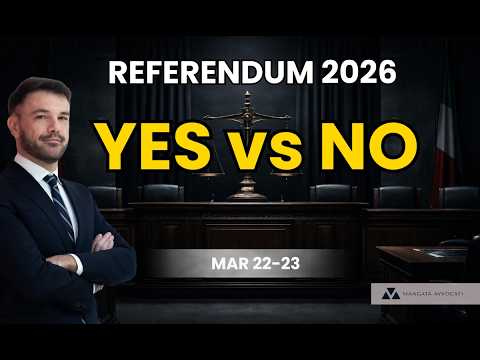
Italy's postwar constitution placed judges and prosecutors in a single, self-governing body to prevent a repeat of fascist-era political control over the courts. On March 22-23, 2026, voters rejected the Nordio Reform by 53.23% to 46.77%. The reform would have separated judicial and prosecutorial careers, split the governing council, and replaced elections with a lottery.

The defeat is a major political setback for Prime Minister Giorgia Meloni's coalition ahead of 2027 elections, despite exit polls showing a narrow 'Yes' lead. High turnout of 55.10% exceeded expectations, handing the opposition a unified victory while preserving the unified magistracy.

Why it matters

This would be the most significant structural change to an EU member state's judiciary since Poland's contested reforms triggered years of legal conflict with Brussels.

Questions about this story

No questions yet — be the first to ask.

Key Indicators

53.23-46.77%
Official Result
No wins referendum (15.08M vs 13.25M votes); 55.10% turnout
55.10%
Turnout
Highest for constitutional referendum in years, exceeding 2022 levels
5th
Constitutional referendum in Italian history
Italy has held only four previous constitutional referendums, in 2001, 2006, 2016, and 2020.
78 years
Age of the unified magistracy
The single-body judicial structure dates to Italy's 1948 constitution, designed to prevent executive control over prosecutors.
0%
Turnout quorum required
Unlike abrogative referendums requiring 50% participation, confirmatory constitutional referendums have no minimum turnout threshold.
117
Constitutional scholars opposing the reform
Including three former presidents of the Constitutional Court who joined the 'No' campaign's scientific committee.

Voices

Curated perspectives — historical figures and your fellow readers.

Ever wondered what historical figures would say about today's headlines?

Sign up to generate historical perspectives on this story.

Play

Exploring all sides of a story is often best achieved with Play.

Log in to play. Track your picks, climb the leaderboards. Log in Sign Up
Predict 4 ways this could play out. Contrarian picks score more — points lock when the scenario resolves. Log in to play
Timeline Five events from this story — drag them oldest to newest. Log in to play
Connections Sixteen names from the news. Find the four hidden groups of four. Log in to play

People Involved

Organizations Involved

Timeline

January 1948 March 2026

13 events Latest: March 24th, 2026 · 4 months ago Showing 8 of 13
Tap a bar to jump to that date
  1. Official results confirm 'No' victory: 53.23% reject Nordio Reform

    Latest Referendum

    With 55.10% turnout (28.34M votes), voters reject judicial career separation, CSM split, and lottery system. Meloni concedes defeat, calling it a 'lost opportunity to modernize Italy'.

  2. Polls close on second day; exit polls show narrow 'Yes' lead

    Referendum

    Voting ends at 15:00 CET. ANSA/Ipsos exit polls report 52% Yes vs 48% No margin. Official results expected later evening as ~35-40% turnout projected, below 2022 referendum levels.

  3. Polls open for two-day constitutional referendum

    Referendum

    Italian voters begin casting ballots on the Nordio Reform. Polls remain open until 23:00, then reopen March 23 from 07:00-15:00. No turnout quorum applies.

  4. 'Civil Society for No' committee inaugurated

    Campaign

    A broad coalition including 117 constitutional scholars and three former Constitutional Court presidents forms to oppose the referendum.

  5. 'Lawyers for No' committee launches

    Campaign

    Attorney Franco Moretti chairs a new legal professionals' committee opposing the reform.

  6. Parliament gives final approval; bill falls short of supermajority

    Legislative

    Both chambers approve the reform but fail to reach the two-thirds supermajority that would have made it law without a referendum, triggering the confirmatory vote process.

  7. Senate approves reform bill on first reading

    Legislative

    The Senate passes the constitutional reform with 106 votes in favor, 61 against, and 11 abstentions.

  8. Meloni government takes office, appoints Nordio

    Political

    Giorgia Meloni becomes prime minister and names former prosecutor Carlo Nordio as Justice Minister, signaling judicial reform as a priority.

  9. Justice referendums fail on 20% turnout

    Referendum

    Five abrogative referendums on justice reform fail to reach the required 50% turnout quorum, with only one in five eligible voters participating.

  10. Palamara scandal exposes judicial faction deals

    Scandal

    Wiretaps reveal former magistrates' union president Luca Palamara brokered judicial appointments through backroom deals, devastating public trust in the judiciary's self-governance.

  11. Voters reject Berlusconi's constitutional reform

    Referendum

    Berlusconi's broader constitutional overhaul, including judicial changes, is defeated with 59% voting 'No' at 52% turnout.

  12. Italy's postwar constitution creates unified magistracy

    Constitutional

    The Constituent Assembly establishes a single self-governing body for judges and prosecutors, explicitly designed to prevent fascist-era political control over the courts.

Historical Context

3 moments from history that rhyme with this story — and how they unfolded.

2017-2024

Poland's judicial independence battle with the EU (2017-2024)

Poland's Law and Justice (PiS) party restructured the judiciary by changing the composition of the National Council of the Judiciary, creating a new disciplinary chamber for judges, and lowering the Supreme Court retirement age to force out sitting justices. The European Court of Justice ruled multiple elements violated EU law, and the European Commission withheld billions in pandemic recovery funds as leverage.

Then

Poland's judiciary operated under parallel authority structures for years, with EU-aligned and government-aligned courts issuing contradictory rulings.

Now

PiS lost power in 2023, and the incoming Tusk government began reversing the reforms — but unwinding institutional changes proved far harder than making them.

Why this matters now

Italy's reform echoes key elements of Poland's playbook: restructuring the judicial council, changing how members are selected, and creating new disciplinary bodies. Critics argue the Italian lottery mechanism, while different in form from Poland's parliamentary appointment model, achieves a similar result — breaking the judiciary's control over its own governance.

December 2016

Italy's 2016 constitutional referendum (Renzi Reform)

Prime Minister Matteo Renzi staked his political future on a sweeping constitutional reform to streamline Italy's legislative process, abolish the Senate's equal power, and recentralize authority from regions. Renzi promised to resign if the reform failed. Turnout hit 65.5%, and 59.1% voted 'No.'

Then

Renzi resigned the day after the result. His Democratic Party fractured, and the populist Five Star Movement surged in subsequent elections.

Now

The defeat established a pattern in Italian politics: constitutional referendums become personal tests for the prime minister who champions them, regardless of the reform's technical merits.

Why this matters now

Meloni faces the same dynamic Renzi did — a referendum on institutional change becoming a referendum on the leader. Unlike Renzi, Meloni has not explicitly tied her political fate to the outcome, and her party avoided branding referendum materials. But a 'No' vote would carry the same political signal.

February 1992-1994

Italy's Mani Pulite investigation (1992-1994)

Milan prosecutors led by Antonio Di Pietro and Francesco Saverio Borrelli exposed systematic bribery connecting Italy's governing parties to major corporations. The investigation, known as 'Clean Hands,' led to over 1,000 politicians and businessmen being investigated, drove former Prime Minister Bettino Craxi into exile in Tunisia, and effectively destroyed the five parties that had governed Italy since World War II.

Then

Italy's entire postwar party system collapsed. Silvio Berlusconi, a media mogul with no prior political career, filled the vacuum by founding Forza Italia and winning the 1994 election.

Now

Mani Pulite created a permanent fault line in Italian politics between those who view prosecutorial independence as democracy's immune system and those who see it as unchecked power wielded by an unelected political class.

Why this matters now

The Nordio Reform is the latest chapter in a thirty-year argument that began with Mani Pulite. Supporters see career separation as preventing prosecutors from becoming political actors; opponents see it as the political class finally succeeding in defanging the institution that held it accountable.

Sources

(17)