
Pull to refresh
Logo
Astronauts keep aging space station running with summer spacewalk series

Astronauts keep aging space station running with summer spacewalk series

Built World

A NASA-ESA pair swaps a failing communications antenna as the ISS heads toward retirement in 2030

August 18th, 2026: Astronauts swap the high-speed antenna

Overview

Updated Aug 18

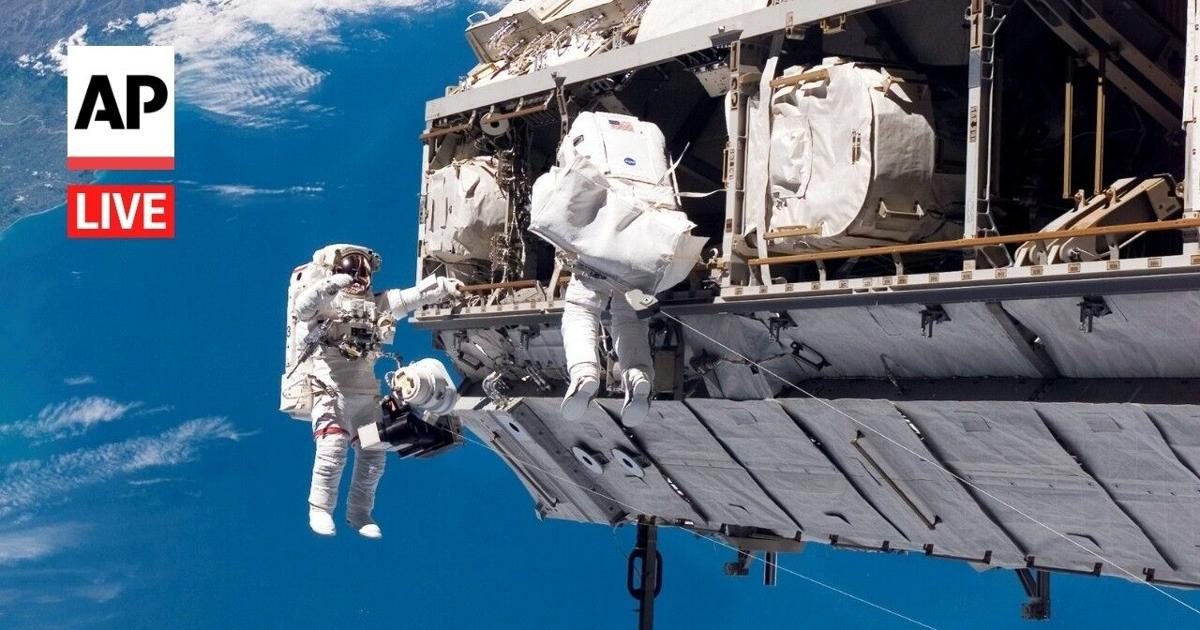
The space station's main high-speed link to Houston was wearing out. On August 18, 2026, two astronauts floated outside and swapped the aging antenna for a spare, restoring a backup for the data and voice that keep the crew safe.

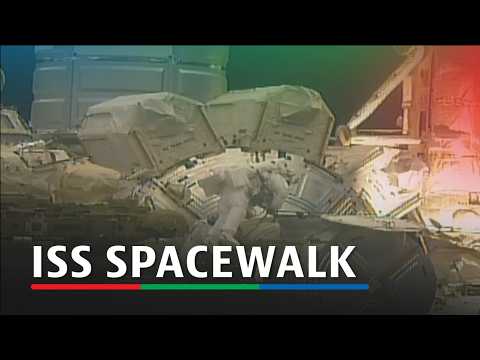
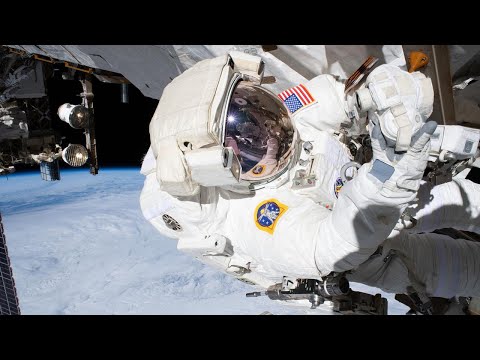
The roughly six-and-a-half-hour outing was the second of three spacewalks NASA planned for the summer. It also put Sophie Adenot in the record books as the first French woman to work in the vacuum of space.

Why it matters

A working, redundant high-speed link to Mission Control is what lets the station run experiments and keep its crew safe as the lab ages toward retirement.

Questions about this story

Free account needed to ask — your question is kept and asked for you right after sign-up. Answers are public.

No questions yet — be the first to ask.

Key Indicators

~6.5 hrs
Spacewalk duration
Time Menon and Adenot spent outside to swap the antenna.
US EVA 97
U.S. spacewalk number
The count of American-led spacewalks at the station, second of three this summer.
1st
French woman to spacewalk
Adenot is also the second European woman to do so, after Samantha Cristoforetti in 2022.
2030
Planned ISS retirement
NASA aims to operate the station through 2030 before a controlled deorbit.

Voices

Curated perspectives — historical figures and your fellow readers.

Ever wondered what historical figures would say about today's headlines?

Sign up to generate historical perspectives on this story.

People Involved

Organizations Involved

Timeline

July 2026 August 2026

4 events Latest: August 18th, 2026 · 4 weeks ago
Tap a bar to jump to that date
  1. Astronauts swap the high-speed antenna

    Latest Spacewalk

    Menon and Adenot spend about 6.5 hours replacing the aging space-to-ground antenna on the Z1 truss with a spare, restoring comms redundancy. Adenot becomes the first French woman to spacewalk.

  2. NASA reschedules the next spacewalk

    Decision

    NASA moves the antenna-swap spacewalk to August 18 so engineers can evaluate the spacesuit hardware. The sensor returned to normal after the suit came off.

  3. First spacewalk ends with a suit sensor glitch

    Spacewalk

    Jessica Meir and Menon finish a 6-hour, 27-minute spacewalk prepping a power channel. A CO2 sensor in Menon's suit reads oddly near the end.

  4. Menon reaches the station

    Mission

    Anil Menon launches on Soyuz MS-29 with two cosmonauts for his first spaceflight, joining Expedition 74.

Scenarios

1

Third spacewalk completes the solar array work by year's end

Likely Resolves by End of 2026

Discussed by: NASA Space Station blog; Space.com

NASA planned three spacewalks this summer. The first prepped a power channel; the third would install or advance a roll-out solar array. If the crew and hardware stay healthy, the agency runs the final EVA and reports it done before 2027.

2

NASA traces the suit CO2 anomaly and clears the hardware

Possible Resolves by Nov 30, 2026

Discussed by: NASA Space Station blog

A carbon-dioxide sensor in Menon's suit read oddly on August 6, delaying the next EVA. Engineers kept evaluating whether to swap suits. A YES means NASA publicly reports a cause or a hardware fix for the sensor issue.

3

Restored antenna holds; no comms-driven EVA before 2027

Likely Resolves by End of 2026

Discussed by: NASA Space Station blog

The swap put a fresh space-to-ground antenna on the Z1 truss and stowed the old one as a spare. If the new unit performs, NASA schedules no further spacewalk specifically to fix the high-speed comms link this year.

Historical Context

3 moments from history that rhyme with this story — and how they unfolded.

May-June 1973

Skylab repair spacewalks (1973)

Skylab lost a heat shield and a solar panel at launch. Astronauts Pete Conrad, Joseph Kerwin, and Paul Weitz ran risky spacewalks to free a jammed array and rig a sunshade, saving the station from overheating.

Then

The crew restored power and cooling, making the station habitable.

Now

The repairs proved humans could fix major hardware in orbit, a founding case for hands-on station upkeep.

Why this matters now

Like the antenna swap, Skylab showed that a station's survival can hinge on astronauts fixing a single failing system by hand.

November 2007

STS-120 solar array repair (2007)

A solar array tore as crews unfurled it on the ISS. Scott Parazynski rode a 90-foot boom to the damaged panel and stitched it with makeshift cufflinks while it carried live current.

Then

The array deployed fully and resumed generating power.

Now

It became a model for improvised, high-stakes spacewalk repairs on the station's core systems.

Why this matters now

Both cases turn on a spacewalk to rescue a critical station system, here power, on August 18, high-speed communications.

July 2022

Cristoforetti spacewalk (2022)

Italy's Samantha Cristoforetti became the first European woman to perform a spacewalk, working outside the ISS during her second long-duration mission.

Then

She completed installation and outfitting tasks on the station's exterior.

Now

Her walk widened who does the physically hardest work in orbit for Europe's astronaut corps.

Why this matters now

Adenot's spacewalk extends that line, making her the second European woman and first French woman to do the job.

Sources

(6)