
Pull to refresh
Logo
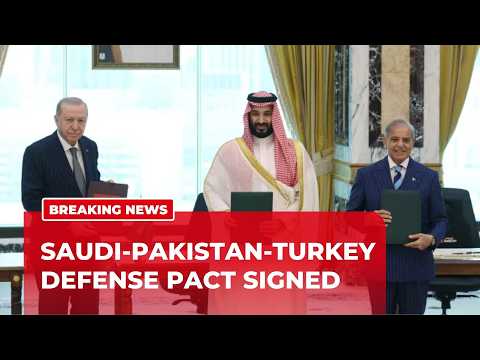
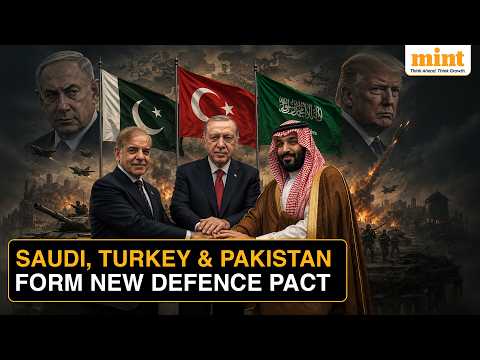
Saudi Arabia, Turkey and Pakistan sign mutual defense pact

Saudi Arabia, Turkey and Pakistan sign mutual defense pact

Rule Changes

Three states agree an attack on one is an attack on all, as Iran's war reaches the Gulf

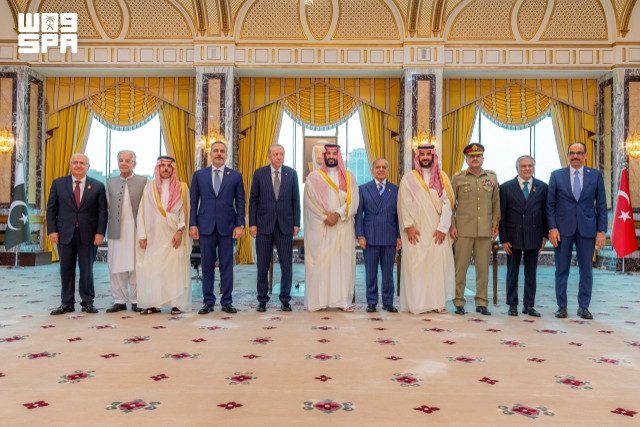
August 7th, 2026: Turkey joins: the Mecca Joint Defence Agreement is signed

Overview

Updated Aug 7

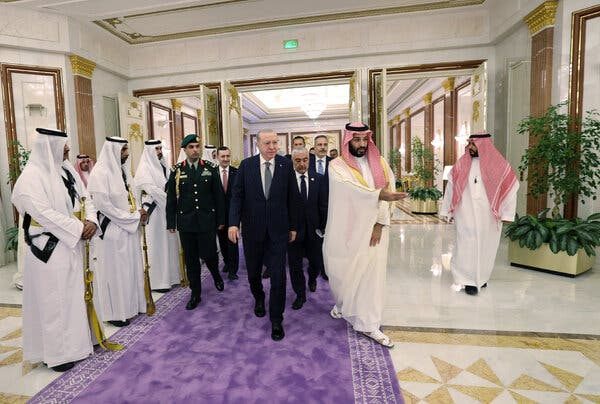
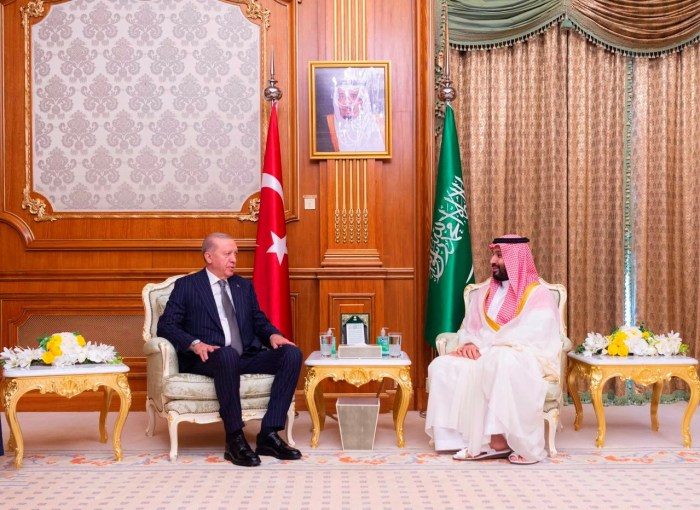
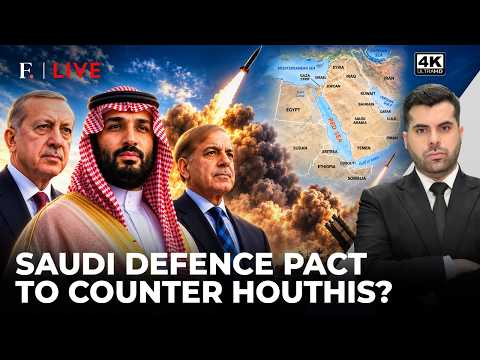
In Mecca, the leaders of Saudi Arabia, Turkey and Pakistan signed a pact stating that an armed attack on any one of them is an attack on all three. It binds oil-rich Saudi Arabia, Turkey's large army, and Pakistan's nuclear arsenal into one defense promise.

The signing lands mid-war. Since late February, Iran has fired missiles and drones at Gulf states, hitting Saudi oil refineries. For decades the Gulf leaned on the United States for protection. This pact builds a backup.

Why it matters

A mutual-defense promise now links Saudi oil, Turkey's army, and Pakistan's nuclear arsenal, changing who defends the Gulf if Iran strikes again.

Questions about this story

Free account needed to ask — your question is kept and asked for you right after sign-up. Answers are public.

No questions yet — be the first to ask.

Key Indicators

3
Countries bound by the pact
Saudi Arabia, Turkey and Pakistan agree that an attack on one is an attack on all.
~170
Pakistani nuclear warheads
Pakistan is the only nuclear-armed member of the new pact.
2nd
Turkey's army rank within NATO
Turkey fields the second-largest military in the NATO alliance.
~160
Days of the Iran war before signing
US and Israeli strikes on Iran began February 28, drawing in Gulf states.

Voices

Curated perspectives — historical figures and your fellow readers.

Ever wondered what historical figures would say about today's headlines?

Sign up to generate historical perspectives on this story.

People Involved

Organizations Involved

Timeline

September 2025 August 2026

3 events Latest: August 7th, 2026 · 1 month ago
  1. Turkey joins: the Mecca Joint Defence Agreement is signed

    Latest Treaty

    Erdogan, Mohammed bin Salman and Sharif sign a trilateral pact in Mecca. An attack on any one is now an attack on all three. India says it is watching the implications.

  2. US and Israeli strikes on Iran start the 2026 war

    Conflict

    Coordinated strikes hit Iranian sites. Iran answers with missiles and drones at Gulf states, including Saudi oil refineries, over the following weeks.

  3. Saudi Arabia and Pakistan sign a bilateral defense pact

    Treaty

    At Al-Yamamah Palace in Riyadh, the two states agree that an attack on one is an attack on both. The move follows an Israeli strike in Doha days earlier.

Scenarios

1

A fourth country joins the Mecca pact

Possible Resolves by Aug 7, 2027

Discussed by: Al Jazeera, Chatham House analysts covering Gulf security

Officials called the pact open to other regional states. Another Gulf government under Iranian fire, such as Qatar or the United Arab Emirates, could sign on to gain the same collective-defense promise. A formal announcement by any new member would confirm it.

2

The three militaries hold their first joint exercise

Likely Resolves by Aug 7, 2027

Discussed by: Turkish media reports on the pact's provisions

The agreement commits members to joint training and exercises. A first trilateral drill would show the pact is operational, not just paper. Watch for a defense ministry announcement naming a joint Saudi-Turkey-Pakistan exercise.

3

A member invokes the mutual-defense clause after an attack

Unlikely Resolves by Aug 7, 2027

Discussed by: IISS and Georgetown Journal of International Affairs analysts

If Iran or another actor strikes a member hard enough, that government could formally call on the others under the pact. An invocation would test whether Pakistan's arsenal or Turkey's army actually backs the promise. NATO invoked its version only once in 70-plus years.

4

The pact stays declaratory with no military follow-through

Possible Resolves by Aug 7, 2027

Discussed by: Skeptics at the Gulf Research Center questioning the pact's substance

Past Muslim-world defense pacts often stalled at the signing ceremony. If no joint exercise, command structure, or troop deployment appears within a year, the Mecca agreement reads as a political signal more than a working alliance.

Historical Context

3 moments from history that rhyme with this story — and how they unfolded.

February 1955

Baghdad Pact / CENTO (1955)

Britain backed a defense pact linking Iraq, Turkey, Iran, Pakistan and later others against Soviet expansion. It aimed to build a Muslim-majority security bloc across the region.

Then

Iraq's 1958 coup pulled it out, gutting the pact's core.

Now

Renamed CENTO, it faded and formally dissolved in 1979 after Iran's revolution, never fighting as a bloc.

Why this matters now

It shows how regional defense pacts can look strong on paper yet unravel when members' politics shift. The Mecca pact faces the same test.

September 2001

NATO invokes Article 5 (2001)

After the September 11 attacks, NATO for the first time treated an assault on one member, the United States, as an attack on all 19 members.

Then

Allies contributed forces and surveillance to operations that followed.

Now

It proved a collective-defense clause can be activated, but also that invoking it is rare and heavy with consequence.

Why this matters now

The Mecca pact copies NATO's core promise. NATO's single invocation in decades hints at how high the bar to trigger one really is.

September 2025

Saudi-Pakistan bilateral pact (2025)

Saudi Arabia and Pakistan signed a mutual-defense agreement in Riyadh, days after an Israeli strike hit Hamas figures in Doha, Qatar. Its text did not mention nuclear weapons.

Then

It raised questions about a de facto Pakistani nuclear umbrella for Saudi Arabia.

Now

It set the template this year's trilateral pact expanded by adding Turkey.

Why this matters now

This is the direct precursor. The 2026 Mecca deal is its enlargement, so the same nuclear ambiguity carries straight over.

Sources

(7)