

Pull to refresh
Logo
Europe backs plan to mass-produce neutral-atom quantum chips

Europe backs plan to mass-produce neutral-atom quantum chips

Built World

A €50 million EU program, led by France's Pasqal, aims to build a pan-European supply chain for quantum hardware.

July 13th, 2026: Q-PLANET launches

Overview

Updated Jul 13

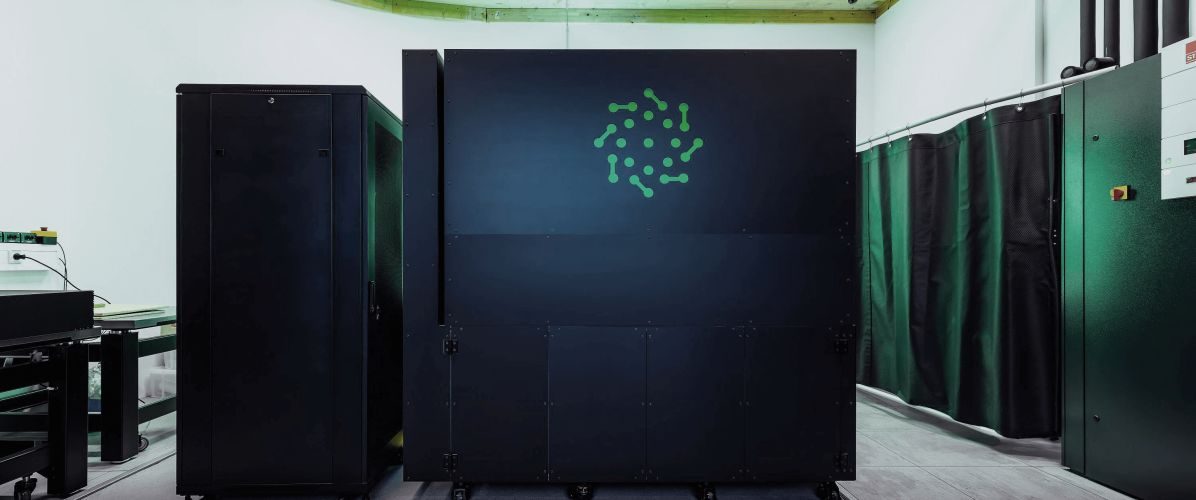
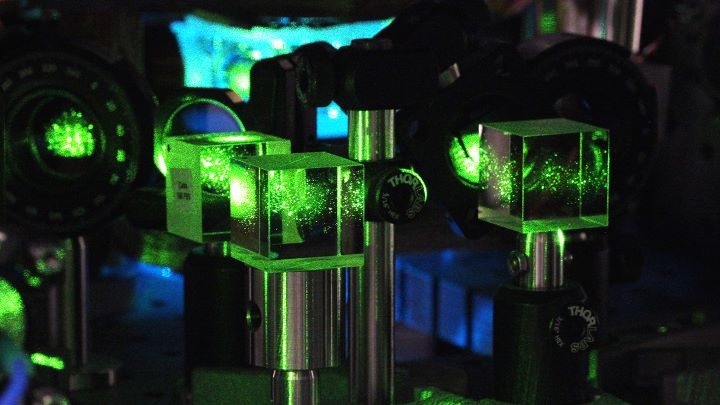
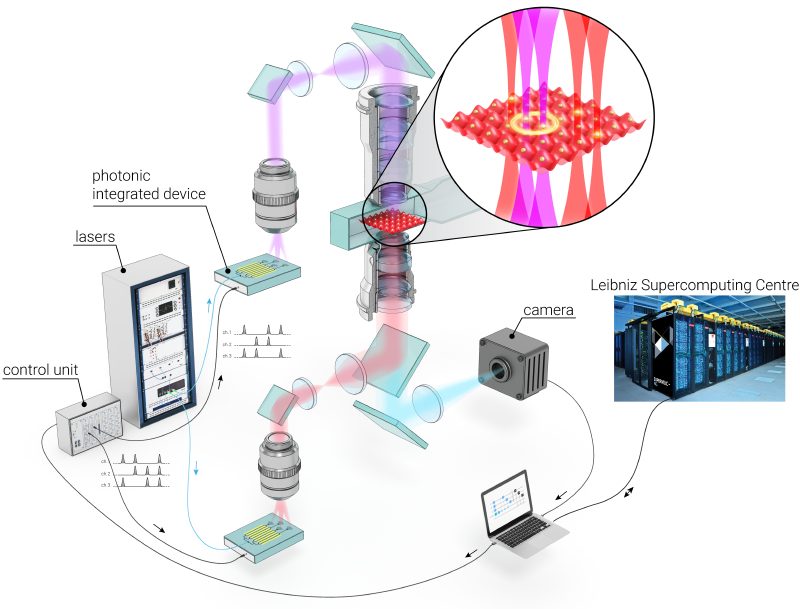
Right now, a neutral-atom quantum computer is mostly hand-built lab gear: tangles of lasers and vacuum chambers assembled by specialists. Europe just put €50 million toward turning those parts into mass-produced chips.

The program, called Q-PLANET, pairs the EU's Chips Joint Undertaking with Pasqal and 36 other partners. Over six years, they will try to standardize the hardest components to make: on-chip lasers, atom-trapping chips, and tiny vapor cells. If it works, smaller firms could buy quantum parts off a shared production line instead of building everything from scratch.

Why it matters

Whoever industrializes quantum hardware first controls its supply chain. This bet aims to keep that chokepoint inside Europe rather than the US or China.

Questions about this story

Free account needed to ask — your question is kept and asked for you right after sign-up. Answers are public.

No questions yet — be the first to ask.

Key Indicators

$55M
Program funding
The €50 million grant Pasqal calls its largest to date.
37
Consortium partners
Companies and institutes signed on to the pilot line.
12
EU countries involved
Member states spanning the planned fabrication network.
6 years
Pilot line timeline
The window to move from lab prototypes toward mass production.

Voices

Curated perspectives — historical figures and your fellow readers.

Ever wondered what historical figures would say about today's headlines?

Sign up to generate historical perspectives on this story.

People Involved

Organizations Involved

Timeline

January 2019 July 2026

5 events Latest: July 13th, 2026 · 2 months ago
Tap a bar to jump to that date
  1. Q-PLANET launches

    Latest Program Launch

    Chips JU and Pasqal launch a €50 million program to industrialize neutral-atom quantum chips across a 37-partner, 12-country consortium.

  2. Pasqal system opens in Italy

    Milestone

    Pasqal inaugurates Italy's first neutral-atom quantum computer, its third such system in Europe.

  3. Pasqal moves to go public

    Money Moves

    Pasqal agrees to a merger with a listed shell company, valuing it near $2 billion and adding fresh capital.

  4. EU Chips Act takes effect

    Policy

    The European Chips Act enters into force and sets up the Chips Joint Undertaking to fund domestic chip capacity.

  5. Pasqal founded near Paris

    Origin

    Researchers from the Institut d'Optique start Pasqal to commercialize neutral-atom quantum computing.

Scenarios

1

Q-PLANET publishes open design kits for quantum chips

Possible Resolves by Jul 13, 2029

Discussed by: Chips JU program materials; Pasqal newsroom

A stated goal is to release open-standard design kits so companies beyond the consortium can design neutral-atom hardware. If the pilot line hits its early targets, those kits get published and outside firms can start building against them. This is the clearest signal that the program is opening the technology rather than keeping it in-house.

2

Pilot line produces first standardized quantum components

Possible Resolves by Jul 13, 2032

Discussed by: Chips JU; Pasqal

The core promise is a working pilot line that turns lab-built parts into repeatable, compact components: laser-on-chip systems, atom chips, and vapor cells. Success means the consortium announces standardized parts coming off that line within the six-year window. That would move neutral-atom hardware from custom builds toward manufactured supply.

3

Pasqal demonstrates quantum advantage on neutral-atom hardware

Possible Resolves by End of 2027

Discussed by: Pasqal 2026 roadmap; The Quantum Insider

Pasqal has said it aims to show quantum advantage, solving an industry-relevant problem faster than classical machines, on hardware built from these components. A published demonstration would validate the technology the pilot line is meant to scale. Independent verification of such claims has been slow across the field, which keeps this uncertain.

4

Q-PLANET is cancelled or sharply scaled back

Unlikely Resolves by Jul 13, 2030

Discussed by: Industry observers tracking EU chip programs

Large multi-country consortia can stall over funding gaps, partner exits, or technical setbacks. If money is pulled or most partners walk, the pan-European fabrication plan collapses before it produces parts. This is the downside case that would leave neutral-atom manufacturing dependent on custom lab work.

Historical Context

3 moments from history that rhyme with this story — and how they unfolded.

December 1970

Airbus consortium formed (1970)

France and Germany, later joined by Spain and the UK, pooled national aircraft programs into a single state-backed group to challenge American planemakers. Critics called it a subsidy sink that would never sell jets.

Then

Early sales were thin, and the venture leaned heavily on government support to survive.

Now

Airbus became one of the world's two dominant planemakers, splitting the global market with Boeing.

Why this matters now

It shows Europe pooling national resources to build an industry it lacked. Q-PLANET follows the same playbook for quantum manufacturing.

1984

imec established in Belgium (1984)

Flanders set up imec as a shared microelectronics research center where competing chipmakers could develop next-generation processes together. It grew into a hub used by nearly every major global chip firm.

Then

It gave European researchers and companies access to expensive tools they could not each buy.

Now

imec became a strategic node in the global chip supply chain and anchored Europe's role in advanced manufacturing research.

Why this matters now

Q-PLANET wants the same effect for quantum: a shared, open-access line that anchors an industry inside Europe.

1987

SEMATECH founded (1987)

The US government and 14 chipmakers each put in money, with the Pentagon's research arm matching about $100 million a year, to build a shared manufacturing consortium. The goal was to claw back ground lost to Japanese memory-chip makers.

Then

The group pooled equipment, process know-how, and supplier support that no single firm could fund alone.

Now

US chipmakers regained competitiveness by the mid-1990s, and the public-private consortium became a template for chip industrial policy.

Why this matters now

Q-PLANET is Europe's version for quantum: shared fabrication funded partly by the state to catch a foreign lead.

Sources

(5)