


Pull to refresh
Logo
India builds domestic quantum chip manufacturing capacity

India builds domestic quantum chip manufacturing capacity

Built World

QpiAI opens a Bengaluru foundry that fabricates superconducting quantum processors from start to finish

August 17th, 2026: QpiAI opens Bengaluru quantum foundry

Overview

Updated Aug 17

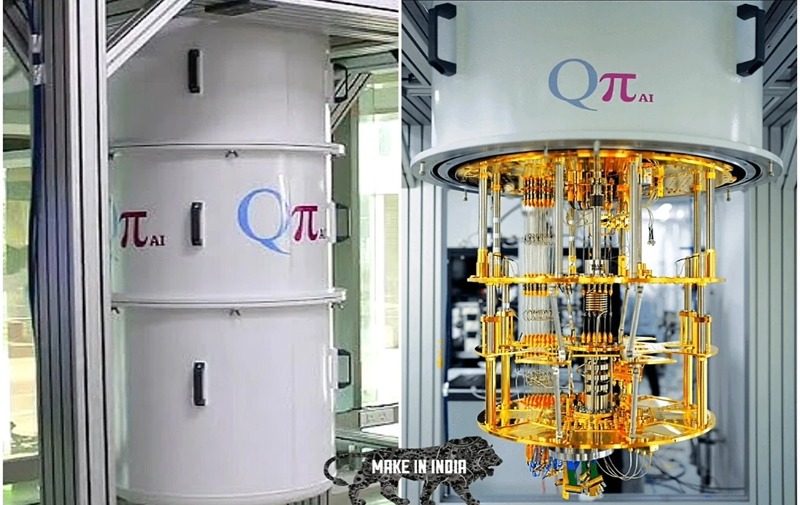
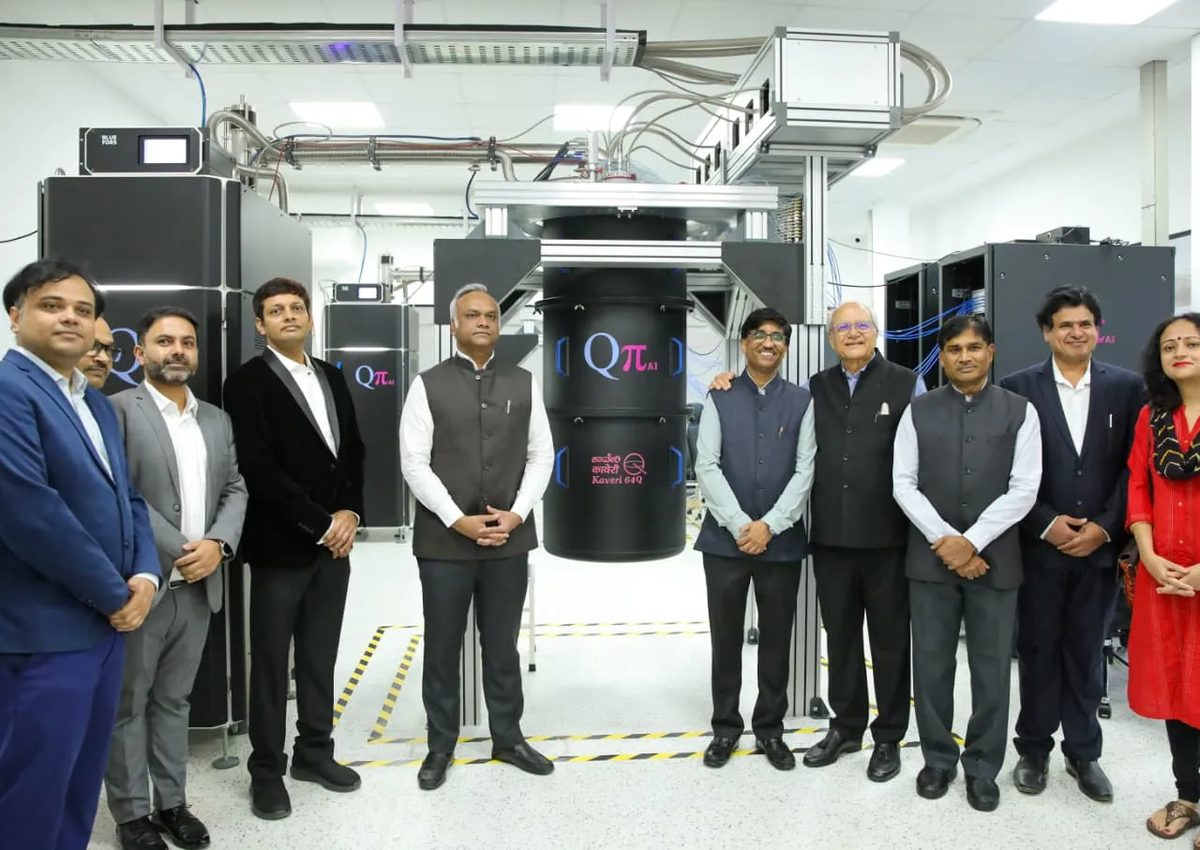
Fewer than ten countries can both design and build a quantum processor. On August 17, 2026, an Indian startup added its country to that list, opening a Bengaluru factory that makes superconducting quantum chips from bare wafer to packaged device.

QpiAI's foundry can fabricate chips with up to 128 qubits today, the basic units that let a quantum computer run calculations a normal computer cannot. The company wants to reach 10,000 physical qubits by 2027. If it holds, India stops importing this hardware and starts making its own.

Why it matters

Only a handful of countries can make quantum chips. India just built a factory that could turn it from a buyer into a supplier.

Questions about this story

Free account needed to ask — your question is kept and asked for you right after sign-up. Answers are public.

No questions yet — be the first to ask.

Key Indicators

128
Qubits per chip today
The most qubits QpiAI's foundry can fabricate on a single superconducting chip now.
10,000
Qubit target by 2027
The physical-qubit capacity QpiAI aims to reach in a planned third build phase.
$20–25M
Invested so far
Spent on the facility, with a further $10–15 million planned.
8-inch
Wafer size
The wafer format the plant uses, larger than the small pilot lines common in early quantum research.

Voices

Curated perspectives — historical figures and your fellow readers.

Ever wondered what historical figures would say about today's headlines?

Sign up to generate historical perspectives on this story.

People Involved

Organizations Involved

Timeline

April 2023 August 2026

5 events Latest: August 17th, 2026 · 4 weeks ago
Tap a bar to jump to that date
  1. QpiAI opens Bengaluru quantum foundry

    Latest Infrastructure

    The eight-inch plant fabricates superconducting chips of up to 128 qubits and runs the full process from lithography to packaging.

  2. QpiAI launches 64-qubit Kaveri chip

    Product

    The flip-chip superconducting processor is set for commercial availability by the third quarter of 2026.

  3. QpiAI raises about $32 million

    Funding

    A Series A round led by Avataar Ventures and the National Quantum Mission funds the hardware push.

  4. QpiAI ships 25-qubit Indus system

    Product

    The company unveils Indus, described as India's first full-stack quantum computer, selected under the National Quantum Mission.

  5. India approves National Quantum Mission

    Policy

    The cabinet backs an eight-year program worth about $726 million to build a domestic quantum industry.

Scenarios

1

QpiAI ships the 64-qubit Kaveri commercially in 2026

Possible Resolves by End of 2026

Discussed by: QpiAI product announcements; The Quantum Insider

QpiAI has said Kaveri would be commercially available by the third quarter of 2026. The new foundry is meant to fabricate it. If the plant ramps on schedule, the company books its first paying customers for a home-built quantum processor this year.

2

QpiAI fabricates a 128-qubit processor by mid-2027

Possible Resolves by Q2 2027

Discussed by: QpiAI roadmap (Ganges 128-qubit chip); YourStory

The foundry can already handle 128-qubit chips, and QpiAI's roadmap targets a 128-qubit processor called Ganges in early 2027. Delivering a working chip at that count would show the plant does more than exist on paper. Missing it would suggest the qubit-quality problems that slow every quantum maker are biting here too.

3

Foundry reaches 10,000-qubit fabrication capacity by end of 2027

Unlikely Resolves by End of 2027

Discussed by: QpiAI's stated third-phase plan; The Quantum Insider

QpiAI says a third build phase, due in 2027, will let the plant fabricate a processor with up to 10,000 physical qubits. That would leapfrog the field, where IBM's largest superconducting chip topped out at 1,121 qubits in 2023. The gap between stated capacity and a working device makes this the roadmap's boldest claim.

4

QpiAI raises a new major funding round by mid-2027

Possible Resolves by Jul 31, 2027

Discussed by: Inc42; Tracxn startup coverage

Scaling a foundry from 128 toward thousands of qubits costs far more than the roughly $35 million QpiAI has committed. A large new round, from private investors or further government backing, would signal that the scale-up plan is funded. No new round would raise questions about the 2027 and 2028 targets.

Historical Context

3 moments from history that rhyme with this story — and how they unfolded.

1987

TSMC founded as a pure-play foundry (1987)

Morris Chang founded Taiwan Semiconductor Manufacturing Company to make chips designed by others, rather than sell its own. The dedicated-foundry model let a mid-size economy enter advanced chipmaking.

Then

TSMC gave fabless design firms a place to build, seeding a new layer of the chip industry.

Now

It became the world's largest contract chipmaker and made Taiwan central to global electronics.

Why this matters now

QpiAI is betting the same logic works for quantum: own the fabrication line and you can supply chips to a field that mostly lacks factories.

September 2014

India's low-cost Mars mission (2014)

India's Mangalyaan probe reached Mars orbit on the country's first try, built for about $74 million, a fraction of comparable Western missions. It showed India could hit advanced-tech targets cheaply.

Then

The mission became a point of national pride and proof of frugal engineering.

Now

It reinforced India's strategy of indigenizing high technology at low cost rather than importing it.

Why this matters now

QpiAI's roughly $35 million foundry follows the same playbook: reach a capability held by a few rich nations, but for far less money.

December 2023

IBM unveils 1,121-qubit Condor (2023)

IBM revealed Condor, the first superconducting quantum chip to pass 1,000 qubits. Its performance, measured by coherence time and gate fidelity, stayed roughly level with IBM's 433-qubit predecessor.

Then

The milestone drew headlines, but IBM soon shifted its public roadmap toward smaller, error-corrected chips rather than raw qubit counts.

Now

The field learned that adding qubits is easier than keeping them accurate, and quality became the harder benchmark.

Why this matters now

It tempers QpiAI's 10,000-qubit goal. Raw count is a start; a machine that computes reliably at that scale is a much harder thing.

Sources

(6)