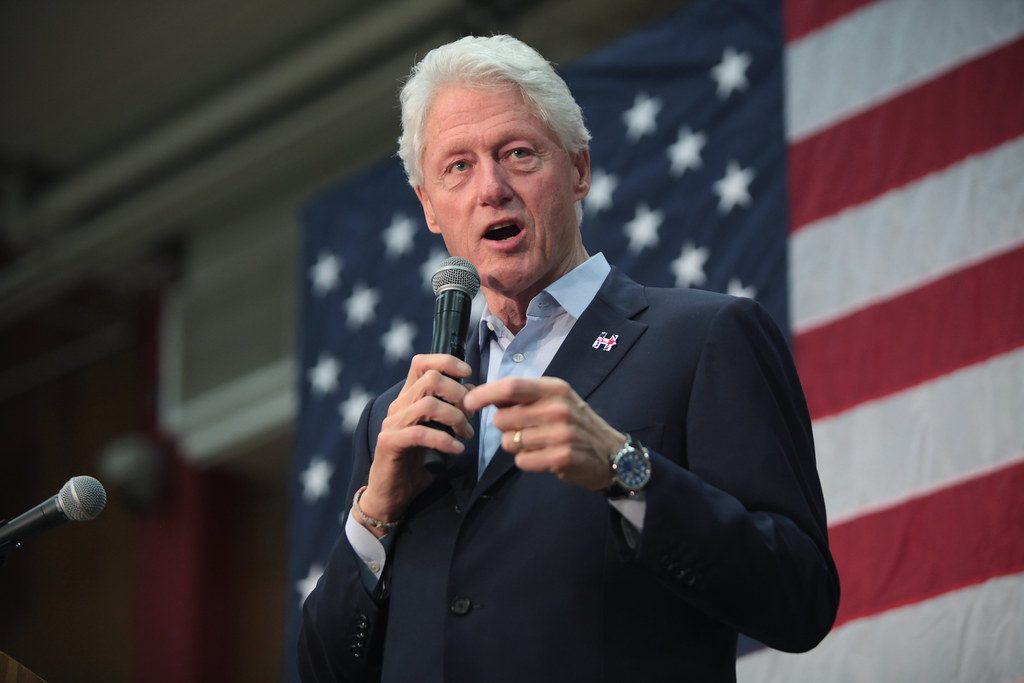
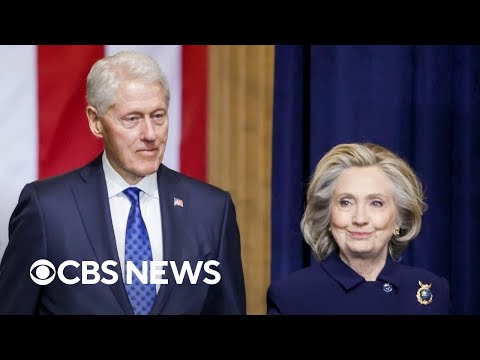
No former president has ever been held in criminal contempt of Congress. On January 21, 2026, the House Oversight Committee voted 34-8 to advance a contempt resolution against Bill Clinton, with nine Democrats crossing party lines to support it. A companion resolution targeting Hillary Clinton passed 28-15, with three Democratic votes.
The Clintons refused to appear for depositions related to the committee's investigation into Jeffrey Epstein, despite bipartisan subpoenas issued five months earlier. The contempt resolutions now advance to the full House for a vote, scheduled in two weeks. If approved, the matter would be referred to the Department of Justice for potential prosecution—the same DOJ that Democrats accuse of stonewalling Congress on Epstein files.
Questions about this story
Free account needed to ask — your question is kept and asked for you right after sign-up. Answers are public.
No questions yet — be the first to ask.
Key Indicators
34-8
Committee vote on Bill Clinton contempt
Nine Democrats joined all Republicans to advance the resolution
9
Democrats voting for Bill Clinton contempt
Including Reps. Frost, Krishnamoorthi, Lee, Lynch, Pressley, Randall, Simon, Stansbury, and Tlaib
5 months
Time since subpoenas issued
Bipartisan subpoenas approved July 23, 2025; Clintons never appeared
<1%
DOJ Epstein files released
Despite legal deadline of December 19, 2025, DOJ has released 12,285 of 2+ million documents
18 events
Latest: January 21st, 2026 · 8 months ago
Showing 8 of 18
JK to step
Tap a bar to jump to that date
Jump to
January 2026
Committee Votes to Hold Clintons in Contempt
LatestLegal
Oversight Committee votes 34-8 to advance Bill Clinton contempt resolution (9 Democrats in favor) and 28-15 for Hillary Clinton (3 Democrats in favor). Resolutions advance to full House.
Hillary Clinton Fails to Appear for Third Deposition
Investigation
Hillary Clinton does not appear for subpoenaed deposition. Committee announces contempt proceedings.
Bill Clinton Fails to Appear for Third Deposition
Investigation
Bill Clinton does not appear for subpoenaed deposition. Committee announces contempt proceedings will begin.
December 2025
DOJ Misses Statutory Deadline for Epstein Files
Legal
DOJ releases partial documents on deadline day. Announces remaining files will come on 'rolling basis.' Less than 1% of 2+ million documents released.
Hillary Clinton Declines Second Deposition
Investigation
Hillary Clinton declines to appear, citing need to attend a funeral. Committee issues new subpoena for January 14, 2026.
Bill Clinton Declines Second Deposition
Investigation
Bill Clinton declines to appear, citing need to attend a funeral. Committee issues new subpoena for January 13, 2026.
Democrats Release Epstein Photos
Document Release
Oversight Committee Democrats release photos from Epstein estate showing Trump, Clinton, Bannon, Gates, Branson and others with Epstein.
November 2025
Trump Signs Epstein Files Transparency Act
Legal
Congress passes H.R. 4405 with 427-1 vote requiring DOJ to release all unclassified Epstein records within 30 days. President Trump signs into law.
October 2025
Bill Clinton Misses First Deposition Date
Investigation
Bill Clinton does not appear for scheduled deposition. Committee reschedules to December 17.
Hillary Clinton Misses First Deposition Date
Investigation
Hillary Clinton does not appear for scheduled deposition. Committee reschedules to December 18.
September 2025
Committee Releases 33,000 Pages of DOJ Records
Document Release
Oversight Committee publishes first major tranche of Epstein-related documents obtained from Department of Justice.
August 2025
Comer Issues Subpoenas to Clintons and DOJ
Investigation
Chairman Comer issues 11 subpoenas including to DOJ for all Epstein-related records. Clinton depositions scheduled for October 2025.
Federal Law Enforcement Subcommittee unanimously approves motion to subpoena Bill and Hillary Clinton, nine former DOJ and FBI officials, and Ghislaine Maxwell.
December 2021
Ghislaine Maxwell Convicted
Legal
Federal jury convicts Maxwell of recruiting and grooming underage girls for Epstein. Later sentenced to 20 years.
August 2019
Epstein Dies in Federal Custody
Investigation
Epstein found dead in Metropolitan Correctional Center cell. Medical examiner rules death a suicide. Case against him dismissed; investigations continue into associates.
July 2019
SDNY Indicts Epstein on Sex Trafficking Charges
Legal
Southern District of New York unseals indictment charging Epstein with sex trafficking of minors. Epstein arrested at Teterboro Airport.
2007
Secret Non-Prosecution Agreement Signed
Legal
U.S. Attorney Alexander Acosta enters non-prosecution agreement with Epstein, allowing him to plead to state charges for 13 months jail time. Federal 53-page indictment never filed. Victims not consulted.
2006
FBI Opens Epstein Investigation
Investigation
FBI and Miami U.S. Attorney's Office take over case from Palm Beach police after state attorney criticized for weak response. Investigation identifies more than 30 alleged underage victims.
Scenarios
1
House Passes Contempt, DOJ Declines Prosecution
Likely
Discussed by: Legal analysts at CNN, Washington Post; based on precedent from Holder (2012), Barr/Ross (2019), Garland (2024) cases
The full House votes to hold both Clintons in contempt, likely along party lines with some Democratic crossover. DOJ, under Attorney General Bondi, declines to prosecute—consistent with longstanding DOJ policy of not prosecuting contempt citations when executive branch interests are implicated or when prosecution is politically fraught. The Clintons face no criminal consequences. This is the most common outcome for high-profile contempt referrals.
2
House Passes Contempt, DOJ Pursues Prosecution
Possible
Discussed by: Yahoo News, CBS News; based on Bannon/Navarro prosecutions under Biden DOJ
DOJ breaks from its recent pattern of declining politically sensitive contempt prosecutions and seeks indictments against the Clintons. This would require the Trump-appointed DOJ to prosecute a Trump adversary—removing any appearance of political motivation. If convicted, contempt of Congress carries up to one year imprisonment and fines. The Bannon case took three years from contempt vote to prison; Clintons would face similar timeline.
3
Clintons Negotiate Testimony to Avoid Prosecution
Possible
Discussed by: The Hill, ABC News; based on typical subpoena standoff resolutions
Facing the prospect of a full House vote and potential prosecution, the Clintons agree to modified testimony terms—possibly written answers under oath or a limited deposition with counsel present. Chairman Comer has rejected informal arrangements but might accept formal testimony that satisfies the committee's stated investigative needs. This would defuse the contempt charges while giving the committee usable information.
4
Investigation Shifts Focus to DOJ Noncompliance
Uncertain
Discussed by: Rep. Robert Garcia, Rep. Ro Khanna, Rep. Thomas Massie; bipartisan frustration with Bondi
Bipartisan frustration over DOJ's failure to release Epstein files overtakes the Clinton contempt proceedings. With Reps. Khanna (D) and Massie (R) pursuing inherent contempt charges against AG Bondi, the investigation's center of gravity shifts from the Clintons to the executive branch's stonewalling. Maxwell's February 9 testimony—even if she invokes the Fifth—may reveal whether DOJ is withholding material that implicates current officials.
Historical Context
3 moments from history that rhyme with this story — and how they unfolded.
1 of 3
1994 - 2000
Whitewater Investigation (1994-2000)
Republican-led congressional committees and Special Counsel Kenneth Starr investigated the Clintons' Whitewater real estate investments. The investigation expanded to cover multiple controversies, ultimately leading to Bill Clinton's impeachment over the Lewinsky matter. Congress issued dozens of subpoenas to Clinton officials; some were contested.
Then
29 Clinton administration officials testified before Congress in 1994; all were acquitted of wrongdoing. The Senate Whitewater Committee found document production delays but no illegalities.
Now
Special Counsel Robert Ray concluded in 2000 that evidence was 'insufficient to prove beyond a reasonable doubt that either President or Mrs. Clinton knowingly participated in any criminal conduct.' The investigation established precedent for extensive congressional investigation of sitting presidents.
Why this matters now
The Whitewater investigation showed the Clintons can sustain years of congressional scrutiny without criminal charges. However, the current investigation concerns their connection to a convicted sex trafficker rather than financial dealings—a different category of public interest.
2 of 3
June 2012
Eric Holder Contempt Citation (2012)
The House voted 255-67 to hold Attorney General Eric Holder in criminal contempt for refusing to turn over documents related to Operation Fast and Furious, a failed gun-tracking program linked to the death of Border Patrol agent Brian Terry. Holder was the first sitting Cabinet member held in contempt of Congress.
Then
DOJ declined to prosecute, citing President Obama's assertion of executive privilege. The House filed a civil lawsuit seeking document production.
Now
The civil case dragged on for years. A DOJ Inspector General report later found Holder had no prior knowledge of the operation. The case established the modern template: contempt votes generate headlines but rarely produce prosecutions when politically sensitive.
Why this matters now
The Holder case demonstrates that DOJ routinely declines to prosecute contempt citations against high-profile political figures, particularly when executive privilege is claimed. The Clintons are not executive branch officials, but the same political calculus applies.
3 of 3
October 2021 - July 2024
Steve Bannon Contempt Conviction (2022)
The House voted 229-202 to hold former Trump adviser Steve Bannon in contempt for refusing to comply with January 6 Committee subpoenas. DOJ prosecuted. A jury convicted Bannon in July 2022; he was sentenced to four months in prison.
Then
Bannon remained free during appeal. His conviction was upheld in May 2024; he reported to prison July 1, 2024.
Now
Bannon and Peter Navarro became the first former White House officials imprisoned for contempt of Congress. The prosecutions showed DOJ would act when witnesses defied congressional subpoenas outright rather than negotiating.
Why this matters now
The Bannon prosecution shows contempt charges can result in prison time when DOJ chooses to act. Unlike Bannon, who was a private citizen at the time of subpoena, the Clintons are also private citizens—removing any executive privilege defense. But the Clintons argue they've cooperated through written declarations, a distinction from Bannon's complete refusal.

![[Bill Clinton, head-and-shoulders portrait, facing front]. Photograph from the Presidential File Collection, [1992]. Library of Congress Prints & Photographs Division.
https://www.loc.gov/item/93505822/](/api/story/538/photo/708)