
Pull to refresh
Logo
Congress's power to compel testimony faces its weakest moment in decades

Congress's power to compel testimony faces its weakest moment in decades

Rule Changes

The Supreme Court clears the path for the Trump Justice Department to erase Steve Bannon's contempt of Congress conviction

April 6th, 2026: Supreme Court vacates Bannon's conviction

Overview

Updated May 30

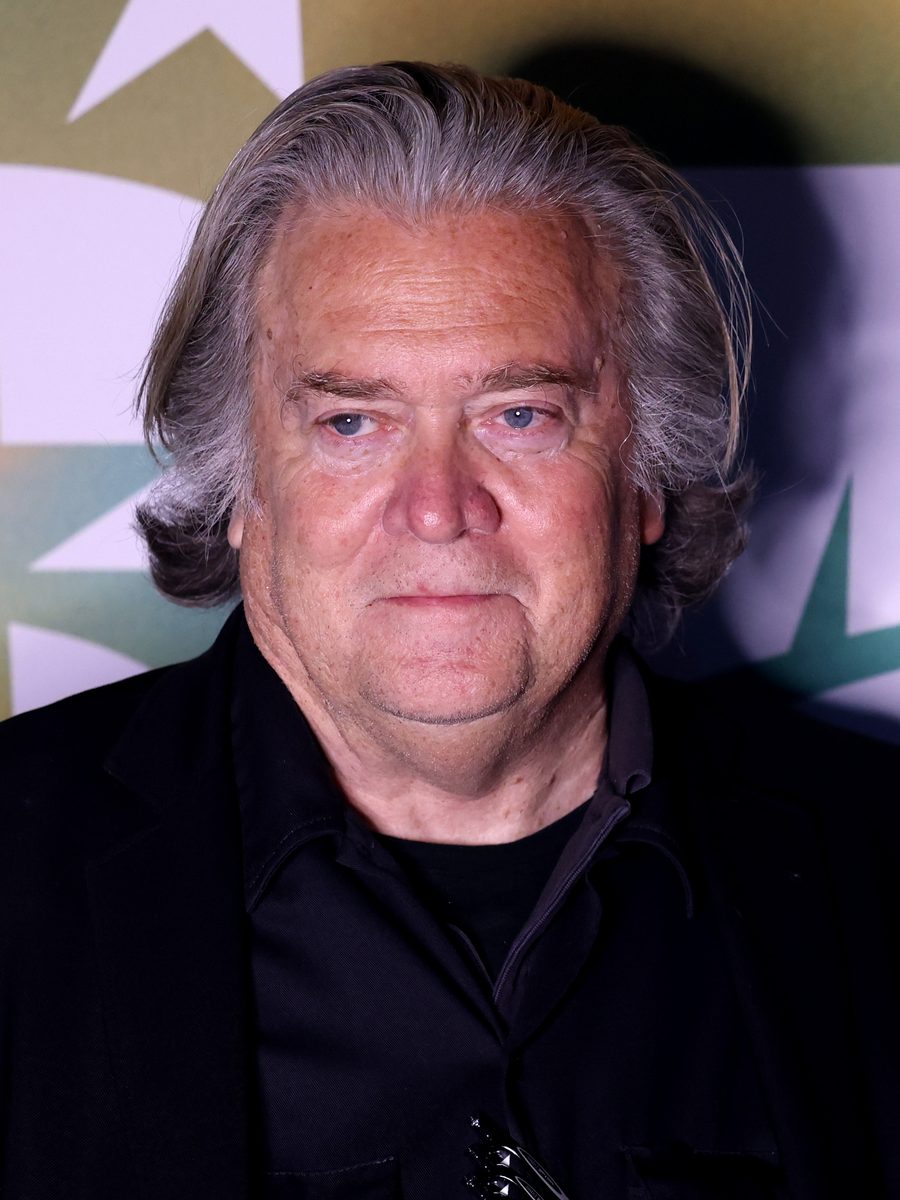
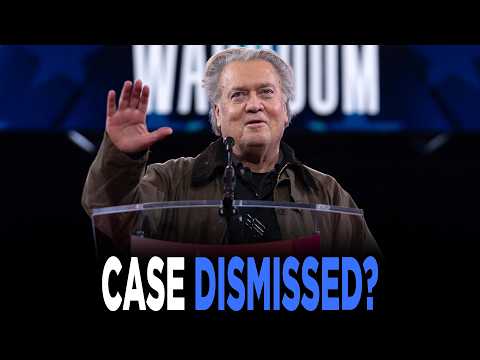
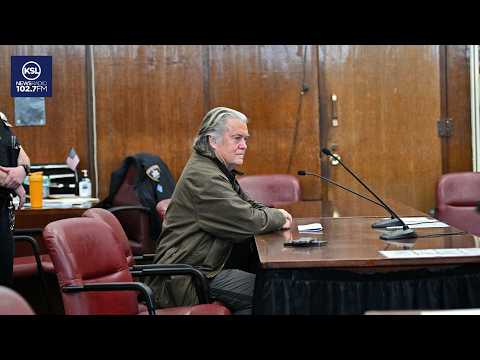
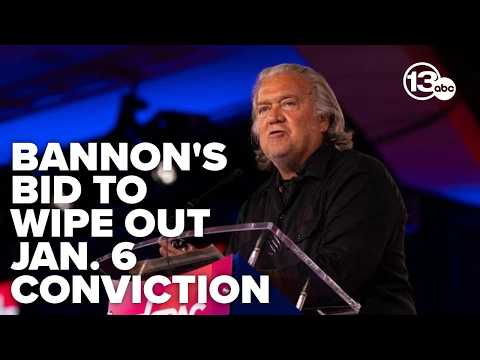
The Supreme Court on April 6, 2026, vacated the appeals court ruling upholding Steve Bannon's contempt of Congress conviction. The unsigned order, containing no noted dissents, sends the case back to lower courts, where the Department of Justice has a pending motion to dismiss all charges. Bannon had already served a four-month federal prison sentence in 2024 for defying a subpoena from the House committee investigating the January 6, 2021, attack on the Capitol.

The decision ends one of only two successful criminal contempt prosecutions from the January 6 investigation. It raises pointed questions about whether Congress can enforce its subpoenas against anyone with allies in the executive branch.

Criminal contempt of Congress depends on the Justice Department to prosecute. When a new administration declines to defend its predecessor's cases, the entire enforcement mechanism unravels — as it did here.

Why it matters

If defying a congressional subpoena carries no lasting consequence, Congress loses its primary tool for investigating the executive branch.

Questions about this story

Free account needed to ask — your question is kept and asked for you right after sign-up. Answers are public.

No questions yet — be the first to ask.

Key Indicators

4
Jan. 6 committee contempt referrals
The committee referred Bannon, Navarro, Meadows, and Scavino for criminal contempt. Only Bannon and Navarro were prosecuted.
2
Contempt convictions now being unwound
Both Bannon's and Navarro's convictions are being reversed by the Trump DOJ, despite both men having served their prison sentences.
~1,500
Jan. 6 defendants pardoned
Trump granted blanket clemency to nearly all January 6 defendants on his first day in office, January 20, 2025.
4 months
Prison time Bannon served
Bannon reported to a federal prison on July 1, 2024, and served his full sentence before the conviction was vacated.

Voices

Curated perspectives — historical figures and your fellow readers.

Ever wondered what historical figures would say about today's headlines?

Sign up to generate historical perspectives on this story.

People Involved

Organizations Involved

Timeline

June 2021 April 2026

13 events Latest: April 6th, 2026 · 5 months ago Showing 8 of 13
Tap a bar to jump to that date
  1. Trump pardons nearly 1,500 January 6 defendants

    Executive

    On his first day in office, Trump signed an executive order granting blanket clemency to nearly all January 6 defendants, including full pardons for most and commutations for 14 Oath Keepers and Proud Boys leaders.

  2. House resolution introduced to rescind January 6 subpoenas

    Legislative

    Representative Eric Burlison introduced H.Res.15 to rescind the subpoenas issued by the January 6 committee and withdraw contempt recommendations against Bannon, Navarro, Meadows, and Scavino.

  3. House votes to hold Bannon in criminal contempt

    Legislative

    The full House voted 229-202 to hold Bannon in contempt of Congress and refer the matter to the DOJ for prosecution. Nine Republicans voted with Democrats.

  4. House creates January 6 Select Committee

    Legislative

    The House voted 222-190 to establish a select committee to investigate the Capitol attack. Only two Republicans, Liz Cheney and Adam Kinzinger, voted in favor.

Scenarios

1

Bannon's charges formally dismissed, conviction erased from record

Likely

Discussed by: SCOTUSblog, NBC News, and CNN legal analysts

The most probable outcome. With the Supreme Court clearing the procedural path and the DOJ's pending motion to dismiss in the trial court, the district judge is expected to grant dismissal. Bannon's conviction would be formally vacated. He already served his sentence, so there is no prison time to undo — but the legal record would be wiped clean. This could happen within weeks.

2

District judge resists dismissal, prompting DOJ appeal

Unlikely

Discussed by: Legal commentators and former federal prosecutors

In theory, a district court judge could push back on the DOJ's motion to dismiss, demanding a more detailed justification — as happened in other Trump-era DOJ reversals. However, with the Supreme Court having already vacated the appellate ruling, the legal foundation for the conviction has been pulled out. A judicial challenge to dismissal would be procedurally unusual and likely short-lived.

3

Navarro's conviction follows same path to dismissal

Likely

Discussed by: The Hill, Washington Examiner, and legal analysts tracking both cases

The DOJ has already dropped its defense of Navarro's conviction, though it has not yet filed a formal dismissal motion as it did for Bannon. If the Bannon dismissal proceeds smoothly, the DOJ is expected to take similar steps in Navarro's case. Navarro's appeal is pending in the D.C. Circuit. A formal DOJ motion to dismiss would effectively end the last remaining criminal contempt prosecution from the January 6 investigation.

4

Congress responds by reviving civil or inherent contempt mechanisms

Unlikely

Discussed by: Legal scholars, Lawfare, and congressional reform advocates

The collapse of both contempt prosecutions could push Congress to explore alternatives that do not depend on the executive branch. Options include reviving 'inherent contempt' — Congress's power to detain uncooperative witnesses through its own Sergeant at Arms — or establishing a permanent civil enforcement mechanism. Neither option has been used in nearly a century, and the current political environment makes legislative action unlikely in the near term.

Historical Context

3 moments from history that rhyme with this story — and how they unfolded.

October 1947 - 1950

The Hollywood Ten contempt convictions (1947-1950)

Ten screenwriters and directors — including Dalton Trumbo and Ring Lardner Jr. — refused to answer questions from the House Un-American Activities Committee about alleged Communist Party membership. All ten were convicted of contempt of Congress and sentenced to six to twelve months in prison. Their convictions were upheld on appeal.

Then

All ten served their sentences and were blacklisted from the entertainment industry.

Now

The cases became a cautionary tale about the abuse of congressional investigative power. The Supreme Court later imposed limits on congressional inquiries in Watkins v. United States (1957), ruling that Congress cannot investigate for 'the sake of exposure.'

Why this matters now

The Hollywood Ten cases represent the last era when criminal contempt of Congress was routinely enforced and the convictions stuck. That Bannon and Navarro's convictions — the first successful criminal contempt prosecutions in decades — are both being reversed suggests the enforcement mechanism may be functionally dead.

February 2008 - March 2009

Harriet Miers and Josh Bolten contempt standoff (2007-2009)

The House Judiciary Committee subpoenaed former White House counsel Harriet Miers and chief of staff Josh Bolten over the firing of nine United States Attorneys. President George W. Bush asserted executive privilege. The House voted to hold both in criminal contempt in February 2008. The DOJ under Attorney General Michael Mukasey refused to prosecute.

Then

The House filed a civil lawsuit instead. A federal judge ruled that Miers was not immune from testifying, but the case dragged on for over a year.

Now

The case was settled in March 2009 after Obama took office. Miers testified in a closed session and some documents were produced. The episode demonstrated that criminal contempt of Congress is essentially unenforceable against executive branch allies when the DOJ declines to act.

Why this matters now

The Miers case established the modern pattern: when the executive branch controls the prosecution of contempt, witnesses allied with the president face no real risk. Bannon's case initially appeared to break this pattern because he was prosecuted — but the reversal under a new administration completes the circle.

June 2012 - January 2019

Eric Holder contempt of Congress (2012)

The House voted 255-67 to hold Attorney General Eric Holder in criminal contempt for withholding documents related to the 'Fast and Furious' gun-trafficking operation. President Obama asserted executive privilege. It was the first time a sitting attorney general had been held in contempt of Congress.

Then

The DOJ declined to prosecute its own boss. The House pursued a civil lawsuit that ground through the courts for nearly seven years.

Now

The case was not fully resolved until 2019, when a partial document production was negotiated. The episode reinforced the structural impotence of criminal contempt when aimed at executive branch officials.

Why this matters now

Holder's case showed that criminal contempt of Congress requires executive branch cooperation to enforce — creating an inherent conflict of interest. Bannon was not a sitting official, which is why the Biden DOJ prosecuted him. But the Trump DOJ's reversal shows that even prosecutions of private citizens can be unwound when administrations change.

Sources

(8)