


Pull to refresh
Logo
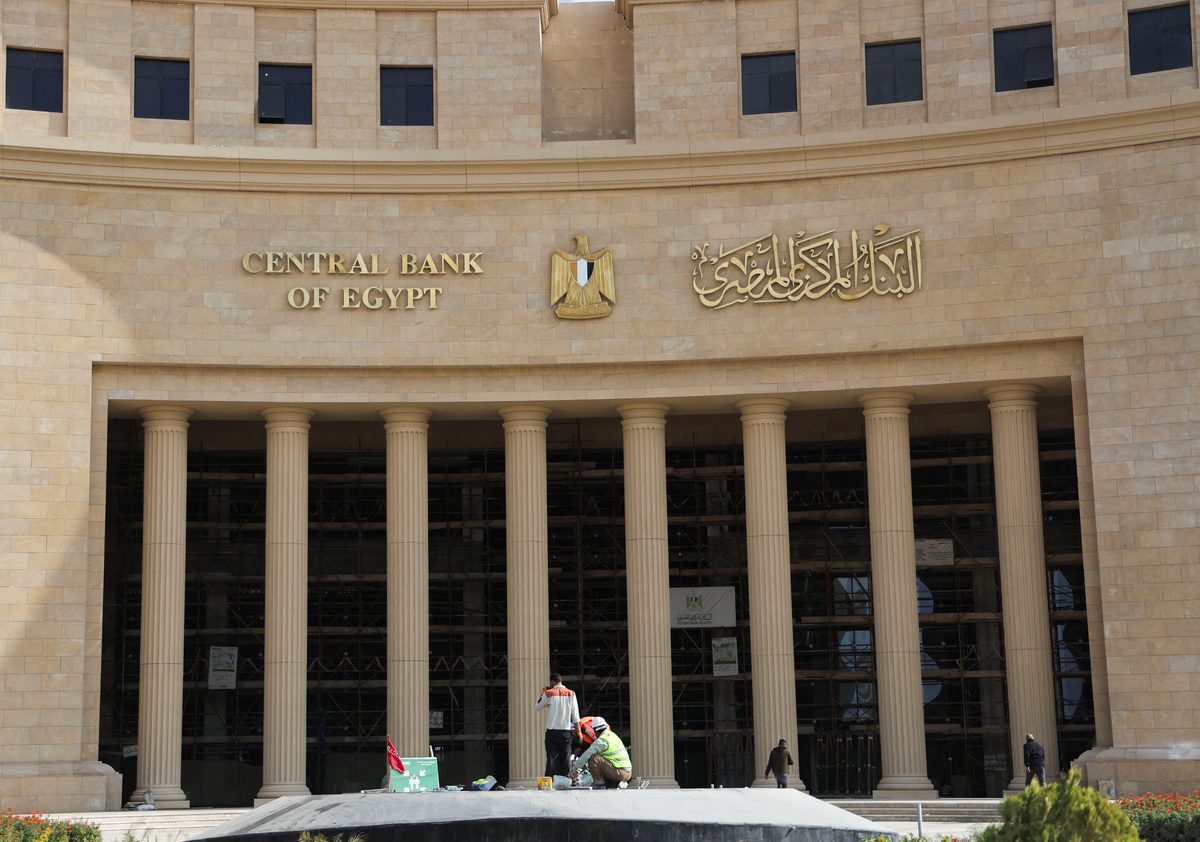
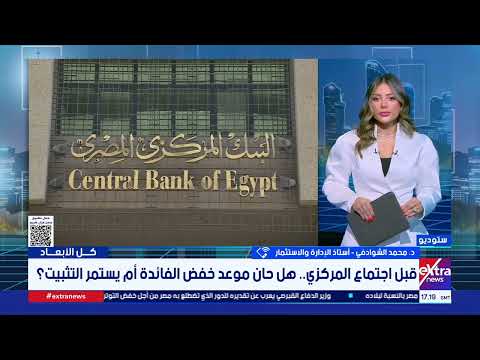
Egypt's central bank raises key interest rates by 100 basis points

Egypt's central bank raises key interest rates by 100 basis points

Money Moves

First hike since March 2024 as the pound slides past 56 per dollar, banks lift borrowing costs and savings returns, and the interest bill climbs

Overview

Updated 3 days ago

The central bank's October 29 hike lifted the overnight deposit rate to 20% and the lending rate to 21%, the first increase since March 2024. Days later, the biggest banks raised returns on variable-rate savings certificates: National Bank of Egypt to 20.50%, Banque Misr and Commercial International Bank to 20.25%.

A Finance Ministry official put the added annual interest bill near LE150 billion, the Egyptian Gazette reported. The government is repricing about LE4.3 trillion of domestic borrowing at yields above 25%, and interest is still about 59% of revenue this year. The monetary policy committee meets December 17, and an IMF mission is in Cairo to finish the eighth review of the $8 billion loan before it expires December 15.

Why it matters

Higher rates mean costlier loans for Egyptian businesses and mortgage holders, while savers earn more on bank certificates.

Questions about this story

Free account needed to ask — your question is kept and asked for you right after sign-up. Answers are public.

No questions yet — be the first to ask.

Key Indicators

1 percentage point
Size of rate increase
Overnight deposit rate to 20%, lending rate to 21%, main operation and discount rates to 20.5%.
56.12
Pounds per US dollar, October 29
CBE selling rate on the day of the hike. The pound broke 56 for the first time days earlier.
13.9%
Annual urban inflation, September
Core inflation was 14.1%. Monthly headline prices rose 1.3% in September after 0.1% in August.
20.50%
NBE variable-rate certificate return
Annual return on National Bank of Egypt's three-year Platinum certificate, paid monthly, after the hike.
LE150B
Added annual interest bill
Finance Ministry estimate of the extra yearly cost from the 100-basis-point hike, reported by the Egyptian Gazette.
25.5–26.1%
Treasury bill yields at October 29 auction
Clearing yields on 182-day and 364-day bills, 5.5 to 6.1 points above the 20% deposit rate.
EGP 512B
Interest paid, July and August
Finance Ministry figure, up from EGP 478.8 billion in the same two months a year earlier.

Voices

Curated perspectives — historical figures and your fellow readers.

Sign up to generate historical perspectives on this story.

People Involved

Organizations Involved

Timeline

March 2024 November 2026

14 events Latest: 3 days ago Showing 8 of 14
Tap a bar to jump to that date
  1. Finance Ministry puts added interest bill near LE150B

    Latest Economy

    A ministry official estimated the 100-basis-point hike adds about LE150 billion a year in interest costs, the Egyptian Gazette reported. Full repricing of the domestic debt stock implies roughly LE137 billion.

  2. Banks raise variable-rate certificate returns

    Business

    National Bank of Egypt set 20.50% on its three-year Platinum certificate, Banque Misr 20.25% on a three-year certificate, and Commercial International Bank 20.25% on a daily-payout product, up from 19.25%. CIB's minimum return is 17.25%.

  3. Euro treasury bill auction

    Markets

    CBE sells 600 million euros in one-year bills to raise hard currency.

  4. Banks lift loan rates by a point

    Business

    Banks raised rates on loans to large companies, including private-sector and government borrowers, by one percentage point. They began reviewing savings rates, and variable-rate certificates of deposit repriced automatically.

  5. EGX30 falls 1.72% after hike

    Markets

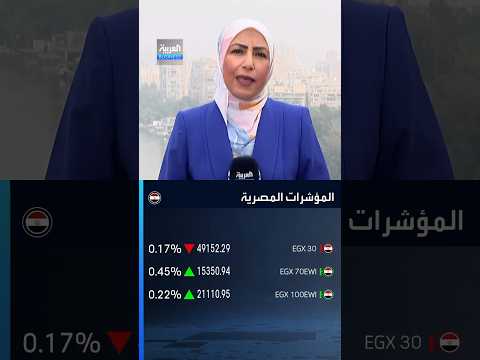
    The main index closed at 48,744, down 852 points from Thursday's 49,596, as Arab and foreign investors sold. The EGX70 lost 0.68% and the EGX100 1.01%.

  6. CBE hikes 100 basis points

    Policy

    Deposit rate to 20%, lending rate to 21%, first increase since March 2024. The statement called the move preemptive and moved expected convergence on the 7% target to the fourth quarter of 2027.

  7. Treasury bill auction draws double cover

    Markets

    The 364-day line drew EGP 152.5 billion in bids against EGP 80 billion offered, with EGP 56.3 billion accepted. The 182-day line drew EGP 65.4 billion against EGP 30 billion, with EGP 22.5 billion accepted.

  8. US Fed holds rates

    Policy

    Federal Reserve keeps target range at 3.75%–4% amid inflation and war uncertainty.

  9. Pound breaks 56 per dollar

    Markets

    The currency traded above 56 to the dollar for the first time, days before the central bank's decision, after crossing 55 on October 22.

  10. Exchange halts trading

    Markets

    Egyptian Exchange pauses 30 minutes as investors sell on war worries.

  11. Sixth straight hold

    Policy

    MPC keeps deposit rate at 19% and lending rate at 20%.

  12. Easing cycle ends

    Policy

    Cuts stop as US-Iranian war drives up energy prices and inflation risks.

  13. CBE begins cutting rates

    Policy

    Starts easing cycle that trims 825 basis points by February 2026.

  14. Previous rate hike

    Policy

    Last increase before October 2026; deposit rate rose heading into the easing cycle.

Scenarios

1

CBE Holds Rates Steady Through Mid-2027

Possible Resolves by Q2 2027

Discussed by: Economists quoted in Egyptian media who argue the hike is a one-off to anchor expectations

The hike works: foreign investors return to Egyptian debt on the higher yield, the pound stabilizes, and inflation resumes its downward path. The committee keeps rates at 20%/21% through the first half of 2027. This is the outcome the central bank's own statement points to, framing the move as defending the disinflation path rather than starting a tightening cycle.

2

Further Hikes Follow as Pound Slides Below 60

Possible Resolves by Q1 2027

Discussed by: Analysts at Barclays and others who warned regional escalation and currency weakness argue against holding

The pound keeps sliding past 56 per dollar as foreign investors stay on the sidelines, import costs push prices up, and inflation reaccelerates above 15%. The committee is forced to tighten again before mid-2027. Pressure on the external account is severe: Suez revenue is down roughly $11 billion and the government needs hard currency for imports and debt service.

3

Hike Attracts Capital, Cuts Resume by End of 2027

Unlikely Resolves by End of 2027

Discussed by: Advisers like Ahmed Shawky who said the move preserves the pound's appeal to foreign investors

The higher yield pulls foreign money back into local treasury bills, the currency firms, and inflation falls toward the 7% target. With the external position stabilized and the war contained, the committee resumes cutting rates in the second half of 2027. This path assumes the regional conflict de-escalates and Suez traffic recovers, easing the hard-currency squeeze.

4

CBE Holds Again on December 17

Possible Resolves by Dec 17, 2026

Discussed by: Enterprise AM, which framed the December test as whether monthly inflation cools and the pound holds around 56

Monthly price growth slows, the pound settles near 56 per dollar, and the committee leaves the deposit rate at 20% at its December 17 meeting. Net international reserves of $57.35 billion at end-September give the bank room to wait, though that cushion depends on inflows continuing.

Historical Context

3 moments from history that rhyme with this story — and how they unfolded.

November 2016

Egypt's November 2016 currency float

Under a new IMF program, Egypt floated the pound and hiked its benchmark rate by 300 basis points in a single day to stop capital flight and attract foreign money. The currency lost half its value within weeks.

Then

Foreign investors returned to Egyptian debt as yields surged, and the IMF disbursed a $12 billion loan.

Now

The episode locked in a pattern: sharp currency moves paired with aggressive rate action whenever Egypt faces external financing stress.

Why this matters now

Thursday's hike repeats the playbook in miniature, defending the pound and foreign-investor appetite for Egyptian debt as the currency breaks records.

2022–2023

Egypt's 2022–2023 inflation surge

The global food and energy shock after Russia's invasion of Ukraine, plus repeated devaluations, pushed Egyptian urban inflation above 30% in 2023. The central bank hiked rates repeatedly to contain it.

Then

Inflation peaked near 40% and borrowing costs rose sharply, squeezing households and businesses.

Now

A painful tightening cycle followed by an easing phase set the stage for the 825 basis points of cuts in 2025–2026 that Thursday's hike partly reverses.

Why this matters now

The current decision is driven by the same forces: devaluation feeding import costs, energy price shocks from war, and a central bank choosing to fight inflation with higher rates.

Late 2023 – 2024

Red Sea shipping crisis (2023–2024)

Houthi attacks on cargo ships in the Red Sea forced carriers to reroute around Africa, cutting Suez Canal transits roughly in half and slashing Egypt's hard-currency revenue from tolls.

Then

Egypt lost billions in canal income, worsening its dollar shortage and pressuring the pound.

Now

The crisis showed how dependent Egypt's external accounts are on regional stability, a lesson now recurring in the current war.

Why this matters now

The 2026 Middle East war has again diverted shipping from Suez, costing Egypt an estimated $11 billion and tightening the squeeze behind this rate hike.

Sources

(17)