

Pull to refresh
Logo
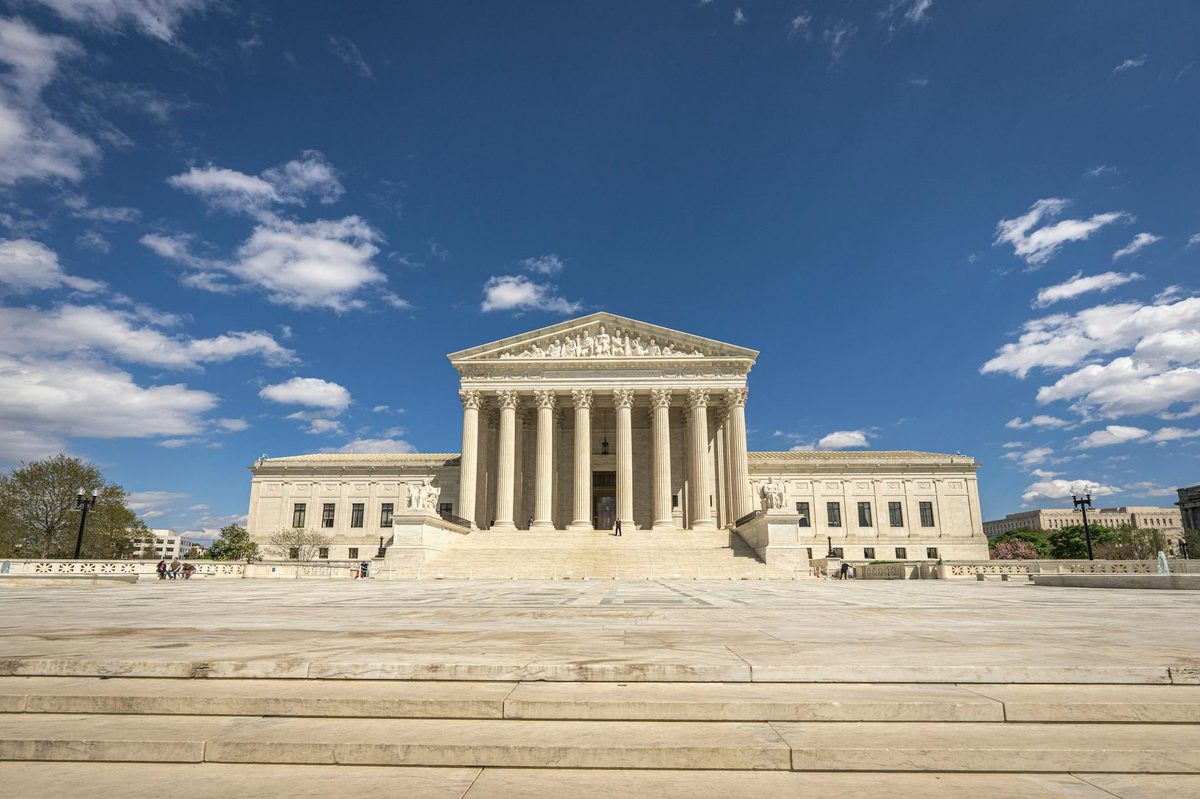
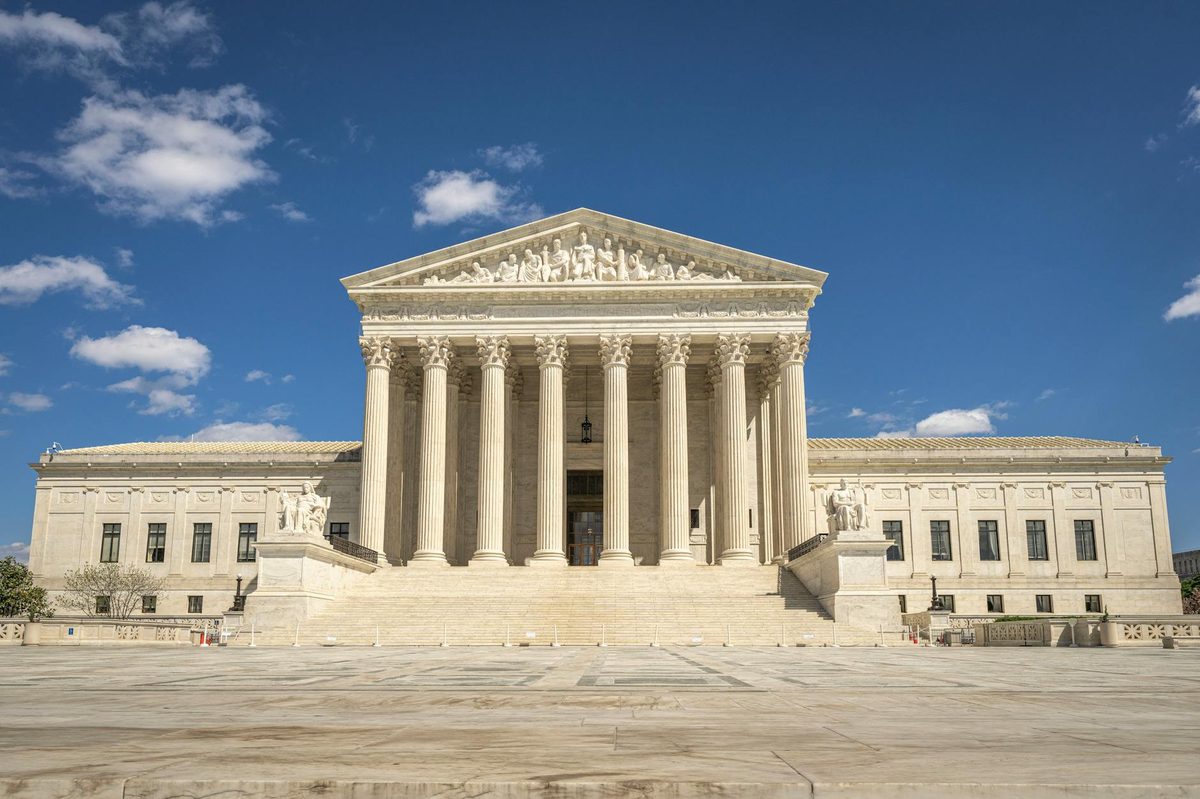
Supreme Court leaves Atkins protections intact in Alabama death row case

Supreme Court leaves Atkins protections intact in Alabama death row case

Rule Changes

Justices dismiss Hamm v. Smith, declining to tell lower courts how to weigh multiple IQ scores in capital cases

May 21st, 2026: Court dismisses the case as improvidently granted

Overview

Updated May 21

Joseph Clifton Smith has been on Alabama's death row since 1997. His five IQ tests came back at 72, 74, 74, 75, and 78. On Thursday, the Supreme Court dismissed Alabama's appeal in Hamm v. Smith, letting stand a lower-court finding that Smith is intellectually disabled and cannot be executed.

The dismissal locks in a more protective reading of the Court's 2002 Atkins ruling for borderline cases. States hoping for a stricter test, one that would treat any IQ score above 70 as disqualifying an Atkins claim, did not get one.

Why it matters

Roughly 20 percent of capital defendants have IQs near the disability threshold, and the rule courts use to weigh their scores decides who lives.

Questions about this story

Free account needed to ask — your question is kept and asked for you right after sign-up. Answers are public.

No questions yet — be the first to ask.

Key Indicators

5
IQ tests taken by Smith
Scores ranged from 72 to 78, all above the traditional cutoff of 70.
29 years
Smith on Alabama's death row
Convicted in 1997 for the murder of Durk Van Dam in Mobile County.
4
Dissenting justices
Roberts, Thomas, Alito, and Gorsuch wanted to rule for Alabama.
24 years
Since Atkins v. Virginia
The 2002 ruling that banned executing the intellectually disabled.
69
Smith's adjusted low IQ
District court found his lowest score of 72 could be as low as 69 within the measurement error.

Voices

Curated perspectives — historical figures and your fellow readers.

Ever wondered what historical figures would say about today's headlines?

Sign up to generate historical perspectives on this story.

People Involved

Organizations Involved

Timeline

1997 May 2026

9 events Latest: May 21st, 2026 · 4 months ago
Tap a bar to jump to that date
  1. Supreme Court grants certiorari

    Procedural

    The Court agrees to hear Alabama's renewed appeal after the Eleventh Circuit again rules for Smith on remand.

Scenarios

1

Supreme Court takes another Atkins multiple-IQ case within two terms

Likely Resolves by Q2 2028

Discussed by: SCOTUSblog; The Intercept legal coverage

The dismissal leaves the circuit split on multiple IQ scores unresolved. Several state attorneys general, including Alabama's, are likely to bring a cleaner vehicle. With four dissenters already on record, only one more vote is needed to grant cert again.

2

A state legislature narrows its Atkins standard by statute

Possible Resolves by End of 2027

Discussed by: Death Penalty Information Center; The Arc of the United States

Alabama, Texas, or another active death-penalty state could pass legislation defining intellectual disability more narrowly, for example by mandating use of the median IQ score or excluding measurement error. Such a statute would force a fresh Eighth Amendment fight.

3

Supreme Court overrules Atkins v. Virginia

Unlikely Resolves by Q2 2030

Discussed by: Justice Thomas (dissent); conservative legal commentators at Federalist Society

Thomas's solo call to overrule Atkins drew no other named signatures. Doing so would require five votes, a clean vehicle, and a willingness to revisit a settled Eighth Amendment precedent. None of those is currently in evidence beyond Thomas himself.

4

Alabama executes Smith despite the ruling

Unlikely Resolves by End of 2028

Discussed by: Alabama Attorney General's office filings; defense counsel briefing

The dismissal forecloses the legal path through this appeal. Alabama could theoretically pursue a new procedural maneuver, but the federal ruling that Smith is intellectually disabled is now final. An execution would require overturning that finding.

Historical Context

3 moments from history that rhyme with this story — and how they unfolded.

June 2002

Atkins v. Virginia (2002)

Daryl Atkins was sentenced to die in Virginia for a 1996 abduction and murder. His IQ measured 59. The Supreme Court ruled 6-3 that executing the intellectually disabled violates the Eighth Amendment, citing an emerging national consensus across state legislatures.

Then

Atkins's own death sentence was vacated. Dozens of death row prisoners filed new Atkins claims in the months that followed.

Now

Atkins set the constitutional floor that Hamm v. Smith was litigated against. States, not the Court, were given the task of defining intellectual disability, which set up the borderline-IQ disputes that have followed.

Why this matters now

Every multiple-IQ-score fight, including Smith's, exists because Atkins drew a line but did not draw a number. The Court declined again to draw that number this week.

May 2014

Hall v. Florida (2014)

Florida had treated any IQ score above 70 as automatically disqualifying an Atkins claim. Freddie Lee Hall, sentenced to die for a 1978 murder, scored as low as 71 on some tests. The Supreme Court ruled 5-4 that Florida's bright line ignored the standard error of measurement.

Then

Hall's case was sent back for fuller consideration of his disability. Florida and a handful of other states had to rewrite their Atkins procedures.

Now

Hall established that an IQ near 70 must be read as a range, not a point. That principle is exactly what the Eleventh Circuit applied to Smith's lowest score of 72.

Why this matters now

Alabama's argument in Hamm v. Smith was, in effect, that Hall should not stretch to cover scores in the mid-70s. The dismissal leaves Hall's logic in force for those cases.

March 2017 and February 2019

Moore v. Texas (2017 and 2019)

Texas was using a set of non-clinical factors, drawn from the fictional character Lennie in Of Mice and Men, to assess intellectual disability. Bobby James Moore had scored as low as 57 on IQ tests. The Supreme Court twice told Texas to use current medical standards instead.

Then

Moore was resentenced to life without parole. Texas was forced to abandon its homegrown test.

Now

Moore made clear that states cannot improvise their own definitions of intellectual disability. Current clinical standards control.

Why this matters now

Together with Hall, Moore framed the Eleventh Circuit's approach in Smith's case. The dismissal in Hamm v. Smith means that framework is not being narrowed.

Sources

(9)