
Pull to refresh
Logo
Supreme Court bars damages suits against prison officials under religious-rights law

Supreme Court bars damages suits against prison officials under religious-rights law

Rule Changes

A Rastafarian man whose dreadlocks were shaved cannot collect money damages from the guards who did it, the Court ruled 6-3.

June 23rd, 2026: Court bars personal-capacity damages

Overview

Updated Jun 23

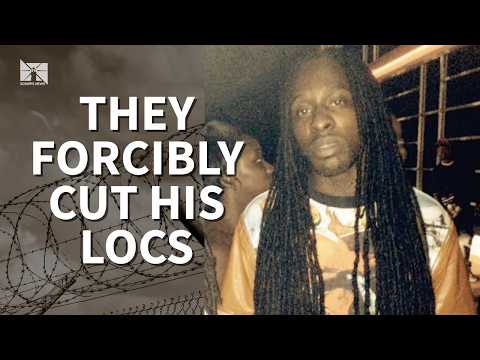
Three weeks before his release, Louisiana prison guards handcuffed Damon Landor to a chair and shaved off the dreadlocks he had grown for nearly 20 years. He had handed them a court ruling saying his faith protected his hair. A guard threw it in the trash.

On June 23, 2026, the Supreme Court ruled 6-3 that Landor cannot sue those guards for money. The decision closes the one remedy that hits officials personally, and leaves many prisoners with rights on paper but no way to collect when those rights are broken.

Why it matters

A federal law promises prisoners the right to practice their faith. The Court just ruled that the officials who break that right usually can't be made to pay.

Questions about this story

Free account needed to ask — your question is kept and asked for you right after sign-up. Answers are public.

No questions yet — be the first to ask.

Key Indicators

6-3
Vote
The Court split along ideological lines, with Gorsuch writing for the majority.
~20 years
Years Landor grew his hair
His Rastafarian vow not to cut his hair lasted roughly two decades before it was shaved.
2000
Year RLUIPA passed
Congress enacted the law unanimously to protect the religious practice of prisoners.
3 weeks
Time left on his sentence
Landor was near the end of a five-month drug sentence when his head was shaved.

Voices

Curated perspectives — historical figures and your fellow readers.

Ever wondered what historical figures would say about today's headlines?

Sign up to generate historical perspectives on this story.

People Involved

Organizations Involved

Timeline

September 2000 June 2026

7 events Latest: June 23rd, 2026 · 3 months ago
Tap a bar to jump to that date
  1. Guards shave Landor's head

    Incident

    Weeks from release, Landor is handcuffed to a chair and shaved at Raymond Laborde Correctional Center. A guard throws his court ruling in the trash.

  2. Congress passes RLUIPA

    Legislation

    Lawmakers unanimously enact the Religious Land Use and Institutionalized Persons Act, protecting the religious practice of prisoners. It rests on Congress's power to attach conditions to federal funding.

Scenarios

1

Congress amends RLUIPA to allow damages

Unlikely Resolves by End of 2027

Discussed by: Justice Gorsuch's majority opinion; Constitutional Accountability Center

The majority noted Congress could rewrite the law to permit personal-capacity damages. A bill restoring that remedy would require sponsors in both chambers and a path through a divided Congress. Religious-liberty and civil-rights groups across the spectrum have backed Landor, which could give such a fix unusual bipartisan appeal.

2

Ruling stands as the final word, no fix

Likely Resolves by End of 2027

Discussed by: SCOTUSblog; CBS News

With Congress gridlocked, the decision simply holds. Prisoners can still seek court orders to change prison policy, but those become moot once an inmate is released. For people like Landor, already free, no remedy remains. This is the default path if lawmakers take no action.

3

States pass their own damages remedies

Possible Resolves by End of 2027

Discussed by: Religious-liberty advocates cited in PBS and CNN coverage

States can write their own laws letting inmates sue prison staff for violating religious practice. Advocates may push such bills in legislatures, especially in states with active religious-freedom coalitions. At least one state would need to enact a measure creating a personal-capacity damages remedy for prison religious-rights violations.

Historical Context

2 moments from history that rhyme with this story — and how they unfolded.

January 2015

Holt v. Hobbs (2015)

Gregory Holt, a Muslim inmate in Arkansas, sued under RLUIPA for the right to grow a half-inch beard. The Supreme Court ruled unanimously in his favor, finding the prison's no-beard policy violated the law.

Then

Holt won the right to keep his beard, and prisons nationwide reviewed grooming rules.

Now

The case confirmed RLUIPA's strength when inmates seek court orders changing prison policy.

Why this matters now

Holt got relief because he was still incarcerated and wanted a policy changed. Landor was already free, so only money could help him. The ruling shows where RLUIPA's protection ends.

December 2020

Tanzin v. Tanvir (2020)

Three Muslim men sued FBI agents personally for damages after being placed on the No Fly List for refusing to act as informants. The Supreme Court ruled unanimously that the Religious Freedom Restoration Act allows money damages against federal officials sued in their individual capacity.

Then

The men could pursue damages against the agents.

Now

It established that 'appropriate relief' under a sister religious-liberty law includes personal-capacity damages.

Why this matters now

Landor argued his case was the same. The Court disagreed, drawing a sharp line: RFRA rests on Congress's general power, while RLUIPA rests on the spending power, which it said cannot bind individuals.

Sources

(5)