

Pull to refresh
Logo
AIPAC halts candidate endorsements and direct campaign contributions

AIPAC halts candidate endorsements and direct campaign contributions

Money Moves

Pro-Israel lobby shifts to member-driven giving and super PAC spending after a costly midterm cycle

Overview

Updated 14 hours ago

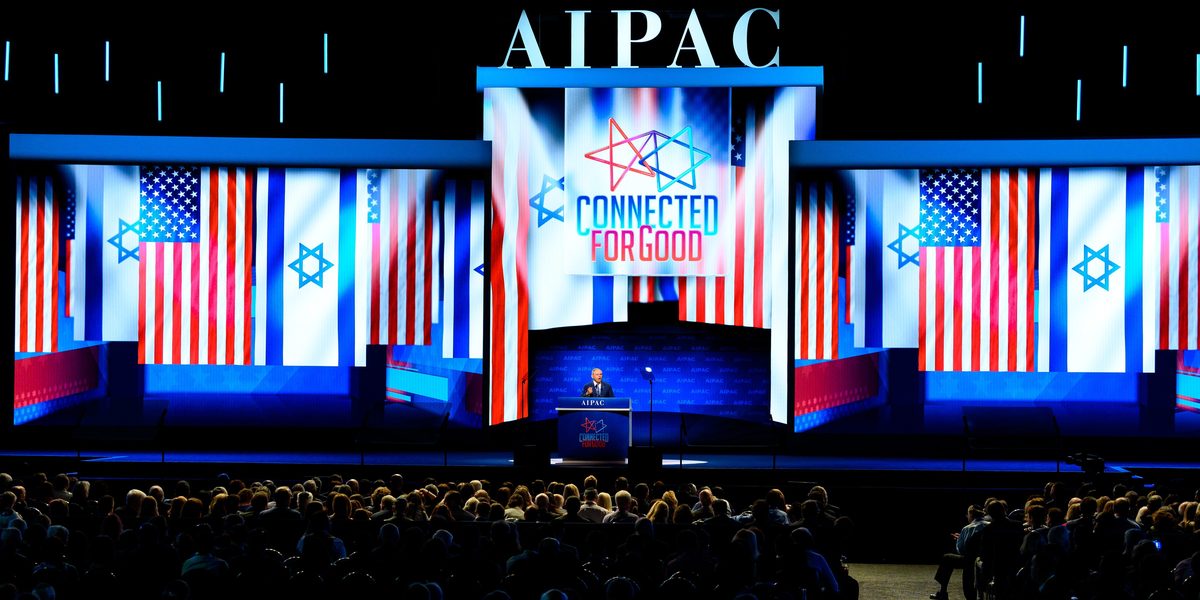
The American Israel Public Affairs Committee (AIPAC) said on Oct. 21 that it will stop endorsing candidates and giving money directly to their campaigns. It plans to organize donations from its members and keep spending through its super PAC, United Democracy Project.

The Nov. 3 election showed the risk in that approach. Democrat Abdul El-Sayed beat Republican Mike Rogers in Michigan after AIPAC's super PAC spent heavily against him. AIPAC said 234 candidates it backed won, but an outside tally found nearly two-thirds of the $84 million it and allied groups spent went to losers.

Why it matters

AIPAC's money still shapes races, but candidates now weigh whether taking it costs more votes than it buys.

Questions about this story

Free account needed to ask — your question is kept and asked for you right after sign-up. Answers are public.

No questions yet — be the first to ask.

Key Indicators

$90M
AIPAC member direct giving
AIPAC members gave directly to candidates this cycle, per the group.
$25M
AIPAC PAC contributions
PAC contributions to candidates and committees through Sept. 30, 2026, per FEC filings.
$53.5M
UDP independent expenditures
United Democracy Project independent spending in 2026 congressional races.
234
AIPAC-backed candidates won
AIPAC said on Nov. 4 that 234 candidates it backed had won.
$55M
Spent on losing candidates
Quincy Institute tally of AIPAC and allied spending that went to candidates who lost.
$42M
Spent against El-Sayed
Spent by AIPAC and allied groups against Abdul El-Sayed across the primary and general election, per Politico.

Voices

Curated perspectives — historical figures and your fellow readers.

Sign up to generate historical perspectives on this story.

People Involved

Organizations Involved

Timeline

2021 November 2026

10 events Latest: 6 days ago
Tap a bar to jump to that date
  1. AIPAC-backed incumbents lose key House races

    Latest Election

    More than 30 of AIPAC's preferred candidates lost, including Republican Reps. Mike Lawler, Brian Fitzpatrick and Max Miller. AIPAC bundled over $3.3 million for Sen. Susan Collins, who lost to Democrat Troy Jackson.

  2. AIPAC says 234 backed candidates won

    Statement

    AIPAC said it had counted 234 candidates it backed as winners. An outside tally by the Quincy Institute found about $55 million of the $84 million spent by AIPAC and allied groups went to candidates who lost.

  3. El-Sayed defeats Rogers in Michigan Senate race

    Election

    Abdul El-Sayed won the Michigan Senate seat, beating Republican Mike Rogers. AIPAC's super PAC and allied groups had spent heavily against El-Sayed, including about $9 million in late money for Rogers.

  4. AIPAC halts endorsements and direct contributions

    Strategy shift

    AIPAC announces it will stop endorsing candidates and making direct contributions, shifting to member-driven giving and super PAC expansion.

  5. Report: AIPAC super PAC sends up to $9 million to pro-Rogers group

    Campaign finance

    Newsweek, citing The New York Times, reported that United Democracy Project would send up to $9 million to the Great Lakes Conservatives Fund, which backs Republican Mike Rogers in Michigan. The transfer went out after the October 14 deadline that would have put it in filings before Election Day.

  6. Pro-Rogers super PAC discloses media buy

    Disclosure

    Great Lakes Conservatives Fund discloses a $4.6 million media buy in Michigan funded by AIPAC.

  7. Pre-election disclosure deadline passes

    Regulatory

    AIPAC's late donation to a pro-Rogers super PAC is made after the deadline that would require disclosure before Election Day.

  8. Rogers opens door to AIPAC support

    Statement

    At a debate, Rogers says he would 'take all of that help' from AIPAC, breaking from candidates who decline the group's backing.

  9. AIPAC becomes a campaign issue in Democratic primaries

    Political conflict

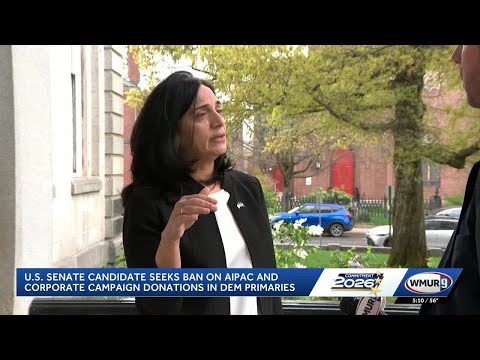
    UDP spends $31 million trying to defeat Abdul El-Sayed in Michigan; candidates across the country are attacked for taking AIPAC money.

  10. AIPAC enters direct politics

    Strategy shift

    AIPAC forms a PAC and begins making direct contributions, ending its old practice of staying out of campaign finance.

Scenarios

1

Michigan Senate race tests AIPAC's new model

Uncertain Resolves by Dec 1, 2026

Discussed by: NPR, JNS, and DNYUZ all identified Michigan as the first test of AIPAC's post-announcement strategy and its late $9 million push for Mike Rogers

The November 3 election between Mike Rogers and Abdul El-Sayed is AIPAC's first major test under the new model. AIPAC has planned up to $9 million in late spending for Rogers through a dedicated super PAC. A Rogers win lets AIPAC argue its super PAC model delivers results without the political baggage of direct endorsements. An El-Sayed win would undercut that claim and embolden the group's critics.

2

Democratic rejections of AIPAC money accelerate

Possible Resolves by Aug 1, 2028

Discussed by: JNS reported that candidates stopped taking AIPAC contributions during 2026 'rather than give their challengers a new line of attack'

The trend of candidates publicly refusing AIPAC money, already visible in 2026, becomes the norm for Democratic incumbents. Entering the 2028 cycle, fewer Democrats accept AIPAC-organized donations. AIPAC's direct pipeline into Democratic campaigns shrinks even as its super PAC remains active.

3

AIPAC tilts toward Republicans

Possible Resolves by Q1 2027

Discussed by: DNYUZ noted AIPAC 'has almost never backed a Republican in a competitive general election race' before the Rogers donation

AIPAC's late $9 million push for Rogers breaks a long bipartisan pattern. If its general-election spending continues to flow disproportionately to Republicans as Democrats increasingly reject its support, AIPAC's identity as a bipartisan lobby erodes, shifting how both parties treat the group.

Historical Context

3 moments from history that rhyme with this story — and how they unfolded.

January 2010

Citizens United v. FEC (2010)

The Supreme Court ruled 5-4 that corporations and unions may spend unlimited money on independent political advertising, striking down long-standing federal limits. The decision created the legal space for super PACs, which can raise and spend unlimited sums as long as they do not coordinate with candidates.

Then

Super PACs became the dominant vehicle for large political donations, reshaping the 2010 and 2012 election cycles.

Now

Groups across the political spectrum adopted the super PAC structure, including AIPAC's United Democracy Project.

Why this matters now

AIPAC's shift from direct contributions toward super PAC spending reflects the post-Citizens United landscape, where unlimited independent spending has largely replaced regulated direct giving.

2021

AIPAC enters direct politics (2021)

After decades of influence through lobbying and member mobilization, AIPAC formed a political action committee and began collecting contributions for candidates. The move ended its long-standing practice of staying out of direct campaign finance.

Then

AIPAC's PAC and super PAC spent heavily beginning in the 2022 cycle, making the group one of the biggest pro-Israel donors in American politics.

Now

Direct involvement made AIPAC itself a campaign issue, with primary challengers attacking Democratic incumbents for accepting its money.

Why this matters now

The October 2026 announcement reverses AIPAC's own five-year experiment with direct spending, returning it to its older model of member mobilization — but now with a super PAC in the mix.

2016-2021

NRA's political decline (2016-2021)

The National Rifle Association was one of Washington's most feared lobbies after spending heavily in the 2016 election. Within five years, it faced corporate cutbacks after the 2018 Parkland shooting, leadership corruption scandals, and a failed 2021 bankruptcy. Its political influence collapsed.

Then

Top officials resigned, the donor base shrank, and candidates across both parties became more willing to oppose the group.

Now

The NRA showed that a lobby whose brand becomes toxic can keep raising money yet lose political leverage — because candidates no longer want its help.

Why this matters now

AIPAC faces the same dynamic. Candidates, especially Democrats, now weigh the political cost of accepting its money against the financial benefit.

Sources

(10)