
Pull to refresh
Logo
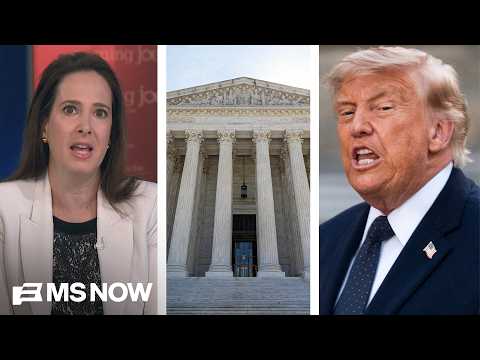
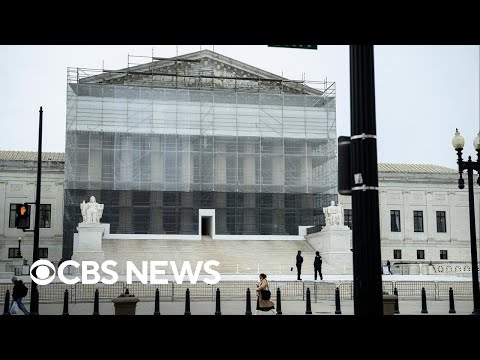
Supreme Court lifts limits on political party campaign spending

Supreme Court lifts limits on political party campaign spending

Rule Changes

A 6-3 ruling lets parties spend without limit in coordination with their candidates, undoing a Watergate-era rule

June 30th, 2026: Supreme Court strikes the limits down

Overview

Updated Jun 30

For 25 years, a national party could spend only a fixed amount working hand-in-hand with its own candidate. In Ohio in 2022, that cap sat between $130,600 and about $4 million for a Senate race. On June 30, 2026, the Supreme Court erased the limit entirely.

The 6-3 ruling lets the Republican and Democratic parties raise large sums and spend them in full coordination with candidates on ads, mail, and strategy. It lands months before the 2026 midterm elections, changing how party money reaches the candidates it backs.

Why it matters

Parties can now pour unlimited coordinated money into close races, giving the two major parties more leverage over which candidates win.

Questions about this story

Free account needed to ask — your question is kept and asked for you right after sign-up. Answers are public.

No questions yet — be the first to ask.

Key Indicators

6-3
Vote split
The court's conservative majority struck the limits; its three liberals dissented.
$4M
Old Senate spending cap
The top coordinated-spending limit for a Senate race in the 2026 cycle, now gone.
25 years
Precedent overturned
The court reversed its own 2001 ruling that had upheld the limits.
Unlimited
New coordinated spending
Parties can now spend any amount in direct coordination with their candidates.

Voices

Curated perspectives — historical figures and your fellow readers.

Ever wondered what historical figures would say about today's headlines?

Sign up to generate historical perspectives on this story.

People Involved

Organizations Involved

Timeline

October 1974 June 2026

4 events Latest: June 30th, 2026 · 2 months ago
Tap a bar to jump to that date
  1. Congress caps party coordinated spending

    Legislation

    Amendments to the Federal Election Campaign Act limit how much a party can spend in coordination with its candidates, part of the post-Watergate cleanup.

Scenarios

1

Both parties book record coordinated spending in the 2026 midterms

Likely Resolves by End of 2026

Discussed by: Election lawyers at Elias Law and the Campaign Legal Center

With no ceiling, both national parties move large sums directly into coordinated ads and field work for Senate and House candidates. FEC filings for the 2026 cycle show coordinated party expenditures far above the old per-race caps. The change shows up first in tight Senate races where party money makes the biggest difference.

2

Congress moves to write new contribution rules in response

Possible Resolves by Q2 2027

Discussed by: Reporters at NBC News and The Hill covering congressional reaction

Lawmakers who oppose the ruling introduce legislation to tighten the contribution rules the decision leaves intact, aiming to limit how donors fund parties. A bill gets a committee hearing or a floor vote. Because the ruling rests on the First Amendment, any statute would face its own court challenge.

3

Outside super PACs lose ground to party committees

Uncertain Resolves by Q1 2027

Discussed by: Campaign finance analysts cited by CNN and Axios

Kavanaugh's opinion argued the old limits pushed money toward outside groups parties cannot control. If that logic holds, donors shift giving back to party committees, and independent super PAC spending in federal races falls relative to recent cycles. The effect would be measurable in 2026 totals compared with 2022.

Historical Context

3 moments from history that rhyme with this story — and how they unfolded.

January 1976

Buckley v. Valeo (1976)

The Supreme Court reviewed the same 1974 campaign finance law. It upheld limits on direct contributions but struck down limits on independent spending, ruling that money spent on political speech gets First Amendment protection.

Then

The decision split the law in two: contributions could be capped, but a person's own independent spending could not.

Now

It set the framework every later campaign finance case has argued over, including this one.

Why this matters now

The 2026 ruling extends Buckley's logic to party spending, treating coordinated party money as protected speech rather than a contribution that can be limited.

June 2001

FEC v. Colorado Republican Federal Campaign Committee (2001)

By 5-4, the court upheld the limit on coordinated party spending. It reasoned that coordinated money works like a contribution to the candidate, so it could be capped to prevent corruption.

Then

Party committees stayed bound by per-race spending caps when working with their candidates.

Now

The decision stood as the controlling precedent for 25 years.

Why this matters now

This is the exact ruling the 2026 court overruled, reversing the legal status of coordinated party spending.

January 2010

Citizens United v. FEC (2010)

The court ruled 5-4 that the government cannot limit independent political spending by corporations and unions. The decision opened the door to super PACs that spend unlimited sums on elections.

Then

Outside groups quickly became a large source of election spending.

Now

It shifted money toward groups operating apart from the candidates and parties.

Why this matters now

Kavanaugh cited this shift toward outside groups as a reason to free parties from their own spending caps.

Sources

(6)