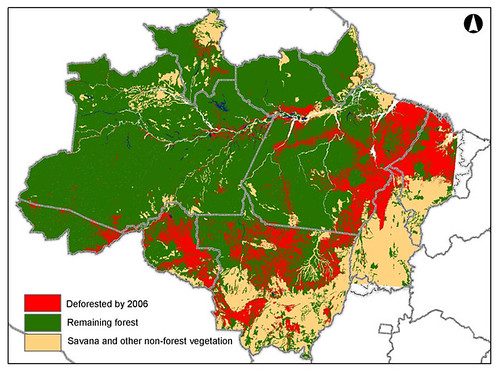
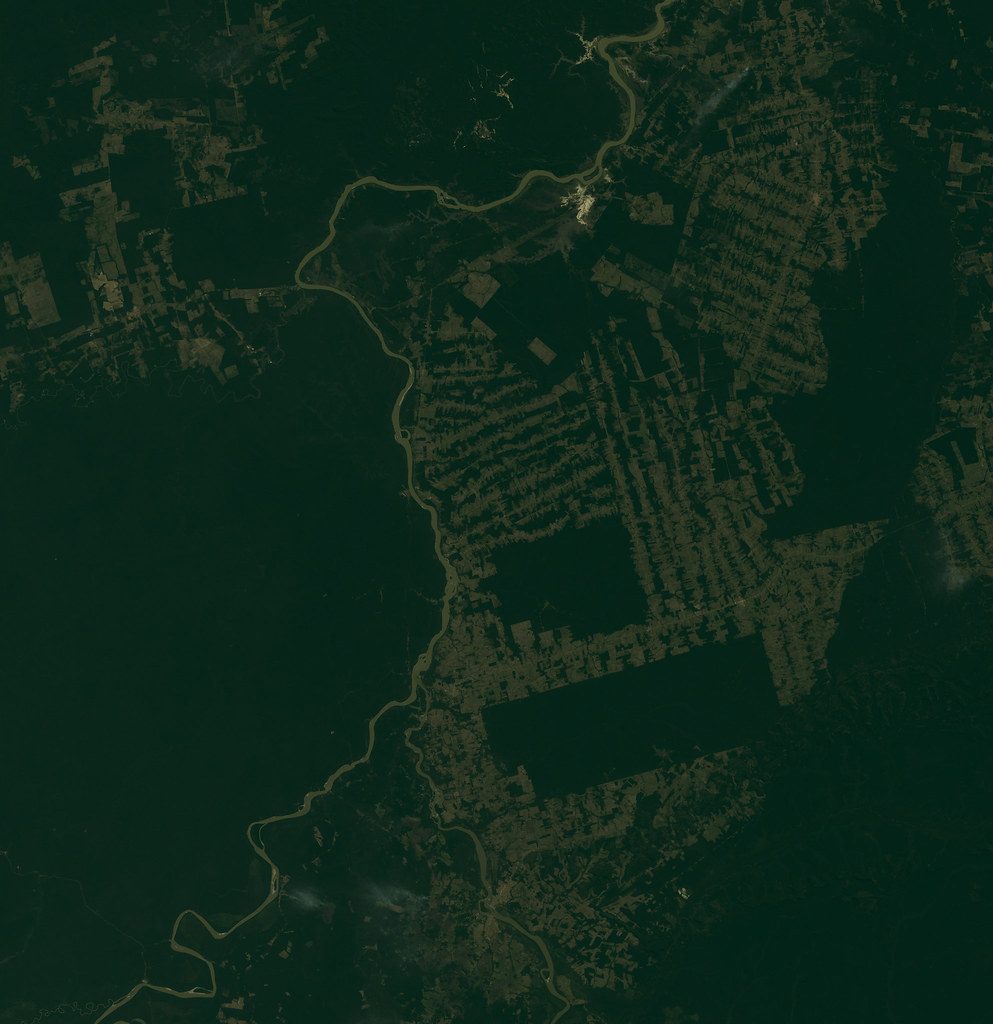
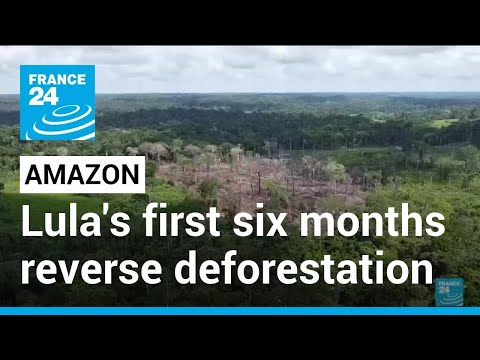
Brazil cut Amazon deforestation by a third in the first six months of 2023, putting the world's largest tropical rainforest on track for its lowest annual clearing rate in years. The turnaround arrived fast: just months earlier, deforestation had been running at its highest levels in over a decade. The shift traces directly to a change in government and a rapid restoration of environmental enforcement that had been dismantled under the previous administration.
The speed of the reversal reveals something important about how deforestation works in the Amazon. It is not a force of nature—it responds to whether laws are enforced. Brazil proved this between 2004 and 2012, slashing forest loss by 84% through satellite monitoring, fines, and credit restrictions.
When enforcement lapsed, deforestation surged again. Now Brazil is rerunning the same playbook, testing whether it can reach zero deforestation by 2030.
Questions about this story
Free account needed to ask — your question is kept and asked for you right after sign-up. Answers are public.
No questions yet — be the first to ask.
Key Indicators
33%
Deforestation decline, first half of 2023
Deforestation alerts in the Amazon fell 33% from January to June 2023 compared to the same period in 2022, according to Brazil's DETER satellite system.
66%
July 2023 drop year-over-year
July 2023 saw a 66% reduction in deforestation compared to July 2022, the sharpest single-month decline.
147%
Increase in environmental fines
Brazil's environmental enforcement agency IBAMA issued 147% more fines for environmental crimes from January to July 2023 than the average for 2019 to 2022.
27,772 km²
Peak annual deforestation (2004)
The highest annual Amazon deforestation ever recorded, before the original enforcement campaign drove an 84% reduction by 2012.
14 events
Latest: November 6th, 2024 · 2 years ago
Showing 8 of 14
JK to step
Tap a bar to jump to that date
Jump to
November 2024
2023-2024 deforestation falls to nine-year low
LatestData
The annual PRODES measurement showed 5,796 square kilometers of Amazon clearing, a further 31% decline and the lowest level since 2015.
November 2023
Annual PRODES data confirms 22% drop to 9,001 km²
Data
INPE's official annual measurement showed 9,001 square kilometers cleared in the August 2022 to July 2023 period, falling below 10,000 square kilometers for the first time since 2018.
August 2023
July deforestation plunges 66%, reaching six-year low
Data
July 2023 recorded the sharpest single-month decline, with a 66% drop compared to July 2022, pushing cumulative 2023 deforestation to a six-year low.
July 2023
First-half data confirms Amazon on track for record-low deforestation
Data
INPE's DETER system showed deforestation alerts fell 33% in the first half of 2023, reaching their lowest level since 2019 and confirming a sustained trend rather than a one-month anomaly.
May 2023
April deforestation drops 68% year-over-year
Data
The first major monthly data point showed deforestation in April 2023 fell 68% compared to April 2022, the earliest strong signal that enforcement was working.
January 2023
Lula takes office, reactivates Amazon Fund
Policy
On his first day, Lula signed a decree reactivating the Amazon Fund and appointed Marina Silva as environment minister, signaling an immediate policy reversal.
November 2022
Lula pledges zero deforestation by 2030 at COP27
Policy
Before taking office, Lula attended the United Nations climate conference in Egypt and committed Brazil to eliminating Amazon deforestation within eight years.
October 2022
Lula wins presidential election
Political
Lula narrowly defeated Bolsonaro in a runoff election, pledging to end Amazon deforestation by 2030 and restore environmental enforcement.
August 2019
Amazon fires trigger global outcry
Crisis
Widespread fires across the Amazon drew international condemnation. Bolsonaro dismissed satellite data and called concerns about the rainforest an interference in Brazilian sovereignty.
The new administration cut enforcement budgets, dismissed INPE's director for defending deforestation data, and dismantled the Amazon Fund's governance, beginning a four-year surge in forest loss.
November 2012
Amazon deforestation hits record low of 4,571 km²
Milestone
Annual deforestation reached its lowest recorded level, an 84% reduction from the 2004 peak, validating the enforcement-based approach.
August 2008
Amazon Fund established with Norwegian funding
Finance
Norway pledged up to $1 billion in results-based payments for reducing Amazon deforestation, creating the largest international conservation fund for the rainforest.
July 2006
Amazon soy moratorium takes effect
Industry
Major grain traders agreed to stop purchasing soybeans grown on recently deforested Amazon land, removing a key economic driver of clearing.
March 2004
Brazil launches PPCDAm anti-deforestation plan
Policy
Lula's first administration launched the Action Plan for the Prevention and Control of Deforestation in the Legal Amazon, combining satellite monitoring, enforcement, and credit restrictions to combat record-high forest clearing of 27,772 square kilometers.
Scenarios
1
Brazil reaches near-zero Amazon deforestation by 2030
Possible
Discussed by: The Lula administration and international partners including Norway's government; analysts at the Wilson Center and Climate Policy Initiative
If enforcement capacity continues to expand, IBAMA receives adequate staffing, and international funding through the Amazon Fund grows, Brazil could approach its zero-deforestation pledge. The precedent is strong: the 2004-2012 campaign achieved an 84% reduction. However, reaching the final stretch toward zero is harder than the initial drop, requiring not just enforcement but economic alternatives for rural communities who currently depend on clearing land.
Enforcement-driven gains level off as IBAMA struggles with staffing shortages and political resistance from agricultural interests in Congress. Deforestation falls substantially from Bolsonaro-era peaks but stabilizes well above zero. Meanwhile, forest degradation from fires and selective logging—harder to detect and enforce against than outright clearing—partially offsets the gains in headline deforestation numbers.
3
Political reversal sends deforestation climbing again
Possible
Discussed by: Environmental groups including Greenpeace and WWF Brazil; political analysts tracking the influence of Brazil's powerful agricultural caucus in Congress
A future administration hostile to environmental enforcement, or successful legislative efforts by Brazil's agricultural bloc to weaken protections, reverses the gains. This scenario has direct precedent: the entire Bolsonaro-era surge was itself a reversal of Lula's first-term achievements. The vulnerability of Brazil's environmental progress to political cycles remains the single largest structural risk to the Amazon.
4
Fire and degradation replace clearing as primary threat
Likely
Discussed by: INPE researchers; Amazon Conservation Association; Washington Post and Mongabay reporting on 2024 fire season
Even as traditional clear-cutting falls, rising temperatures, drought, and the spread of roads into the forest interior make vast areas newly vulnerable to fire. In 2024, fires destroyed 2.78 million hectares of primary forest—roughly 60% of total forest loss. If this trend continues, declining deforestation statistics could mask ongoing destruction happening through a different mechanism.
Historical Context
3 moments from history that rhyme with this story — and how they unfolded.
1 of 3
1987-present
Costa Rica reverses deforestation (1980s-present)
Costa Rica's forest cover fell to 40% of the country by 1987 after decades of agricultural expansion, making it one of the most deforested countries in Latin America. The government created a Payments for Ecosystem Services program in 1997, funded largely by a fuel tax, that paid private landowners directly to maintain forest on their land.
Then
Net deforestation halted and forests began regenerating. Over $500 million has been paid to landowners over two decades.
Now
Forest cover recovered to nearly 60% of the country. Costa Rica became the first tropical nation to fully reverse deforestation and a model for international conservation policy.
Why this matters now
Costa Rica's success shows that durable forest recovery requires economic incentives, not just enforcement. Brazil's current approach relies heavily on policing; the Costa Rica model suggests that long-term success may require making standing forests more valuable than cleared land.
2 of 3
2004-2012
Brazil's first deforestation reversal (2004-2012)
Facing record Amazon clearing of 27,772 square kilometers in 2004, Brazil's government launched the PPCDAm plan under Environment Minister Marina Silva. The strategy combined INPE's new real-time satellite alert system (DETER) with aggressive field enforcement by IBAMA, credit restrictions for non-compliant landowners, and a soy industry moratorium on purchasing from recently deforested areas.
Then
Annual deforestation dropped to 4,571 square kilometers by 2012, an 84% reduction that remains the most successful anti-deforestation campaign in any tropical country.
Now
The success proved that tropical deforestation could be rapidly reversed through enforcement. But the gains proved fragile: when political will evaporated after 2012, deforestation gradually climbed, and then surged under Bolsonaro.
Why this matters now
The current decline is effectively a replay of this earlier success, using the same institutional tools and many of the same people—including both Lula and Marina Silva. The key question is whether this iteration can be made more durable.
3 of 3
2011-present
Indonesia's palm oil moratorium (2011-present)
Indonesia imposed a moratorium on new palm oil concessions in peatlands and primary forests in 2011, made permanent in 2019. Palm oil-driven deforestation in 2018-2022 fell to 18% of its peak a decade earlier, driven by the moratorium, falling palm oil prices, and company-level no-deforestation commitments.
Then
Deforestation for palm oil dropped sharply, and Indonesia's overall deforestation rate declined substantially.
Now
By 2024, signs of backsliding emerged as palm oil prices recovered and enforcement wavered, showing that commodity-driven deforestation can rebound when economic incentives shift.
Why this matters now
Indonesia's experience illustrates that commodity prices and market conditions shape deforestation independently of policy. Brazil's deforestation is similarly tied to global beef and soy markets—a factor that enforcement alone cannot permanently override.