Pull to refresh
Logo
Massachusetts requires local approval for new data centers

Massachusetts requires local approval for new data centers

Rule Changes Boston, MA local

Healey's order ties state permits to community agreements and 100% clean energy as more towns move to ban or pause data centers

5 days ago: Healey signs executive order on local approval

Overview

Updated 3 days ago

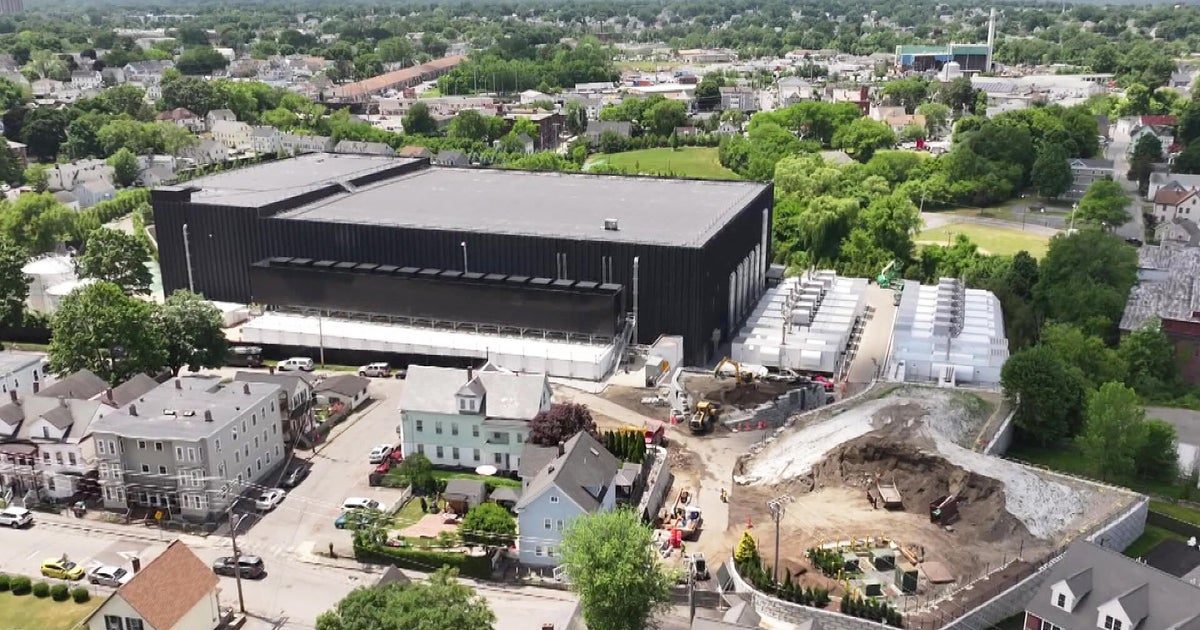
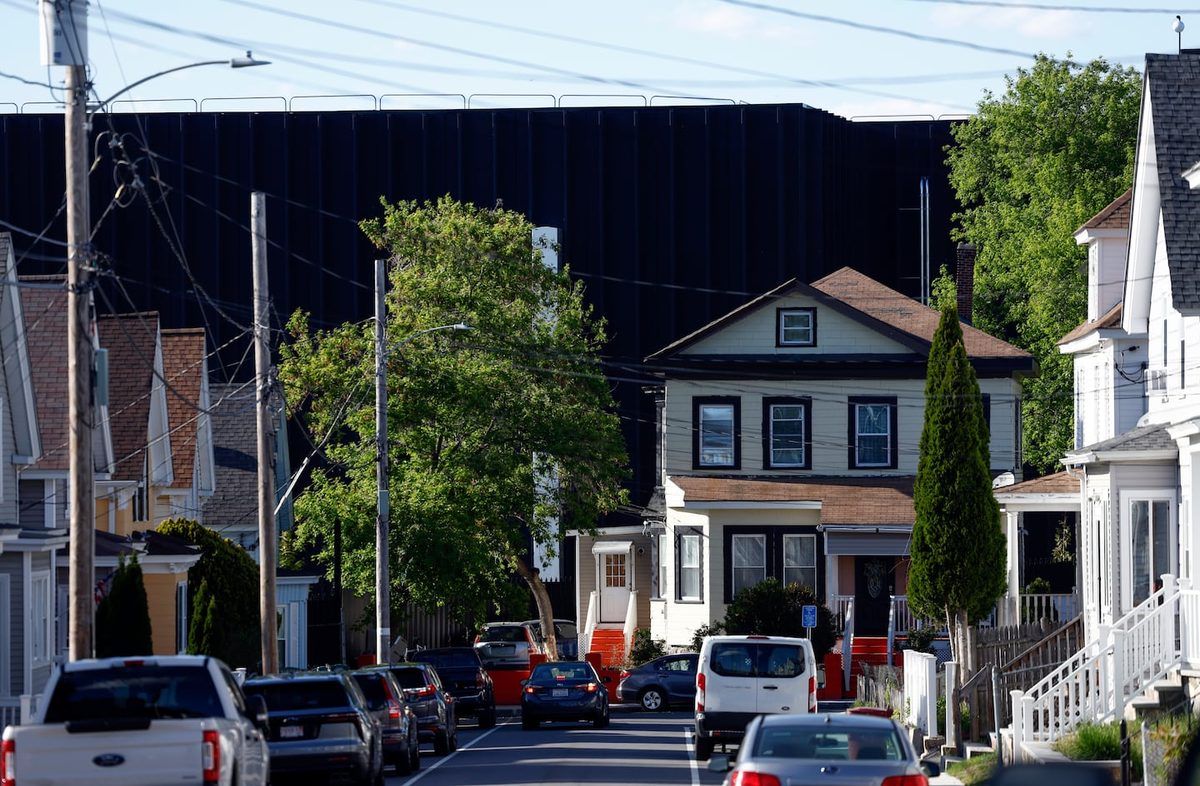
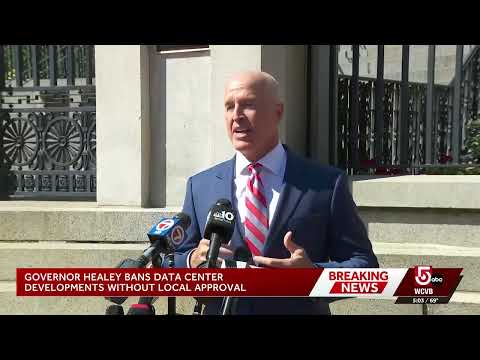
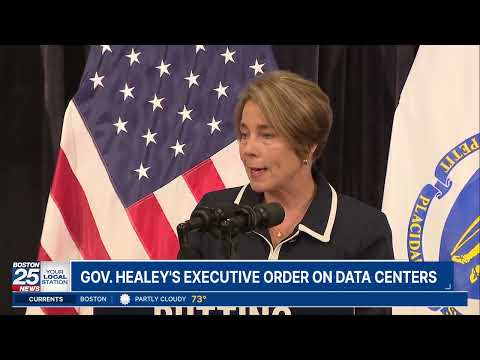
Massachusetts towns hold veto power over new data centers. Gov. Maura Healey's Sept. 8 order requires projects over 25 megawatts to win community approval and meet a 100% clean-electricity standard before state permitting.

Colleges, universities, and medical providers can seek exemption from the threshold. The order follows five municipal bans or moratoriums and a June pause on the state's 2024 tax incentive. Five more towns are weighing restrictions, and a West Springfield resident filed a citizen's petition for statewide rules.

Why it matters

Anyone building a data center in Massachusetts must now win over the host town first — a model other states may copy.

Questions about this story

Free account needed to ask — your question is kept and asked for you right after sign-up. Answers are public.

No questions yet — be the first to ask.

Key Indicators

69%
Surveyed residents opposing AI data centers in their area
NBC News/SurveyMonkey poll, Aug 20-Sept 1, 2026.
5
Towns with data center bans or moratoriums
Lowell, Mansfield, Holyoke, Westfield, and Shutesbury.
25 MW
Minimum peak demand for projects needing local approval
Threshold set in Healey's Sept. 8 executive order.
5
More towns weighing bans or moratoriums
Northampton, Easthampton, Greenfield, New Bedford, and Methuen are considering restrictions.

Voices

Curated perspectives — historical figures and your fellow readers.

Ever wondered what historical figures would say about today's headlines?

Sign up to generate historical perspectives on this story.

People Involved

Organizations Involved

Timeline

November 2024 September 2026

13 events Latest: 5 days ago Showing 8 of 13
Tap a bar to jump to that date
  1. Healey signs executive order on local approval

    Latest Policy

    New data centers over 25 MW must win community approval, meet clean-energy standards, and sign community benefits agreements before state permitting.

  2. New Bedford mayor proposes citywide data center ban

    Local policy

    Mayor Jon Mitchell filed an ordinance to ban data centers while the city studies their impact. The council takes it up Sept. 11.

  3. Northampton advances year-long data center moratorium

    Local policy

    The city council referred a proposed one-year moratorium to committee. A public hearing is planned; the full council could vote Sept. 17.

  4. Methuen mayor proposes one-year data center moratorium

    Local policy

    Mayor D.J. Beauregard drafted an ordinance pausing data center development so the city can write zoning rules.

  5. West Springfield resident files statewide data center petition

    Citizen action

    A West Springfield resident filed a citizen's petition to regulate data centers statewide.

  6. Poll finds 69% oppose local data centers

    Poll

    NBC News/SurveyMonkey poll shows broad bipartisan opposition to AI data centers in respondents' areas.

  7. Holyoke enacts citywide data center ban

    Local policy

    Mayor signs law prohibiting new data centers in the city.

  8. Healey halts data center tax incentives

    Policy

    Governor pauses the tax exemption and unveils an eight-point developer framework focused on clean energy and community benefits.

  9. Mansfield voters approve near-total ban

    Local policy

    Town votes to ban most new data center development.

  10. Lowell enacts first data center moratorium

    Local policy

    Lowell becomes the first Massachusetts city to pause new data center construction.

  11. Massachusetts passes data center tax exemption

    Policy

    Legislature's economic development bill creates 20-year sales and use tax exemption for qualified data centers.

Scenarios

1

Massachusetts resumes data center tax breaks

Possible Resolves by Q2 2027

Discussed by: WBUR noted Healey did not say when she would resume accepting applications for the 20-year exemption.

Healey paused the Qualified Data Center Sales and Use Tax Exemption in June 2026 and has not committed to a restart date. If the administration resumes accepting applications for projects meeting the new clean-energy and community-agreement standards, developers who were waiting can move forward. If not, the pause could become indefinite.

2

Ratepayer Protection Fund goes live

Likely Resolves by Q1 2027

Discussed by: The executive order requires MassDEP to develop the payment mechanism by Dec. 31, 2026.

The order creates a Ratepayer Protection Fund funded by data centers that cannot immediately supply their own clean energy. MassDEP must build the alternative compliance payment mechanism by Dec. 31. If it does, the fund starts collecting revenue in 2027 and returns it to ratepayers, making the clean-energy requirement financially binding.

3

More towns ban data centers

Possible Resolves by Q3 2027

Discussed by: The National Conference on State Legislatures reports 15 states considering data center moratoriums; Lowell, Mansfield, and Holyoke have already acted in Massachusetts.

Towns with no data centers may follow Lowell, Mansfield, and Holyoke by enacting moratoriums or bans. If another Massachusetts municipality formally restricts or prohibits data center development within a year, it signals the local-control movement is spreading. If none do, the order's community-agreement requirement may be satisfying local concerns.

4

Lowell generator case resolves

Possible Resolves by End of 2027

Discussed by: Lowell residents sued MassDEP in April 2026; a Middlesex judge blocked four generators in August 2026.

The Lowell lawsuit over the Markley Group's diesel generators is the visible test case for tensions behind the executive order. If the court issues a final ruling upholding or overturning the air quality approval, it will set a precedent for how Massachusetts balances data center operations against local health complaints. The case could also settle, with Markley agreeing to emissions limits.

5

New Bedford bans data centers

Possible Resolves by Sep 10, 2026

Discussed by: Mayor Jon Mitchell filed the ordinance Sept. 1; the City Council takes it up Sept. 10.

New Bedford's mayor wants a citywide ban while the city studies data center impacts. Current zoning allows data centers by-right in many areas, meaning no special approval is needed. If the council passes the ban, New Bedford becomes the second Massachusetts city after Holyoke to enact a full prohibition.

6

Legislature codifies data center guardrails

Possible Resolves by End of 2026

Discussed by: State Sen. Vanna Howard's amendment is in conference committee; Healey has said the 2024 tax exemption was the Legislature's idea.

A Senate amendment tying data center tax benefits to community and environmental standards sits in a conference committee. If it survives, the tax break Healey paused in June would only resume for projects meeting the new standards.

7

University and hospital data centers bypass local approval

Possible Resolves by End of 2026

Discussed by: Boston.com reporting on the order's exemption clause

Healey's order lets two cabinet secretaries jointly exempt projects tied to accredited colleges, universities, medical providers, or state programs from the 25 MW threshold. Exemptions would let institutional data centers skip community agreements and state clean-energy rules.

Historical Context

3 moments from history that rhyme with this story — and how they unfolded.

2012-2019

Local fracking bans and state preemption (2012-2019)

Dozens of towns and counties in New York, Colorado, and other states passed local bans or moratoriums on hydraulic fracturing. New York upheld local control and later banned fracking statewide, while Colorado moved to preempt local bans after the 2018 defeat of Proposition 112.

Then

New York ended with a de facto statewide ban; Colorado and Texas asserted state authority over siting.

Now

Established the 'who decides' question: whether local communities or state governments control energy infrastructure siting.

Why this matters now

Massachusetts is choosing the local-control path, reversing its own 2024 incentive-based approach — the opposite of states that preempt local limits.

March 2018

Plattsburgh, NY bitcoin mining moratorium (2018)

In March 2018, Plattsburgh, a New York city with cheap hydro power, voted an 18-month moratorium on cryptocurrency mining after a bitcoin facility drove up residents' electricity bills. The city's utility saw a spike in demand, and officials cited noise and power concerns.

Then

The moratorium passed, and the mining firm's expansion stalled as bitcoin prices fell.

Now

It set an early precedent for local limits on energy-intensive computing and drew national attention to the local costs of such facilities.

Why this matters now

Mirrors the same dynamic now in Massachusetts: energy-intensive computing facilities drawing local backlash over utility bills and environmental impact.

November 2022 – 2024

Northern Virginia data center backlash (2022-2024)

Prince William County, Virginia, approved the 'Digital Gateway' project in late 2022, rezoning thousands of acres for more than 20 data centers anchored by Amazon. Residents sued over noise, power lines, and the loss of historic sites, and the county faced years of litigation and renegotiation.

Then

The project proceeded but was scaled back and contested; lawsuits continued into 2024 and beyond.

Now

Became the poster child for how data center projects can bypass local concerns when approved at the county or state level.

Why this matters now

Shows the national scope of data center siting conflict; Massachusetts' local-approval requirement is a direct response to similar objections.

Sources

(19)