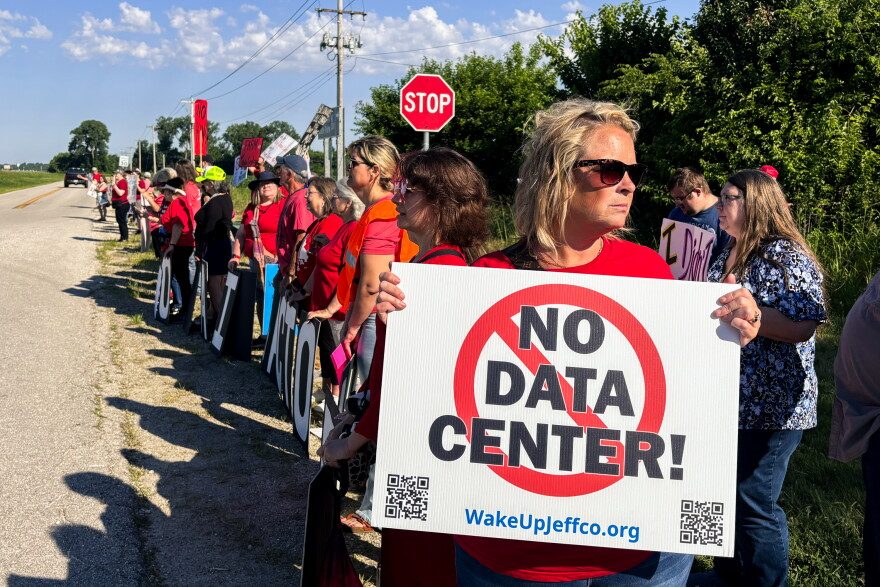
Developers have called off at least $260 billion in planned US data center projects this year. On Nov. 3, voters approved data center restrictions in 40 of 41 local measures across 10 states, with the only rejection in Harwood, North Dakota.
Local governments are still tightening rules: Oakland extended its moratorium to October 2027, Oklahoma City paused new rezoning requests through next year, and Romulus, Michigan, imposed a 180-day freeze. The Senate also voted 73-25 to advance a bill that would make data centers pay the incremental grid costs they create.
Why it matters
Local votes are now setting the rules for AI infrastructure, raising costs and slowing projects across the country.
Questions about this story
Free account needed to ask — your question is kept and asked for you right after sign-up. Answers are public.
No questions yet — be the first to ask.
Key Indicators
$260B
Data center projects canceled in 2026
Heatmap Pro counts at least $260B in planned US projects called off this year.
50%
Oppose a data center within three miles
Up from 28% in January, per The POLITICO Poll conducted by PF Global and published October 25, 2026.
61%
Americans opposing local data centers
Up from 49% in the spring, per an Annenberg Public Policy Center survey.
50+
Indiana communities with limits
Thirty-two counties enacted moratoriums, 14 adopted regulatory ordinances, and four counties do not permit data centers, per PBS.
75
Projects blocked or delayed in Q1 2026
Worth about $130B, per Bloomberg's count citing Data Center Watch.
16
States weighing bans or moratoriums
National Conference of State Legislatures tally as of September 2026.
833
Active local opposition groups
Data Center Watch counted 833 groups in early 2026, more than double the number earlier in the year, in almost every state.
40
Local data center measures approved
Voters approved 40 of 41 measures in 10 states on Nov. 3; Harwood, North Dakota, was the lone rejection.
48%
Growth in US data center capacity under construction
From December 2025 to June 2026, measured in gigawatts, Reuters reported on October 29, 2026.
73-25
Senate vote to advance grid-cost bill
Cloture vote on the Bipartisan American Affordability and Jobs Act, which would make data centers pay incremental grid costs.
29 events
Latest: Yesterday
Showing 8 of 29
JK to step
Tap a bar to jump to that date
Jump to
November 2026
Oakland extends data center moratorium to October 2027
LatestRegulation
The City Council voted unanimously to extend its pause for 10 months and 15 days, until Oct. 5, 2027, and declared an emergency ordinance blocking permits and zoning changes for data centers.
Oklahoma City extends data center rezoning moratorium
Regulation
The council extended its pause on new rezoning requests through the end of 2027 or until the zoning code is updated, whichever comes first.
Romulus imposes 180-day data center moratorium
Regulation
The City Council voted unanimously to pause new data center proposals while the Planning Commission studies electrical demand, environmental effects and zoning rules.
Trinity, Alabama, data center rezoning request withdrawn
Decision
A property owner withdrew a request to rezone about 184 acres before the council could vote. The town's separate data center moratorium runs through June 2027.
Lumberton council restricts data centers to one industrial park
Regulation
The City Council approved an ordinance limiting data center projects to a single industrial park.
Senate advances bill to make data centers pay grid costs
Regulation
Senators voted 73-25 to invoke cloture on the Bipartisan American Affordability and Jobs Act, which would require FERC to make data centers pay published grid rates plus incremental costs. The bill faces another 60-vote hurdle and a House vote.
Voters approve data center restrictions in 40 of 41 local measures
Politics
Measures in 10 states passed everywhere except Harwood, North Dakota, where voters rejected an added review of industrial projects. Ohio accounted for 21 of the measures.
October 2026
Ballot measures on data centers set for Election Day in 10 states
Politics
Voters in 38 local jurisdictions faced at least 41 measures to delay, block or add requirements for data centers, Ballotpedia found. A 25-megawatt cap in Sunbury, Ohio, was among the measures.
Poll finds half of Americans oppose nearby data centers
Poll
The POLITICO Poll, conducted by PF Global, found 50% oppose a data center within three miles of their home, nearly double the 28% in January. The survey landed with less than two weeks before the midterms.
Northern Virginia power line fight spreads across three states
Infrastructure
A proposed 765-kilovolt Valley Link line would run 260 miles from West Virginia through Virginia into Maryland, with a second 116-mile segment from central Virginia to Northern Virginia, CNN reported. The lines are meant to ease a power shortage in Northern Virginia, home to the world's largest concentration of data centers.
Indiana passes 50 communities with data center limits
Regulation
At least 50 Indiana communities have adopted moratoriums or zoning rules, PBS reported. Thirty-two counties enacted moratoriums, 14 adopted regulatory ordinances, and four counties do not permit data center development.
Trump calls for data center 'dividends' before midterms
Politics
The president called for data center 'dividends' as Republicans try to win over midterm voters angry about the facilities.
Spokane County extends data center permit freeze to June 2027
Regulation
Commissioners voted unanimously to stop accepting and processing data center permits until June 1, 2027, or until county rules are in place.
Hayward and Richmond impose data center moratoriums
Regulation
Hayward approved a 45-day pause, which could be extended for two years. Richmond extended its existing moratorium for more than 22 months.
Wisconsin Rapids rejects PNK Group data center
Decision
The Common Council voted 7-0 against a conditional use permit for a hyperscale data center at the city's old paper mill site, after months of resident opposition.
Broward County moves to draft data center moratorium
Regulation
Commissioners voted unanimously to begin drafting a one-year moratorium on large data centers in unincorporated areas. A final vote is expected next month or in December.
Cincinnati opens public comment on data center rules
Public Meeting
Residents spoke about electricity costs, water use and environmental effects as the city drafts permanent zoning rules. A citywide pause runs through February 2027.
QZ reports $260B in canceled projects
Report
Heatmap Pro data shows cancellations accelerating through 2026.
Raleigh enacts data center moratorium
Regulation
City council votes 7-1 for six-month pause on larger data center approvals.
Amazon drops four Northern Virginia data centers
Decision
Amazon scrapped plans for four data centers on a 122-acre Northern Virginia site after local opposition. Most of the land would be rezoned for homes and mixed use, with 25 acres donated for a community arts and recreation center and $5 million for the county housing fund.
Oakland approves 45-day data center moratorium
Regulation
The Oakland City Council voted unanimously in the first half of October to pause new data center approvals, the first such move in Alameda County and the fourth in the Bay Area, the AP reported.
California cities widen data center restrictions
Regulation
A Southern California city put a data center question on its ballot, and officials in the San Gabriel Valley adopted an ordinance that effectively bans the facilities, the News & Observer reported. Other California jurisdictions have passed restrictions as recently as October.
September 2026
Weld County approves Global AI permit
Decision
Commissioners unanimously approve 41-acre data center despite 30K-signature petition.
Judge orders environmental review for Rucci project
Legal
California court halts Imperial Valley data center until full review done.
Massachusetts requires local approval
Rule Change
Gov. Maura Healey orders no state permits for data centers without municipal OK.
NCSL tallies 16 states weighing restrictions
Report
States considering data center bans or moratoriums, per legislature trackers.
August 2026
St. Louis opponents sue to block TeraWatt data center
Legal
Residents filed suit in August challenging the conditional use permit for the 120-megawatt TeraWatt data center in Midtown St. Louis, part of the $3.1 billion Armory Innovation District. TeraWatt sued the city weeks later over board-imposed conditions.
July 2026
Reuters details Ohio Stargate fight
Report
Township denial in Ohio ends in settlement with $14M in community benefits.
June 2026
Karis Critical drops Plum Farms rezoning
Development
Developer abandons Illinois plan after residents from three towns object.
Scenarios
1
State legislatures preempt local data center bans
Possible
Resolves by Q2 2027
Discussed by: QZ coverage of Maryland's January session; NCSL tally of 16 states weighing restrictions
Maryland lawmakers could override Harford County's permanent ban when the session resumes in January. Illinois tried and failed to pass data center rules this spring. If states reclaim authority over siting, local wins get reversed and developers gain a predictable path around hostile town councils.
2
Developers pivot to transparency and concessions
Possible
Resolves by Q2 2027
Discussed by: The Next Web's coverage of Big Tech's 'charm offensive'; Karis Critical's pledge to share project details
A string of forced withdrawals has pushed developers to court communities early: full environmental reviews, water and noise limits, and cash for local services. The Ohio Stargate dispute ended in a settlement with $14 million in community benefits after a denial. If this becomes the norm, more projects clear local votes.
3
Local bans and moratoriums keep spreading
Possible
Resolves by Q2 2027
Discussed by: NCSL tally of 16 states; Raleigh's six-month pause; Vermont town bans
Raleigh's six-month moratorium is one of many. Harford County, Maryland has the only permanent county ban, but Vermont towns and others are passing their own. If resistance keeps momentum, developers get boxed out of more regions and costs rise.
Voters in 10 states will decide at least 41 local measures on Nov. 3, including a 25-megawatt cap in Sunbury, Ohio, that could derail Amazon's proposed $2 billion project. Trenton votes on a 25-megawatt ban, and Cincinnati residents are pressing local candidates as the city drafts zoning rules.
5
Ohio passes a statewide data center moratorium
Possible
Resolves by End of 2027
Discussed by: Conserve Ohio, which helped pass 10 local data center bans
Conserve Ohio is pushing the state Legislature for a 12-month moratorium on all data center-related activity after local ballot wins. If lawmakers agree, Ohio would become the first state to pause data center approvals statewide.
Historical Context
2 moments from history that rhyme with this story — and how they unfolded.
1 of 2
December 2014
New York's fracking ban (2014)
New York towns began passing local moratoriums against hydraulic fracturing in 2011, citing health and water worries. In December 2014, then-Gov. Andrew Cuomo's administration banned high-volume fracking statewide after a years-long public health review.
Then
Drilling shifted to Pennsylvania and Ohio; more than 170 New York towns had passed bans or moratoriums.
Now
The fight showed sustained local opposition could move a state to ban an industry outright.
Why this matters now
Same pattern now: town-level resistance to data centers may ripple up to state law, either toward bans or toward preemption that overrides local votes.
2 of 2
1976-1990
Seabrook nuclear plant (1976-1990)
Grassroots opponents fought the Seabrook, New Hampshire nuclear plant through protests, permitting challenges, and utility cost disputes. The unit took 14 years to come online at far higher cost than projected.
Then
Public opposition forced years of delay and review; cost overruns helped drive utilities to abandon other planned reactors.
Now
Seabrook became a template for how sustained local activism could stall massive energy infrastructure.
Why this matters now
Data centers face the same dynamic: time, review requirements, and organized residents raise costs, pushing developers to friendlier sites.