
Pull to refresh
Logo
Austin reports results in five of ten city council races

Austin reports results in five of ten city council races

Rule Changes Austin, TX local

Two seats were decided outright, and Districts 1, 3 and 5 head to a Dec. 12 runoff.

Overview

Updated 3 days ago

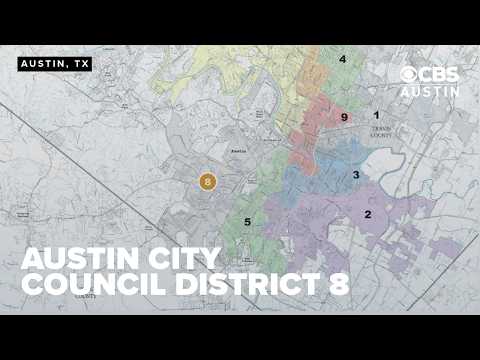
According to unofficial results, Austin voters settled two of five City Council races on the Nov. 3 ballot and sent three to a Dec. 12 runoff. Selena Xie won the open District 8 seat with about 64% of the vote, and incumbent Zohaib “Zo” Qadri won a second term in District 9 with 51.4%.

In District 1, Amber Goodwin and Misael Ramos finished with about 34% each, and Goodwin led by 73 votes. Incumbents José Velásquez in District 3 and Ryan Alter in District 5 also face runoffs, against Neha Shah and David Weinberg. The council must certify the results by Nov. 17 before it can order the runoffs. The other five districts aren't on the ballot until 2028.

Why it matters

Half of Austin's council is chosen at once and serves four years, shaping zoning, policing and the city budget.

Last Monday's email for Austin, TX

Sent Nov 9. It carried:

Get next Monday's: one short email a week. Free. Unsubscribe in one click.

Questions about this story

Free account needed to ask — your question is kept and asked for you right after sign-up. Answers are public.

No questions yet — be the first to ask.

Key Indicators

5
Council seats on the 2026 ballot
Half of Austin's ten-district council.
2
Seats decided outright
Selena Xie in District 8 and Zohaib Qadri in District 9.
3
Races headed to runoffs
Districts 1, 3 and 5 vote again on Dec. 12.
$295M
Approved for parks and libraries
Proposition A and B bonds on the same ballot.
Nov. 17
Deadline to certify results
The council must canvass the vote before ordering runoffs.

Voices

Curated perspectives — historical figures and your fellow readers.

Sign up to generate historical perspectives on this story.

People Involved

Organizations Involved

Timeline

4 events Latest: 7 days ago
Tap a bar to jump to that date
  1. Two council races decided, three head to runoffs

    Latest Election

    Selena Xie won District 8 and Zohaib Qadri won District 9, according to unofficial results. Districts 1, 3 and 5 go to a Dec. 12 runoff because no candidate cleared 50%.

  2. Results published for five Austin council races

    Election

    KXAN Austin reported results in the five districts holding elections. The other five districts aren't on the ballot until 2028.

  3. Voters approve $295 million in parks and library bonds

    Election

    Proposition A sets aside $260 million for parks and recreation, and Proposition B sets aside $35 million for library projects, according to unofficial results.

  4. Voters reject audit measure and two charter changes

    Election

    Seven of 10 charter amendments passed. Propositions D, E and I failed, with 56% of voters rejecting Proposition I, which would have added another layer of audits to city spending.

Scenarios

1

At least one Austin council race goes to a runoff

Possible Resolves by End of 2026

Discussed by: Not attributed to a named analyst; the possibility follows from Austin's majority-vote rule for council elections.

This happened. Districts 1, 3 and 5 went to runoffs after no candidate won more than half the vote. The top two in each district meet again on Dec. 12.

2

Turnout in the five district races falls below the 2024 general election

Likely Resolves by End of 2026

Discussed by: Not tied to a specific forecast; city races sit lower on the ballot than presidential-year contests, and turnout usually drops with them.

Council races share a ballot with statewide and federal contests, but the district-level numbers are what the winners will answer to. If the five districts follow the usual pattern, each new member takes office having been chosen by a smaller share of the district than voted two years earlier.

3

A recount is requested in at least one of the five races

Unlikely Resolves by End of 2026

Discussed by: Not attributed to a named analyst; the scenario depends on how close the final margins are.

Texas lets a losing candidate petition for a recount. In District 1, Amber Goodwin led Misael Ramos by 73 votes, but both were more than 10 points ahead of the third-place finisher, so a recount would not change who is in the runoff.

Historical Context

2 moments from history that rhyme with this story — and how they unfolded.

November 2012 - November 2014

Austin's shift to district elections (2012-2014)

Austin elected its council citywide for decades, with every member answerable to the same citywide electorate. In November 2012, voters approved a charter amendment creating ten geographic districts plus a citywide mayor. The first election under the new map was in November 2014, and every seat was filled at once.

Then

The 2014 election produced an entirely new council, and several districts needed December runoffs to settle.

Now

District seats gave neighborhood-level constituencies their own representative, and staggered terms meant half the council faces voters every two years instead of all of it.

Why this matters now

The 2026 ballot is the staggered version of that system: five seats at a time rather than ten, with the other half waiting two years.

April 1980 - June 1982

Mobile v. Bolden and the districting wave (1980-1982)

In 1980 the Supreme Court ruled in Mobile v. Bolden that at-large elections in Mobile, Alabama, did not violate the Voting Rights Act unless challengers proved intentional discrimination. Congress responded in 1982 by amending Section 2 of the act so that election systems could be challenged based on their results rather than their intent.

Then

Local governments across the South faced new pressure to replace at-large councils with single-member districts.

Now

Hundreds of cities and counties switched systems over the following decade, changing which candidates could assemble a winning majority.

Why this matters now

Austin's move to districts came from a local charter campaign decades later, but it followed the same logic: drawing geographic seats changes who can win, and how many votes it takes.

Sources

(9)