



Pull to refresh
Logo
Austin council approves local hiring preference for convention center reopening

Austin council approves local hiring preference for convention center reopening

Rule Changes Austin, TX local

Unanimous vote steers post-rebuild event work to local stagehands after the $1.6 billion closure gutted their incomes

Overview

Updated Oct 25

Austin's stagehands lost up to 70% of their work when the downtown convention center closed for a $1.6 billion rebuild. On October 22, the city council approved a resolution that tells staff to favor local hires when the doors reopen.

The measure carries no quota. It directs the city manager to prefer contractors who employ workers from Austin or the surrounding metro, and who use labor providers credentialed by the Entertainment Technician Certification Program. A city audit presented the day before found uneven checks on the living wage and other labor standards the resolution cites.

Why it matters

This preference decides whether tax-funded convention work at the rebuilt center goes to Austin residents or out-of-town crews.

Last Monday's email for Austin, TX

Sent Nov 9. It carried:

Get next Monday's: one short email a week. Free. Unsubscribe in one click.

Questions about this story

Free account needed to ask — your question is kept and asked for you right after sign-up. Answers are public.

No questions yet — be the first to ask.

Key Indicators

$1.6B
Rebuild cost
UnconventionalATX project, funded by hotel occupancy tax and convention center revenues.
70%
Work lost by some stagehands
Council Member Vanessa Fuentes said some technical event-production workers saw a 70% drop in work after the old center closed.
620,000 sq ft
New rentable space
Up from 365,000 sq ft in the old facility, per the Austin Convention Center.
$22.15/hr
Austin living wage
Required hourly minimum for covered city contracts in fiscal 2026-27, effective October 1, 2026, and named in the resolution's labor standards.

Voices

Curated perspectives — historical figures and your fellow readers.

Sign up to generate historical perspectives on this story.

People Involved

Organizations Involved

Timeline

October 2025 October 2026

5 events Latest: October 22nd, 2026 · 3 weeks ago
Tap a bar to jump to that date
  1. Council approves union-backed local hiring resolution

    Latest Policy

    Austin City Council adopts the resolution on consent, directing staff to favor contractors that use local workers and ETCP-recognized labor providers. Vanessa Fuentes is lead sponsor, with Ryan Alter, Zohaib Qadri, Mike Siegel and José Velásquez signed on.

  2. Audit finds gaps in living wage monitoring

    Audit

    The city auditor's office reviewed 59 contracts and pay records for 285 workers, finding 15 workers under four contracts who may not have been paid Austin's living wage. Financial Services investigated and found one case of noncompliance.

  3. Construction begins on new convention center

    Construction

    Work starts at the site of the old facility; the city targets an early 2029 reopening.

  4. Demolition of old convention center underway

    Infrastructure

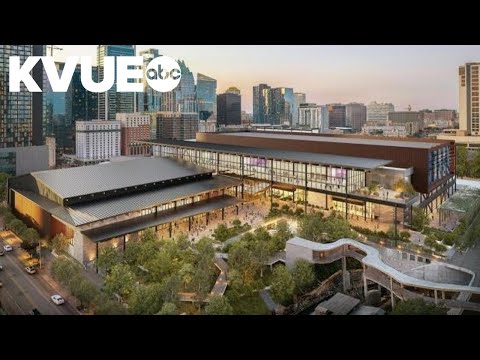
    Demolition work continues downtown as the $1.6 billion UnconventionalATX rebuild gets underway.

Scenarios

1

Local hiring preference lands in reopening contracts

Possible Resolves by End of 2029

Discussed by: Labor coalition (IATSE Local 205, Austin AFL-CIO)

When the center reopens, city staff write the local-residency preference into service contracts, and local stagehands capture a larger share of event work, restoring pre-closure hours. This is the outcome unions pushed for and the council approved.

2

Local hiring preference faces a legal challenge

Possible Resolves by End of 2029

Discussed by: The PAC that sued over the project; trade and contractor groups

A contractor or trade association sues, arguing the residency preference is unlawful under state procurement law or the U.S. Constitution. A court either blocks it or lets it stand, setting precedent for how far the city can go.

3

Preference stays advisory, weak impact

Possible Resolves by End of 2029

Discussed by: Procurement analysts and local business groups

The resolution directs staff to prioritize and prefer local hiring, but it sets no quota. Under competitive bidding rules, residency may become one weighted factor among many, and contractors without local workforces still win a share of events. Lost jobs return only partly.

4

Living wage checks tighten before convention center contracts go out

Likely Resolves by End of 2027

Discussed by: Austin City Auditor's Office and Austin Financial Services

Auditors said the city could not reliably verify contractor pay because forms went missing and spot checks were inconsistent. Financial Services agreed to expand vendor performance evaluations in early 2027 and add a new contract management system in fiscal 2027, which would put living wage checks on convention center work let under the new preference.

Historical Context

2 moments from history that rhyme with this story — and how they unfolded.

March 1983

White v. Massachusetts Council (1983)

Boston required that half the workers on city-funded construction projects be city residents. A group of contractors challenged the rule as an unconstitutional burden on interstate commerce.

Then

The Supreme Court upheld the requirement, ruling the city could attach residency conditions to projects it funded.

Now

The decision became the legal foundation for local hiring preferences on city-funded work across the country.

Why this matters now

Austin's resolution rests on the same logic: a city steering its own contract dollars toward its own residents. Whether it holds depends on how the preference is written into procurement and what state law allows.

September 2025

Los Angeles Convention Center expansion (2025)

Los Angeles city council approved a convention center expansion after a coalition of unions, business groups, and community leaders rallied in favor. UNITE HERE Local 11, which represents venue food and beverage workers, backed the project publicly.

Then

The expansion moved forward with organized labor's active support.

Now

Convention center builds are treated by unions as job engines; the fight is over how the jobs are distributed, not whether to build.

Why this matters now

Austin's unions took the same stance, supporting the rebuild while pressing for local hiring so the reopened center's work benefits their members.

Sources

(8)