
Pull to refresh
Logo
Alexandria zoning board to revisit deck variance it denied in November

Alexandria zoning board to revisit deck variance it denied in November

Rule Changes Alexandria, VA local

Vassalo and Savino seek rear-yard and open-space relief for 9 Potomac Court on September 14

July 22nd, 2026: BZA denies 2500 Dewitt Avenue variance 3-2

Overview

Updated 3 days ago

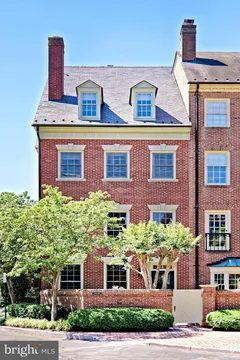
Ronnie Vassalo Jr. and Mary Savino want to build a deck on their townhouse at 9 Potomac Court in Alexandria, Virginia. The zoning code's rear-yard and open-space rules don't allow it, so they've asked the Board of Zoning Appeals for a variance. On November 10, 2025, the board denied a previous request by a 3-2 vote; a new application goes to a public hearing on September 14.

The board is a citizen panel appointed by the city council that weighs whether a property owner faces an "unnecessary hardship" under state law. The September hearing lets neighbors speak before the vote. Approval clears the way to build; another denial would push the owners back to the drawing board or into court.

Why it matters

The September 14 vote decides whether the 9 Potomac Court deck gets built — and how much relief Alexandria zoning grants homeowners.

Questions about this story

Free account needed to ask — your question is kept and asked for you right after sign-up. Answers are public.

No questions yet — be the first to ask.

Key Indicators

3-2
November 2025 denial vote
The BZA rejected the original 9 Potomac Court deck variance request by a single vote.
308 days
Time between denial and rehearing
From the November 10, 2025 denial to the September 14, 2026 hearing.
2
Variances sought
A rear-yard setback variance and a reduction in required open space.

Voices

Curated perspectives — historical figures and your fellow readers.

Ever wondered what historical figures would say about today's headlines?

Sign up to generate historical perspectives on this story.

People Involved

Organizations Involved

Timeline

November 2025 September 2026

5 events Latest: July 22nd, 2026 · 2 months ago
Tap a bar to jump to that date
  1. BZA public hearing for BZA2026-00010, 9 Potomac Court

    Upcoming Hearing

    The board will hear the resubmitted request for variances to build a deck in the required rear yard and reduce required open space. Residents can speak before the vote.

  2. BZA denies 2500 Dewitt Avenue variance 3-2

    Latest Decision

    The board rejected another residential variance request by a narrow margin while approving a special exception at 414 Duke Street 5-0.

  3. BZA denies 1030 Cross Drive variance 5-2

    Decision

    A month after the deferral, the board denied the Cross Drive variance on a 5-2 vote, showing its strictness on the merits.

  4. BZA defers 1030 Cross Drive variance

    Decision

    The board postponed a variance request for 1030 Cross Drive at the applicant's request, leaving the case open.

  5. BZA denies original 9 Potomac Court deck variance

    Decision

    The board rejected the first variance request for a deck at 9 Potomac Court by a 3-2 vote. It approved an ADU variance at 2500 Dewitt Avenue the same night, 6-0.

Scenarios

1

BZA approves 9 Potomac Court deck variance

Possible Resolves by Sep 14, 2026

Discussed by: No public predictions; the outcome turns on the board's "unnecessary hardship" analysis.

The applicants, possibly after tweaking the deck design during the hearing, convince the board that the townhouse's lot shape makes strict compliance impractical. The board votes to grant the rear-yard and open-space variances, clearing the way for construction. This would break the board's recent pattern of denying several variance requests.

2

BZA denies the variance a second time

Possible Resolves by Sep 14, 2026

Discussed by: The board's strict 2026 voting record, including the May 1030 Cross Drive denial and the July 2500 Dewitt denial.

The board finds no "unnecessary hardship" — the lot is not uniquely constrained, or the owners created the problem. It rejects the application by a vote similar to the November 3-2 outcome. This would match the board's 2026 pattern of denying most variance requests it hears on the merits.

3

BZA defers the item to a later hearing

Unlikely Resolves by Sep 14, 2026

Discussed by: The board's April 2026 decision to defer 1030 Cross Drive at the applicant's request.

The board postpones the decision, either at the applicants' request to revise the plan or on its own motion. A deferral keeps the case alive without deciding the merits, pushing the next hearing to a later month. The 1030 Cross Drive case shows the board does occasionally defer, though it later denied that case.

Historical Context

3 moments from history that rhyme with this story — and how they unfolded.

November 2025

Same-night contrast: 2500 Dewitt Avenue ADU variance (November 2025)

On the same night the BZA denied the original 9 Potomac Court deck variance 3-2, it approved an accessory dwelling unit variance at 2500 Dewitt Avenue by a 6-0 vote.

Then

The ADU variance was granted, allowing the property owner to proceed with construction.

Now

Illustrates the board's case-by-case approach: clear constraints earn relief, less clear ones don't.

Why this matters now

The September hearing tests whether the 9 Potomac Court applicants can make a hardship case as strong as the ADU one.

April-May 2026

1030 Cross Drive variance denial (2026)

The BZA deferred a variance request at 1030 Cross Drive at the applicant's request in April 2026, then denied it 5-2 a month later. The applicant sought relief tied to the property's conditions but failed to clear the board's hardship bar.

Then

The variance was denied, and the property owner had to rework the plan or pursue other options.

Now

Reinforced the board's strict interpretation of Virginia's variance standard.

Why this matters now

A deferral — one possible outcome of the September 14 hearing — often leads to a denial, not an approval, when the case returns.

Long-standing

Virginia's unnecessary hardship doctrine (established by state law)

Virginia law requires variance applicants to show that the property's peculiar conditions create a hardship that is not self-created, and that the relief won't harm the neighborhood. Courts apply this test strictly across the state.

Then

Boards across Virginia deny variances when the hardship stems from the owner's own choices.

Now

Kept the variance a narrow safety valve rather than a broad exception to zoning.

Why this matters now

This is the exact standard the Alexandria BZA applies to the 9 Potomac Court request.

Sources

(3)