

Pull to refresh
Logo
Daily Brief
Following
Why Sign Up
Premium lens technology closes the gap between cataract surgery and natural vision

Premium lens technology closes the gap between cataract surgery and natural vision

New Capabilities
By Newzino Staff |

FDA clears first extended-focus lens without contrast sensitivity warning, marking a shift in what patients can expect after cataract surgery

5 days ago: FDA approves first EDOF lens without contrast sensitivity warning

Overview

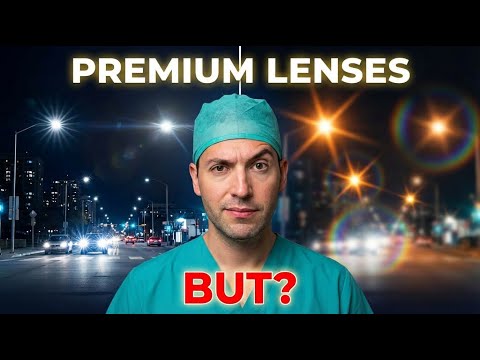
For a decade, patients choosing premium lenses during cataract surgery have faced a trade-off: better range of vision, but dimmer, lower-contrast sight—especially in low light. On March 12, 2026, the Food and Drug Administration approved Johnson & Johnson's TECNIS PureSee, the first extended depth of focus lens cleared in the United States without a warning for loss of contrast sensitivity. In clinical trials, 97% of patients reported no bothersome visual disturbances like halos or glare.

Key Indicators

97%
Patients with no bothersome visual disturbances
In clinical trials, nearly all PureSee recipients reported no very bothersome halos, glare, or starbursts.
~4M
Annual U.S. cataract surgeries
Cataracts are the leading cause of vision loss globally, and the United States performs about four million procedures per year.
~500K
Eyes treated with PureSee worldwide
Nearly half a million eyes have already received the lens internationally since its 2024 launch outside the U.S.
46%
Global premium IOL adoption rate (2024)
Premium lenses now account for nearly half of all new implantations, up from 33% in 2021.

Interactive

Exploring all sides of a story is often best achieved with Play.

Ever wondered what historical figures would say about today's headlines?

Sign up to generate historical perspectives on this story.

Sign Up

Debate Arena

Two rounds, two personas, one winner. You set the crossfire.

People Involved

Organizations Involved

Timeline

  1. FDA approves first EDOF lens without contrast sensitivity warning

    Regulatory

    The FDA cleared Johnson & Johnson's TECNIS PureSee for the U.S. market, the first extended depth of focus intraocular lens approved without a warning for loss of contrast sensitivity. Nearly 500,000 eyes had already received the lens internationally. U.S. availability is expected later in 2026.

  2. J&J completes premium IOL trifecta with Odyssey approval

    Regulatory

    The FDA approved the TECNIS Odyssey, the first full visual range lens meeting new international standards. It reached 100,000 U.S. eyes within its first year, giving J&J a three-tier IOL lineup ahead of PureSee's U.S. entry.

  3. TECNIS PureSee launches internationally

    Product Launch

    Johnson & Johnson began selling the TECNIS PureSee in Europe, the Middle East, and Africa, following earlier launches in South Korea and New Zealand. The purely refractive lens design began accumulating real-world data outside clinical trials.

  4. Small-aperture IOL adds another approach to extended focus

    Regulatory

    The FDA approved the IC-8 Apthera from AcuFocus, a lens using a pinhole-like aperture to extend depth of focus. It offered a different optical principle but reduced light reaching the retina, limiting low-light performance.

  5. J&J launches enhanced monofocal as mid-tier option

    Product Launch

    The FDA approved the TECNIS Eyhance, a monofocal lens with a modified surface that slightly extended depth of focus. It was the first monofocal design innovation in 20 years, offering 30% better image contrast in low light than competitors.

  6. Alcon introduces non-diffractive EDOF approach

    Regulatory

    The FDA approved Alcon's Vivity, a non-diffractive extended depth of focus lens that stretched light rather than splitting it. Despite the new design, FDA labeling still warned of significant contrast sensitivity loss.

  7. First trifocal lens approved in the United States

    Regulatory

    The FDA approved Alcon's AcrySof IQ PanOptix, the first trifocal intraocular lens available in the U.S. It provided near, intermediate, and distance vision but used light-splitting optics that reduced contrast sensitivity.

  8. Johnson & Johnson acquires Abbott Medical Optics

    Business

    Johnson & Johnson completed its $4.3 billion acquisition of Abbott Medical Optics, gaining the TECNIS IOL platform and entering the premium lens market. The division was renamed Johnson & Johnson Vision.

  9. First extended depth of focus lens reaches U.S. market

    Regulatory

    The FDA approved Abbott Medical Optics' TECNIS Symfony, the first intraocular lens in a new category called extended depth of focus. It provided better intermediate vision than standard lenses but carried warnings about contrast sensitivity loss.

Scenarios

1

Premium lenses become the default for most cataract patients

Discussed by: Market research firms including Grand View Research and Precedence Research; industry analysts tracking the 33%-to-46% premium adoption trend

If the PureSee eliminates the primary objection surgeons have had about recommending premium lenses—contrast sensitivity loss—adoption could accelerate past the current 46% global share toward becoming the standard of care. Premium IOL adoption grew 37% between 2021 and 2024 even with the trade-offs. Removing that barrier, combined with an aging population driving cataract volumes higher, could push premium lenses past 60% adoption within a few years. The main constraint would be out-of-pocket cost, since most insurance covers only basic monofocal lenses.

2

Competitors match the no-warning benchmark, sparking a quality race

Discussed by: Ophthalmology Times and industry analysts covering Alcon's Vivity and pipeline lenses

Alcon, Bausch + Lomb, and other IOL manufacturers respond with next-generation designs that also eliminate contrast sensitivity warnings. This would shift the competitive battleground from 'premium versus monofocal' to differentiation within the premium tier—on factors like near vision quality, low-light performance, and tolerance for surgical imprecision. Patients would benefit from rapid improvement across all available options.

3

Insurance and Medicare coverage expands to include premium lenses

Discussed by: Health policy analysts and Medicare coverage watchers at U.S. News, Healthline

As premium lenses demonstrate outcomes comparable to monofocal lenses on safety metrics while providing superior functional vision, pressure builds on Medicare and private insurers to cover them. Currently, patients pay $1,500 to $6,000 per eye out of pocket for premium lenses. A policy shift would dramatically expand access but would require evidence that the lenses reduce downstream costs like glasses prescriptions and falls linked to poor vision.

4

Real-world outcomes disappoint compared to clinical trials

Discussed by: Ophthalmology researchers publishing in peer-reviewed journals like Eye and the Journal of Refractive Surgery

Clinical trials are conducted under ideal conditions with carefully selected patients and experienced surgeons. If real-world PureSee outcomes in the broader U.S. market show higher rates of visual disturbances or less impressive contrast preservation than the 97% trial figure, it could slow adoption and invite regulatory scrutiny. The international track record of nearly 500,000 eyes makes this less likely but not impossible, since the U.S. patient population and surgical practices may differ.

Historical Context

The first intraocular lens implant (1949)

November 1949

What Happened

British ophthalmologist Harold Ridley implanted the first intraocular lens at St. Thomas' Hospital in London, after noticing that Royal Air Force pilots who got acrylic shards from shattered canopies lodged in their eyes did not reject the material. The medical establishment initially rejected the idea, and it took decades for IOL implantation to become standard practice.

Outcome

Short Term

Ridley faced professional ostracism and skepticism for years. Early lenses had high complication rates.

Long Term

Intraocular lens implantation became the standard of care for cataract surgery worldwide by the 1980s. The procedure is now the most commonly performed surgery in medicine.

Why It's Relevant Today

The PureSee approval is the latest step in a 77-year evolution from Ridley's improvised acrylic disc to precision-engineered refractive optics. Each generation has moved closer to replicating the natural lens's full capabilities.

LASIK approval transforms vision correction (1999)

1999-2005

What Happened

The FDA approved the first LASIK lasers in 1999, enabling refractive surgery that reshaped the cornea to correct nearsightedness, farsightedness, and astigmatism. Early LASIK patients frequently reported halos, glare, and reduced contrast sensitivity—the same complaints that plagued early premium IOLs.

Outcome

Short Term

LASIK adoption surged despite visual side effects, peaking at about 1.4 million procedures per year in the United States by 2007.

Long Term

Iterative improvements in laser technology and patient screening reduced side effects dramatically. Wavefront-guided LASIK now produces fewer visual disturbances than earlier generations, and the procedure remains widely popular.

Why It's Relevant Today

LASIK's trajectory illustrates how early-generation vision correction technologies carry visual side effects that improve with subsequent designs. The PureSee's elimination of the contrast sensitivity warning mirrors the refinement arc that LASIK followed over two decades, compressed into a single product generation.

AcrySof IQ PanOptix trifocal IOL approval (2019)

August 2019

What Happened

Alcon's PanOptix became the first trifocal intraocular lens approved in the United States, offering near, intermediate, and distance vision in a single lens. The light-splitting diffractive design provided the widest range of clear vision available at the time but came with the familiar trade-off: reduced contrast sensitivity and increased visual disturbances, particularly halos at night.

Outcome

Short Term

PanOptix rapidly gained market share, with Alcon reporting that over 99% of patients said they would choose the same lens again despite the side effects.

Long Term

The approval helped establish patient demand for glasses-free vision after cataract surgery and pushed competitors to develop lenses with fewer optical compromises.

Why It's Relevant Today

PanOptix demonstrated that patients were willing to accept some visual trade-offs for freedom from glasses. PureSee's clinical data suggests a new generation may no longer require that trade-off, potentially resetting patient expectations for what premium lenses should deliver.

Sources

(12)