
Pull to refresh
Logo
KRAS pancreatic cancer vaccine triggers immune response in 99% of patients, phase 3 trial planned

KRAS pancreatic cancer vaccine triggers immune response in 99% of patients, phase 3 trial planned

New Capabilities

Camupepimut missed its primary endpoint but generated durable T-cell responses; stronger responders stayed cancer-free longer

Overview

Updated Oct 26

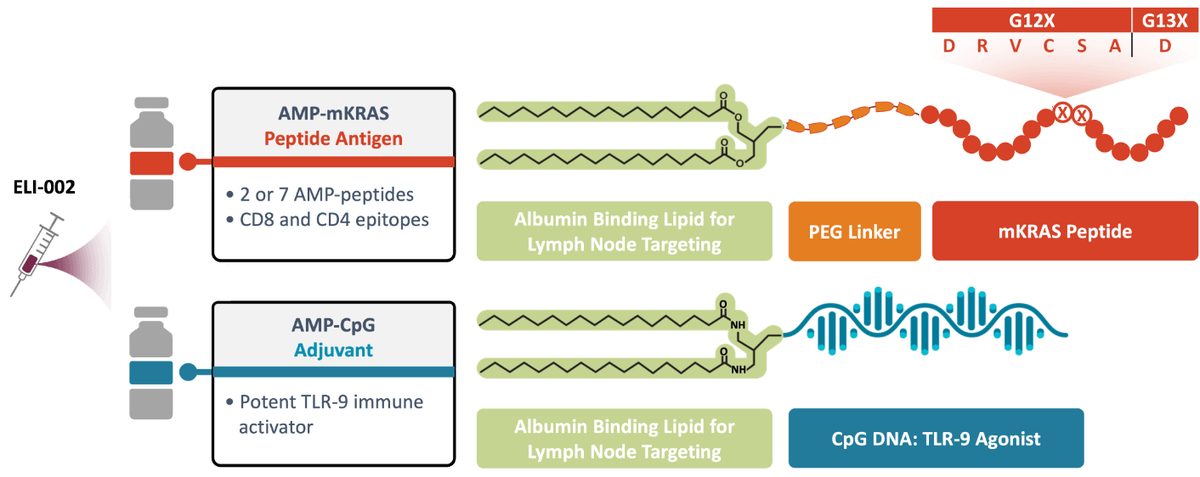
About 90% of pancreatic cancers are driven by mutations in the KRAS gene, long considered undruggable. The experimental vaccine camupepimut (ELI-002 7P) targets seven common KRAS mutations, and 89 of 90 evaluable patients (98.9%) developed KRAS-specific T-cell responses in the phase 2 AMPLIFY-7P trial.

The primary endpoint was missed. Median disease-free survival was 23.8 months on the vaccine versus 21.2 months on observation (HR 0.85, P = 0.5329). Patients with responses above 9.17 times baseline had a median disease-free survival not reached, versus 6.08 months for weaker responders. In a post hoc analysis reported by CancerNetwork, the benefit was statistically significant in patients who had complete (R0) resection, about 84% of enrolled patients. Elicio plans to discuss the full data with the FDA before a phase 3 study, which may focus on that group.

Why it matters

Pancreatic cancer has a 13% five-year survival rate; if this vaccine delays recurrence after surgery, it could become the first immunotherapy that works in the disease.

Questions about this story

Free account needed to ask — your question is kept and asked for you right after sign-up. Answers are public.

No questions yet — be the first to ask.

Key Indicators

98.9%
Patients developing KRAS-specific T-cell responses
89 of 90 evaluable patients who received camupepimut mounted an immune response. Elicio's release rounds this to 99%.
9.17-fold
T-cell response threshold associated with prolonged DFS
Responses above 9.17x baseline correlated with longer disease-free survival (HR 0.22). This was an exploratory analysis.
23.8 vs 21.2 months
Median disease-free survival: vaccine vs observation
Primary endpoint not met (HR 0.85, P = 0.5329). Post hoc adjusted HR was 0.47.
95.5%
Patients with persistent T-cell response at 46 weeks
Immune responses persisted in evaluable patients at least 46 weeks after study start.
86.7%
Patients showing antigen spreading
Immune responses expanded beyond the vaccine's targets to other tumor antigens (13 of 15 evaluable).

Voices

Curated perspectives — historical figures and your fellow readers.

Sign up to generate historical perspectives on this story.

People Involved

Organizations Involved

Timeline

January 2024 October 2026

5 events Latest: October 24th, 2026 · 3 weeks ago
Tap a bar to jump to that date
  1. AMPLIFY-7P results published in Nature Medicine

    Latest Publication

    Phase 2 results show camupepimut generated T-cell responses in 98.9% of patients; primary DFS endpoint not met; phase 3 planned.

  2. Elicio presents AMPLIFY-7P at ESMO Congress 2026

    Conference

    Elicio presented the late-breaking phase 2 results at ESMO and said it would discuss the full findings with the FDA ahead of a potential phase 3 study. The company reported a 99% response rate and a median 44.3-fold T-cell increase.

  3. Post hoc analysis finds benefit in fully resected patients

    Trial result

    CancerNetwork reported a statistically significant DFS benefit in R0-resected patients, about 84% of enrolled patients. The primary intention-to-treat analysis was not significant. Elicio shifted its phase 3 focus to that group.

  4. AMPLIFY-201 phase 1 results published

    Publication

    Phase 1 AMPLIFY-201 trial showed ELI-002 2P generated mKRAS-specific T-cell responses in most patients with KRAS-mutated pancreatic and colorectal cancer.

  5. AMPLIFY-7P trial launches

    Trial start

    Phase 2 trial enrolled 144 patients with stage I-III KRAS-mutated pancreatic cancer who had no recurrence within six months of standard therapy.

Scenarios

1

Phase 3 trial confirms DFS benefit with extended dosing

Possible Resolves by End of 2029

Discussed by: Trial authors in Nature Medicine publication

The phase 3 design will extend camupepimut treatment beyond the six-month period used in phase 2, since the DFS advantage coincided with dosing duration. It will also exclude patients with prior radiation (associated with lymphopenia and poor immunogenicity) and stratify by circulating tumor DNA status. If the adjusted HR of 0.47 holds, the trial could show significant recurrence delay.

2

Combination with RAS inhibitors and checkpoint blockade succeeds

Possible Resolves by End of 2028

Discussed by: Peter Hosein, Sylvester Comprehensive Cancer Center; Elicio Therapeutics

A planned multicenter phase 1 trial will test camupepimut with daraxonrasib (a RAS(ON) inhibitor) with or without nivolumab in metastatic KRAS-mutated pancreatic cancer. The hypothesis: blocking RAS-driven immune suppression could strengthen vaccine-primed T-cell activity. An ongoing trial (NCT07671339) is already evaluating combination with checkpoint inhibitors in the neoadjuvant setting.

3

Overall survival data disappoint despite T-cell response

Unlikely Resolves by End of 2029

Discussed by: Mayo Clinic researchers (noted results pending)

The Nature Medicine publication notes overall survival data are not yet available, and some findings linking immune response to DFS came from exploratory analyses. It remains possible that the DFS signal does not translate to an OS benefit, particularly given the post hoc nature of many subgroup findings. The association between T-cell magnitude and DFS is correlational, not causal.

4

Phase 3 enrolls only fully resected (R0) patients and reads out a DFS benefit

Possible Resolves by End of 2028

Discussed by: Elicio Therapeutics, per CancerNetwork's report of its post hoc analysis

Elicio plans a registrational phase 3 for R0-resected patients after standard locoregional therapy. The group is smaller than the full trial population, and the subgroup result is post hoc.

Historical Context

2 moments from history that rhyme with this story — and how they unfolded.

1980s-2013

KRAS declared 'undruggable' (1980s-2010s)

KRAS mutations were identified in the early 1980s as among the most common oncogenes in human cancer. For three decades, attempts to develop drugs targeting the mutated protein failed; the protein lacks the deep binding pockets that typical small-molecule drugs need, leading researchers to call it undruggable.

Then

A generation of drug development efforts focused on downstream pathways instead of KRAS itself.

Now

The 2013 breakthrough by Kevan Shokat's lab at UCSF found a covalent-binding pocket on the G12C variant, leading to sotorasib and adagrasib approvals in lung cancer in 2021-2022. However, pancreatic cancer's most common KRAS variants (G12D, G12V) remained harder to drug.

Why this matters now

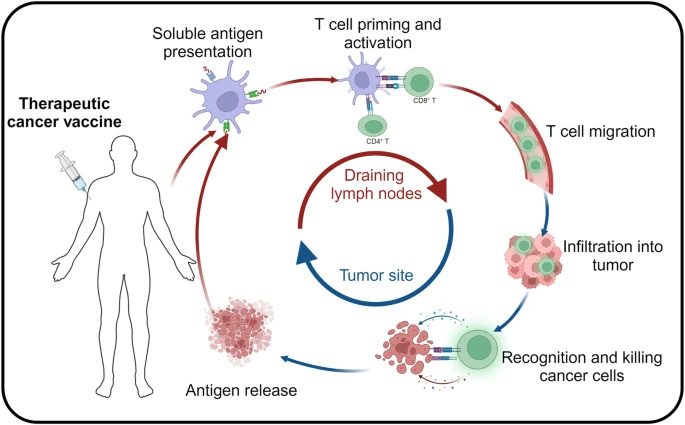
Vaccines take a different approach than small molecules: instead of blocking the mutated protein, they train T cells to recognize and kill cancer cells presenting KRAS peptides. This sidesteps the 'undruggable' problem entirely.

April 2010

Provenge, first therapeutic cancer vaccine (2010)

The FDA approved sipuleucel-T (Provenge), a personalized vaccine for metastatic prostate cancer, after a phase 3 trial showed a 4.1-month median overall survival benefit. It was the first therapeutic cancer vaccine ever approved.

Then

Provenge was a commercial failure — production costs made it unprofitable, and Dendreon filed for bankruptcy in 2014.

Now

The experience taught researchers that autologous (patient-derived) vaccines were too expensive and slow. Modern neoantigen vaccines use off-the-shelf or rapid-manufacturing platforms, which is why KRAS vaccines like camupepimut can reach hundreds of patients in trials.

Why this matters now

Camupepimut is an off-the-shelf vaccine targeting the seven most common KRAS mutations, covering about 90% of pancreatic cancers. It avoids the cost and logistics problems that sank Provenge.

Sources

(8)