


Pull to refresh
Logo
Memphis pauses new data centers and steers their tax money to nearby neighborhoods

Memphis pauses new data centers and steers their tax money to nearby neighborhoods

Rule Changes

A 135-day permit freeze, a $3.26 million neighborhood fund, and two zoning votes pushed to Dec. 22

Overview

Updated 38 minutes ago

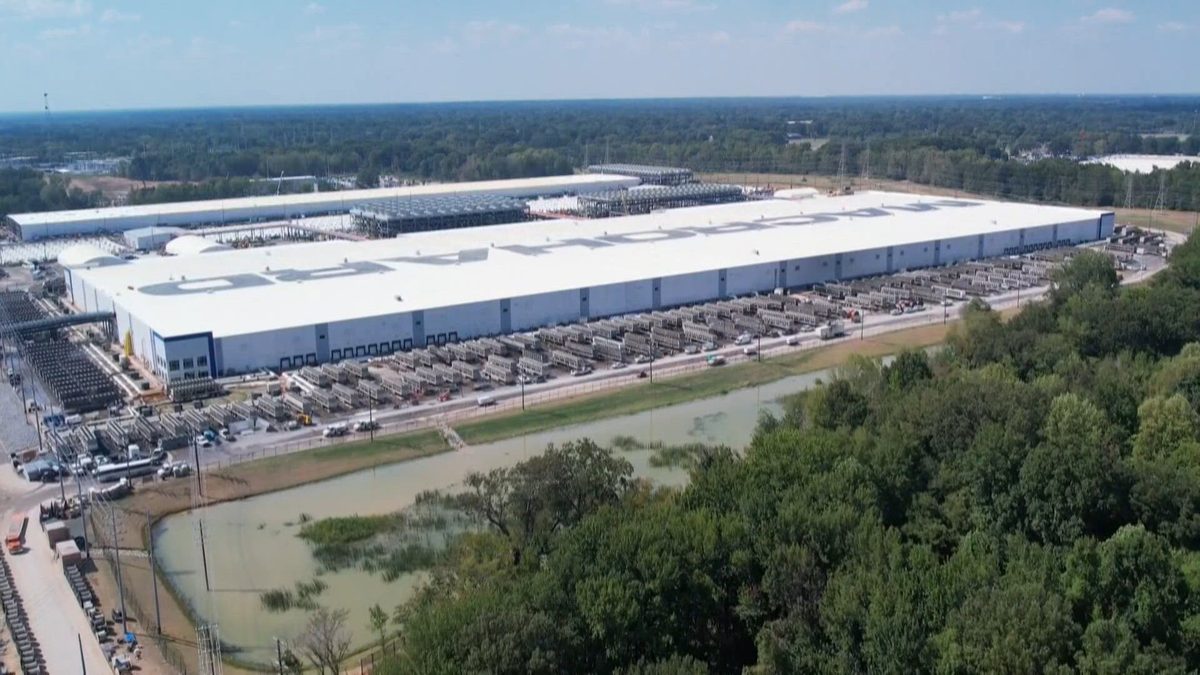
Memphis set aside $3.26 million in data-center tax revenue for the neighborhoods around a SpaceXAI site on Nov. 10, and pushed final votes on two data-center zoning ordinances to Dec. 22. The city has been under a 135-day pause on new data-center permits since Oct. 20.

The money is the first payout under a 2025 ordinance that sends a quarter of the city's property tax from AI facilities back into a five-mile radius. The pause is the city's first limit on a buildout that has added three data centers in the Memphis area, with two more under construction.

Why it matters

Memphis is testing whether host cities can convert AI data-center tax revenue into neighborhood benefits while pausing new permits.

Questions about this story

Free account needed to ask — your question is kept and asked for you right after sign-up. Answers are public.

No questions yet — be the first to ask.

Key Indicators

135 days
Length of the data-center permit moratorium
Passed Oct. 20, 2026, after a one-year version failed.
$3,259,282
Data-center tax revenue allocated to Southwest Memphis
First payout under the city's 2025 community benefit ordinance.
$6 billion
SpaceXAI capital investment in Memphis, per the Greater Memphis Chamber
Chamber figure cited for the company's local buildout.
25%
Share of AI property tax set aside for nearby projects
Must be spent within five miles of each AI property, inside city limits.
2
Data-center ordinances held to Dec. 22
Ordinance 5987 (zoning amendments) and Ordinance 5985 (large-load district program).

Voices

Curated perspectives — historical figures and your fellow readers.

Sign up to generate historical perspectives on this story.

People Involved

Organizations Involved

Timeline

2024 November 2026

9 events Latest: Today
Tap a bar to jump to that date
  1. Moratorium stays in force as city drafts permanent rules

    Today Policy

    The 135-day pause continues; two zoning ordinances await the Dec. 22 vote.

  2. Council approves $3.26 million Southwest Memphis plan

    Vote

    Two million dollars goes to home repairs; environmental monitoring funding is removed.

  3. Two data-center zoning ordinances held to Dec. 22

    Vote

    Ordinances 5987 and 5985 are delayed again without a stated reason.

  4. City COO reports 20-plus days of neighborhood outreach

    Statement

    Chris Winton tells a council work session residents felt blindsided by the project.

  5. Council passes 135-day moratorium instead of a one-year ban

    Vote

    A substitute ordinance halts new data-center permits for 135 days.

  6. Council reserves a quarter of AI property tax for nearby projects

    Policy

    The community benefit ordinance directs 25% of AI property taxes within five miles.

  7. SpaceXAI builds Colossus 1 in Memphis

    Infrastructure

    The first Memphis data center opens, beginning years of local opposition.

Scenarios

1

Council adopts permanent data-center zoning on Dec. 22

Possible Resolves by Dec 22, 2026

Discussed by: Memphis Report, Commercial Appeal

The two held ordinances come back for final votes and at least one passes, giving Memphis a standing siting framework instead of a temporary pause. Ordinance 5987 would amend the zoning code for data centers; Ordinance 5985 would create a large-load development district program. Passage would let the city process permits again under new rules when the moratorium lapses.

2

Moratorium lapses with no replacement rules in place

Possible Resolves by Mar 4, 2027

Discussed by: Memphis Report, Commercial Appeal

The 135-day clock runs out before the council agrees on permanent zoning. Data-center applicants could then resume the permit process under the existing Unified Development Code, which the moratorium ordinance itself says does not classify data centers as a distinct land use. That outcome would leave the neighborhood fund as the city's only lasting lever over the buildout.

3

SpaceXAI shifts new capacity across the state line to Southaven

Likely Resolves by Q2 2027

Discussed by: 5AM Memphis, Mississippi Department of Environmental Quality records

Musk said two more Southaven data centers would start up before the end of 2026, and the company already has a $20 billion facility planned there under the name MACROHARDRR. Mississippi's permitting regime is the binding constraint in that scenario, not Memphis zoning. If Southaven capacity comes online first, the Memphis moratorium limits the company's Tennessee footprint without slowing its regional compute buildout.

4

Mississippi resolves the permit violations through a single agreed order

Likely Resolves by Q1 2027

Discussed by: SpaceXAI securities filing, Mississippi Department of Environmental Quality

SpaceXAI told the Securities and Exchange Commission in an Oct. 22 filing that it is cooperating with MDEQ and discussing a single agreed order to settle both notices of violation. That would end the enforcement case with a negotiated penalty rather than litigation. MDEQ has declined to confirm the dollar figure the company reported.

Historical Context

2 moments from history that rhyme with this story — and how they unfolded.

November 2018 - February 2019

Amazon HQ2 and the Long Island City reversal (2018-2019)

Amazon named Long Island City in Queens and Crystal City in Virginia as the two halves of its second headquarters. New York's offer included roughly $3 billion in state and city incentives. Local elected officials and union leaders opposed the deal, and Amazon canceled the New York portion on Feb. 14, 2019, before any construction began.

Then

Amazon kept the Virginia campus and expanded elsewhere; New York lost the projected jobs.

Now

The episode became the standard case study in how local political opposition can reverse a site selection even after incentives are granted.

Why this matters now

Memphis is running the same test in reverse: instead of bidding for a project, it is trying to attach conditions to one that already broke ground.

1978

Love Canal (1978)

Residents of a Niagara Falls, New York, neighborhood built on top of buried chemical waste organized after years of illness and visible contamination. Under Lois Gibbs, the Love Canal Homeowners Association pressed state and federal officials until New York declared an emergency and began relocating families.

Then

Hundreds of families were relocated and the site was placed under federal emergency response.

Now

The organizing effort led directly to the Comprehensive Environmental Response, Compensation, and Liability Act, known as Superfund, in 1980.

Why this matters now

Boxtown and Whitehaven residents are making the same argument Love Canal residents made: that a facility's costs land on the surrounding neighborhood while its benefits go elsewhere.

Sources

(9)