


Pull to refresh
Logo
XPeng robotics unit raises $900 million at $6.3 billion valuation

XPeng robotics unit raises $900 million at $6.3 billion valuation

Money Moves

Largest single-round private financing to date in China's embodied AI industry

August 24th, 2026: Robotics unit raises record $900M+ at $6.3B valuation

Overview

Updated Aug 25

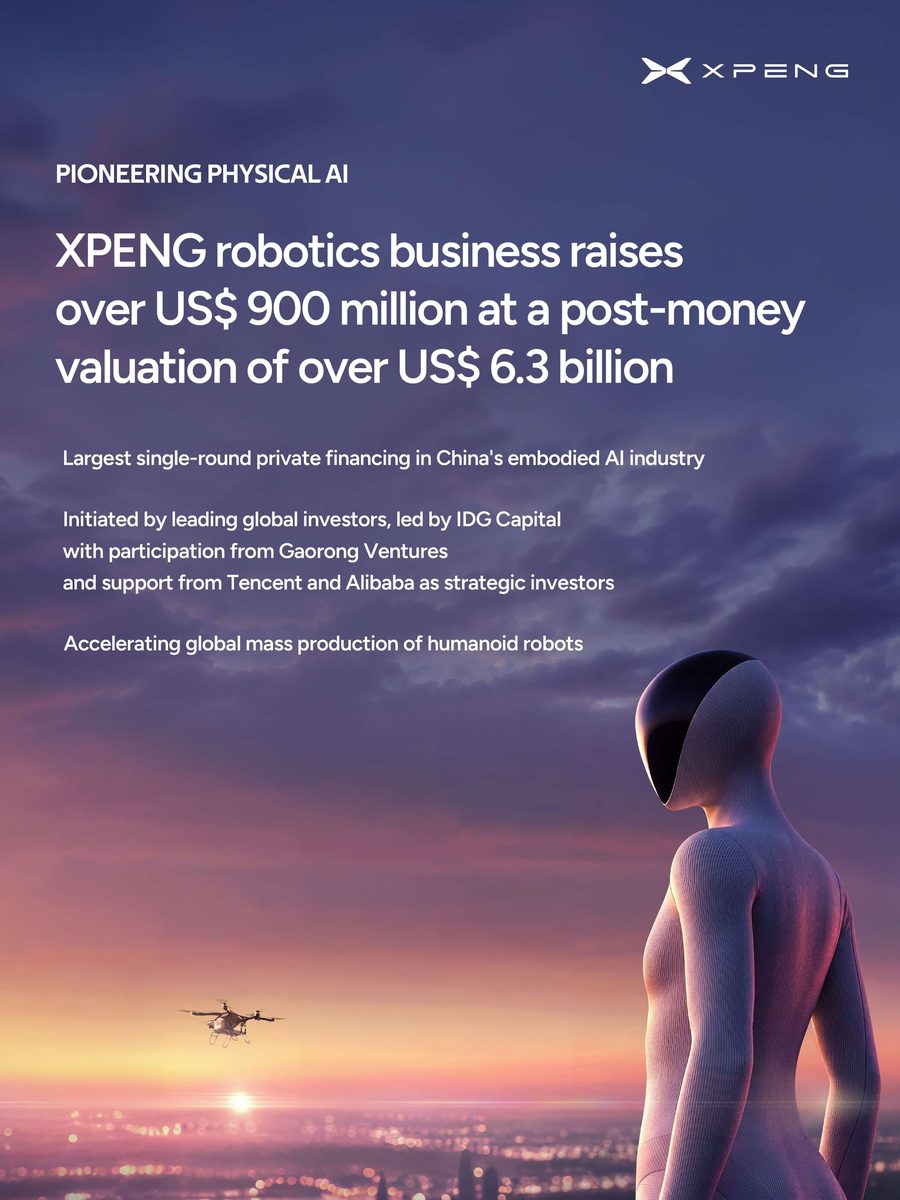
XPeng's robotics business has raised over $900 million at a valuation above $6.3 billion, the largest single-round private financing in China's embodied AI industry. IDG Capital led the round, with Tencent and Alibaba joining as strategic investors.

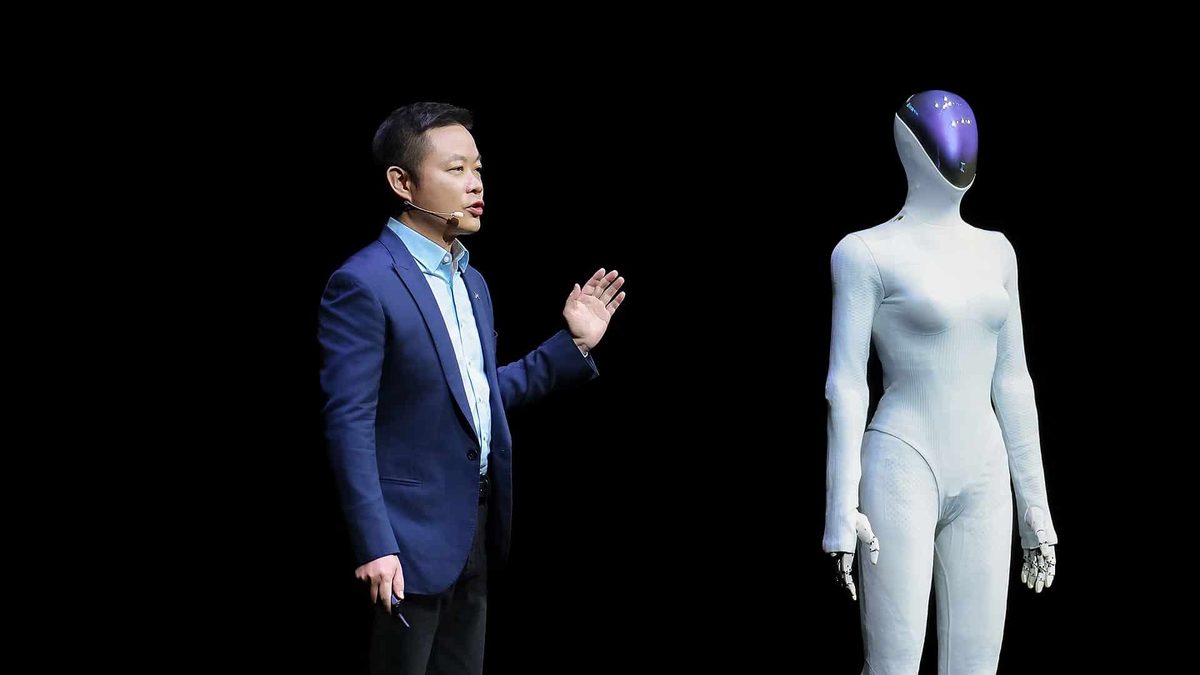
The funding bankrolls the IRON humanoid robot, which XPeng plans to mass-produce at 1,000 units a month by year-end, with commercial sales set for 2027. It also funds the carve-out of the robotics unit into a standalone business called Dogotix, which XPeng keeps under its control.

Why it matters

If XPeng's IRON hits 1,000 units a month, humanoid robots stop being lab projects and become a manufactured product — an automaker with real factory capacity is betting on it.

Questions about this story

Free account needed to ask — your question is kept and asked for you right after sign-up. Answers are public.

No questions yet — be the first to ask.

Key Indicators

$900 million+
Raised in first funding round
Led by IDG Capital, with Tencent and Alibaba as strategic investors.
$6.3 billion
Post-money valuation of robotics business
XPeng's wholly owned subsidiary Xpeng Dogotix invested $200 million; external investors contributed $600 million.
~82%
XPeng's retained stake in Dogotix
Could fall to 68% if all warrants, additional investments, and incentive shares are exercised.
1,000 units/month
IRON humanoid production target for 2026
Mass production by end of 2026, with commercial sales in China and overseas in 2027.

Voices

Curated perspectives — historical figures and your fellow readers.

Ever wondered what historical figures would say about today's headlines?

Sign up to generate historical perspectives on this story.

People Involved

Organizations Involved

Timeline

June 2026 August 2026

3 events Latest: August 24th, 2026 · 3 weeks ago
  1. Robotics unit raises record $900M+ at $6.3B valuation

    Latest Funding

    XPeng's robotics business raised over $900 million in its first funding round, led by IDG Capital with strategic investors Tencent and Alibaba. The round set a record for China's embodied AI sector.

  2. XPeng reports widening Q2 loss amid R&D push

    Earnings

    Net loss widened 179% year over year to 1.34 billion yuan (about $199 million) as R&D costs jumped 32%. Revenue rose 8% to 19.7 billion yuan.

  3. XPeng CEO takes personal charge of robotics

    Strategic shift

    He Xiaopeng announced he would personally lead the robotics business as XPeng pushes toward mass production of humanoid robots.

Scenarios

1

XPeng IRON enters mass production on schedule

Likely Resolves by Q2 2027

Discussed by: XPeng's official announcements; Reuters reporting on production targets

XPeng maintains its timeline: 1,000 IRON units per month by end of 2026, initial deployments at its stores and campuses, then commercial deliveries in China and overseas in 2027. The $900M+ round funds the production ramp and physical AI model training.

2

Production delays push IRON commercial launch to 2028

Possible Resolves by Q2 2027

Discussed by: Concerns about humanoid manufacturing complexity; XPeng's Q2 loss widening amid heavy R&D spending

Technical challenges in humanoid actuation, supply chain constraints, or cost overruns delay the ramp. XPeng misses the 1,000-unit monthly target for year-end 2026 and revises the commercial launch to 2028.

3

Dogotix carve-out completes, unit operates independently

Likely Resolves by Feb 24, 2028

Discussed by: XPeng's carve-out plan submitted to investors

The transfer of assets, intellectual property, personnel, and systems from XPeng to Dogotix reaches completion within 18 months of the first tranche of external share subscriptions. Dogotix operates as a standalone entity with XPeng keeping roughly 82% ownership.

Historical Context

3 moments from history that rhyme with this story — and how they unfolded.

2018–2021

Chinese EV funding wave (2018–2021)

XPeng, NIO, Li Auto, and other Chinese EV startups raised billions in private rounds and public listings to build vehicle manufacturing capacity. XPeng itself listed on the New York Stock Exchange in 2020 and Hong Kong in 2021.

Then

Massive production scale-ups and rapid market share gains in China's EV market.

Now

China became the world's largest EV market, with domestic manufacturers dominating it.

Why this matters now

XPeng is applying the same playbook to humanoid robotics: raise big, build manufacturing scale early, and capture a nascent market before competitors arrive. Its automotive infrastructure gives it a head start most robotics startups lack.

2021–2026

Tesla Optimus program (2021–present)

Tesla announced a humanoid robot in 2021 and has developed the Optimus platform since. Elon Musk positioned the company's EV manufacturing expertise and AI development as core advantages for building robots at scale.

Then

Optimus prototypes demonstrated publicly but no commercial-scale production announced.

Now

Set the benchmark for automaker-backed humanoid robots, convincing the industry that EV plants can build robots.

Why this matters now

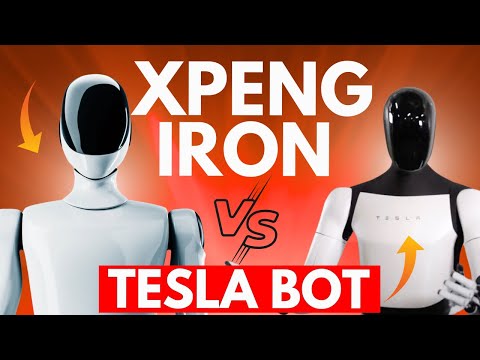
XPeng is explicitly competing with Tesla. The South China Morning Post reported the round gives XPeng a shot at challenging Tesla in humanoid robots, applying the same EV-manufacturing-to-humanoids playbook.

2024

Figure AI's humanoid funding wave (2024)

Figure AI, a U.S. humanoid robotics startup, raised hundreds of millions from investors including major tech companies and venture firms, securing commercial partnerships with manufacturers.

Then

Fueled venture investment across humanoid robotics startups globally.

Now

Established the benchmark for how much capital a pre-revenue robotics company can attract.

Why this matters now

XPeng's round now dwarfs those U.S. raises, showing the scale of capital available to an automaker-backed robotics unit with existing factory capacity.

Sources

(10)