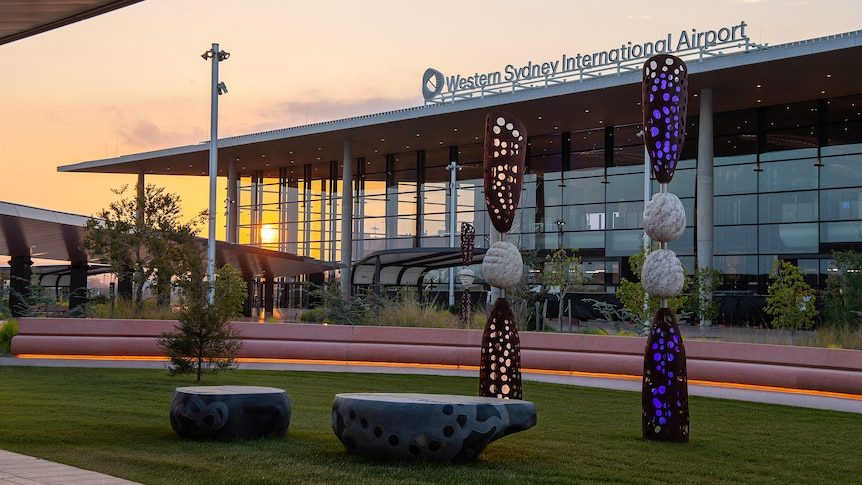
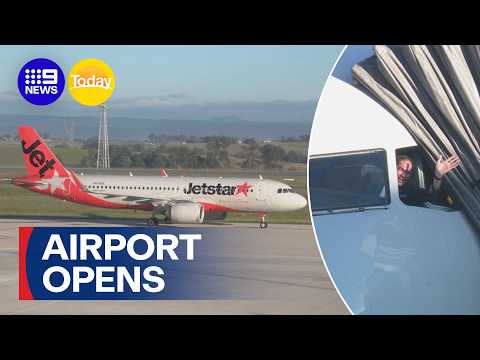
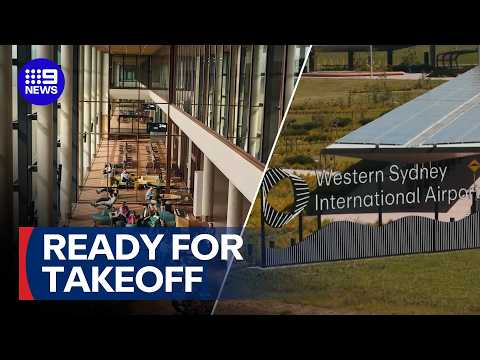
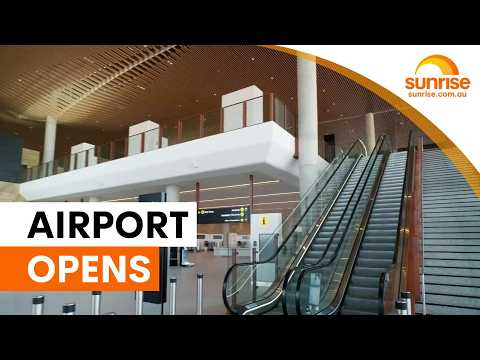
Western Sydney International Airport opened to passengers on October 25, with Jetstar flight JQ362 to the Gold Coast. Air New Zealand flew the first international service the next day and now runs three return flights a week to Auckland.
Freight flights exempt from Sydney Airport's overnight curfew move here from November 1 Blue Mountains residents have since complained about aircraft noise and are petitioning for an 11pm-to-6am curfew at the new airport. Singapore Airlines starts daily Singapore flights on November 23, and the metro line to the terminal may not open until mid-2028.
Why it matters
Sydney gains a second, around-the-clock airport, bypassing the night curfew and flight caps that have limited its existing hub for decades.
Questions about this story
Free account needed to ask — your question is kept and asked for you right after sign-up. Answers are public.
No questions yet — be the first to ask.
Key Indicators
A$5.3B
Federal spending on the airport
The government's figure for building the airport. Reuters reported A$5.6 billion, and Construction Review reported A$3.94 billion. The reports appear to use different bases.
10M
Initial annual passenger capacity
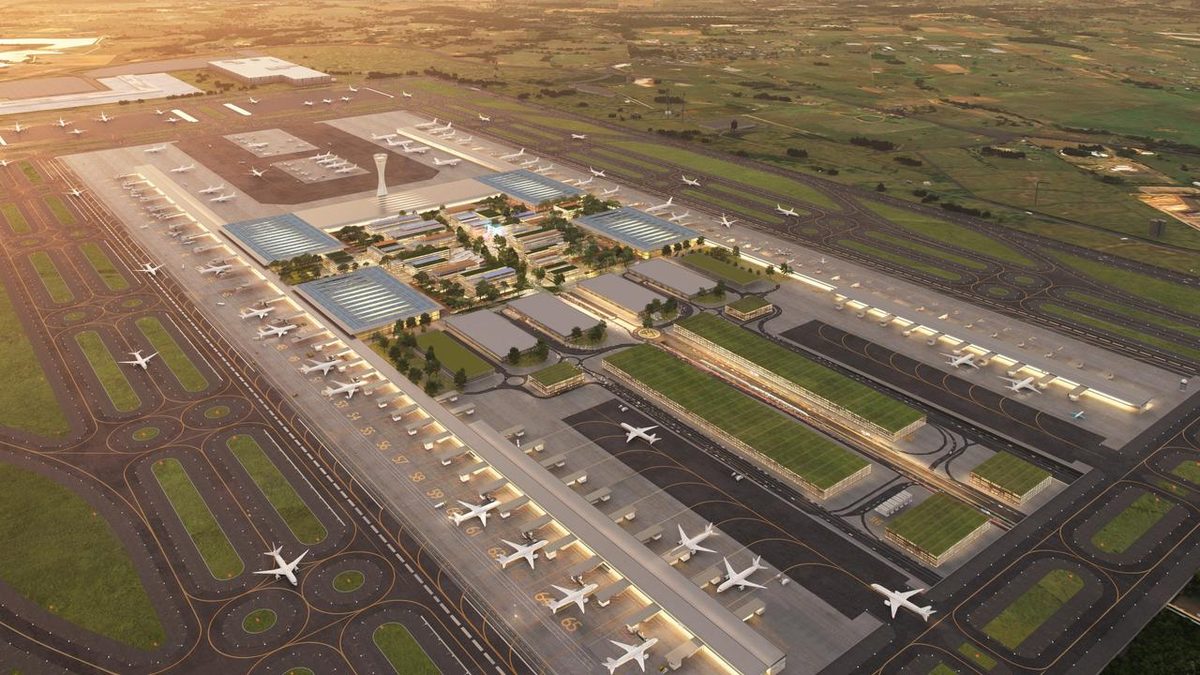
The terminal is about the size of Adelaide Airport's. WSI projects 82 million passengers a year by the 2060s.
24/7
Operating hours
No curfew, unlike Sydney Airport at Mascot, which is capped at 80 movements an hour and shut from 11pm to 6am.
45 km
Distance from Sydney CBD
About 18 km from Penrith's city centre, on a 1,780-hectare site the federal government bought in the 1980s.
13,000+
Workers on the wider precinct
More than 13,000 people across the broader build, over half from western Sydney. About 10,000 built the airport itself.
1.8M
Eventual air cargo target
Tonnes of freight a year WSI aims to handle eventually, according to the airport.
15 events
Latest: November 3rd, 2026 · 1 week ago
Showing 8 of 15
JK to step
Tap a bar to jump to that date
Jump to
March 2027
Qantas begins WSI services
UpcomingOperations
Qantas opens four weekly flights each to Brisbane and Melbourne using Embraer E190 aircraft.
2027
Metro rail connection possibly delayed to mid-2028
UpcomingInfrastructure
Sydney Metro's airport line was expected as early as late 2027, but the NSW government conceded in June that delays could push the opening to mid-2028. Until then passengers rely on a free shuttle to St Marys and re-routed suburban buses.
November 2026
Singapore Airlines starts daily Changi flights
UpcomingOperations
Daily flights connect WSI to Singapore Changi Airport.
Blue Mountains residents complain about aircraft noise
LatestCommunity
Residents under the flight path reported louder skies a week after the airport opened and backed a petition for an 11pm-to-6am curfew. Airservices Australia says it prioritises reciprocal runway operations overnight to limit overflight of populated areas.
Night movements begin under the 24-hour licence
Operations
A federal instrument cleared WSI for night aircraft movements from November 1. Exemptions that let some cargo aircraft, propeller planes and business jets use Sydney Airport during its curfew lapsed the same day.
October 2026
Air New Zealand begins Auckland service
Operations
WSI's first international route launches, one day after the passenger opening.
Air New Zealand flies first international departure from WSI
Operations
Flight NZ166 left for Auckland, landing there at 1:58pm local time. It was the first international departure from the airport.
Air New Zealand NZ165 lands from Auckland
Operations
The first international arrival at Western Sydney International touched down from Auckland. The return flight, NZ166, departed at 9:17am.
Passenger operations begin
Opening
Jetstar flight JQ362 to the Gold Coast is the first passenger departure from Western Sydney International Airport.
Government shifts overnight freight to WSI from November 1
Policy
Freight flights that had been exempt from Sydney Airport's curfew and allowed to land at Mascot overnight will fly into WSI instead from November 1.
Jetstar lifts Gold Coast route to daily
Operations
Strong demand since June sales led Jetstar to grow the Western Sydney to Gold Coast route from four flights a week to daily.
July 2026
Freight operations commence
Operations
First commercial cargo flights begin, ahead of passenger services. Qantas Freight starts regular flights the next day.
September 2018
Construction begins
Infrastructure
Ground is broken on the greenfield airport site in western Sydney.
April 2014
Coalition government confirms Badgerys Creek
Policy
The Abbott government locks in Badgerys Creek, ending decades of back-and-forth over alternate sites.
February 1986
Badgerys Creek designated for second airport
Policy
The Hawke government announces Badgerys Creek as the site for Sydney's second major airport.
Scenarios
1
WSI grows into a major 24-hour gateway
Likely
Resolves by End of 2028
Discussed by: WSI chief executive Simon Hickey, who projects expansion toward 82 million passengers by the 2060s
The curfew-free license lets airlines schedule overnight flights that Sydney Airport cannot accept. If the metro rail link opens on schedule and airlines add routes, WSI could push toward its 10-million initial capacity within a few years, with Air New Zealand, Singapore Airlines, Fiji Airways, Vietjet, and Qatar Airways already committed.
2
Metro delay and access gaps cap early growth
Possible
Resolves by Q2 2028
Discussed by: Transport analysts and Guardian reporting on the delayed rail link
The Sydney Metro Airport station, pushed to at least December 2027, means early passengers depend on roads still being upgraded around Elizabeth Drive and Mamre Road. Congestion could dampen demand until rail service arrives.
3
Long-haul carriers bypass WSI for Sydney Airport
Possible
Resolves by End of 2029
Discussed by: Industry watchers noting WSI's initial focus on Asia-Pacific routes
WSI's launch lineup is regional — Air New Zealand, Singapore Airlines, Fiji Airways, Vietjet, Qatar Airways — with no North American or European carrier. If Qantas keeps intercontinental flights at Mascot and long-haul airlines don't move, WSI remains a regional complement to Sydney Airport rather than a full second hub.
4
Badgerys Creek takes Sydney's overnight freight
Likely
Resolves by Nov 1, 2027
Discussed by: The federal government, which ordered the shift, and WSI, which wants up to 1.8 million tonnes of air cargo a year
Cargo flights barred from Mascot between 11pm and 6am move to WSI from November 1, the first test of the 24-hour licence. WSI says it cannot say how much freight or how many flights will move, because that depends on the carriers.
Historical Context
3 moments from history that rhyme with this story — and how they unfolded.
1 of 3
July 1998
Hong Kong International Airport (1998)
Hong Kong replaced the cramped Kai Tak airport, whose runway jutted into Victoria Harbour with planes threading between apartment towers, with a new airport on reclaimed land at Chek Lap Kok.
Then
The opening night was chaotic, with computer glitches stranding luggage and delaying flights for weeks.
Now
Hong Kong International Airport grew into a major Asian cargo and transit hub, handling tens of millions of passengers annually.
Why this matters now
Like Hong Kong, Sydney built a new airport to escape site constraints — but Sydney is adding capacity alongside its existing hub, not replacing it, so the growth outcome is less predetermined.
2 of 3
October 2020
Berlin Brandenburg Airport (2020)
Berlin's new airport was meant to open in 2011 but launched a decade late after design flaws, certification failures, and billions in cost overruns.
Then
It opened into the COVID pandemic, with passenger volumes far below plan.
Now
As air travel recovered, BER gradually ramped up and consolidated Berlin's aviation traffic.
Why this matters now
A cautionary case: airport megaprojects can open late and over budget yet still find their market — while the delays shape public perception for years.
3 of 3
August 1981
Changi Airport (1981)
Singapore moved its aviation hub to a purpose-built greenfield airport at Changi, replacing Paya Lebar, with the national carrier Singapore Airlines relocating its base overnight.
Then
Changi immediately became Singapore's gateway, built for expansion from the start.
Now
It became one of Asia's most-awarded airports and a core piece of Singapore's economic model.
Why this matters now
The template WSI's backers point to: a greenfield airport that powered a city's aviation expansion through deliberate, long-term capacity planning.