
Pull to refresh
Logo
AirTrunk secures A$4.25 billion green loan for Sydney data centre expansion

AirTrunk secures A$4.25 billion green loan for Sydney data centre expansion

Money Moves

A 400 MW campus in Western Sydney, funded by 32 banks, as rising rates and community opposition test Australia's AI buildout

Overview

Updated Oct 29

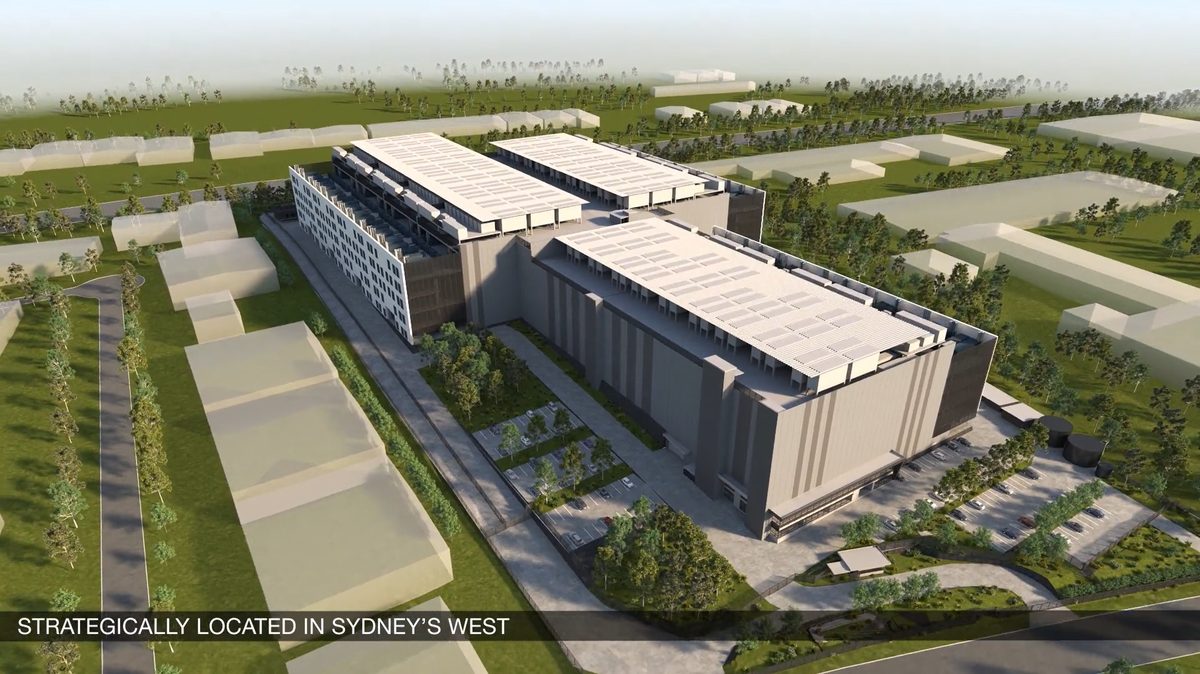
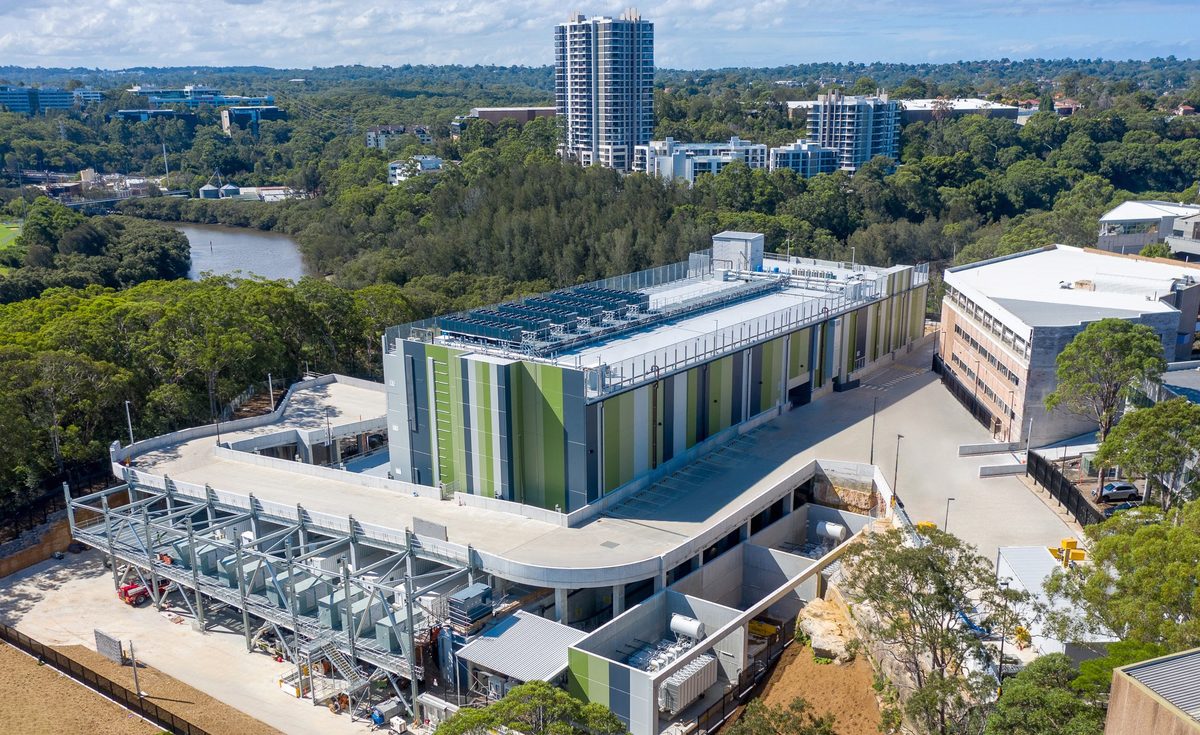
AirTrunk borrowed A$4.25 billion (US$2.98 billion) to keep building SYD3, a 400-megawatt data centre campus in Western Sydney due online by mid-2028. The green loan, one of Australia's largest data centre financings, is backed by 32 financial institutions.

The loan's cost tracks rates: the Reserve Bank lifted its cash rate to 4.60 per cent on 29 September, and DC Market Insights puts base-rate interest at about A$196 million a year before any bank margin. Rivals show the risk. NextDC shares fell 40 per cent after a Melbourne grid delay, Goodman Group cancelled a Sydney project, and AirTrunk said on 28 October that community support is essential to the buildout.

Why it matters

If AirTrunk's buildout stalls or overbuilds, its 32 lenders and hyperscale tenants carry the cost, and Australia's digital capacity is decided here.

Questions about this story

Free account needed to ask — your question is kept and asked for you right after sign-up. Answers are public.

No questions yet — be the first to ask.

Key Indicators

US$2.98 billion
Green loan principal (A$4.25 billion)
One of the largest data centre financings ever assembled in Australia, from 32 local and international banks.
400 MW
SYD3 campus capacity
Upgraded from the 320+ MW originally announced in 2021; roughly a quarter of Australia's 1.6 GW operating capacity.
32
Lenders in the consortium
Underwritten by 14 lead banks including NAB, ING, Deutsche Bank, MUFG and HSBC.
10,000+
Jobs supported during construction
Spans construction, trades, engineering, logistics and safety across Western Sydney.
A$38.4 billion
AirTrunk's total committed debt financing
About A$19.8 billion of it is tied to Australian projects; the SYD3 loan brings the global total to roughly A$38.4 billion.
A$196 million
Estimated annual base-rate interest
DC Market Insights' calculation for the A$4.25 billion loan at the 4.60% cash rate, before bank margin; each further quarter-point rise adds about A$10.6 million a year.

Voices

Curated perspectives — historical figures and your fellow readers.

Sign up to generate historical perspectives on this story.

People Involved

Organizations Involved

Timeline

2021 October 2026

7 events Latest: October 28th, 2026 · 2 weeks ago
Tap a bar to jump to that date
  1. AirTrunk says social licence is essential to AI buildout

    Latest Comment

    AirTrunk said community support is essential if the AI buildout is to proceed, after Goodman Group and NextDC shelved planned data centres in Sydney and Melbourne during the preceding two months.

  2. AirTrunk secures A$4.25 billion green loan

    Financing

    The company closes a green loan from 32 lenders to fund SYD3 in Western Sydney.

  3. RBA lifts cash rate to 4.60 per cent

    Policy

    The Reserve Bank raised its cash rate target by 25 basis points and said it would increase further if needed. The move raises the base cost of floating-rate project debt such as the SYD3 loan.

  4. RBA staff paper tallies data centre financing

    Analysis

    Reserve Bank staff paper counts A$35 billion raised by Australian operators in 2026.

  5. A W Edwards wins expanded SYD3 contract

    Contract

    Bouygues subsidiary secures €1.2 billion contract to deliver the expanded 400+ MW campus.

  6. Blackstone buys AirTrunk

    Acquisition

    Blackstone acquires AirTrunk in one of Australia's largest infrastructure deals.

  7. SYD3 announced

    Announcement

    AirTrunk unveils plans for the SYD3 campus, originally sized at over 320 MW.

Scenarios

1

SYD3 completes on schedule in mid-2028

Likely Resolves by Q2 2028

Discussed by: AirTrunk and A W Edwards, whose public guidance set the mid-2028 completion target

Construction proceeds without major delays. The 400 MW campus reaches commissioning by mid-2028 as planned, with capacity contracted to cloud and AI tenants. This assumes power supply, grid connection and community approvals hold through the build.

2

Power constraints or community opposition delay SYD3

Possible Resolves by Jan 31, 2028

Discussed by: Forbes Australia and the Reserve Bank of Australia staff note

Grid connection delays and community resistance have already stalled rival projects: Jemena postponed power upgrades for NextDC's M3, and Goodman Group cancelled a Sydney facility at Lane Cove. If similar issues hit SYD3, AirTrunk pushes past its mid-2028 target or scales back phases of the campus.

3

Rising debt costs strain AirTrunk's A$75 billion plan

Possible Resolves by End of 2027

Discussed by: Forbes Australia's coverage of rising interest rates and heavy sector borrowing

Rising rates make the roughly A$38.4 billion in committed debt more expensive to service. The RBA cash rate is 4.60 per cent after the September rise, and DC Market Insights calculates each further quarter-point move adds about A$10.6 million a year to the SYD3 loan alone. If borrowing costs keep climbing, AirTrunk or Blackstone could slow new campus starts, seek equity injections, or renegotiate terms. The ten-year, A$75 billion rollout would stretch.

Historical Context

2 moments from history that rhyme with this story — and how they unfolded.

1999–2002

The fibre optic boom and bust (1999–2002)

Telecom carriers laid hundreds of thousands of miles of fibre optic cable on borrowed money, expecting internet demand to fill it within a few years. By early 2002, Global Crossing had filed for bankruptcy and WorldCom followed in July, crushed under the debt.

Then

Billions in debt went unpaid and thousands of jobs were lost as the carriers collapsed.

Now

The overbuild left unused 'dark fibre' that took a decade to fill. It remains the cautionary tale for debt-funded infrastructure built ahead of measured demand.

Why this matters now

AI demand is the current 'cannot lose' thesis, but the structure echoes the fibre boom: massive borrowing, construction racing ahead of verified demand, and sharp sensitivity to interest rates.

2009–2018

Australian LNG megaprojects (2009–2018)

Australia's biggest LNG projects — Gorgon, Wheatstone and Ichthys — were among the most expensive energy developments ever built, funded on forecasts of Asian demand and delivered years late and billions over budget.

Then

Gorgon ran billions over budget and years behind schedule; Wheatstone and Ichthys also slipped. Contractors and lenders absorbed the overruns.

Now

The projects were eventually completed and made Australia the world's largest LNG exporter. The lesson: Australian megaprojects are prone to schedule and cost blowouts.

Why this matters now

SYD3 is a similar bet — enormous capital, a long construction horizon, and a demand thesis that must hold for the debt to service itself.

Sources

(11)