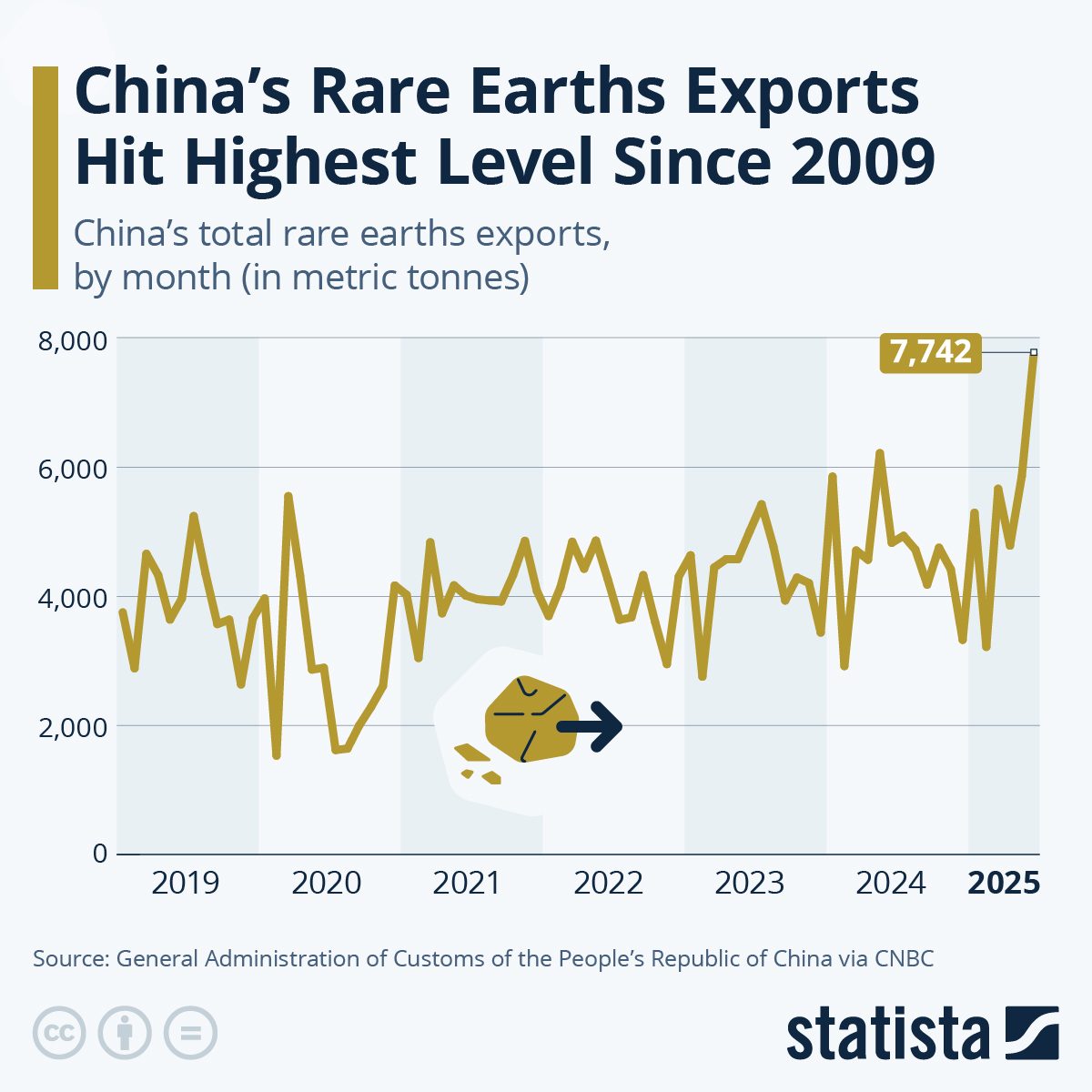
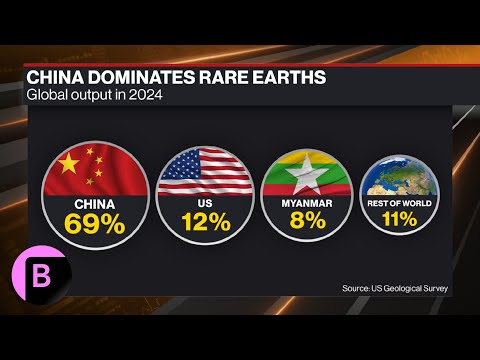
The United States imports roughly 80% of its rare earth elements and relies on China for over 90% of processing—materials essential to electric vehicles, wind turbines, and precision weapons. China's April 2025 export controls on seven heavy rare earths remain in force, with a broader set of restrictions due to expire in November 2026.
The Trump administration launched a $12 billion strategic mineral stockpile and a 55-nation Critical Minerals Ministerial in February 2026, producing 11 bilateral supply agreements and the FORGE coalition. MP Materials posted 49% revenue growth in Q1 2026, Lynas signed a $96 million Pentagon offtake deal in March, and USA Rare Earth struck a $2.8 billion deal to acquire Brazil's Serra Verde. At the Trump-Xi Beijing summit in May, China pledged to address specific element shortages but made no formal commitments, with the Section 232 deadline arriving July 13.
Why it matters
Chinese export controls can freeze weapons programs, stall EV production, and wipe out industries—proving America can't make anything without these materials.
Questions about this story
Free account needed to ask — your question is kept and asked for you right after sign-up. Answers are public.
No questions yet — be the first to ask.
Key Indicators
93%
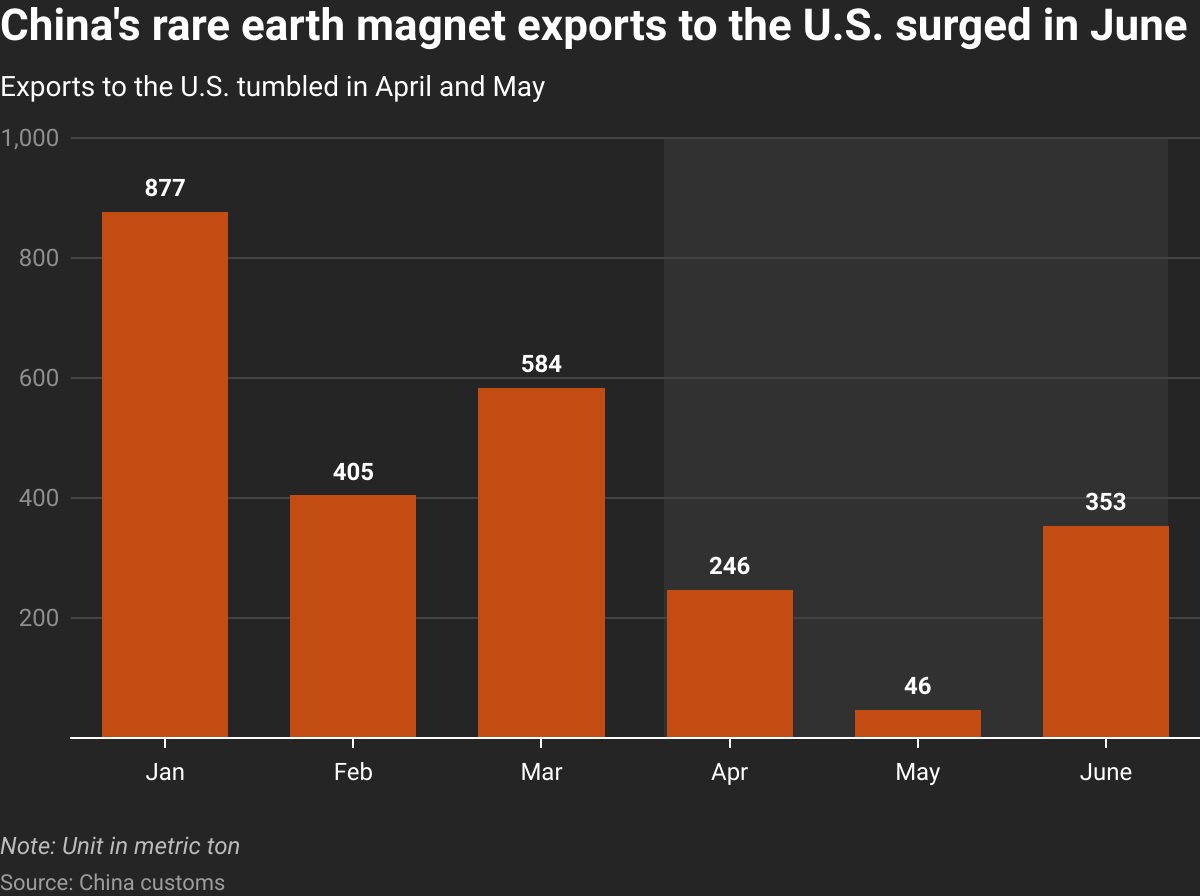
Rare earth magnet shipment decline to US
Year-over-year drop in Chinese rare earth magnet exports to the US in May 2025
~50%
Heavy rare earth export decline from China
Estimated drop in Chinese exports of yttrium, dysprosium, and terbium to the US since April 2025 controls took effect
$134M
DOE demonstration facility funding
Federal funding for 1-2 projects recovering rare earths from unconventional sources; award pending as of May 2026
90%+
China's rare earth processing share
China refines over 90% of global rare earths and produces 90% of high-performance magnets
$400M
DOD equity stake in MP Materials
July 2025 investment making the federal government MP's largest shareholder
$12B
Project Vault stockpile
Trump administration's strategic critical minerals reserve launched February 2026
$3.1B
USA Rare Earth government investment
Government equity stake plus private capital for mine-to-magnet chain; January 2026
$2.8B
USA Rare Earth acquires Serra Verde
April 2026 deal to buy Brazil's Serra Verde, the only non-Asian producer of all four magnetic rare earths at scale
28 events
Latest: May 28th, 2026 · 4 months ago
Showing 8 of 28
JK to step
Tap a bar to jump to that date
Jump to
May 2026
MP Materials Sues USA Rare Earth Over Magnet Trade Secrets
LatestCorporate
MP Materials filed suit in Texas federal court alleging a former employee stole proprietary "grain boundary diffusion" magnet formulations and shared them with USA Rare Earth and a third-party firm. Both companies receive federal backing, making the dispute a government-funded rivalry; USA Rare Earth denied all allegations.
DOE Awards $45.7M for 19 Critical Minerals Projects
Funding
The DOE Office of Critical Minerals and Energy Innovation announced $45.7 million across 19 projects to fill domestic supply chain gaps, including pilot-scale facilities for rare earth and magnesium processing. Awardees include Argonne National Laboratory, Columbia University, and Ohio University.
Trump-Xi Beijing Summit Produces No Rare Earth Deal
Geopolitical
President Trump traveled to Beijing for a summit where rare earth access was central to the agenda. China agreed to "address US concerns" on yttrium, scandium, and neodymium but made no binding commitments and left the April 2025 controls on seven heavy rare earths fully in place.
March 2026
Lynas Signs $96M Pentagon Rare Earth Offtake Deal
Corporate
Lynas Rare Earths signed a binding letter of intent with the US Department of War to supply rare earth oxides for $96 million over four years at a $110/kg NdPr floor price. The deal replaces the original Texas refinery plan, which Lynas confirmed is unlikely to proceed.
February 2026
US Announces Critical Minerals Trading Bloc
Policy
Trump administration unveils plans for allied trading bloc (EU, Japan, Mexico) with price floors maintained via tariffs to counter China dominance and secure rare earth supply chains.
US Hosts Critical Minerals Ministerial, Launches FORGE Coalition
Policy
Secretary of State Rubio convened 55 foreign delegations in Washington and signed 11 bilateral supply agreements. The meeting launched FORGE (Forum on Resource Geostrategic Engagement), a successor to the Minerals Security Partnership chaired by South Korea, designed to coordinate price floors and counter Chinese market dominance.
Rare Earth Stocks Surge on Trading Bloc News
Market
US rare earth miners rally—Critical Metals +10%, USA Rare Earth +11%, MP Materials +4%—following critical minerals trading bloc announcement and Project Vault momentum.
Trump Launches $12B Project Vault Stockpile
Policy
$12B strategic critical minerals reserve ($10B EXIM loan + $1.67B private) including rare earths, modeled on Strategic Petroleum Reserve; GM, Boeing, Google commit.
January 2026
DOE Application Deadline Closes
Milestone
Final deadline for applications to $134 million rare earth demonstration program. Awards of $67-134M each expected for up to 2 projects; selection anticipated February 2026.
Trump Signs Critical Minerals Executive Order
Policy
President Trump invokes Section 232 national security authorities, ordering Commerce and USTR to negotiate critical minerals trade agreements with 180-day deadline. Failure triggers potential tariffs or minimum import prices.
MP Materials CEO Sells $19.2M in Stock
Corporate
James Litinsky sells 300,000 shares at approximately $64 per share via pre-arranged trading plan. Stock up 33% year-to-date amid government partnership and production ramp-up.
China Bans Rare Earth Exports to Japan
Geopolitical
China halts rare earth and magnet exports to select Japanese firms following Prime Minister Takaichi's comments on potential military intervention in Taiwan Strait conflicts. Japan relies on China for 63% of rare earth imports.
December 2025
DOE Announces $134M Demonstration Program
Funding
Department of Energy opens applications for Rare Earth Elements Demonstration Facility program targeting recovery from unconventional feedstocks.
November 2025
China Suspends October Controls for One Year
Geopolitical
Following US-China negotiations, China suspends October export controls until November 2026. April 2025 restrictions on heavy rare earths remain in place.
October 2025
Phoenix Tailings Opens First US Metallization Facility
Milestone
Exeter, New Hampshire facility begins producing 200 tons/year of rare earth metals with capacity to scale to 1,000+ tons—enough to supply entire US defense industrial base. First domestic rare earth metallization without Chinese inputs.
China Escalates with October Controls
Geopolitical
China announces expanded export controls including extraterritorial provisions requiring licenses for products made outside China using Chinese rare earth materials.
July 2025
Apple Announces $500M MP Materials Partnership
Corporate
Apple signs long-term agreement with MP Materials for American-made rare earth magnets from recycled materials, expanding domestic supply chain commitments.
DOD Takes 15% Stake in MP Materials
Investment
Pentagon invests $400 million equity in MP Materials, becoming largest shareholder. Deal includes $150M loan, 10-year offtake agreement, and $110/kg price floor—triple market rates.
May 2025
US Rare Earth Imports Collapse
Trade
Chinese rare earth magnet exports to US fall 93.3% year-over-year. Ford temporarily closes Chicago factory; automakers scramble for supply.
April 2025
China Imposes Rare Earth Export Controls
Geopolitical
China requires export licenses for seven heavy rare earth elements—including samarium and dysprosium—in response to US tariffs. Defense contractors effectively barred from purchasing.
April 2022
DOD Awards MP Materials $35M
Funding
Department of Defense awards contract to MP Materials to design and build heavy rare earth separation facility at Mountain Pass.
November 2021
Bipartisan Infrastructure Law Enacted
Policy
President Biden signs legislation including $140 million for DOE rare earth demonstration facilities and over $600 million for critical mineral programs.
June 2017
MP Materials Acquires Mountain Pass
Corporate
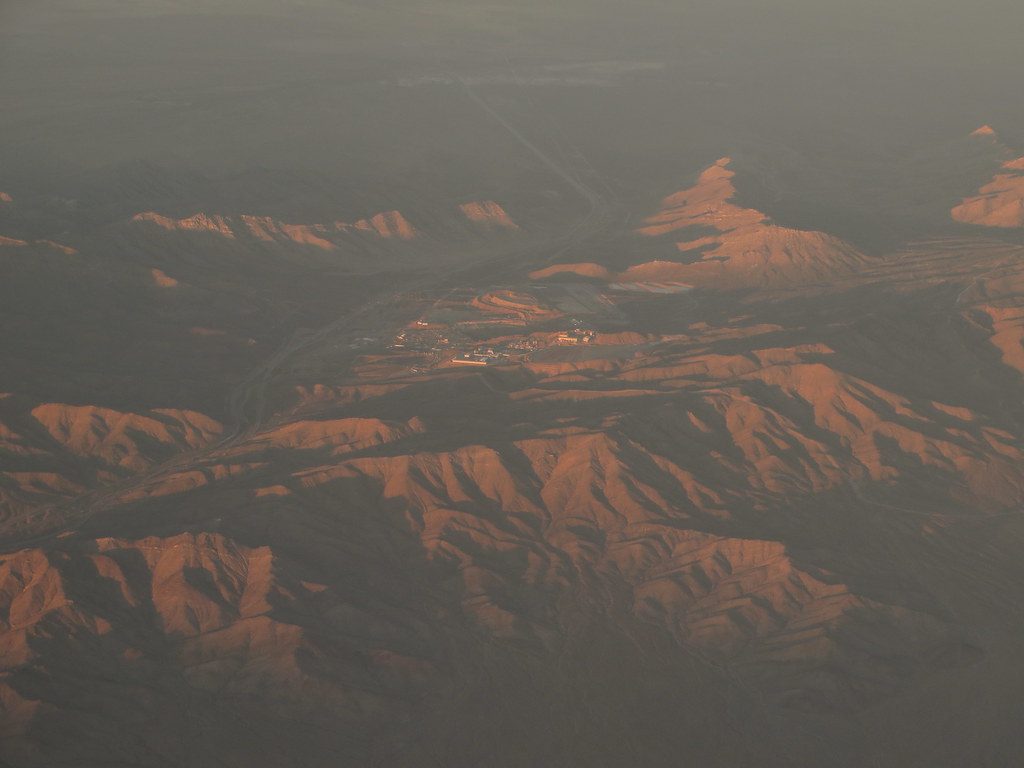
Consortium led by JHL Capital purchases Mountain Pass mine at bankruptcy auction for $20.5 million, beginning revival of US rare earth production.
June 2015
Molycorp Files for Bankruptcy
Corporate
America's only major rare earth producer files Chapter 11 with $1.4 billion in debt. Mountain Pass mine shuts down as rare earth prices collapse from post-2010 highs.
August 2014
WTO Rules Against China
Legal
WTO finds China's rare earth export restrictions violate trade rules. China subsequently drops export quotas in 2015.
March 2012
US Files WTO Case Against China
Legal
United States, Japan, and European Union jointly file WTO dispute against China's rare earth export restrictions.
September 2010
China-Japan Rare Earth Crisis Begins
Geopolitical
Chinese fishing trawler collides with Japanese Coast Guard near disputed Senkaku Islands. China halts rare earth exports to Japan for two months, triggering global price spike and supply chain panic.
Scenarios
1
Demonstration Projects Prove Commercial Viability by 2029
Possible
Discussed by: DOE program documentation; industry analysts at S&P Global and Wood Mackenzie
Funded projects successfully demonstrate commercial-scale rare earth recovery from mine tailings or e-waste within the 36-month performance period. This validates unconventional feedstocks as economically viable, attracting private capital for follow-on facilities. Combined with MP Materials' 2028 magnet plant, the US achieves partial supply chain independence for defense applications by decade's end.
2
China Reimposes Full Export Controls After Truce Expires
Likely
Discussed by: CSIS analysts; Resources for the Future; FDD
The November 2026 deadline passes without a new trade agreement. China reactivates October 2025 controls including extraterritorial provisions. US defense contractors face acute shortages of samarium-cobalt magnets for missile systems. Emergency measures including Defense Production Act authorities and allied supply agreements partially mitigate impact, but production delays cascade through weapons programs.
3
Technology Gaps Delay US Independence Past 2030
Possible
Discussed by: Chicago Council on Global Affairs; industry executives
Even with successful demonstration projects, scaling from pilot to commercial production proves slower than anticipated. Permitting challenges similar to those stalling Lynas's Texas facility plague new entrants. Heavy rare earth separation technology—currently dominated by Chinese expertise—remains a bottleneck. The US makes incremental progress but remains dependent on imports through the early 2030s.
4
Allied Coordination Creates Alternative Supply Network
Possible
Discussed by: DOD officials; Australian government; Japan's Ministry of Economy
The US coordinates with Australia (Lynas), Canada, and Japan to build a Western rare earth supply chain. Japan's post-2010 diversification model—reducing China dependence from 90% to 60%—provides a template. Lynas's Malaysian expansion fills gaps while domestic US capacity builds. Allied processing facilities handle material from multiple mining sources, reducing single-point vulnerabilities.
5
Trump Administration Imposes Critical Minerals Tariffs After Failed Negotiations
Possible
Discussed by: CSIS analysts; trade policy experts; mining industry observers
The 180-day negotiating window expires July 13, 2026 without satisfactory trade agreements. Trump administration imposes tariffs or minimum import prices on processed critical minerals under Section 232 authorities. China retaliates with expanded export controls. Short-term price spikes accelerate domestic production investments but disrupt supply chains. Allied nations split between joining US framework and maintaining China trade relationships.
6
Japan-Style Response Spreads Across Allied Nations
Possible
Discussed by: Foundation for Defense of Democracies; international trade analysts
China's January 2026 export ban on Japan triggers coordinated allied response mirroring Japan's post-2010 strategy. European Union, South Korea, and other nations accelerate rare earth diversification investments. Combined allied purchasing power creates viable alternative market, reducing individual vulnerability. Trump's price floor proposal gains multilateral traction, stabilizing Western rare earth production economics.
7
China Fulfills Beijing Summit Pledge on Rare Earth Access
Uncertain
Resolves by Nov 10, 2026
Discussed by: White House summit readout; Foreign Policy, CNBC, and Benchmark Minerals analysts covering the Trump-Xi meeting
At the May 2026 Beijing summit, China agreed verbally to address US shortages of yttrium, scandium, and neodymium. If Beijing issues formal licenses for these elements before November 2026, it eases supply pressure on semiconductor and defense manufacturers. The April 2025 controls on dysprosium and terbium would remain, so defense applications dependent on those elements stay constrained regardless.
Historical Context
3 moments from history that rhyme with this story — and how they unfolded.
After Japan detained a Chinese fishing captain near the disputed Senkaku Islands, China halted rare earth exports to Japan for approximately two months. Japan imported 90% of its rare earths from China. Prices for some rare earths spiked over 2,000%—the cost of US rare earth imports rose from $6,969 to $170,760 per metric ton by 2011.
Then
Japan's automotive and electronics industries faced immediate supply disruptions. The crisis triggered a global rare earth price bubble lasting through 2011.
Now
Japan invested 100 billion yen in supply chain resilience, cutting China dependence from 90% to 60% and halving total rare earth consumption through efficiency and recycling. Lynas received $250 million in Japanese investment. The WTO ruled against China's export restrictions in 2014.
Why this matters now
The 2010 crisis demonstrated China's willingness to weaponize rare earth supply. Japan's response—diversification, efficiency improvements, recycling, and allied investment—provides a template for US strategy. The current situation is more severe: April 2025 restrictions target defense applications specifically.
2 of 3
October 2010 - Present
Japanese Rare Earth Strategy (2010-2025)
After the 2010 embargo, Japan launched a comprehensive five-pillar strategy: reduce rare earth usage through technology, develop substitute materials, promote recycling, diversify suppliers, and build strategic stockpiles. The government invested 100 billion yen ($1.2 billion) immediately. State-backed entities invested $250 million in Lynas, securing 30% of Japanese demand.
Then
Japanese companies rapidly developed motors using fewer rare earths and found substitutes for some applications.
Now
Japan cut China dependence from 90% to 60% while halving total consumption. The Lynas investment helped create a second major non-Chinese rare earth producer. Japan's approach became a model for resource security policy.
Why this matters now
Japan achieved meaningful diversification in 15 years through sustained government-industry coordination. The US is attempting a similar effort but started later. The DOE demonstration program and DOD's MP Materials investment mirror Japan's playbook.
3 of 3
June 2015 - June 2017
Molycorp Bankruptcy and Mountain Pass Collapse (2015)
Molycorp, America's only major rare earth producer, filed Chapter 11 bankruptcy with $1.4 billion in debt. The company had invested over $1 billion to modernize Mountain Pass after the 2010 price spike, but prices collapsed before full production began. Shares fell from $79.16 to $0.35. The mine sold at auction for $20.5 million.
Then
The US lost its only significant rare earth production capability. Mountain Pass sat idle for two years.
Now
MP Materials acquired and revived the mine, going public in 2020 at a $4 billion valuation. The experience demonstrated both the volatility of rare earth markets and the difficulty of competing with Chinese state-subsidized production.
Why this matters now
The Molycorp failure shows why government support—like the July 2025 DOD price floors—may be necessary to sustain domestic rare earth production. Private capital alone proved insufficient against Chinese market manipulation.