
Pull to refresh
Logo
Trachoma eliminated as a public health problem across Southeast Asia

Trachoma eliminated as a public health problem across Southeast Asia

New Capabilities

WHO validation clears the last endemic country in the South-East Asia Region

September 4th, 2026: Milestone reaches public audience

Overview

Updated 5 days ago

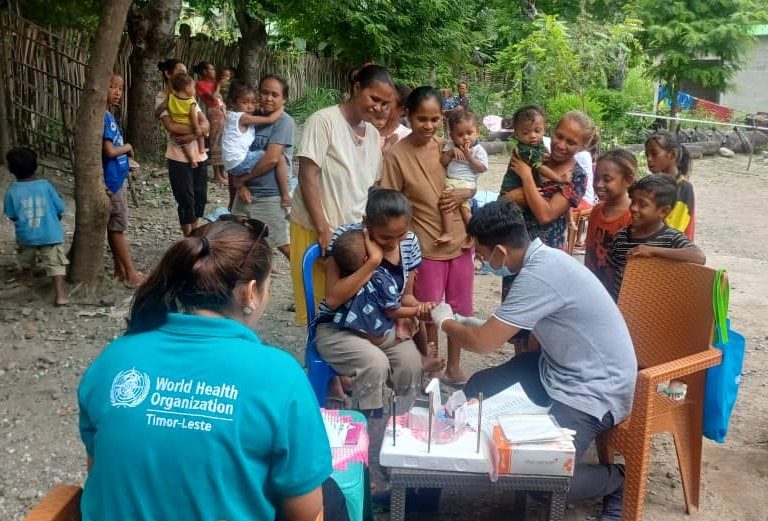
Timor-Leste was the last country in Southeast Asia where trachoma, the world's leading infectious cause of blindness, still counted as a public health problem. On September 3, 2026, the World Health Organization (WHO) validated that the disease is gone, clearing the entire South-East Asia Region.

The milestone caps a 24-year global push. In 2002, 1.5 billion people were at risk of trachoma. As of March 2026, 92 million still need interventions, and the 2030 target of ending the disease worldwide is coming into view.

Why it matters

Trachoma blinds millions through preventable infection; its elimination from a whole region proves the WHO strategy can protect the 92 million people still at risk.

Questions about this story

Free account needed to ask — your question is kept and asked for you right after sign-up. Answers are public.

No questions yet — be the first to ask.

Key Indicators

0
Trachoma cases found in Timor-Leste
No trachoma in 2015-2017 investigations; a 2025 survey of 4,949 children found no transmission requiring intervention.

Voices

Curated perspectives — historical figures and your fellow readers.

Ever wondered what historical figures would say about today's headlines?

Sign up to generate historical perspectives on this story.

People Involved

Organizations Involved

Timeline

January 2012 September 2026

10 events Latest: September 4th, 2026 · 1 week ago
Tap a bar to jump to that date
  1. Milestone reaches public audience

    Latest Report

    Human Progress reports trachoma no longer a public health problem in Southeast Asia.

  2. WHO validates Timor-Leste's elimination

    Validation

    Timor-Leste becomes the 33rd country, clearing the entire region.

  3. El Salvador becomes 32nd country validated

    Validation

    Targeted assessments from 2023 to 2026 found no evidence of active trachoma transmission in El Salvador.

  4. Australia becomes 30th country validated

    Validation

    WHO validates Australia for eliminating trachoma. The achievement advances indigenous health and global efforts against neglected tropical diseases.

  5. WHO reports 92 million still at risk

    Report

    Trachoma remains endemic in parts of 29 countries globally.

  6. Global intervention needs fall below 100 million

    Milestone

    WHO reports at-risk population drops below 100 million for first time.

  7. Global Trachoma Mapping Project begins

    Program

    Project starts documenting trachoma burden worldwide.

Scenarios

1

Global trachoma elimination validated by 2030

Possible Resolves by End of 2030

Discussed by: WHO; International Coalition for Trachoma Control

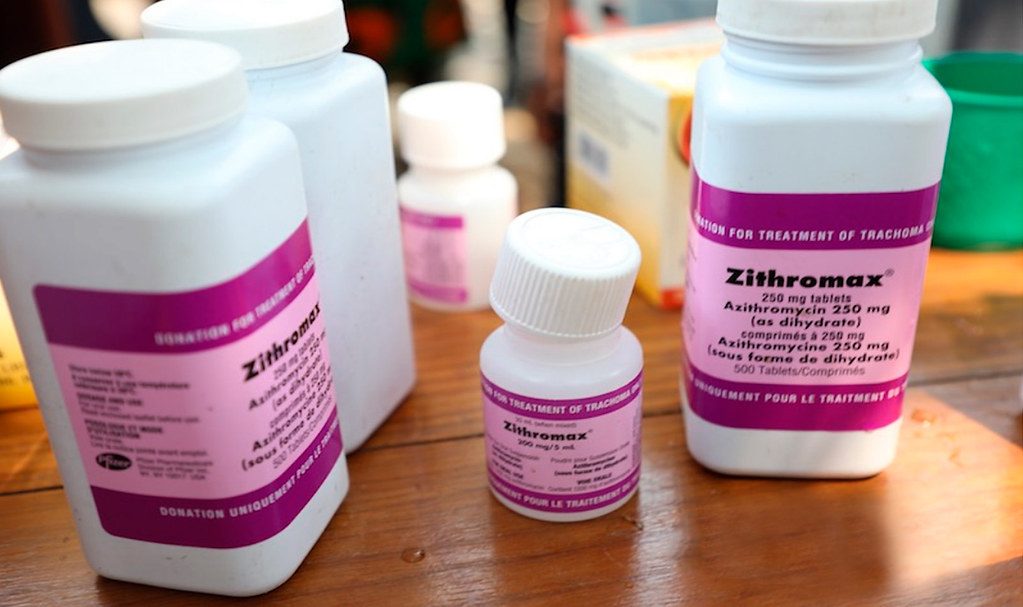
WHO's 2030 target requires the remaining 29 endemic countries to replicate Timor-Leste's model. The at-risk population has fallen 94% since 2002, so the trajectory supports the goal. Success depends on sustained funding, Pfizer's antibiotic donations, and access to conflict-affected communities.

2

Elimination completes after 2030 as Ethiopia clears its burden

Likely Resolves by End of 2035

Discussed by: International Coalition for Trachoma Control

Ethiopia carries the world's largest trachoma burden, with 66 million people affected and roughly 80% of trichiasis surgeries. If Ethiopia reaches elimination but WHO misses the 2030 target, full validation could land in the early 2030s.

3

Elimination stalls in countries with conflict or weak health systems

Uncertain Resolves by End of 2030

Discussed by: WHO neglected tropical disease country reports

Several remaining endemic countries face conflict, displacement, or fragile health systems. Interrupted antibiotic distribution or gaps in surveillance could push their elimination dates past 2030, as happened with Guinea worm disease in its final years.

Historical Context

3 moments from history that rhyme with this story — and how they unfolded.

October 1977 – May 1980

Smallpox eradication (1977–1980)

The last natural case of smallpox was recorded in Somalia in October 1977. WHO declared the disease eradicated in May 1980, making it the first — and still only — human disease ever fully eliminated.

Then

Vaccination campaigns stopped; surveillance replaced them.

Now

Set the template for disease elimination programs worldwide.

Why this matters now

Timor-Leste's validation is a regional step on the same country-by-country path to global elimination.

1986–present

Guinea worm (dracunculiasis) campaign (1986–present)

Guinea worm disease fell from 3.5 million cases in 1986 to fewer than a dozen in recent years. Final eradication has repeatedly slipped because the last cases sit in conflict zones with poor access.

Then

The disease is at its lowest level ever recorded.

Now

Shows how last-mile elimination can stall despite near-complete success.

Why this matters now

Trachoma's remaining 29 endemic countries face the same pattern: progress is hardest where access and stability are weakest.

1991–1994

Polio-free certification of the Americas (1994)

The last polio case in the Americas was reported in Peru in 1991. An independent commission certified the region polio-free in 1994, requiring a high bar of surveillance evidence, not just zero reported cases.

Then

The Americas became the first region certified polio-free.

Now

Regional certification became the standard model for elimination proof.

Why this matters now

WHO applied the same region-wide certification standard to trachoma, requiring Timor-Leste to document surveillance capacity for future cases.

Sources

(9)