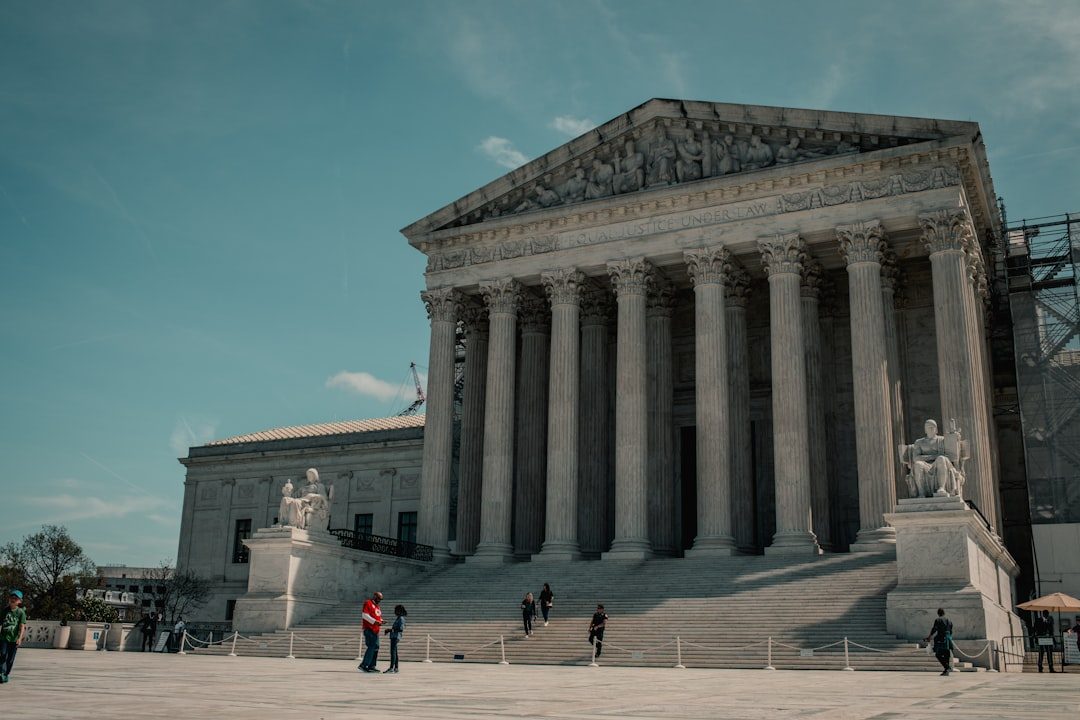
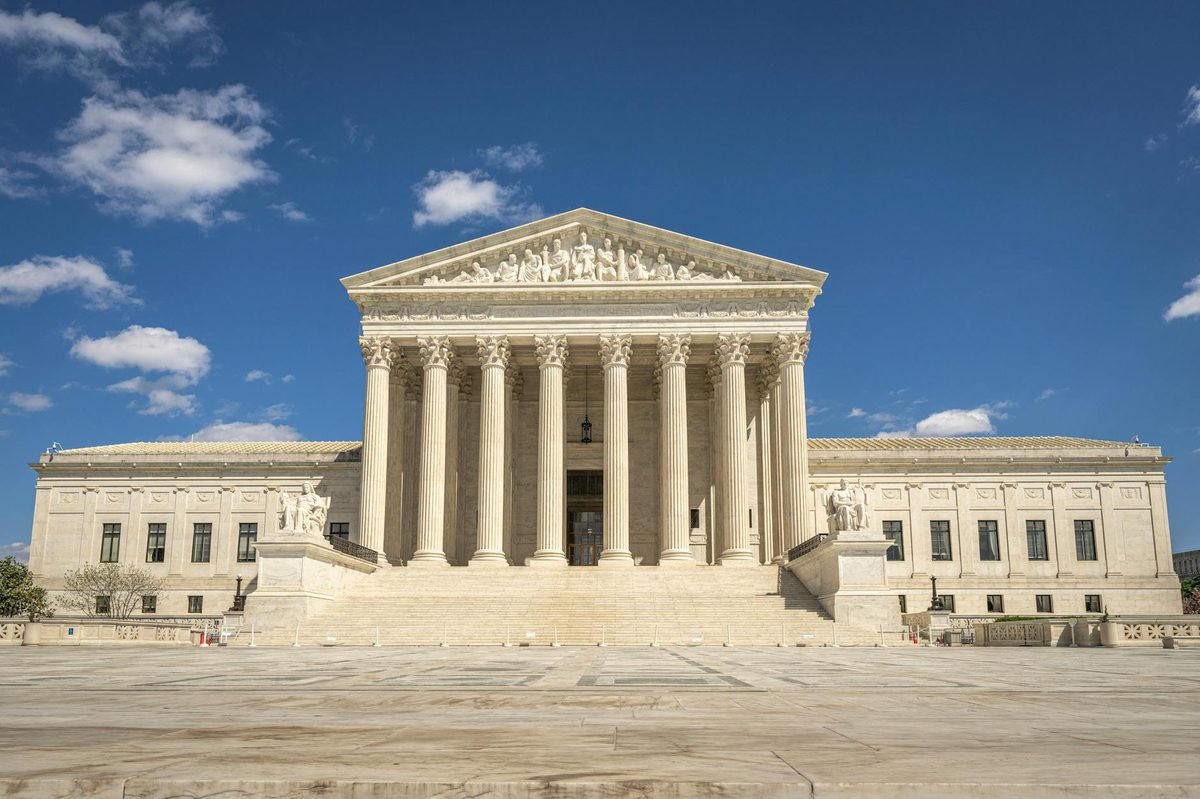
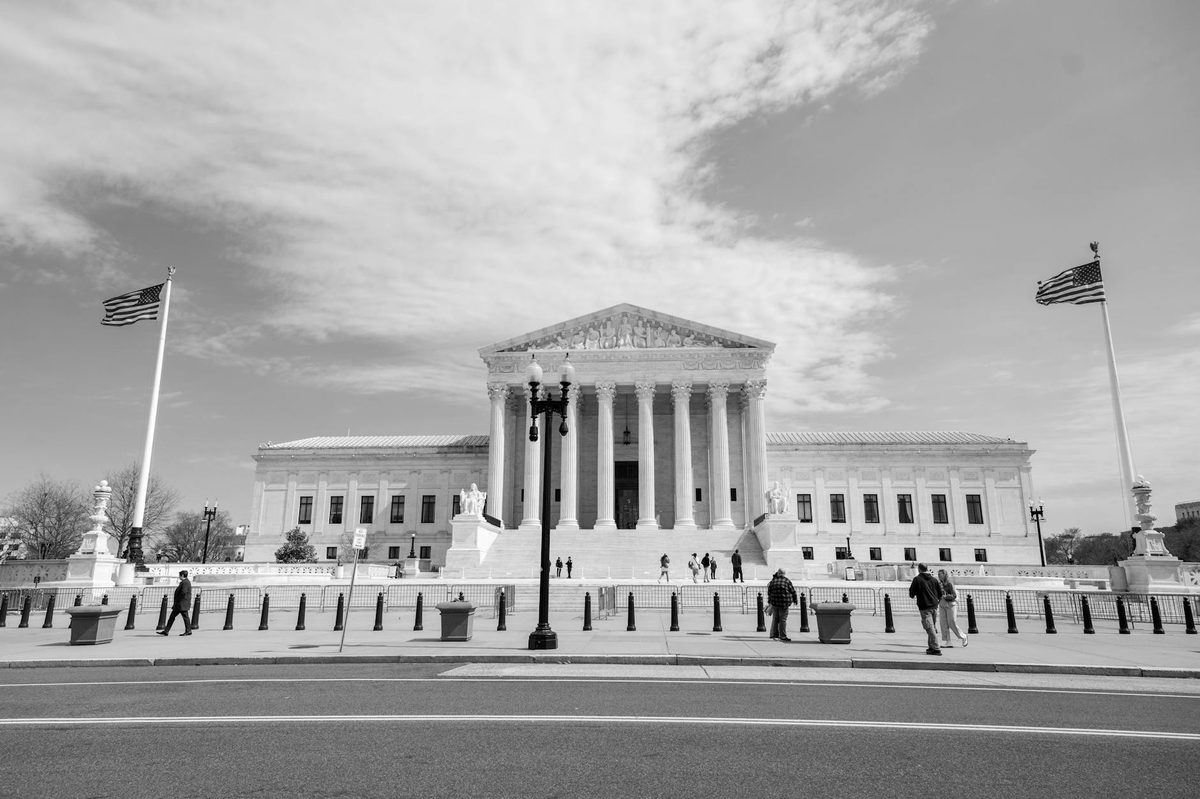
On June 25, 2026, the Supreme Court ruled 6-3 in Mullin v. Doe that courts cannot review non-constitutional challenges to TPS terminations. Justice Alito wrote the majority opinion; the three liberal justices dissented.
Haiti's 350,000 TPS holders have protection through at least July 27, after the D.C. Circuit paused termination while the case returns to the lower court. But the Senate killed a legislative backup that same week — Republican Sen. Eric Schmitt blocked a bill the House had already passed 224-204. Syria's work authorization expired July 24 with no comparable court order in place.
Why it matters
Courts can no longer block TPS terminations on procedural grounds, putting more than a million long-term residents from 17 countries at immediate risk of deportation.
Questions about this story
Free account needed to ask — your question is kept and asked for you right after sign-up. Answers are public.
No questions yet — be the first to ask.
Key Indicators
350,000
Haitian TPS holders
Face loss of deportation protection once the D.C. Circuit's July 27 pause expires.
~6,100
Syrian TPS holders
Work authorization expired July 24 with no court order extending it further.
6-3
Supreme Court vote
Justice Alito's June 25 majority held that TPS terminations cannot be reviewed on non-constitutional grounds.
1.3M
Total TPS holders
Across 17 designated countries — the ruling bars judicial review for all of them.
July 27
Haiti deadline
D.C. Circuit pause on Haiti TPS termination expires; no Senate-passed fix in place.
17 events
Latest: July 24th, 2026 · 2 months ago
Showing 8 of 17
JK to step
Tap a bar to jump to that date
Jump to
July 2026
Syria TPS work authorization expires
LatestAdministrative
Employment authorization documents for Syrian TPS holders expire per USCIS guidance issued July 17. No court order extends protections further.
Senate blocks Haiti TPS extension bill
Legislative
Republican Sen. Eric Schmitt of Missouri objected to unanimous consent passage of a Markey-Blunt Rochester bill to extend Haiti TPS, blocking the Senate's last quick path to a legislative fix.
USCIS sets July 24 as Syria EAD expiration date
Administrative
USCIS issued guidance extending Syrian TPS employment authorization documents to July 24, 2026, giving employers a final deadline to update I-9 records.
June 2026
Senate bill introduced to extend Haiti TPS
Legislative
Senators Edward Markey (D-MA) and Lisa Blunt Rochester (D-DE), joined by Minority Leader Schumer, introduced legislation to preserve Haiti's TPS designation following the Supreme Court ruling.
April 2026
Supreme Court hears oral arguments
Legal
The justices hear 80 minutes of argument in Mullin v. Doe and Trump v. Miot. The administration argues the terminations are unreviewable; challengers argue Noem ignored statutory procedure and acted on discriminatory grounds.
House passes bipartisan Haiti TPS extension 224-204
Legislative
A bipartisan House majority voted to extend Haiti TPS by statute before the Supreme Court ruled. The bill moved to the Senate, where it stalled.
March 2026
Supreme Court fast-tracks both cases
Legal
The Court defers the stay request but grants certiorari before judgment, consolidating the Syria and Haiti cases and scheduling oral argument for the final day of the April session.
February 2026
Solicitor General petitions Supreme Court
Legal
Solicitor General D. John Sauer files an application for stay and a request for certiorari before judgment, asking the justices to bypass the appeals court and rule directly.
Federal judge blocks Haiti TPS termination
Legal
U.S. District Judge Ana Reyes in Washington stays the termination one day before it would take effect, finding plaintiffs substantially likely to prove discrimination against nonwhite immigrants.
December 2025
Haitian plaintiffs sue in D.C. federal court
Legal
Five Haitian TPS holders file the class action that becomes Trump v. Miot, alleging the termination was procedurally invalid and motivated by racial animus.
November 2025
Noem terminates Haiti TPS
Executive Action
DHS announces Haiti's TPS designation will end February 3, 2026, citing both the absence of extraordinary conditions in Haiti and a determination that continued protection is contrary to the national interest.
Federal judge blocks Syria TPS termination
Legal
U.S. District Judge Katherine Polk Failla in New York issues a preliminary injunction halting the Syria termination two days before it would take effect, finding plaintiffs likely to succeed on Administrative Procedure Act claims.
October 2025
Supreme Court allows Venezuela TPS termination
Legal
In an unsigned shadow-docket order, the Court grants the government's request to lift a district court injunction, clearing the way for DHS to strip TPS from roughly 600,000 Venezuelans.
September 2025
Noem terminates Syria TPS
Executive Action
DHS Secretary Kristi Noem announces Syria's TPS designation will end November 21, citing Syria's purported move toward stable institutional governance after Assad's December 2024 fall.
March 2012
Syria designated for TPS amid civil war
Designation
DHS designates Syria for TPS as Bashar al-Assad's crackdown escalates into full civil war. The designation is repeatedly extended over the following 13 years.
January 2010
Haiti designated for TPS after earthquake
Designation
DHS designates Haiti for TPS following the January 12 earthquake that killed an estimated 200,000 people. The designation has been extended every 18 months for 16 years.
November 1990
Congress creates Temporary Protected Status
Legislation
President George H.W. Bush signs the Immigration Act of 1990, establishing TPS as a humanitarian protection from deportation for nationals of countries facing armed conflict, disaster, or other extraordinary conditions.
Scenarios
1
Court rules terminations unreviewable, TPS ends for Haitians and Syrians
Likely
Discussed by: SCOTUSblog, Roll Call, conservative legal commentators
The Court holds that the Immigration and Nationality Act's review-bar provision shields the Secretary's termination decisions from judicial second-guessing — the same path the Ninth Circuit took in Ramos v. Nielsen before being vacated en banc. Lower-court injunctions dissolve, deportation protections lapse, and DHS proceeds with terminations for both countries. Given the Court's October 2025 Venezuela ruling and its conservative majority, several observers consider this the most likely outcome.
A majority finds judicial review available under the Administrative Procedure Act and concludes that Noem's terminations — particularly the Haiti notice preceded by a three-sentence inter-agency email — failed the statute's procedural requirements. The Court remands without reaching the racial-animus question, leaving DHS free to try again with a fuller process. Protections continue while the agency redoes the analysis.
3
Court splits the cases, ruling differently on Haiti and Syria
Uncertain
Discussed by: Court watchers analyzing the differing lower-court rationales
The justices sustain Judge Failla's procedural ruling on Syria — where the stated stabilization rationale conflicts with State Department guidance — but reverse Judge Reyes on Haiti, finding the racial-animus theory insufficiently supported on the present record. Outcomes diverge by country, producing partial relief for Syrians and lifting the Haiti injunction.
4
Congress extends Haiti TPS legislatively, mooting the Haiti case
Unlikely
Discussed by: Bipartisan House sponsors of the April 2026 extension bill
The House passed a Haiti TPS extension 224-204 in April; if a Senate companion clears before the ruling, statutory protection could supersede the executive action and render the Haiti case moot. Most observers consider Senate passage unlikely on the relevant timeline, but advocates are pressing for floor action.
5
D.C. Circuit lifts Haiti injunction after July 27, TPS ends
Likely
Resolves by Aug 15, 2026
Discussed by: Immigration attorneys, USCIS guidance, The Hill
The D.C. Circuit's July 23 pause expires July 27, when the court is expected to align with the Supreme Court ruling and lift its stay. Once the injunction is gone, USCIS would issue a new termination date for Haiti TPS. No legislative fix passed the Senate. Most immigration attorneys now consider this outcome close to inevitable.
6
Equal protection claim produces a new Haiti injunction on remand
Unlikely
Resolves by End of 2026
Discussed by: ACLU, immigration law scholars at Just Security
The Supreme Court majority said the equal protection claim is unlikely to succeed but did not dismiss it outright. Haitian plaintiffs will press the racial animus theory on remand, citing Trump campaign statements about Haitian migrants. A lower-court injunction on those grounds remains possible, but the bar is high after the Supreme Court's language.
Historical Context
3 moments from history that rhyme with this story — and how they unfolded.
1 of 3
March 2018 - February 2023
Ramos v. Nielsen (2018-2023)
During the first Trump administration, DHS moved to terminate TPS for El Salvador, Haiti, Nicaragua, and Sudan, affecting more than 300,000 people. Nine TPS holders and five U.S.-citizen children sued. A federal judge in San Francisco issued a preliminary injunction; a divided Ninth Circuit panel reversed in 2020, holding the terminations were unreviewable.
Then
TPS holders kept protections under the injunction throughout the first Trump term. The Biden administration redesignated the affected countries in 2021-2022, mooting much of the litigation.
Now
The en banc Ninth Circuit vacated the panel opinion in February 2023, leaving the reviewability question unresolved at the appellate level — the same question now squarely before the Supreme Court.
Why this matters now
Ramos is the direct predecessor litigation. The Trump administration's brief leans on the vacated Ninth Circuit panel reasoning, while challengers argue the en banc vacatur means that reasoning carries no weight.
2 of 3
June 2020
Department of Homeland Security v. Regents of UC (2020)
The Supreme Court ruled 5-4 that the first Trump administration's rescission of the Deferred Action for Childhood Arrivals (DACA) program violated the Administrative Procedure Act because DHS had failed to adequately consider reliance interests. Chief Justice Roberts wrote the opinion.
Then
DACA was reinstated, protecting roughly 700,000 recipients from deportation. The administration's challenge to the program was sent back to the agency for further proceedings.
Now
The case established that immigration policy reversals — even discretionary ones — are reviewable under the APA when challenged on procedural grounds, a precedent the TPS challengers rely on heavily.
Why this matters now
Regents is the strongest precedent for the challengers' procedural argument. The administration's position is that TPS, unlike DACA, comes with an explicit statutory review bar that Regents did not address.
3 of 3
October 2025
Noem v. National TPS Alliance (October 2025)
Six months before the Haiti and Syria arguments, the Supreme Court issued a brief unsigned order on its emergency docket allowing the administration to terminate TPS for roughly 600,000 Venezuelans, lifting a district court injunction. The Court provided no reasoning.
Then
Venezuelan TPS holders lost work authorization and deportation protection effective immediately, with no merits ruling and no opportunity for full briefing.
Now
The order signaled that a majority of the Court is skeptical of injunctions blocking TPS terminations — but because it was a shadow-docket stay, it set no formal precedent on the underlying legal questions now being argued in Mullin and Miot.
Why this matters now
The Venezuela order is why the Haiti and Syria cases matter beyond their named beneficiaries: this is the Court's first chance to write a reasoned opinion on whether and how courts can review TPS terminations.